













Listen and followApple PodcastsSpotifyYouTubeMore apps · Browse all episodes
“Although I personally hope to continue to be at or near the frontlines, I understand those that are in a compromised position, and they shouldn’t feel ashamed for wanting to protect themselves or their family. There is no portion of the Hippocratic Oath that implicitly or explicitly states that physicians have a duty to patients above their own safety. Even though we’re in the midst of the pandemic, I’ve found it to be a beneficial practice to reflect and think about the way we can improve the safety and efficacy of those delivering care. While it may be commendable to rush to be directly involved in patient care, we need to take a step back and review the role that residents play: who is being put on the frontlines, how is that being decided, and how is this impacting resident burnout? This is one of the many questions I hope can be thoughtfully revisited after the emergency of the pandemic is over.”
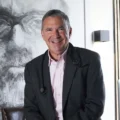
Jon Zaid is an internal medicine physician who blogs at 34justice.
He shares his story and discusses his KevinMD article, “Doctors shouldn’t feel ashamed for wanting to protect themselves or their family.”
Did you enjoy today’s episode?
Please click here to leave a review for The Podcast by KevinMD. Subscribe on your favorite podcast app to get notified when a new episode comes out!
Do you know someone who might enjoy this episode? Share this episode to anyone who wants to hear health care stories filled with information, insight, and inspiration.

Hosted by Kevin Pho, MD, The Podcast by KevinMD shares the stories of the many who intersect with our health care system but are rarely heard from.


Transcript
Kevin Pho: Hi, and welcome to the show, where we share the stories of the many who intersect with our health care system but are rarely heard from. My name is Kevin Pho, founder and editor of KevinMD. Today on the show, we have Jon Zaid. He’s an internal medicine physician, and he wrote the KevinMD article “Doctors shouldn’t feel ashamed for wanting to protect themselves or their family.” Jon, welcome to the show.
Jon Zaid: Thanks for having me, Dr. Pho.
Kevin Pho: So we’ll get into your article in a bit, but first off, tell me your story and your journey to where you are today.
Jon Zaid: Sure. So I’m originally from Philadelphia, from the Philadelphia area. I initially, after college, went into benchtop cancer research. I actually worked at Fox Chase Cancer Center for a few years, decided that I wasn’t very good at it, and also missed talking to people and the human connection. So then I went back to school, completed my medical degree in 2017 at Drexel, just finished my residency a few weeks ago at Jefferson in Philadelphia, and now I’m a clinical professor at Sidney Kimmel Medical College. And then I also see patients at my outpatient setting at Jefferson as well.
Real physician voices, twice a week
Free, and one click to unsubscribe.
Kevin Pho: Well, congratulations on finishing residency.
Jon Zaid: I couldn’t have asked for it to be any sooner.
Kevin Pho: So tell me how the pandemic is affecting you and your practice.
Jon Zaid: Well, so in the obvious ways, for instance, telehealth is becoming much more prevalent. We’ve had lots of hiccups, which is to be expected. Those are starting to get a little bit smoother as we go along. Some of the patients don’t even like to do the teleconferencing. Some patients just want to do it by phone only. Some patients are now starting to come back into the office a little bit more, which is good. We’re still trying to figure out what’s the most appropriate and the safest way to get patients in the office. That’s kind of how I see our practice running for at least the next few months, possibly even longer.
I think one of the good benefits of the pandemic, if you could, you know, try to see the silver lining, is that we’re moving telehealth and telemedicine, the timeline, up a little bit quicker, for better or for worse. So I think especially the elderly population, they’re going to have to get a little bit more acclimated to their iPhone, or having their children, grandchildren, whatever, friends, colleagues help them use the internet a little bit better and more efficiently, which I think is ultimately a good thing. I just wish it, you know, wasn’t because of the pandemic.
Kevin Pho: Now let’s get into your KevinMD article, “Doctors shouldn’t feel ashamed for wanting to protect themselves or their family.” Can you walk my audience through that article and explain why you decided to write it?
Jon Zaid: Yeah, absolutely. So I actually was on quarantine. I had a high-risk exposure towards the end of March, and I was having some symptoms. My residency program at the time told me, “You know, you really have to stay home. You have to self-quarantine until you get the swab results back.” And if you recall, at that time it was anywhere from two days to a week, or seven business days, something like that. And so I started writing again, and I was talking to a lot of my friends that either were pregnant, or they lived with their parents or grandparents, or were immunocompromised. And a lot of people were kind of saying, “I really am scared.”
And this was in Philadelphia, where at the time, if you recall, in New York it was just starting to really ramp up. And some of my friends were saying, “You know, when this comes down south, or comes down I-95, this is going to hit us hard, and I don’t know how to say no to my program director,” or “I don’t really know what the best way is to deal with my grandparents, who watch my son,” or “You know, my significant other has an immunocompromised condition.” You know, we’re kind of stuck between a rock and a hard place.
And then I’ve been reading some tweets by mainly people that actually aren’t in the clinic, but, you know, higher-ups in the administration at various hospitals, saying, “You know, we’re ready. Bring it on. We’re prepared for coronavirus.” And it got me thinking, like, this is not necessarily something that we signed up for. There are lots of things that we hope to do and learn as clinicians, but it’s never, at least, you know, for primary care, and I’m sure for a lot of other specialties and subspecialties, it’s never, “I want to be on the front lines of a pandemic.”
So I really wrote the article to tell people that it’s OK to have reservations, it’s OK to be concerned, it’s OK to say maybe my family should have a little bit more thought put into whether they want me to even be going, quote, unquote, to the front lines. And so that’s kind of where the article came from, that it’s OK to say my family might come first in this instance. And I will say that after I was on quarantine and I was on outpatient rotations, I did volunteer for the Philly Medical Corps. So I don’t want it to seem like, you know, is this a cowardice thing, or, you know, shouldn’t we want to be on the quote-unquote front lines? It’s, no, we have to always be thinking about our loved ones, and sometimes that includes being safe around our patients too.
Kevin Pho: Now, how difficult is it to speak out and ask to not be on the front lines because of a high-risk contact at home? What kind of obstacles do a lot of these residents and physicians face in trying to speak up?
Jon Zaid: Initially, when the pandemic, maybe late February, early March, when the pandemic seemed like it was starting to ramp up, the party line was no students, no residents, no interns, no fellows; only attendings would be seeing COVID patients. And then maybe a week later it was, “OK, fellows can now see COVID patients.” And then a few days after that, “OK, just senior residents,” and so on and so forth. So it seemed like, OK, this is going to be a much bigger issue than we thought. And in the media, and even, you know, internally, the biggest issue was, do we have enough PPE? But there was never really discussion of, well, what if we’re not comfortable being in that setting?
Now luckily, Philadelphia didn’t really get hit as hard as New York, and even as hard as a lot of other places that are currently getting hit really hard, so we never really had to have those discussions. But things like, you know, do we want multiple people to have limited exposure to COVID, or would it be better to have some residents have more exposure? You know, do you start saying things like, well, this person’s single, or they don’t have any family near them? Or, you know, how do you start dividing or making tiers of who should be the ones that go on the front line and who should be protected a little bit more?
And so that was something that, it never really came to that at my institution. You know, they were pretty receptive, but I know from colleagues that they were not receptive in the same way in some programs in New York, for instance. So I think it takes a lot of guts to come out and say, “I don’t feel comfortable,” and I know some of my colleagues did end up doing that. But luckily, you know, for Philadelphia at least, it never really came to having to be pulled from rotations.
Kevin Pho: Now, we’re speaking in mid-July, and the pandemic hasn’t subsided at all. It’s certainly flaring up, especially in the South and the West. So it looks like this is going to be with us at least for the next few months, if not longer. Now, for those physicians who are not comfortable going on the front lines because of the reasons that we talked about, do you have any tips or any advice that you could share with them?
Jon Zaid: In my program, it was, everything goes through the chiefs. And I think there is, at least from my standpoint, a right way to do it, and then maybe a way that you might face more backlash. So of course, if you yourself are immunocompromised, or, you know, if you are pregnant or you live with a small child, it’s easy to say, “Well, I don’t want to put my family at risk.” But let’s just say you’re just not comfortable, for whatever reason. There are lots of good reasons to not be comfortable.
For me and my institution, it was going through the chiefs. You know, our chiefs were our biggest advocates, so we always felt comfortable expressing any of our frustrations and concerns to them. And in one instance, they actually were able to get someone’s duty at least lessened because of their concerns. And so I think if you take the right avenues, and again, I have to catch this with all of it coming from my institution, there really weren’t any issues. Then again, it’s tough to say, “I want to sit out,” while my colleagues or my peers are going to have to fill in for me, and now I’m putting someone else at risk. There’s really no right or wrong way to do it when you know that someone else is going to have to take the fall. So it’s a tough situation. It really is.
Kevin Pho: Now, you wrote your article in mid-April, and we are here three months later. Have any of the attitudes to those who do not want to be on our front line changed? Has anything changed in the last three months?
Jon Zaid: Well, I will say that, just like in society, there’s kind of COVID fatigue, and that’s real, and that may have hit maybe two months ago. People are just, you know, the PPE is not being worn as properly as it once was. People are now saying, “Well, you know, I probably got it just by nature of taking care of patients or being in the hospital for X amount of days.” And so there are several instances where people are maybe less inclined now, because they assume either they’ve gotten it, everyone else has gotten it, or now at this point they’re immune because they haven’t had any symptoms. Now, that’s certainly not the right mentality, but I think, just like everyone else in the country, we’re just so sick and tired of being so hypervigilant that it’s starting to wear on us.
Kevin Pho: We’re talking to Jon Zaid. He’s a newly graduated internal medicine physician, and he wrote the KevinMD article “Doctors shouldn’t feel ashamed for wanting to protect themselves or their family.” Jon, what’s something that you know now about the pandemic that you wish you knew back before the pandemic started?
Jon Zaid: So one of the things that I’ve been thinking about a lot actually, just even growing up, you know, in high school, you think the adults have everything figured out. In college, similarly, the professors, they know what’s best, they know what’s right. And then even in medical school, you’re learning, you know, memorizing everything from First Aid or Step 1, and you look at your professors for all the answers. And then you get into residency, and you’re realizing, well, maybe my superiors or my colleagues, they don’t know all the answers.
And one of the things that I found really fascinating in the last couple of months especially is that being on Zoom meetings or conference calls with the experts in their fields, they don’t necessarily know what’s going on. So I’ve witnessed lots of discussions, debates, sometimes getting heated, about things like what to do with, let’s say, anticoagulation for patients, what protocols do we want to follow, what studies do we want to look at. And then you see, not necessarily heads butting, but you see the sausage getting made. And I think that’s something that’s really fascinating. It’s cool to see the process, yes, but it’s also a good reminder that we don’t really know everything there is to know. And sometimes, as residents especially, you need that reminder to say there’s still much more that we need to figure out, and this is how protocols get made, this is how people come together and make a formal suggestion, things like that. And that’s something that I thought was really cool, that if it weren’t for the pandemic, I certainly would not have really been seeing the nitty-gritty.
Kevin Pho: And Jon, my final question: What’s your take-home message for the KevinMD audience?
Jon Zaid: It’s OK to not know all the right answers, and that’s from, you know, board questions, but patient questions, and even family questions. That’s one of the toughest things that I’ve had to say, “I don’t know,” to friends and families when they ask me, “Well, can my daughter go to daycare?” or “Can my child go to camp?” Again, it’s OK to say we just don’t know. I mean, it’s frustrating, but that’s the reality of it.
And it’s OK to not want to put your family in harm’s way. Now, at least my family is somewhat fortunate in that we can say, “Well, I can stay home for a little bit and take shifts,” but a lot of people aren’t in the same boat. But it’s OK for those that are in medicine to just take a step back and say, “I don’t feel comfortable doing this.” And I think we should feel empowered to say that. And it’s a little bit tough right now, but I think if people realize that there’s a large support system out there, that’ll make it a little bit easier.
Kevin Pho: Thank you so much for your insight and your time, and thank you for being on the show.
Jon Zaid: Thanks so much.
Listen and followApple PodcastsSpotifyYouTubeMore apps · Browse all episodes