












Listen and followApple PodcastsSpotifyYouTubeMore apps · Browse all episodes
“Since the coronavirus outbreak, reports of anxiety have increased, especially among physicians. Physicians face numerous stressors, including fears of contracting the coronavirus, concerns about potentially infecting loved ones, PPE shortages, testing delays, and frequently making quick decisions with limited information.
Common symptoms of anxiety are increased worrying about one’s self and/or loved ones, difficulty sleeping, difficulty eating, poor concentration, increased heart rate, hyperventilation, and struggling to control worrying.”
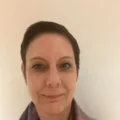
Christine Tran-Boynes is a psychiatrist.
She shares her story and discusses her KevinMD article, “5 ways to manage anxiety during the coronavirus pandemic.”
Did you enjoy today’s episode?
Please click here to leave a review for The Podcast by KevinMD. Subscribe on your favorite podcast app to get notified when a new episode comes out!
Do you know someone who might enjoy this episode? Share this episode to anyone who wants to hear health care stories filled with information, insight, and inspiration.

Hosted by Kevin Pho, MD, The Podcast by KevinMD shares the stories of the many who intersect with our health care system but are rarely heard from.


Transcript
Kevin Pho: Hi, and welcome to the show, where we share the stories of the many who intersect with our health care system but are rarely heard from. My name is Kevin Pho, founder and editor of KevinMD. Today on the show, we have Christine Tran-Boynes. She’s a psychiatrist, and she wrote the KevinMD article “5 ways to manage anxiety during the coronavirus pandemic.” Christine, welcome to the show.
Christine Tran-Boynes: Thank you for having me, Kevin.
Kevin Pho: So we’ll get into the article in a bit, but first off, tell me your story and your journey to where you are today.
Christine Tran-Boynes: Sure. So a little bit about myself: My parents were actually refugees from Vietnam. They came shortly after the end of the war, in the 1970s, and my dad is actually a retired neonatologist, so I’m a second-generation physician. I was actually born in Chicago but grew up outside of Los Angeles, in Southern California. I completed my undergraduate degree at the University of California, Berkeley, but once I graduated from college, I wasn’t quite sure what to do with myself. So for five years, I spent time in the San Francisco Bay Area working various nine-to-five jobs.
Then, five years later, I entered medical school as a non-traditional student, and I attended the Lake Erie College of Osteopathic Medicine in Erie, Pennsylvania. It was during my third-year medical school rotations that I fell in love with psychiatry as a profession, because we really had to delve more beyond the cluster of symptoms that we often associate diseases with. You really have to get to know a patient and really gain this therapeutic alliance.
So after medical school in Pennsylvania, I moved to Baltimore, Maryland, where I entered residency at the University of Maryland and Sheppard Pratt combined residency program, which was a great experience. Since graduation from residency, as an attending psychiatrist, I’ve focused on working in both outpatient psychiatry settings as well as emergency psychiatry settings. So at this time, I work at a federally qualified health care center in Baltimore, Maryland, mainly working with a homeless population, doing outpatient psychiatric medication management.
Real physician voices, twice a week
Free, and one click to unsubscribe.
Kevin Pho: And how has the pandemic affected what you’re seeing in your practice?
Christine Tran-Boynes: Absolutely. So the interesting part is I started this job at the end of March of this year, so right at the beginning of the pandemic. When I started my job, there were a lot of things to learn. Thankfully, I had adequate PPE, like surgical masks, those types of things. But in terms of seeing patients, I wasn’t really able to see patients in person like I usually was able to. What we actually ended up doing: Most of my visits are conducted over the telephone, for the most part. It wasn’t until a few weeks ago that we started using the video platform Doxy.me. Maybe a rare event here or there: A patient may walk in, I may see them, and we’re socially distant or both wearing masks. But it’s quite an unusual situation to not be able to see my patients face to face. That’s been quite a challenge.
Kevin Pho: Now, can you share any tips on how we could better connect with patients remotely, whether it’s through a phone or through Doxy.me or a video platform?
Christine Tran-Boynes: Absolutely. So through telephone, you really have to hone in on your listening skills and also your tone of voice, because if you sound too monotonous on the phone, you may disengage with your patients. But if you really just hone in on listening and hearing their stories and showing empathy, it takes some practice, obviously, on the telephone, but that’s how I’ve been getting through for the past four months.
With the video, it’s a little easier. You have the ability to see the patient’s body language, and be mindful of your own body language, and just feed off of the reaction of the patient. If they start to get more guarded, then maybe back off your questioning a little bit, but if they share wonderful news, then you want to share appropriate excitement.
Kevin Pho: Sure. Now let’s talk about your KevinMD article, “5 ways to manage anxiety during the coronavirus pandemic.” Now, can you walk my audience through that article for those who haven’t read it, and perhaps share the story behind why you wrote it?
Christine Tran-Boynes: Right. So as I mentioned earlier, I started my current job right at the beginning of the pandemic, so by the time I wrote the article, I was in between jobs. During that time off, like a lot of Americans, I was trying to learn more about the pandemic, and what ended up happening was that I was probably watching way too much news on the TV and probably looking at too many things on social media. This was a time when the CDC was telling us, “You can go out, you don’t have to wear masks, but socially distance,” which is obviously different than what we know now. So with watching TV, not consistent information, too much social media, it reinforced the anxiety I already had about COVID, because there was so much at that time, and even now, that we don’t know about.
So I did a Google search about how to manage my anxiety, because I felt really tense, really irritable, and had difficulty sleeping, especially in anticipation of starting a new job. I actually found this exercise where you spend about maybe 10-15 minutes just dedicated to focusing on what your anxiety is centered around. I find for myself, actually, if I write things down as opposed to just playing things over in my mind, it decreases my anxiety. And so from that, I wrote down some things that could help me decrease my worries.
From that, I thought, “Well, this really helped me,” especially after I did this exercise. And then I thought to myself, “Well, a lot of readers look at KevinMD, a lot of physicians and health care workers, so why don’t I share this with everyone else out there, especially in this pandemic?”
Kevin Pho: Sure. So I’m a primary care internal medicine physician, and I see a lot of patients in my clinic with anxiety and depression. Now, from a psychiatry standpoint, is there any advice that you could give me in terms of how to manage, and some of the symptoms that I need to look out for when I see these patients?
Christine Tran-Boynes: Right. So a lot of what I’ve seen in practice, and what you’ll probably see a lot of in primary care, is anxiety that’s either pre-existing and exacerbated by COVID, or new-onset anxiety due to fears about COVID, whether you think you have the symptoms or whether you’re getting inconsistent information out there. So I think the biggest thing to do is to actually validate those fears and reflect back on the feelings, like, “You know, we’re in a really difficult time.” It’s quite an unusual time, with the social distancing, and we’re isolated from peers. We can’t go out like we usually do. So acknowledging the fact that this is quite a strange time in history can actually do wonders.
Another thing you want to watch out for with anxiety and depression, because a lot of people will experience depression with COVID, especially when you’re isolated, especially when you can’t do the things you normally do, is really watch out for some red flags, such as not eating like you usually do, to the point where you’re losing a lot of weight; where you can’t sleep, to the point where it’s affecting you work-wise or socially; or, in extreme cases, if you’re resorting to alcohol or drugs to cope with this anxiety and depression; or, in very severe cases, having thoughts of wanting to die or wanting to end your life because you can’t handle the emotions.
Kevin Pho: Now, from a patient standpoint, are there any online resources that they could turn to, or resources that you recommend to your own patients, when it comes to depression and anxiety related to COVID?
Christine Tran-Boynes: Absolutely. So the CDC actually has excellent resources about anxiety and depression, especially in light of the pandemic. Another website I tend to refer folks to is the American Psychiatric Association website, because it has a lot of guides and information in layman’s terms that’s easy for the public to understand. In terms of apps, there are plenty of apps out there for cognitive behavioral therapy, which is a common form of therapy for both anxiety and depression. So those are the three main resources I tend to distribute to my patients.
Kevin Pho: Now, anxiety and depression aren’t just restricted to patients, of course. We’re seeing it among health care workers as well: frontline nurses, physicians, advanced practice practitioners. Tell me what you’re seeing on your end. Are you seeing anxiety and depression among the health care workforce?
Christine Tran-Boynes: Absolutely, and I want to add to that also acute stress disorder, from what I’ve seen from classmates, medical school classmates, those who work more on the front lines. There are a lot of unknowns, basically, where patients who are in the ICU, perhaps, because they’re sick and towards the end of their lives, can’t have their families with them towards the end of their lives. So often families are isolated, and often these patients only have these health care workers to be around. Health care workers are working very, very hard to save these lives, and it’s not always possible, and that in and of itself is traumatic.
From a psychiatric standpoint, in addition to anxiety and depression in relation to COVID, there are your usual psychiatric illnesses going on. Let’s say I see a lot of folks who are suicidal outside of COVID, and you try to get them to, let’s say, an emergency room, and you’re trying to weigh the risks and benefits, because there is possible exposure to COVID in that type of setting. Or maybe they aren’t necessarily suicidal but are a little bit too sick for outpatient psychiatric care, and they need some sort of intermediate level of care, like a partial hospitalization program or intensive outpatient program. Those two programs, because they involve a lot of groups, have been shut down due to the pandemic. So from a psychiatric standpoint, besides your run-of-the-mill psychiatric issues, it’s been hard to refer people to higher levels of care if needed.
Kevin Pho: So for frontline health care workers, or for every health care worker, for that matter, what are some of the signs and symptoms they should look out for in order to take the next step, perhaps seeing a counselor or seeing a psychiatrist? What are some red flags that they should look out for?
Christine Tran-Boynes: Absolutely. So with anxiety, there are different degrees of anxiety, but if it’s coming to the point where you cannot get quality sleep at night and it’s affecting your work the next day, I would definitely consider seeing a counselor about that. If the day before you go to work, you’re having a lot of fear and anxiety, or if you’re having dread about going to work in general, where you can’t separate your work life from your home life, that’s another red flag for me. And, as I mentioned earlier, if things are so stressful that you have to self-medicate with alcohol or drugs, or you’re thinking that things are so overwhelming that you don’t want to live anymore, that you want to end your life, those are definite red flags.
Kevin Pho: And is there anything that health care workers can do at home to help mild symptoms?
Christine Tran-Boynes: Right. So in psychiatry, we often talk about self-care, but it’s such a vague term. For some folks, what self-care means is to kind of take a break from the reality of working on the front lines of COVID, so trying to find something that brings you enjoyment, pleasure, you know, kind of grounds you back to reality. For some people, that may involve meditation. There are a bunch of apps out there, one that’s actually free to health care workers until the end of 2020, and some of these apps also guide you through breathing exercises or sleep hygiene techniques, or even exercising.
Other people might find benefit in pursuing a hobby. Like myself, I found this online iPhone photography class, so it allows me to walk around the neighborhood and get some exercise. Other people like to bake. So basically, it’s finding what works best for you, so that you can separate what’s going on at work from your regular life.
Kevin Pho: We’re talking to Christine Tran-Boynes. She’s a psychiatrist and wrote the KevinMD article “5 ways to manage anxiety during the coronavirus pandemic.” Christine, my last question: What is your take-home message that you want to share with the KevinMD audience?
Christine Tran-Boynes: Absolutely. So my take-home message is that even before the pandemic, burnout among physicians was rather prevalent, that emotional exhaustion, depersonalization, and that really affects not just yourself but patient care. So with the pandemic, that risk of burnout is even higher. So if you find yourself struggling, and that’s a very subjective term, whether you can’t separate your home life versus work life, whether your mind is so consumed by what’s going on at work that you can’t relax at home, or whether you feel like there’s stress going on with administration or patients or all of the above, there’s always a saying that you can’t pour from an empty pot.
So as physicians, we always think about taking care of other people, but unless you take care of yourself, you’re not going to give the best patient care, and you’re not going to be fair to yourself. And whether that’s through self-care activities or seeking professional help through a psychiatrist, psychologist, or therapist, there are a lot of mediums around for support.
Kevin Pho: Christine, thank you so much for sharing your expertise and insight, and thank you for being on the show.
Christine Tran-Boynes: Thank you so much, Kevin.
Listen and followApple PodcastsSpotifyYouTubeMore apps · Browse all episodes