







Listen and followApple PodcastsSpotifyYouTubeMore apps · Browse all episodes
“When we think about holistic medicine, many assume that it requires human-to-human touch points and, therefore, doesn’t lend itself well to technology and innovations such as artificial intelligence. In fact, holistic medicine and whole-person care advocates often view technology as manufactured or impersonal and therefore dismiss its utility for health care. This is because there is a perception that health care tech values the human experience only for the purpose of developing better widgets or to refine machine learning algorithms. As a result, it can be difficult to envision high-tech holistic medicine that is supported by a whole-person care model. Nevertheless, I see a future where both technology and holistic medicine can complement each other for the advancement of whole-person care.”
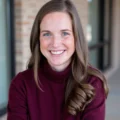
Trisha Swift is a health care executive.
She shares her story and discusses her KevinMD article, “The future of whole-person care: high-tech holistic medicine.”
Did you enjoy today’s episode?
Please click here to leave a review for The Podcast by KevinMD. Subscribe on your favorite podcast app to get notified when a new episode comes out!
Do you know someone who might enjoy this episode? Share this episode to anyone who wants to hear health care stories filled with information, insight, and inspiration.

Hosted by Kevin Pho, MD, The Podcast by KevinMD shares the stories of the many who intersect with our health care system but are rarely heard from.


Transcript
Kevin Pho: Hi, and welcome to the show where we share the stories of the many who intersect with our health care system but are rarely heard from. My name is Kevin Pho, founder and editor of KevinMD. Today on the show, we have Trisha Swift. She is an advanced practice nurse and a health care executive. She wrote the KevinMD article “The future of whole-person care: high-tech holistic medicine.” Trisha, welcome to the show.
Trisha Swift: Thank you for having me. I’m glad to be here.
Kevin Pho: We’ll get into your article in a little bit, but first off, can you share your story and your journey to where you are today?
Trisha Swift: Sure. I have a nursing background, obviously. I grew up in the hospital and integrated health care system setting, rose through the ranks in those settings, and grew my role into overseeing the quality, safety, and regulatory aspects of care delivery. From there, I moved on to management consulting, applied those skills in other settings, and helped other organizations sort of figure out how to best deliver care in an integrated way.
Today I work for a pop health management software company. We service the insurance industry, primarily working on whole-person care and how to integrate digital technologies into that. As I look at my career and sort of what I’ve been through, I’ve started to shift my focus a bit to addressing the things that make us sick instead of trying to make symptom management as good as it can be. So, same realm, but a different perspective, a different corner of the arena.
Real physician voices, twice a week
Free, and one click to unsubscribe.
Kevin Pho: So talk a little about that transition from clinical medicine to your current role in a nonclinical application of what you do.
Trisha Swift: I transitioned from the bedside. I was working in perioperative medicine and transitioned into quality right around the time when core measures and meaningful use and all those sort of legislative things came down.
It’s funny you ask me this, because I had friends and family say, “Oh, so you’re not going to be a nurse anymore.” And it was, you know, something I had to explain: Being a clinician can look very different. You don’t always have to be at the bedside. What makes the care delivery system run is all the supportive roles plus the front line. That’s where I really found my calling, in having a bit of a broader brushstroke while still holding true to what I understand the front line has to deal with, so that we can truly start to redesign and transform our system into offering the best care that’s possible.
Kevin Pho: Now, were there any challenges that you had to overcome when making that transition into management consulting?
Trisha Swift: Absolutely. In management consulting, there are very few clinicians in the group, and so that actually was an extremely challenging transition for me: to be surrounded by, you know, very competent and educated business leaders in health care who had no understanding of how care was applied and delivered. So when you’re designing strategy, or selecting technology tools and designing that portfolio, lacking that perspective at the table was a gap that I wanted to fill, but I was usually the only one there to speak to that perspective.
Being the small voice, but a very important perspective at the table, really opened my eyes, and I advocate all the time: More clinicians need to come over to this side of the world, because our voice is drowned out if we’re not there.
Kevin Pho: Now, did you have any prior training before making that transition into management?
Trisha Swift: I did. I have a doctorate of nursing practice, which I got at the University of Iowa, and my focus, my specialty within that program, was in health systems. So the academic preparation I have is in designing health systems, managing them, and transforming them to be best positioned for future care delivery and all that entails. So, lots of business training: you know, nonprofit organizations, ethics courses, legal risk. All of that was part of my academic preparation.
Kevin Pho: All right. So let’s transition now into the KevinMD article that you wrote. This was back last August, and it’s titled “The future of whole-person care: high-tech holistic medicine.” Now, for those who didn’t read that article, can you walk my audience through it and share the story of why you decided to write it?
Trisha Swift: Yeah. I’m particularly interested in preventative medicine. I’m currently working on my second master’s degree, in Ayurveda and integrative medicine. When you think about what it means to be preventative in nature, your mind is naturally drawn to things that are organic or natural: you know, yoga and wellness and eating healthy and things of that nature. And usually, thinking about technology in that context doesn’t naturally come.
So as someone who’s currently working in the tech industry, but with that passion and that interest on that side, I wanted, for your audience and anyone else who’s willing to listen, to sort of bring together that, you know, applying holistic medicine and being preventative in an approach is absolutely synergistic with technology. There are many digital therapeutics, analytical platforms, and things of that nature that can help us apply whole-person care in a more effective way that makes it tangible for the consumer themselves.
Kevin Pho: So please share some examples or stories of that intersection between holistic medicine and technology that’s either coming down the pike or that may be available already that a lot of clinicians may not know about.
Trisha Swift: Absolutely. I’m going to focus on AI for this one. In order to understand the vulnerabilities and the things that make us sick, we have to be able to measure that and analyze that, because there are so many things that one could focus on, and knowing sort of what to zoom in on and what’s going to be effective, you know, analytics helps support that.
Stratifying populations is one example of where advanced analytics is really helpful. What I mean by that is sort of taking data that’s publicly available, perhaps through governmental agencies or just in your local municipalities: water quality, air quality, access to transportation, distance to health care, things of this nature. You can sort of analyze what those are, not only at a ZIP code level, which a lot of people focus on, but even zooming in farther and looking at the census tract level, down to your neighborhood. Then you can start to understand where vulnerabilities and disparities lie by using and consuming those data.
From there, you can risk-stratify populations and segments within communities and then begin to understand what’s going to be most impactful, based upon the results of what those vulnerabilities and disparities say, using those analytics. That’s just really sort of retrospective analytics, but from there you can start to use machine learning to build predictive models and begin to understand, you know, what is the correlation between, you know, food deserts and diabetes, or education level and smoking habits. You can start to predict what people are at risk for in the event they don’t change behavior, or in the event that that vulnerability gap cannot be closed through their provider team.
Kevin Pho: So I’m an internal medicine primary care doctor, and I know a lot of the things that you do are on a population level. But let’s say for me, one-to-one in the exam room, what are some specific tools that I can use? What are some specific resources that I can look up to implement and use some of the things that you’re talking about?
Trisha Swift: One really fundamental way to get started on understanding how this is impacting your panel is to just do the screening and ask the questions routinely, twice a year, once a year, and use that data to analyze your own panel to understand where their vulnerabilities are. So, you know, understanding what their social context is, what sort of support they have, you know, screening for social isolation, assessing means for transportation, access to food.
This can get a little complex, too, because sometimes our patients don’t understand what we mean by access to food. What we really need is access to nutritious food: not Burger King or, you know, bags of Doritos, but perhaps, you know, do you have fresh fruits and vegetables? Do you have milk? Do you have whole grains? So just collecting that as part of an intake assessment or an annual physical exam can start to unveil where those gaps and vulnerabilities are that you might not otherwise be made aware of if you didn’t just simply ask the question.
Kevin Pho: So you mentioned artificial intelligence being one technological thing that is current. Now, what else is coming down the pike, you know, from a primary care setting? What are some of the things that we have to look forward to in the future?
Trisha Swift: Well, I think, you know, there’s a big trend to sort of transfer the risk of managing patients to the primary care physician. I think it sounds good on the surface, but it’s so much more complex than that. And of course, primary care physicians need their patients to engage in that health care journey in order to feel comfortable in owning that risk.
So there’s this whole concept of engaging your patient and understanding sort of what it means on the psychosocial level to engage patients, what they need to be engaged. You know, some people can say, “Well, they need to own it,” or “They need to feel connected,” and that varies based upon the person. What does connected mean? But it’s really confidence, and it’s education, and it’s understanding where actions and behaviors and compliance can factor into their health.
So there’s a big movement on consumer engagement, and what it means to engage a consumer, and how wearable devices and lifestyle nudges, they call it. How can we insert a health or a wellness nudge into the day-to-day sort of lifestyle of patients? I’m excited to kind of see that segment grow, because I do think it’s not feasible long term to just transfer risk to primary care and wait and see what happens. We have to have the patients sort of engage and own some of that risk, too.
But creating that nuance and that precise and customized approach, I think, is where the devil’s in the details, and what that means for different, you know, population segments and risk cohorts as well. You know, if you’re low risk, if you’re young and relatively healthy, the goal is to keep you there. We don’t want you to emerge in risk, and so it’s easier to engage that segment. But if you’re someone with multiple comorbidities and 25 different medications to manage, and you’re elderly, and you’re not as tech-savvy, that becomes even more difficult. But teasing out what that looks like and creating those really custom care plans, I think, is what’s going to help us sort of really get into that value-driven delivery.
Kevin Pho: Now, we’re talking at the beginning of February, and we’re about one year into the pandemic now. How has the last year during the pandemic changed or influenced what you’re seeing from a population level, and what you’re seeing, I mean what you’re doing, in that intersection between health care and technology?
Trisha Swift: I think, you know, the COVID pandemic has illuminated this understanding that our social vulnerabilities and our social determinants really do impact health, and we’re even seeing that today in who gets the vaccine and who doesn’t, and whether it’s appropriate to prioritize the vaccine to the elderly, or to the front line, or to those with comorbidity, sort of which approach we should take.
But I think overall, illuminating those vulnerabilities, you know, that people of color and people of lower socioeconomic status have indeed been at higher risk and have higher mortality rates, has allowed us to better understand that these things aren’t just for preventing diseases. Even in a public health crisis, and in a very acute setting, we’re seeing the social determinants of health make a difference in your outcome. So there’s been even more interest in applying some of those advanced analytics and using artificial intelligence to better understand that.
And then also sort of understanding how we can use some of those more, not bleeding-edge interventions, but how can we apply different nutritional care plans? How can we use sort of phytonutrients? How can we address gut health? How can we address brain health in order to lower the risk of patients for these, you know, viruses that come out in a public health crisis, but even in, you know, managing and preventing their diseases as they move forward as well, and the comorbidities associated with that?
Kevin Pho: Now, is there an anecdote or story that you could share about how what you’re doing with population management affected patients individually and in a specific community?
Trisha Swift: Yeah. You know, we do a lot of work at ZeOmega in, you know, understanding populations and stratifying them, and we have some really neat artificial intelligence models that can address sort of boutique needs that health plans might have. If they have a problem in a particular area that’s not commonplace across the nation, we can kind of zoom in and help them.
One of the models that we have is related to predicting the likelihood of opioid overdose. I think, you know, a lot of people assume that opioid overdose is secondary to having prescriptions for opioids and having access to them. When we took in real patient data, not synthetic data, which is common when you’re building AI models, we used real patient data, and what we learned was the opposite of that: Those patients who were overdosing on opioids didn’t have a prescription at all. They had other things that made them at higher risk for overdosing, such as, you know, increased ER visits, I mean multiple ER visits, over and over and over, where they’re hopping and getting different prescriptions, or their socioeconomic status, or the fact that they may have had some sort of recent traumatic event, or, you know, a death in the family, or things of that nature.
So I think if you look at that, if you’re trying to manage a care management workflow, or you’re trying to monitor patients who are on opioids and make sure they don’t get too much, but if you apply the advanced analytics on top of that and then you understand, well, these patients don’t have a prescription to track at all, then the approach you take at preventing overdoses and poor outcomes and prolonged lengths of stay in the ICU, the approach you take, is different, because now you automatically exclude those with opioid overdoses and you look at different things that put them at risk.
Kevin Pho: We’re talking to Trisha Swift. She’s an advanced practice nurse and a health care executive, and she wrote the KevinMD article “The future of whole-person care: high-tech holistic medicine.” Trisha, my final question: What’s your take-home message that you want to leave with the KevinMD audience?
Trisha Swift: Sure. I think, you know, a take-home message regarding high-tech holistic medicine is that in order to offer holistic medicine, we need to start to integrate technology and use the different things that help address the vulnerabilities that make us sick, and help customize interventions to also pull in the things that make us unique as a person.
So, you know, if we look at emotional health, spiritual health, brain health, nutrition, gut health, the microbiome, your social support system, and all of those things, well, traditionally we think of those as sort of alternative and complementary. They can indeed be the front end of preventing disease and reducing your risk of becoming infected with a virus, or having your comorbidities progress to a point where they’re unmanageable and they lead to unexpected mortality.
So I’d like your audience to sort of think about these things in a more front-facing way, and maybe start there and back into some of the more acute interventions, because, you know, it’s just going to help patients overall be able to own their own treatment plan and not have to reach outside of their ecosystem to be healthy and well.
Kevin Pho: Well, thank you so much for sharing your time and insight, and thanks again for being on the show.
Trisha Swift: Thank you.
Listen and followApple PodcastsSpotifyYouTubeMore apps · Browse all episodes