
















Listen and followApple PodcastsSpotifyYouTubeMore apps · Browse all episodes
“I hope being a parent will now equip me to be a better pediatrician. I hope I can teach them whatever I know about safe sleeping, breastfeeding, and newborn care, but I also hope to acknowledge the reality and struggles of parenting. I hope my statements and recommendations do not sound generic and rehearsed. I hope I can tell them every child is different and will not follow the book. I hope I can be more understanding and empathetic towards the angry and worried parents and applaud them all for what an amazing job they are doing. I hope they can remember me as a friendly face who understands their struggles and not just their doctor who tells them what to do.”
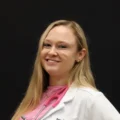
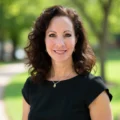
Saba Fatima is a pediatric hospitalist.
She shares her story and discusses her KevinMD article, “Being a pediatrician did not prepare me for parenting.”
Did you enjoy today’s episode?
Please click here to leave a review for The Podcast by KevinMD. Subscribe on your favorite podcast app to get notified when a new episode comes out!
Do you know someone who might enjoy this episode? Share this episode to anyone who wants to hear health care stories filled with information, insight, and inspiration.

Hosted by Kevin Pho, MD, The Podcast by KevinMD shares the stories of the many who intersect with our health care system but are rarely heard from.


Transcript
Kevin Pho: Hi, and welcome to the show, where we share the stories of the many who intersect with our health care system but are rarely heard from. My name is Kevin Pho, founder and editor of KevinMD. Today we welcome back to the show Saba Fatima. She is a pediatric hospitalist, and she wrote the KevinMD article “Being a pediatrician did not prepare me for parenting.” Saba, welcome back to the show.
Saba Fatima: Thank you. Thanks for having me, and thanks for the podcast. I think it’s great.
Kevin Pho: Well, thank you so much for being on it twice now, back for more. So we’ll get into your article in a little bit, but for those who didn’t listen to your first episode, can you just briefly share your story and journey to where you are today?
Saba Fatima: Yeah. So I was born and raised in Karachi, Pakistan, where I did my medical school training at Dow Medical College. And then I did my residency training in pediatrics in Philadelphia, at Einstein Medical Center. For the past two years, I’ve been working as a pediatric hospitalist at Wesley Children’s Hospital in Wichita, Kansas, and I work as faculty with the KU School of Medicine in Wichita, where I work with residents and medical students.
And just briefly, I’ve been writing articles and blogs since I was a teenager, so that’s one of my passions along with medicine. I’m really intrigued by this field of narrative medicine, where you can connect both of these things together.
Real physician voices, twice a week
Free, and one click to unsubscribe.
Kevin Pho: So I last talked to you last year, and things are much different now. We’re speaking in the beginning part of April. So just tell me, from your lens as a pediatric hospitalist, how are things going in the hospital now?
Saba Fatima: Well, I guess we were in for the biggest surprise, because we did not see a single case of RSV or influenza throughout the winter. And I remember last year, when we had the RSV season, we were running in and out of rooms because it’s always so busy, right? It’s always so busy. But I guess we know now that masking works. Our winter was pretty quiet in terms of respiratory illnesses.
But now, as we’ve seen that the precautions are a little bit relaxed and people have stopped masking, maybe a little bit, we’re starting to see some late respiratory illnesses, and we’re starting to see kids getting sick. So I would be surprised to know if we get a late spring RSV season. I don’t think that’d be fun. But yeah, it’s been a pretty quiet winter for all of us.
Kevin Pho: So let’s transition now into the KevinMD article that you wrote. This was back in January. It’s titled “Being a pediatrician did not prepare me for parenting.” Now, for those who didn’t read the article, can you just walk my audience through it and share the story of why you decided to write it?
Saba Fatima: When I last talked to you on your podcast, Kevin, I think we talked a little bit about what it was like to be pregnant in a pandemic, but I guess we really didn’t talk about what happened once we brought the baby home. So I wrote this article a few months after I had the baby, because I realized I was in for a huge shock: My pediatric residency and my background in pediatrics did not train me for parenting at all. Before, I thought, “You know, I know a little bit. I know the basics, so how hard can I be?” I thought it was going to be a little hard, but I didn’t know that I was in for a really huge learning curve. And of course, it has given me a great sense of appreciation and empathy for all the parents, families, and babies that I take care of now on a daily basis.
So one of the things I talked about in the blog was safe sleep. When I was a pediatric resident, when we used to do our newborn nursery rotation, we used to go into every room, and we had a one-and-a-half- to two-minute speech about safe sleep: “So do this, this, this, and this.” And then the parents were exhausted. Sometimes they had a blank face, and they’d be like, “OK.” And this is it, and we moved to the next room, and that would be 20 to 30 babies in a day.
And so when I had my own baby, I realized that she rejected safe sleep like anything. She hated it, and it was so exhausting and frustrating. I would say I cried tears, because I realized I was failing at this one thing that I had told all those parents. And I remember there was a day when I was trying to put her to sleep, so I didn’t want to go to sleep at all, because I know safe sleep works. It’s the best thing that you can do for your baby. So I was sitting upright in the bed, and she had fallen asleep. It was the middle of the night, and I woke up two hours later, and I was still in that upright position. And I hadn’t slept. I guess I had slept in that position.
And shame is the word for it. I felt so much shame. I felt so bad, but I was so exhausted. And I wish someone would have told me that, yeah, it’s the safest choice, but it’s also really challenging to do it, so I wouldn’t have felt like a failure. And for me, I wish I would have told those parents, you know, instead of just giving that two-minute speech, and I could have connected with them more and given them more insight. But I guess I didn’t know, right? So there was no way for me to tell.
And the same goes for a lot of other things, like breastfeeding. You know, there’s so much shame and disappointment associated with that, because I told all the moms who came to my clinic, I was like, “It’s OK. You can give your baby formula. It’s not the worst thing in the world.” And when it came to me, I just felt like it was really hard.
The one other thing that I talked about was obviously postpartum depression. When we were in our clinic, we used to give a screening questionnaire to the moms, and if it came back positive, we’d offer a few words of support, and we’d give them some resources for counseling. And, you know, that’s the end of your visit. But I guess when you’re doing it on your own, when your own body is recovering from so much pain, and you have a newborn to take care of, and it’s the pandemic, and you can’t ask anyone for help because it’s COVID, and then postpartum depression can cause a lot of feelings where you don’t feel attached to your baby and you don’t feel the bonding. So I think it’s really, really scary, and I wish I had that empathy for those moms instead of just giving them a questionnaire and that being the end of the visit.
So I would just say, just this experience. And the funny part of it was, you know, my husband was also a clueless parent, and he would look at me and he’s like, “OK, you know how to do this, because this is what you do day in and day out.” And I was too arrogant, maybe, to admit that I didn’t know, but inside I was so lost, and I was like, “No, trust me, I don’t know this.”
So one of my beloved mentors from residency, I asked her, I texted her, “You know, this pediatric residency did not train me for parenting at all.” And she wrote something really nice. She said it was really useful. She said, “Being a parent will now train you to become a better pediatrician.” And I think that’s been my journey. I just feel like now I have a greater sense of empathy for those families and parents, and I wish I could be their friend. And, you know, when I see them in the clinic, it’s not just medical advice and go, go, go. I hope I can connect with them more and realize how tough their journey can be.
Kevin Pho: So you said that now that you are a parent yourself, that’s changed how you interact with patients. Can you give, let’s say, a specific example of how you incorporate your stories of being a parent yourself? Give an example of how that’s changed when you advise patients going forward.
Saba Fatima: Yes. I mean, I would say before, if I was going into a patient room, I would be like, “OK, you know, are you getting enough sleep?” And the parents would mostly be like, “Yeah, we are. We’re tired.” And that would be it. But now, when I talk to them, it’s just like, “You know, I understand how hard this is.” And I really understand how hard this is.
So if I see a parent who’s not applying safe sleep, before, I might have been a little judgmental. I’d be like, “OK, this is the best thing you can do for your baby. Why are you not doing it?” But now I know, because I’ve been through it, that it’s hard. So I just want to be that positive encouragement. I want to give positive encouragement to them and not be the Negative Nancy and be like, “Why are you not doing it?” I guess I’m just trying to be more understanding.
But I must say, if you talk about my experiences, this empathy, I think empathy is a double-edged sword. Compassion is also a double-edged sword, I think, because just in my experience, if I’ve had a bad outcome with a patient, or the babies are not doing so well, it has just hit me harder now that I’m a parent. Now I realize what their loss is and how hard it is to see your baby in pain. So I don’t think I’ve perfected that part of the interaction yet, because I still don’t know how to compartmentalize and go home and disconnect from their pain. So yeah, I think that’s the hard part for me in practice for the past few months, but I just feel like I understand them better now.
Kevin Pho: When you were going through your pediatric training, and your mentors and your teachers were teaching you about safe sleep, about breastfeeding, and about postpartum depression, did they incorporate any stories when they were teaching you, so you had a better idea of what to expect when you yourself were a parent? Or was it just purely didactic, from a textbook, for instance? How much personal experience did they incorporate into their own teachings to you to better prepare you?
Saba Fatima: Yeah, I think that’s a good question. I feel like it’s mostly didactic. You’re learning the breastfeeding techniques, you’re learning about newborn crying and reflux, and you’re learning about the soothing techniques. And I think the experience is mostly the one you get from families. When you talk to families in the clinic, they’ll teach you about their experiences.
But what I’ve realized is, when people come in there for a 10- to 15-minute visit, they don’t tell you their full story. And that’s what I was doing, you know, when I was going to my daughter’s pediatrician. She always asked me, “You know, are you sleeping?” And I was like, “Yeah, it’s OK.” I wasn’t telling her that I was exhausted, because, 10 minutes, what are you going to fix?
But when you ask about my mentors, I feel like most of them who were parents, I saw a lot of them become parents during that time, and I just noticed a new sense of understanding in them. At that point, I didn’t realize it, you know, but I think they just knew better from their own stories, and I guess that’s what I’m feeling now. But if you talk about training, I think it’s mostly didactic, just answering your question that way.
Kevin Pho: Yeah. Now, when you talk to your other pediatric colleagues who are also parents for the first time, do they share a similar experience to what you described?
Saba Fatima: Yeah. When I posted my article on my Facebook, Kevin, so many people, so many of my colleagues, commented. And these are not colleagues of this time, you know, but my people from medical school, people from before. And they said they agreed, and they said they felt it so much. It’s just so different when you’re at work being a doctor, and it’s so different when you’re at home and it’s your own kid.
So a lot of people, and I think that’s why we share stories, right? A lot of people can connect with them, and a lot of people came and said that, yeah, this is what they felt. And my colleagues who have right now, they said the same thing: You don’t learn about breastfeeding, you don’t learn about sleep training. Nobody teaches you that, and I wish we learned about that, you know, the more practical aspect of it.
Kevin Pho: Yeah. We’re talking to Saba Fatima. She is a pediatric hospitalist, and she wrote the KevinMD article “Being a pediatrician did not prepare me for parenting.” Saba, if you were to be a parent for the first time again, what would you do differently, or what kind of resources would you seek out?
Saba Fatima: If you asked me what I would do differently, I think I’d enjoy it more, because I’m just going to say that I was so tired, and I just found it so challenging, that I don’t think I enjoyed it at all, because I was just surviving at that time, the first few months. And especially in this pandemic, you know, when we came home, there was no one waiting for us to help us out. There were no balloons. It was just like, “Go. You know, you have this newborn baby. Your life was like this before, and now you have this.” And there’s nobody to help you, because we’re in the middle of a pandemic.
So I think I would enjoy it, because now I know from perspective that it passes, and there is a stage when they’ll start sleeping, and they’ll start getting better, and they’ll start giving you joy. Even postpartum depression, you can treat it, and you can get better. So I just think there’s light at the end of the tunnel. That’s what I would tell myself, and I would enjoy what I have at that moment. You know, those moments obviously don’t come back again with that kid. So yeah, I just want to enjoy it more.
Kevin Pho: And for those first-time parents who may be listening to this podcast, what kind of advice from your own experience can you share with them?
Saba Fatima: I’m just going to say, Kevin, now I have so much respect. Because your portal is for physicians, I’m just going to talk about physicians. I have so much respect for all those physician moms, and I’m going to say dads as well, because this is so hard. They go to work, and they are the best version of themselves for their patients. You know, they’re totally different. And they come home, and they carry all that baggage, and they’re still the best version for their own kids and their families, and they totally disconnect those two worlds. So wow, this is amazing, you know, because when I wasn’t a parent, I just went to work, I came home, and I was just taking care of myself. So I had no one.
So I’m just going to say to all my colleagues, I have deep respect for all of you. My only advice is that you guys realize how amazing and phenomenal you are, and that you give yourself grace, because especially in the pandemic, it’s so hard to be a parent. So yeah, I’m just going to say kudos to everyone who’s doing this.
Kevin Pho: Yeah. And my final question: What’s your take-home message that you want to leave with the KevinMD audience?
Saba Fatima: Vulnerability is not a sign of weakness, and it’s extremely brave. I’m just saying this in reflection, because when I write a lot of blogs, I talk a lot about my challenges as a parent and as a physician. And somebody who has wished me well, people who wish me well, have come out and told me, “You know, that might reflect on you as a weak person. Professionally, it can affect you,” or in another way. And I thought about it. I thought maybe I should change the way I write.
But no, because I realized that the reason we’re sharing the stories is because someone who’s going through the same thing, like people came out on my article and they talked about it, you know, they can feel less alone. And that’s why I said your podcast is amazing, because so many times I’ve gone there and looked for a topic and listened to someone who I didn’t know, and they have helped me through a time. So I’m just going to say, keep sharing your stories, because being vulnerable and sharing your stories is a sign of strength, and it’s not a sign of weakness.
Kevin Pho: Well, thanks again for sharing your story and coming back on the show, and thanks again for your time.
Saba Fatima: Thank you. Thanks, Kevin. Thanks for having me.
Listen and followApple PodcastsSpotifyYouTubeMore apps · Browse all episodes