Listen and followApple PodcastsSpotifyYouTubeMore apps · Browse all episodes
“Tears and sweat drown my face as I try to rip off my PPE and exit the room. I didn’t want to leave him, but I couldn’t bear another second in that reality. A whirlwind of emotions crash over me, and my knees weaken. I thought, “If I can just get this gown and mask off, I’ll be able to breathe again.” Even after ripping the damp N95 from my face, I was still breathless, speechless, and broken in disbelief of what happened in that room. I was suffocating. I nearly collapsed as I stepped through the barrier of his room with my coworkers there to catch me. Never in my life had I felt that level of hysteria as COVID showed us that what we were fearing was actually much worse than we could’ve imagined. This became the new standard for the worst night I’ve ever had.
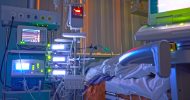
The best way I can describe the frontlines is trying to scream as loud as you can while underwater. We are all underwater, trapped in our fishbowl-like glass rooms behind closed doors, praying that someone will hear us. Imagine being the only thing standing between life and death for another human being, and everything you need to keep them alive is through a glass door that you can not open. While screaming underwater. We are drowning.”
Lauren Powers is a critical care nurse.
She shares her story and discusses her KevinMD article, “I am an ICU nurse. We are drowning.”
Did you enjoy today’s episode?
Rate and review the show so more audiences can find The Podcast by KevinMD.
Subscribe on your favorite podcast app to get notified when a new episode comes out.
Reflect and earn 1.0 AMA PRA Category 1 CME for this episode.
Also available in Category 1 CME bundles.
Powered by CMEfy – a seamless way for busy clinician learners to discover Internet Point-of-Care Learning opportunities that reward AMA PRA Category 1 Credit(s)™. Learn more at about.cmefy.com/cme-info
Do you know someone who might enjoy this episode? Share this episode with anyone who wants to hear health care stories filled with information, insight, and inspiration.

Hosted by Kevin Pho, MD, The Podcast by KevinMD shares the stories of the many who intersect with our health care system but are rarely heard from.


Transcript
Kevin Pho: Hi, welcome to the show, where we share the stories of the many who intersect with our health care system but are rarely heard from. My name is Kevin Pho, founder and editor of KevinMD. Today on the show we have Lauren Powers. She is a critical care nurse, and she wrote the KevinMD article “I am an ICU nurse. We are drowning.” Lauren, welcome to the show.
Lauren Powers: Thank you for having me, Kevin.
Kevin Pho: So we’ll get into your article in a little bit, but first off, can you share your story and journey to where you are today?
Lauren Powers: Sure. So I was born and raised in New England, and I took a pretty traditional route through nursing. I got my bachelor’s degree from Worcester State University. I practiced for a little bit in the new grad program out there at a big level one trauma. My first unit was a cardiothoracic med-surg floor with a very high acuity, which kind of triggered my love for cardiac nursing.
From there I went to a local community hospital, started on their step-down unit, and progressed to the ICU, where I kind of found my niche. I’ve been there for about three or four years now. I also did a brief stint at a big level one teaching hospital in Boston, in the cardiac ICU there.
Real physician voices, twice a week
Free, and one click to unsubscribe.
Kevin Pho: So tell me, what kind of characteristics and traits should a nurse have if he or she is interested in working in a critical care unit?
Lauren Powers: Sure. So that is a question I think people will universally have an answer to: extreme attention to detail, empathy, being able to bounce back after very difficult scenarios, and critical thinking. There’s a lot of autonomy that goes into being an ICU nurse, and you’re tasked with a lot of management. Every medication, every device could potentially save or kill somebody, and that attention to detail and that ability to use your clinical judgment is super important.
Kevin Pho: So take us into the shoes of a typical day. When you talk about the complexity of your critical care duties, some of us may not be familiar with that just by you saying it. So give us an example of some of the complex situations that you would typically see in the ICU.
Lauren Powers: So on a typical day in the ICU, often I’m tasked with being in charge. We have patients frequently coming and going. There’s no pushback if they are critically ill. If they have perhaps cardiac arrested on the floor, we’re the team that responds to that, typically the ones that are running the code, stabilizing the patient, and bringing them down.
I recall specifically on night shift, we had one night where we had STEMI activation after STEMI activation, and we wound up with three mechanical circulatory support devices on our unit, in a small community hospital, at two in the morning. With that, we are the ones who are familiar with the device. We’re tasked with how to troubleshoot, what looks right, and what looks wrong. Our physicians are primarily intensivists, pulmonologists by nature, and they are phenomenal, but they are also not cardiologists. So a lot of that, especially at a community hospital, falls on you as the nurse. There is no perfusionist; you are the perfusionist overnight.
I remember one situation: I had a balloon pump, after my first one, and he was oozing from a groin site incessantly. He had just gotten to the unit at shift change. I got a helium loss alarm on the balloon, which is a level one alarm, meaning the device will completely power down. It’s a balloon that sits in the aorta, so without that pumping every so often, it completely can just shower clots. So this is an emergency. I remember taking alcohol swabs and wiping the helium driveline of the balloon pump to tell if the blood was on the inside or the outside of the device.
While we were doing that, there were probably about five other nurses. Everybody knows their role. For all the things where you think, “Oh, we should start doing this,” there’s somebody already on the other side of the bed doing exactly what you’re thinking. Everybody jumps into gear. We ended up stabilizing the patient by troubleshooting. We FaceTimed the device rep at two in the morning at the bedside, and we walked it through. The patient ended up being OK, but there isn’t much for our intensivists to do. That all falls on the responsibility of the nurse.
On top of titrating multiple medications, continuous medications, to achieve hemodynamic instability, there’s notifying family, consoling them, and many conflicting situations with family members, and futility. Just because we can, does it mean that we should? There are a lot of ethical dilemmas that the nurse kind of coordinates as well.
Kevin Pho: And you talk more about your experiences as a critical care nurse in the KevinMD article “I am an ICU nurse. We are drowning.” Now, for those who didn’t get a chance to read your article, can you just walk my audience through it and share the story of why you decided to write it?
Lauren Powers: Sure. So firstly, writing has always been an outlet for me. You need to have an outlet in this job. You can’t bottle things up, and you can’t internalize everything. You need to have a way to express it and get it off your mind onto paper, and that was my way of doing that.
This article, I actually can still remember it like it was yesterday, which is odd because it’s been about two years since I wrote it. It was just word vomit onto a piece of paper after an incredibly hard shift that I couldn’t process, and I’m surprised by how close in time it feels to the actual event, even reading it back now, because those memories just kind of stick with you.
It was the beginning of the COVID-19 pandemic, probably about two months in. We’re a small community hospital that was hit particularly hard by COVID, with fewer resources. We surged to five ICUs when we really didn’t have the staff for two. We were operating in an all-negative-pressure unit, with all patients on mechanical ventilation with COVID, in full PPE gear for hours, and it was a really taxing situation for everybody in health care. But in particular, our unit was designated, between the two ICUs, to be the COVID-specific ICU.
At first it was just a lot of PUIs, or patients under investigation. I remember coming onto the unit, and we were changing our scrubs when we were caring for COVID patients, which is laughable now. You couldn’t go into a negative person’s room if you were caring for a COVID patient, and you had somebody designated to watch you put on and take off PPE, which is such a second-nature thing now in retrospect. But it went from that and having all these resources to, OK, now we’re getting extremely sick, classic COVID presentation patients who aren’t just under investigation, and there are so many of them that that’s not your only patient. In fact, we at one time had five ICU patients.
This night in particular was when everything came full circle, and we all looked around realizing what had happened. Before you knew it, all of our unit’s room doors were closed, and everybody was face down on their stomachs to help them breathe. It was just such a sudden shift, and that particular night was a big moment for a lot of us working on that unit. I have nurses who still tell me, “I’ll never forget that night.”
It was when it became so apparent to us that we didn’t have the resources or the staff or the knowledge, really, to care for patients with this virus. It was one of the few times that I truly felt that we could have done something differently if we had had those things. I had never ethically been faced with it that head-on and that suddenly, and that realization really hit everybody.
Kevin Pho: So as you reflect on that night, with staff for only two ICUs when you really had five ICUs running, how did you make it through that night? What are some of the tools that you used and relied on to get through that particular night? How did you make it?
Lauren Powers: Truth be told, I would have never been able to cope with that night, or continue to work in this job, if it wasn’t for my coworkers. They are the only people who truly will ever understand what it feels like to be in that scenario. Other people can have empathy, but they’ll never truly know what it’s like. The support and love that I’ve gained from my coworkers, you can’t replace it, and they made it so I didn’t feel alone.
On top of that, after the fact, there was sharing the article and seeing everybody’s reaction, especially from my own hospital, and then reaching thousands and thousands of shares, which I had never anticipated, and seeing everybody else’s reaction. One of my coworkers actually submitted an article that was accepted by you, Kevin. I was telling her how great of a job she did and how well written it was, and she told me, “I would never even have built up the guts to write it and submit it if you hadn’t sent yours in.” So the support and the bond that I formed with people I don’t even know, gained from sharing it, was a really therapeutic experience for me.
Kevin Pho: And your article did get shared more than thousands of times. I’m looking at it right now: 59,000 times. It clearly struck a chord and resonated with the entire health care community. So give us an example of some of that feedback that you received from people you didn’t even know in response to your article.
Lauren Powers: A lot of it was, “You’ve taken the words right from my mouth.” And I think in that, there was a togetherness that I felt, that even though this was such a detailed description of such a specific night, it resonated with so many people: “Thank you for saying the words that I can’t.” People I didn’t even know, in departments in my own hospital, reached out to me specifically, and it felt good to have that recognition of the care and the standard of care that I provide.
I received a lot of loving messages about the care I provided for that patient, and in general, about how much I really pour into my patients. It felt really good, because it can be very taxing to emotionally invest that deeply into this job, but I’ve always found that that’s where I find the most sacred connections, by giving everything that I have. It felt really good to know that I was a bit more at peace with the situation, knowing it’s clear that I did give everything that I had, and sometimes it just isn’t enough. But to know that, in solidarity, there are so many other people feeling the same way was a super therapeutic experience.
Kevin Pho: So clearly this story and that night have changed you forever. In what ways has it changed you as a nurse?
Lauren Powers: I’d love to sit and say that it’s made me better. I don’t know that that’s entirely true. I’ve gained a lot of insight into my own emotions and writing, but it’s also changed health care for me. That was the marker, the night that everything changed from pre-COVID to just life as we know it now.
At this point, I think I’m just, like so many other health care providers, emotionally exhausted. We went 19 months before not having a single COVID patient in our ICU. So from that night, while everybody else is getting back to life, that’s an important perspective to share: We spent those 17 months, you probably had a birthday or two, and we were still caring for COVID patients day in and day out.
Emotionally, I remember just feeling so frustrated at the system. I hate to use “burnout,” and it’s real; it’s a real issue with any health care provider. That night just shifted, like, “Wow, I can’t continue to do this.” I needed to shift into self-perseverance, and I’m finally tuning where to give and where to hold back. I never wanted to do that in this job, but under the circumstances, I feel like that night made me realize that I need to, in order to continue doing a job that I love.
Kevin Pho: We’re talking to Lauren Powers. She’s a critical care nurse, and she wrote the KevinMD article “I am an ICU nurse. We are drowning.” Lauren, we’re speaking now at the beginning of February 2022. How are things now in the intensive care unit?
Lauren Powers: There are peaks and valleys in the ICU, of, all of a sudden, we’re full with extremely sick patients. Patients come in waves of heart attacks or head bleeds; we get pretty much everything at this hospital. And for so long it was solely COVID. We had numerous surges after the most recent variant, and we opened our surge space again. We were holding patients in the PACU again. We were holding patients, very critically ill patients, in the cath lab with an Impella, intubated, because there was no ICU nurse to take care of them.
Now we are still sprinkled with COVID, but at this point it’s a lot of just ethical issues of, they’ve been riding this course, and now we know so much more about COVID and how it progresses, and just the pathophysiology of multi-organ failure, and we’re seeing a lot of that. We’re conflicted. We can only prone somebody for so long. We can only do so much. There’s not 150 oxygen; there’s only 100. So we’re navigating a lot of that, where we’re watching futility, and that’s hard too.
Don’t get me wrong, with the busyness of the surge, you get a little bit of an adrenaline rush to get through it. But this is just kind of slowly watching an inevitable situation play out before you, and you can’t really do anything. So I think there’s something to be said about how emotionally taxing that is as well.
Kevin Pho: We’re reading stories about the proverbial Great Resignation, and how burnout and difficult work circumstances are causing a lot of health care professionals to leave clinical medicine. Now, how many nurses from that particular night are still working with you today?
Lauren Powers: We had a very good crew on that night. That being said, three out of maybe six or seven. And you know what, Kevin? It is arguably one of the most heartbreaking things that I’ve seen, when you love this job and you love your work family so much, and you see their love for their job, and you see that just slowly leave them, to a point that they’re rethinking their whole life. I couldn’t even tell you.
Our staff right now is probably about 80 travel nurses, which, thank God for them, we would not function without them. But the number of people that I’ve seen come and go, and I’ve seen that light and spark that they had for this profession leave them. It’s heartbreaking. It’s heartbreaking to see. We’ve spent holidays together, Christmas, New Year’s, Thanksgiving, COVID, and they couldn’t do it anymore. And you can’t blame them for it either. Mental health needs to come first, but it’s sad that we’re at this point.
Kevin Pho: And my final question: What are some of your take-home messages that you want to leave with the KevinMD audience?
Lauren Powers: I think my take-home message would be: Find an outlet. Support each other. You don’t know how much your work family means to you until they start to leave, and no one will ever be able to replace that bond. Mental health requires attention, especially in times like this. There are people who are going through what you went through, evidenced by the number of people and the reaction I got on this article. Even when you think you’re alone, you’re really not. So reach out to somebody you trust.
Kevin Pho: Lauren, thank you so much for sharing your story, time, and insight, and thanks again for being on the show.
Lauren Powers: Thank you, Kevin.
Listen and followApple PodcastsSpotifyYouTubeMore apps · Browse all episodes