













Listen and followApple PodcastsSpotifyYouTubeMore apps · Browse all episodes
“It is a time to ponder on those essential questions: What is your purpose in life, and how can you follow it? What talents can you share with the world, and what are you grateful for? When we deviate from this true calling, when we deviate from love, from creativity, our spiritual crisis occurs. Our body breaks down with negative thought patterns, pain and illness.
Even though burnout is the end-stage symptom of chronic stress, it is, in essence, the deviation of our spiritual self. How do we reverse this? We begin to ask ourselves the essential spiritual questions. When we practice them during the time of introspection/quiet/meditation/prayer on asserting our truths of being loving, joyful and creative beings, the process begins and continues.
Stress and creativity cannot co-exist. We cannot wait until our health crisis or until we hit rock bottom, deviating into greed, anger, shame or lust. That is not our nature. We must prioritize time to get back to our true selves and, as Gandhi said, “be the change” we want to see in this world: be love, be joy, be creation.”
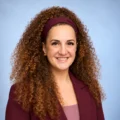
Diana Londoño is a urologist and can be reached on Twitter @DianaLondonoMD.
She shares her story and discusses her KevinMD article, “Burnout is a spiritual crisis.”
Did you enjoy today’s episode?
Rate and review the show so more audiences can find The Podcast by KevinMD.
Subscribe on your favorite podcast app to get notified when a new episode comes out.
Click here to earn 1.0 AMA PRA Category 1 CME for this episode.
Also available in Category 1 CME bundles.
Powered by CMEfy – a seamless way for busy clinician learners to discover Internet Point-of-Care Learning opportunities that reward AMA PRA Category 1 Credit(s)™. Learn more at about.cmefy.com/cme-info
Do you know someone who might enjoy this episode? Share this episode with anyone who wants to hear health care stories filled with information, insight, and inspiration.

Hosted by Kevin Pho, MD, The Podcast by KevinMD shares the stories of the many who intersect with our health care system but are rarely heard from.


Transcript
Kevin Pho: Hi, and welcome to the show, where we share the stories of the many who intersect with our health care system but are rarely heard from. My name is Kevin Pho, founder and editor of KevinMD. Rate and review the show at KevinMD.com/rate. Subscribe at KevinMD.com/follow. Today we welcome back on the show Diana Londoño. She’s a urologist. Her latest KevinMD article is “Burnout is a spiritual crisis.” Diana, welcome back to the show.
Diana Londoño: Thank you so much for having me. It’s always such a fun pleasure to be here. Really, thank you.
Kevin Pho: So you’ve been on the show before, so I highly encourage everyone to go and look up prior episodes and find out more about Diana. But I want to jump straight into this article. It’s titled “Burnout is a spiritual crisis.” Diana, for those of you who get a chance to read this latest article, just walk my audience through it and share the story of why you decided to write it.
Diana Londoño: Yes, thank you. So, you know, I’m very thankful, as I said, to have been here before on the podcast, and to have had the ability to share articles on your platform. One of the first articles I wrote was basically about awakening to our consciousness. “Are we anesthetized to our consciousness?” was the title, really. And it’s just really been a journey. The first article I wrote was really from when I was in my second round of burnout, when I kind of, let’s say, awakened and just started to see things a different way. I really awakened to consciousness, to awareness, which is what coaching is about and what Buddhist principles are about. That was when I first really started to express myself through writing, and that was the first article.
And then there’s been a series of writing, just for my own healing, which I used it for, and just to express myself. Whatever is going on at the time, I write about it and I share it, and hopefully it can help somebody, give somebody else the courage to make a change, to think about things, to pause, to reflect on things. That’s really the goal of why I write, and, like I said, to heal myself.
But this last one was really a little bit of a circle, coming through and getting to a point where, yes, we know the data, let’s say, from Medscape about burnout: It’s about too many tasks, we’re not respected. I know all that data, and you can look it up too, the Medscape articles about burnout and the causes. And those are good, and I think those are interesting and important, but I think they’re a little bit surface-level causes. If you go a little bit deeper into the causes, you start seeing that there’s more to it, and that there is definitely a split. When there’s a split between the needs of, let’s say, your spirit, your soul, whatever your spirituality is, and your body, then we start getting to burnout.
To me, that really was what it was about. When I was in my second round of burnout, I was really in a dark place, and I was lying in bed just thinking, “What am I going to do? I want to get out of medicine, because I don’t want to be here. I need a ticket out of it.” That’s why I became a coach, because I wanted to do coaching full time, or something else, anything else. I kind of sat in bed and thought, “Well, what am I good at? What can I do to help people? What’s my purpose?” That’s sort of what people ask when they have a midlife crisis, but those are also actually spiritual questions. I never realized this. These are spiritual questions: What are you good at? How can I use my skills to help others? What am I grateful for? Who am I?
These are the questions that are spiritual questions, which, again, I never knew, because my spiritual life was really a desert. I was never tapping into my spirituality. And it’s not about religion. I mean, you could be Muslim, Jewish, Christian, whatever you want to be. It’s about spirituality, and really asking these questions and pondering on them. That’s really what started me on this whole journey. And then when you really focus, when you think about it, meditate, whatever you want to call it, every day on this, it really changes your life incredibly.
And again, I didn’t change my job. I have the same job, and I love my job, and I love every day, not because I changed anything except my thoughts. I mean, that’s the only thing I changed: my mindset, my thoughts, the questions I’m asking myself, what I’m focusing on. So I’m not focusing on all the negativity; I’m focusing on all the good. What am I grateful for every day? And it just changes everything.
And then it’s sort of like, well, we all have that within us. We don’t have to always be angry, hopeless, frustrated. That actually is not our true nature as humans. We’re not that. We’re not that at all. But we think we are. We’re like, “Whoa, how can we not be stressed? Look at the gas prices. Look at what’s happening in the world. Look at these shootings. Look at everything. How can you not be stressed? How can you not think the world is a terrible place?”
Real physician voices, twice a week
Free, and one click to unsubscribe.
Kevin Pho: So tell me about that connection between spirituality and burnout, because that is an angle that I actually don’t often hear. We’ve talked about burnout so many times on this podcast, so it’s almost like reframing burnout, almost like that, maybe taking it away from some of the negativity about it and asking more of these introspective questions. So tell me a little bit about that reframing, and how you can make that connection with some of these spirituality questions that you ask.
Diana Londoño: Yeah, this is a great question. Actually, I have a colleague who is tackling burnout in this sense. The way that he’s trying to tackle it is by using the 12-step program, like for addiction or anything, and those 12-step programs are about spirituality, if you’ve ever been in any addiction program, which he was, because he went through burnout and addiction and all this. The way he got out of it was through his 12-step program for addiction, but then he started to tackle this for burnout for physicians, and I think it’s just genius. His name is Dominic Corrigan, and he is amazing, because he’s tapping into this.
Again, we could look at all the negatives and this and that, like the Medscape stuff and the data, which is superficial, and we can also look at all the negativity about it. But when you, like I say, go a little deeper, there are deeper questions here. And when you tap into that, when I ask myself that every morning, “What is my purpose? What am I here to do? Who am I?” And then “Who am I?” starts getting into ego.
So, ego. Because, like, you ask me, “Who are you?” Or you introduce me: “I’m a urologist.” That’s actually a role. I’m a urologist, I’m a mom, I’m this and that. I have a lot of roles. But what happens a lot of times with physicians is we hold on to this role, “I’m a neurologist,” “I’m a cardiologist,” so much that if something were to happen and you’re not a cardiologist anymore, you really go into a crisis. And actually, this is a spiritual crisis, because you went into crisis because you’re no longer that. Yeah.
And it’s the same thing if you’re a mother. If I’m a mom, and my kids, I mean, you never want that, of course, but if they die, then you’re like, “What am I?” Or you’re now an empty nester. And so you have a crisis because you held on to these roles that are just roles. They’re temporary. When you realize that those are just temporary, and you’re not so attached, and you go to the actual true role that you are, you’re a pure, loving, kind soul. That’s who you are as a true soul being. You’re not a doer, because these others are doers. I’m just a being of love, of light, of enthusiasm, which is all spiritual. Then it doesn’t matter, all these roles that come and go, come and go, come and go, and you don’t have these crises every time you become an empty nester, you’re no longer a mom, you’re no longer this, you’re no longer a college student. When you transition out of these roles, people suffer so much because they’re so attached to them.
And when you realize this, again, you realize it by tapping into spirituality, and, again, many religions also kind of do it. You can go different ways to the same path. It just really becomes much different. And again, in tapping into this, I didn’t change anything external, any role. I have the same roles, but I changed how I view things. I changed what I put my attention on, and that’s really the difference. And it really has been so much joy and so much connection with people who are like-minded, and I’m just so grateful, because it’s just been such an amazing journey.
And I am really grateful for the whole year of burnout, for, now, sometimes, all the physical manifestations, truly physical. The whole body breakdown is in the article, all the stuff that happened. I’m glad it was a whole year. I’m glad it was really dark and negative, because then I felt it, and I can relate to you, because it was a year of really not fun. And it gives you so much empathy: I hear you, I see you, I’ve been there. I’m not just talking out of it, not knowing what it is. I know what it is, and there’s a different way.
And I’m also grateful because when there’s so much dark, you see the light. It’s sort of like everything shall pass, right? Like, this too shall pass, even the things that are going on right now, or even if you’re in a bad situation. It will pass. The bad things are not forever, and the good things are not forever. But we also hold on. Like, we just want happiness, but happiness is not forever. That’s unrealistic. And sadness and grief and all that are not forever. They just pass. They’re just seasons of life and of time. So again, these are things that I explored and really got into, just really tapping into that.
And you definitely sometimes need a guide as well, a mentor, a coach. My coach, DJ Philip, is my coach and my spiritual coach, and I am so grateful for her, because it really has opened up a whole other realm of life. She walked me a little bit through that process.
Kevin Pho: So a lot of clinicians are listening to you, and let’s say they’re burnt out, or whatever, seeing 30 to 40 patients a day, and they’re up until midnight on an EMR, just filling messages and cleaning out the inbox, and they’re about to say, “You know, I’m done with this. What else is there in life?” So let’s say this clinician comes to you, and you want to make that spiritual connection. Guide us a little bit through the process, about what you would do.
Diana Londoño: Yeah, I mean, so I’m not a spiritual coach, but I’m a coach. The way that I’ve used my stuff, and I’ll get back to the way I use it, is more to do it for other physicians, not on an individual basis. I founded Physician Coach Support, which is a platform that is free and confidential for physicians to come and just get help with anything that may be challenging them. So it’s not a long-term transformation, like the coaching that you do in 12 weeks, six months, whatever you choose. It’s really just to give you a little bit of help, somebody to help you and guide you, at that time when you’re, like, maybe in those 40 charts and you’re like, “I’m done. Who can I talk to? Because my husband is tired of hearing me,” or they don’t understand, or nobody understands me.
But at Physician Coach Support, there are physicians who are coaches, most of whom have actually been through burnout as well, and they understand. They get you. They’re there to support you. And again, it doesn’t mean you have to do coaching. It just means we’re there for you. So that’s kind of how, as you said, it’s not individual one-on-one coaching. I’m doing this for other physicians because you matter. I want to emphasize that you matter. You’re valuable. This is not how you should be living.
And the first thing I would say to do is that you’ve got to pause. You have to pause. You just have to pause in the day. You have to pause at the end of the night, or whenever, in the morning, and have time for you, time to ask these questions: Is this what I want? Is this what my life is going to be? Is this what I want to create, and am I creating it or not? If you don’t pause, nothing’s going to change, because you’re just going to be in the hamster wheel. So you have to pause. You have to pause and take time for whatever you want to call it, prayer, meditation, introspection, journaling, whatever you like to call it that doesn’t make you uncomfortable. Call it that, and use that time.
You have to pause even throughout the day. I literally do that between patients. I breathe. I just kind of recenter myself, reset, because you pick up a lot of energy and a lot of stuff. The thing is, when patients come, for example, and they’re angry, they’re frustrated, that is their anger. It’s not mine. I don’t get to keep it. I don’t want to internalize it. I don’t want to carry it. I’m going to be empathetic and listen and acknowledge their frustration, pain, blah, blah, blah, but I’m not going to carry it. I’m going to hold it and release it and give it to the universe, because it’s not mine.
And the same with happiness. I mean, I will celebrate with them, but it’s not mine. It’s theirs. So we have to learn to realize that as well, that all this stuff from other people is not ours. What is ours is our own love, our own happiness, our own joy, and then we can share that with everybody else too. But that is what’s ours. Let’s not take in other people’s emotions and frustrations and energy and negativity and positivity. That actually is for them.
Kevin Pho: Now, how long did it take you to understand that there was a spiritual component to burnout?
Diana Londoño: Yeah, great question. I mean, it’s been, I was like 42 years old. So I mean, it really was this past, probably, year, year and a half of really realizing it. But it really was not too long ago. I mean, it was really like, “Aha!” It was that day when I wrote the article. It was that day that I was like, “This is what it is.” The light bulb went off. So it wasn’t like, “Oh my God, I’ve known this the whole time.”
And it’s been work, and that’s what people sometimes don’t realize: It’s work. But I mean, anything in life is work. If you’re going to be in a piano recital at Carnegie Hall, it takes work to practice every day. And this is work. Every morning, every night, I work on it. I spend time on it every single day. And then you fail, and then you’re just like, “Oh, that was a good lesson. Let’s use that, because that was a lesson.” And it’s every day, every day, every day.
People just want that pill that is magical, and in six weeks you’re fantastic, or your money back. Well, it’s not like an eight-week transformation and you’re back to flying in la-la land. No, it’s every day. It’s for the rest of your life, if you want to do that. And if you don’t want to, that’s OK. Everybody has their own journey. We can’t force-feed people wellness. We can’t force people to awaken and see a different way of living. Well, you can’t, but I can offer it. I can show it. I can be it, so they can hopefully get excited that that can be a way. But I can’t force-feed wellness.
If you don’t want to take time for yourself, that’s OK. You’re going to suffer with heart attacks and stroke and bad relationships and everything terrible, because you chose that. It’s a choice. And people also get very upset about that. They’re like, “Oh, it’s not a choice. It’s happening to me.” And no, you are the creator of your life. Whatever is happening in your life, good or bad, you created that. And again, that’s a big pill, a big pill for people to swallow, and that’s OK. When you’re ready to dive into it, you will. We can’t force anybody. You could have forced me five years ago; I wouldn’t have listened. You have to come to a point when it makes sense to you.
Kevin Pho: We’re talking to Diana Londoño. She’s a urologist. Her latest KevinMD article is titled “Burnout is a spiritual crisis.” Diana, what are some of your take-home messages that you want to leave with the KevinMD audience?
Diana Londoño: Thank you. Yeah, I think take a pause. It is imperative. Otherwise, if you don’t pause to reflect, nothing will change. The other one is that it’s a journey. It takes work. It’s work every day. And the last one is that you are valuable. You are worthy. Really listen to those words: You are worthy. You’re valuable. Don’t listen to these false beliefs that we have been taught in medical training and all that stuff. Those are false beliefs. We have a lot of them, but the main one is, you’re worthy, you’re valuable. That’s the last really important thing I want you to believe and know, and quiet and realize: It is you.
Kevin Pho: And how can people reach you?
Diana Londoño: Yes, you can find me. I’m on LinkedIn. I’m on Twitter, @DianaLondonoMD. You can go to my website, DianaLondonoMD.com. All my articles are there. You can also connect there. But yeah, absolutely, I’m on almost all platforms, probably except Instagram, where I’m not that active. But just reach out. I’d love to connect if this resonates. Again, I love to talk about it. I can talk about it for hours, not just 30 minutes. But I really would love to connect anytime.
Kevin Pho: Diana, thank you so much for coming back on the show and sharing your time and insight.
Diana Londoño: Thank you.
Listen and followApple PodcastsSpotifyYouTubeMore apps · Browse all episodes