















Listen and followApple PodcastsSpotifyYouTubeMore apps · Browse all episodes
“It’s apparent to most that the dark clouds and stormy waters in the business of health care continue. There is much that needs attention from both health care workers and consumers.
We have learned that when we work together, strength, creativity, and energy multiply exponentially.
We need to move forward and create a sustainable and caring health care system. We can accomplish this by joining together and acknowledging our struggles, sharing and learning from them.
The next step is key to change — we must take those narratives of drowning and shift their energy in a positive direction. We need to help each other start swimming toward a vision for the future of healing.
Just think about it; what are the possibilities? No dream is too big or too small. Put it out there. You may be surprised at what sticks. And who knows better than you, the working nurse?”
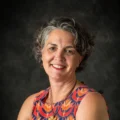
Beth Quaas is a nurse practitioner.
She shares her story and discusses the KevinMD article, “A tale of 2 nurses.”
Did you enjoy today’s episode?
Rate and review the show so more audiences can find The Podcast by KevinMD.
Subscribe on your favorite podcast app to get notified when a new episode comes out.
Click here to earn 1.0 AMA PRA Category 1 CME for this episode.
Also available in Category 1 CME bundles.
Powered by CMEfy – a seamless way for busy clinician learners to discover Internet Point-of-Care Learning opportunities that reward AMA PRA Category 1 Credit(s)™. Learn more at about.cmefy.com/cme-info
Do you know someone who might enjoy this episode? Share this episode with anyone who wants to hear health care stories filled with information, insight, and inspiration.

Hosted by Kevin Pho, MD, The Podcast by KevinMD shares the stories of the many who intersect with our health care system but are rarely heard from.


Transcript
Kevin Pho: Hi, and welcome to the show, where we share the stories of the many who intersect with our health care system but are rarely heard from. My name is Kevin Pho, founder and editor of KevinMD. Rate and review the show at KevinMD.com/rate. Subscribe at KevinMD.com/follow. Today on the show, we have Beth Quaas. She is a nurse anesthetist, and she co-wrote the KevinMD article “A tale of 2 nurses.” Beth, welcome to the show.
Beth Quaas: Thanks so much for having me on, Kevin. I’m happy to be here.
Kevin Pho: We’ll get into the article in a little bit, but first off, can you share your story and journey to where you are today?
Beth Quaas: Yeah, I’ve been in nursing for almost 30 years, and the last 22 years have been in anesthesia. I’ve worked as a CRNA since 2000. Most of my clinical time has been between a large hospital, moving into same-day surgery. And then about a year and a half ago, I moved into education, so now I’m teaching new student nurse anesthetists.
Real physician voices, twice a week
Free, and one click to unsubscribe.
Kevin Pho: So tell me about some of the rewards and challenges of being a nurse anesthetist today.
Beth Quaas: I feel like I am in control of that patient’s care during one of the most vulnerable times in their lives, when they’re having surgery, and that comes along with trust, developing rapport with patients, and being that patient’s sole advocate for that time while they’re under anesthesia.
Kevin Pho: And tell me about what you feel are some of the challenges of the profession going forward.
Beth Quaas: I think the challenges are that we’re getting busier, we’re getting sicker patients, and we’re under a lot of production pressure. So I think that really creates a time when we need to remember we’re there for one patient at a time. We can’t be worrying about speeding up the process to make more money. We really have to just focus on one patient at a time.
Kevin Pho: Now, for those who are interested in pursuing their education and potentially becoming nurse anesthetists, what kind of characteristics or traits should these people have in order to get through?
Beth Quaas: To get into school itself is very competitive. You have to have really good natural science grades and a good understanding of the sciences. Of course, ICU experience is going to be paramount: getting into a very busy ICU, taking care of the sickest of the sick patients. And then when you’re in school, it’s really time management and focusing on developing those skills, those analytical skills that you need. Graduate school is completely different than undergraduate, and so learning how to take responsibility for your own study is what’s going to get you through.
It’s a great profession. We’re doing so much more now than we were when I started, so it’s a great time to go into anesthesia.
Kevin Pho: What’s your relationship, as a nurse anesthetist, with the physician anesthesiologist?
Beth Quaas: In the facility that I work in, I work in an anesthesia care team model, and so we work closely with our anesthesiologist colleagues. It’s a great relationship where I work. It’s great to have a second pair of hands, someone to bounce ideas off of. And then we have CRNAs who are working out in solo practice, who also have to be on the top of their game. So we do a lot of different things in anesthesia, and you can certainly move around and find what you love to do the best.
Kevin Pho: All right, let’s transition to your KevinMD article. It’s titled “A tale of 2 nurses.” You co-wrote it with June Garen, who is also a prior KevinMD guest. But for those who didn’t get a chance to read your article, can you just walk my audience through it and share the story of why you and June decided to write it?
Beth Quaas: I had been in management for a while. I decided to step back into my clinical practice, and then the pandemic hit, and I was feeling burnt out. I think seeing the administrative side of health care was disappointing to me in some ways. I think in that role, we’ve taken away from patient focus. And so, long story short, I think I was feeling burnt out in the clinical world, and so I decided to start a podcast, because there were so many other nurses who were feeling the same way and the frustration, and we just wanted to take good care of patients. So I wanted to have a platform for nurses to tell their stories as well, for recognition for what they do, and to inspire other nurses.
And so that’s how I met June Garen. She was a guest on my podcast. She had been assaulted by a patient, and so she’s a big advocate for safety in work environments and safety for health care providers. So that’s how I met June, and we kind of came at it from two totally different worlds. But we decided that our main goal was to work to improve work environments, safe environments, and just a place for nurses to feel like they still want to remain in health care.
Kevin Pho: So tell me some of the stories that you’ve shared on your podcast, or stories that you’ve heard, that really illustrate some of the difficulties nurses have that potentially may lead to their burnout.
Beth Quaas: Well, there are so many, but they are shared by so many. Of course, COVID. Problems existed long before anyone had heard of COVID: staffing ratios, patients, nurses having to take on more patients than they felt safe with. And I’ve been in that world. Although it’s many years ago that I’ve done bedside nursing, even back then, we had better outcomes for our patients when we could spend more time with them. And as health care providers healing people, we know that if we can spend more time with them, the outcomes are better. So I think staffing ratios are one thing.
The hard physical work is another. I don’t know if people realize how physically demanding nursing is on patients, and the long hours, no bathroom breaks, no time to eat. And so we don’t have the self-care. And this isn’t specific to nurses. This is all health care providers: physicians, nurses, respiratory therapists, nursing aides. And so I believe that we all have the same challenges. We just need to come together and find out how we move forward to improve that.
Kevin Pho: You talk specifically about the physical challenges that people may not be aware of. Give us an example of some of those challenges.
Beth Quaas: Well, we know that obesity in our country is becoming more prevalent. Those patients, when they’re in the hospital, need to be moved. They need to be turned. That’s physically demanding. Some of the larger hospitals have teams dedicated to positioning patients. They’re not always available, and that is not available in, I would say, most of the facilities that we have. Being on your feet for 12-hour shifts or 16-hour shifts on those hard concrete floors, and of course, we may not be in the best physical shape as well. And so all of those things come into play when we are really working and damaging our bodies in those areas.
Kevin Pho: Now, there is the proverbial Great Resignation, where a lot of health care professionals are simply getting burnt out and leaving the profession. Tell us about the steps going forward. Do you think that’s permanently harmed the nursing profession? Because as more people leave, that’s going to increase the stress on the people who are already staying. So tell us about some of those repercussions in the next, say, year or so.
Beth Quaas: Yeah, I think I can see both sides. I think those who have just had enough and are burnt out need to walk away for their self-care. For the people left doing it, the demand on them is going to be greater. But I think that we came to this point not just because of COVID. As I mentioned, this has been building for a long time. How do we get through that? That’s what I’m interested in. What do we really need to change to keep people from leaving health care? And I think now is the time to make that change.
So is the Great Resignation here? I believe it is. Is it all bad? No, especially for those people who really need to leave for their own health.
Kevin Pho: So tell us about some of your solutions. How can we mitigate and solve some of these problems that you bring up?
Beth Quaas: I think right now it’s starting. I think people are starting to talk. We need communication. We need to find out what the main problems are and how they affect patient outcomes. I believe that we can’t just complain. We can’t just talk about these things and not find solutions. So the solutions are going to be harder to come by, but now that we’re all coming together and defining the problems, I think that’s going to help us move forward with solutions.
And I think it’s starting out with more people to take care of patients, whether it be nurses, nurses’ aides, RNs, LPNs, more physicians, or more respite. We need all of those services to come together and decide how we move forward to create the best working environment and the best outcomes for our patients.
Kevin Pho: What kind of advice do you have for nurses who are at the bedside, who may be listening to you on this podcast, and who are perhaps on the cusp of burning out and debating whether to stay at a job or leave altogether? What kind of advice do you have for these nurses?
Beth Quaas: Do not stay in a toxic environment. It is very difficult to change culture. As we know, it takes a long time, and I think that has to start with administration not allowing certain toxic behaviors. But I would say burnout comes from staying in those toxic environments. So if you need to leave, please find somewhere else. Try that before just walking away from nursing. It takes a lot to be a nurse, and we’re losing some really good, experienced people because of that. So my advice would be: Please seek out another place to be before just leaving health care altogether.
Kevin Pho: And to those health care administrators, and I have many of those who listen to this podcast, what kind of message do you have for them to improve the working conditions for nurses?
Beth Quaas: Listen to your nurses. Go to their areas and follow them. Follow them not just for an hour; follow them for a shift, or a day, or a weekend. Come in and see what the challenges are. Sometimes just simple changes can make a world of difference in that nurse’s work environment, in that shift for them.
Kevin Pho: So what kind of simple changes would you recommend, or what kind of examples of simple changes could these health care administrators make?
Beth Quaas: I would say, first, make sure they have the supplies they need readily at hand. Don’t have them run or wait for things that they need right now. Number two, supplement the caregivers. Get more nursing aides on the floors who can do some of that work, so that the nurses can focus on the real nursing at hand.
Kevin Pho: We’re talking to Beth Quaas. She is a nurse anesthetist, and she co-wrote the KevinMD article “A tale of 2 nurses.” Beth, what are some of your take-home messages that you want to leave with the KevinMD audience?
Beth Quaas: I want us to come together as a community, as a health care community, and define those problems. Really, everyone has a solution in them. Talk about what isn’t working. Don’t complain. And then let’s start moving forward to solutions, to help ourselves and to help our patients, so that we can really improve where all of health care is going.
Kevin Pho: And if a nurse wanted to share his or her story and perhaps bring to light some of these issues, what are some ways that nurses can make their voices heard?
Beth Quaas: Well, I have a podcast called “Don’t Eat Your Young,” and I would love to talk to anyone who wants to share their story. You can find out how to do that on my website, donteatyouryoung.com. I think it’s finding like-minded people in the facilities that you work in. Form a committee and start talking about what problems you face, maybe just on your unit and then within your facility itself. Start small, to make small changes that will make a big impact later.
Kevin Pho: Beth, thank you so much for sharing your time and insight, and thanks again for being on the show.
Beth Quaas: Thanks, Kevin. I appreciate it.
Listen and followApple PodcastsSpotifyYouTubeMore apps · Browse all episodes