















Listen and followApple PodcastsSpotifyYouTubeMore apps · Browse all episodes
“Teaching medical students entrepreneurial and business skills is invaluable as the need for leadership in medicine grows in every single sector. Many physicians already engage in managerial and entrepreneurial-like practices without labeling these skills. By formalizing these skills into medical education, physicians will be able to take their ambitions and ideas about how to best run existing health care institutions and translate them into innovations for the future of the field.”
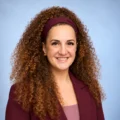
Sofia Yunez is a medical student.
She shares her story and discusses her KevinMD article, “To be effective leaders, physicians need to be trained as entrepreneurs and encouraged to innovate.”
Did you enjoy today’s episode?
Rate and review the show so more audiences can find The Podcast by KevinMD.
Subscribe on your favorite podcast app to get notified when a new episode comes out.
Click here to earn 1.0 AMA PRA Category 1 CME for this episode.
Also available in Category 1 CME bundles.
Powered by CMEfy – a seamless way for busy clinician learners to discover Internet Point-of-Care Learning opportunities that reward AMA PRA Category 1 Credit(s)™. Learn more at about.cmefy.com/cme-info
Do you know someone who might enjoy this episode? Share this episode with anyone who wants to hear health care stories filled with information, insight, and inspiration.

Hosted by Kevin Pho, MD, The Podcast by KevinMD shares the stories of the many who intersect with our health care system but are rarely heard from.


Transcript
Kevin Pho: Hi, and welcome to the show, where we share the stories of the many who intersect with our health care system but are rarely heard from. My name is Kevin Pho, founder and editor of KevinMD. Rate and review the show at KevinMD.com/rate. Subscribe at KevinMD.com/follow.
Today on the show, we have Sofia Yunez. She is a medical student, and she wrote the KevinMD article “To be effective leaders, physicians need to be trained as entrepreneurs and encouraged to innovate.” Sofia, welcome to the show.
Sofia Yunez: Hi, Kevin. Thanks for having me.
Kevin Pho: We’ll get into the article in a little bit, but first off, just briefly share your story and journey to where you are today.
Real physician voices, twice a week
Free, and one click to unsubscribe.
Sofia Yunez: Yeah, so I’m a third-year medical student here in Chicago, and I have an interest in medical entrepreneurship, so much so that I’m planning to apply to several MBA programs this year to complement my medical education. In college, I took classes at the business school and competed in an accelerator program, where I worked alongside non-health students to build a business model for a health venture. Additionally, some of my other commitments have been being part of the global medicine program at my institution and also engaging in community work, such as being part of the steering committee for our student-run free clinic.
In both local and global settings, I have seen physicians try to build interventions from scratch to better the health and health care access of the community members that they work with. For me, this eventually led to an interest in resource and operations management, and ultimately a passion for entrepreneurship, which I feel supplements my medical training.
Kevin Pho: So I understand you’re just starting your third year of medical school. During your preclinical years, tell me about how your business background supplemented your medical training.
Sofia Yunez: Well, I think in the first few years, which are predominantly textbook-based, there was a bigger emphasis on the health sciences and preparing in that aspect to be ready for the clinic. But I will say that having that background did allow me to engage in student organizations, take on leadership roles, work in community settings, and help physicians that I work alongside make decisions about some of the interventions that we work with. So even though it might not seem like there’s a direct parallel between business skills and pre-clerkship, I think it did prepare me to be more of a student leader.
Kevin Pho: How about in your undergraduate years, when you were taking all those business and entrepreneurship courses? How many of your peers in those business classes eventually went into medicine?
Sofia Yunez: I was usually the only one in any of those settings. And furthermore, even in the mentorship that I had, I really rarely saw individuals that were clinicians or even in health care spaces.
Kevin Pho: Now, did you have any role models or mentors to kind of guide you along that path? Because it sounds like there weren’t very many among your peers who chose your path.
Sofia Yunez: Well, I think likes attract likes, right? So I was eventually able to find individuals and mentors that really steered me in this direction. But I also think, interestingly enough, most of my mentors were actually individuals working in the advocacy space and individuals working with minority and vulnerable populations to increase health care access for them. And I think those examples were actually what led me to this curiosity and exploration: How can we improve health care access for vulnerable populations in a way that’s systematic and effective?
Kevin Pho: All right, let’s talk about your KevinMD article. It was written back in early June, and it’s titled “To be effective leaders, physicians need to be trained as entrepreneurs and encouraged to innovate.” Now, for those of you who get a chance to read your article, just walk my audience through it and share the story of why you decided to write it.
Sofia Yunez: Yeah, so I think my inspiration for writing this article came from multiple perspectives, but I think the biggest push came from the potential I see in my classmates and the mentors I have, and from reflecting really on how to maximize that potential. I think for me, even as someone so young in my medical career, it’s really clear that the skills that we need to be successful as clinicians go way beyond the health sciences. A physician needs skills like being able to work the electronic health record, running large teams that solve really complex social and medical care situations, and even thinking about things like insurance as it relates to providing care.
And I think the question that I was really asking myself is, why can’t we think in one more dimension that affects all of those other dimensions? Why can’t we take it a step further, which is training physicians on topics of both management and entrepreneurship? Because ultimately, I think having business-savvy doctors would be to the benefit of both the physicians themselves and the systems that they work in, and ultimately of our patients. Having smoother-running teams, better communication within those teams, and potentially more motivated physicians to fix problems or tensions in operations that they see can only really lead to more effective value-based health care and better patient outcomes.
The other point that really drove me to think about this was empowerment for physicians themselves: for them to be more fully aware of their leadership potential, to have improved critical thinking skills, and ultimately to have an ability to transform their novel ideas into innovations with the potential to scale.
Kevin Pho: So can you give an example, case study, or story of a business skill that you learned that can be directly applied to some of these physician leadership skills that you talk about?
Sofia Yunez: So I think a really good example is, I earlier mentioned that I’m part of the steering committee for our student-run free clinic. That comprises about once a month, when I head over to our free clinic. In an effort to do so, I’ve taken on roles in terms of managing attending volunteers to come, managing medical students to arrive, and then working alongside the staff at the free clinic to ensure that we have a smooth-running free clinic and that we’re able to see six patients regularly every single week.
I think the fact that I’ve had a little bit of entrepreneurship and management training put me in a much better position to be in that role and to have better-running, smooth-flowing clinics. And I think ultimately that ends up being to the benefit of the patients, because they’re getting a better, smooth-running clinical experience.
Kevin Pho: Now, from your experience, or from what you know, do medical students get any exposure to business or management skills during traditional medical school training?
Sofia Yunez: Not really. I think we definitely get some lectures about, say, the system or things that might be in place from an insurance perspective. But so far, I haven’t really had a lecture that talks about management, or what it might mean to be an older medical student that’s in charge of younger medical students, or what it might be like one day to be a resident in charge of medical students. So that’s nothing that I’ve ever really seen touched upon.
And even now that I’m on my rotations, I do have regular didactics that I share with the residents, and likewise, there’s still a much bigger clinical emphasis, even talking about things like how to prepare a patient write-up, but very little about how to really fully take control in a leadership capacity and be a more effective leader.
Kevin Pho: Now, short of getting an MBA like you’re doing, what can medical students do to get a little bit of that business training so they could become more effective managers, more effective team leaders?
Sofia Yunez: So I think the first piece, and it’s the piece that we always get, is, “You can read,” right? There’s always a ton of resources that exist out there to learn about this. But what I’m proposing and thinking about, by having written this article, is the idea that formalizing this skill set for medical trainees is only to the benefit of the trainees and the system. Because I think physicians already engage with the same skills that entrepreneurs do: critical thinking, problem-solving, the constant need to manage resources in a brand-new way. I think it’s already kind of an inherent, silent part of the curriculum that we’re secretly always growing and learning in.
What I’m talking about is the fact that I think if it were part of the actual curriculum, people could formalize it, they could label it, and they could say, “Wow, I’m also a problem-solver. Oh, I’m also somebody that has the potential to fix tensions that I see in the systems around me.” And I think that’s the biggest thing. Because reading, or saying, “Oh, you can explore on your own time,” I think that’s shortsighted. I think people can read, but it’s not going to give you the whole picture the same way as having somebody that has experience in this, even just physicians that work in management in the hospitals that they’re a part of, just infusing some of the knowledge that they’ve built and some of the wisdom that they have, so that people are better empowered from early on in their careers to have better control over what they’re doing and the systems that they’re a part of.
Kevin Pho: Now, from your business background and the business courses that you’ve taken, what’s one business tip that you can share with your fellow medical students that can make them more effective physicians and team leaders?
Sofia Yunez: I think the first is communication. Always be aware of the presence that you make on a team, whether it’s as a medical student or as somebody in a position of leadership. Building a well-communicated team is very important, but so is being aware of your flaws in that communication, right? So just be aware of it. You can’t fix everything every single day, but just take note of ways that you can improve on a regular basis. I think that’s one simple thing that we can be aware of, that all medical students could take from this.
Kevin Pho: Now, when you talk about increasing business exposure in medicine to your peers, to residents, and to attendings, in general, what are some of their responses? Do a lot of them say we should just stick with medicine and leave business to administrators, or are they certainly more receptive to what you’re saying?
Sofia Yunez: You know, I think it’s a pretty new idea for most of them. I think they’re generally receptive. I think they’re usually quite curious. They always say, “Oh, I’ve never thought about that,” or, “That’s cool, I would like to learn more about it.” But because it’s not centrally focused on the day-to-day workings of what it means to be a medical student, it mostly just hasn’t fully crossed their mind, or they think it’s something that’s for the administrators. So that’s what I would say: It’s well received, but it’s pretty novel.
Kevin Pho: We’re talking to Sofia Yunez. She’s a medical student. She wrote the KevinMD article “To be effective leaders, physicians need to be trained as entrepreneurs and encouraged to innovate.” Sofia, I was actually talking to a premedical student before you. Now, for those thinking to go into medicine, like you said, there were only a few interested in business. What do you say to those who want to marry business and medicine as they’re considering medical school? What kind of advice do you have for them?
Sofia Yunez: Well, I think my advice is to be perseverant in what you want. I think medicine already is a really challenging and really time-consuming thing, as we all know. One of the things that has really allowed me to continue to pursue this is that I’m really passionate about it, I believe in it, and I’ve made time for it. So I’ve built a plan about how I want to incorporate this into my life and into my career. As a result of that, I’ve built in time to focus on medicine so that I can do the medicine piece well, and then I’m building in time to be able to do the business piece, so that I can do both of them without having to compromise on either of them.
Kevin Pho: And my final question: What are some of your take-home messages that you want to leave with the KevinMD audience?
Sofia Yunez: So one of the things that worries me as a medical trainee is that we’re constantly hearing about burnout in the medical system and this need for wellness. But I feel like that’s so different from the lively, energetic, and excited students that surround me, who are just filled with amazing ideas about how to improve medical systems and how to improve the patient experience in health care. It really makes me wonder if management and entrepreneurial skills could bridge that gap, and if these skills and this mindset could be a way into the future for physicians that limits their loss of potential.
Kevin Pho: Sofia, thank you so much for sharing your time and insight. Thanks again for being on the show.
Sofia Yunez: Thank you so much.
Listen and followApple PodcastsSpotifyYouTubeMore apps · Browse all episodes