












Listen and followApple PodcastsSpotifyYouTubeMore apps · Browse all episodes
“Very few are talking about workplace bullying, yet many are benefitting from it. It acts contrary to the principles of care at the heart of medicine — and we need to do something about it.
How many physicians have wanted to leave medicine because they were subject to horizontal violence or bullying in the workplace? Who has felt undermined, belittled or humiliated when showing up to work on a daily or weekly basis?
Are there those of you who have been used for skills yet have never been acknowledged for your contributions or work? Have you had someone in a position of power act as a gatekeeper in your career path? How many have been subject to some kind of mental, emotional, physical or sexual harassment?
In a profession with the core principle to heal, it is sad, disappointing and sparks anger to know of and experience workplace bullying. It has grown like a festered fungus in health systems already under pressure from decades of under-resourcing and underfunding. This has worsened with the COVID-19 pandemic.”
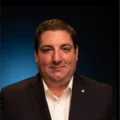
Maria Peach is a general practitioner in Rarotonga, the South Pacific.
She shares her story and discusses her KevinMD article, “Let’s talk about bullying in medicine.”
Did you enjoy today’s episode?
Rate and review the show so more audiences can find The Podcast by KevinMD.
Subscribe on your favorite podcast app to get notified when a new episode comes out.
Click here to earn 1.0 AMA PRA Category 1 CME for this episode.
Also available in Category 1 CME bundles.
Powered by CMEfy – a seamless way for busy clinician learners to discover Internet Point-of-Care Learning opportunities that reward AMA PRA Category 1 Credit(s)™. Learn more at about.cmefy.com/cme-info
Do you know someone who might enjoy this episode? Share this episode with anyone who wants to hear health care stories filled with information, insight, and inspiration.

Hosted by Kevin Pho, MD, The Podcast by KevinMD shares the stories of the many who intersect with our health care system but are rarely heard from.


Transcript
Kevin Pho: Hi, and welcome to the show, where we share the stories of the many who intersect with our health care system but are rarely heard from. My name is Kevin Pho, founder and editor of KevinMD. Rate and review the show at kevinmd.com/rate. Subscribe at kevinmd.com/follow.
Today on the show, we have Maria Peach. She is a general practitioner in Rarotonga, which is an island in the South Pacific. She is joining us, and it is five o’clock in the morning now for her, so thank you so much for joining me. We’ll talk about her KevinMD article, “Let’s talk about bullying in medicine.” Maria, thank you so much for joining me.
Maria Peach: Kia orana, Kevin. Thank you for having me on your podcast. It’s really nice to be here.
Kevin Pho: We’ll get into the article in a little bit, but first off, just briefly share your story and journey to where you are today.
Real physician voices, twice a week
Free, and one click to unsubscribe.
Maria Peach: Yeah. I currently work as a general practitioner on the island of Rarotonga. Our country is made up of 15 islands, and it is one of them. We are northeast of New Zealand on the map and west of Tahiti, if you have a look there. I’m indigenous to these islands; my mother’s from here. I spent most of my time growing up in Aotearoa, in New Zealand, and some time in Australia, but I returned here in December of 2020 just to come back and be back here and work in our community back in the islands.
I have my background in public health and also in some climate change work and advocacy, and I work as a general physician at the moment at a practice on the island. I’ve done some emergency medicine and also have a background in mental health.
Kevin Pho: So tell us about what a typical day is like for you practicing on the island and some of the typical cases that you may see.
Maria Peach: Yeah. I’ve just recently shifted from working for the ministry, which was a combination of working in the outpatient unit and emergency medicine. We have an outpatient unit on the island that’s situated in the community, and then we also have the emergency department, which is situated up at the hospital. So that was a mix of cases: general practice-type cases, working alongside your flus, your comorbidities, NCD clinics, and then also the emergency situations, where you have people coming in with acute pulmonary edema, MIs, and so forth.
At the current practice that I’m in, we’re mainly focused on the general practice-type presentations, and we do get the odd emergency that we refer up to the hospital if they do turn up to the clinic.
Kevin Pho: So what are some of the biggest challenges and rewards that you have practicing medicine?
Maria Peach: I guess the biggest challenge would be the limited number of the workforce carrying the load at present. That’s a big, big challenge. I think it’s not just here; I think it’s all around the world at the moment. I’m not sure about America and Canada, but I do know that the number of trainees that we put through the system to come out and work in the system is not as much as there are in other countries around the world. The yearly intake at med school in Aotearoa is roughly 200 a year.
So with the COVID pandemic, with everything that was happening, there was a massive demand on the usage of resources in the health system, and that happened here as well when we opened up the doors to the wider community, the international community. So yeah, it’s managing resources and staff and having the staff available to be able to implement health care and deliver.
The reward is seeing people get better, feel better, and feel happy with the way that we’ve all looked after everyone, so that’s really, really neat. And one of the things I did notice here is that we get fed a lot by the people that we look after, the patients, the community. They often bring in a lot of food to say thank you.
Kevin Pho: So let’s talk about your KevinMD article. It’s titled “Let’s talk about bullying in medicine.” Now, for those who didn’t get a chance to read your article, just walk my audience through it and share the story of why you decided to write it.
Maria Peach: It was an accumulation, I think, over many years of being in the field. A lot of us are going through a real reflective time right now. We’re looking at our paths; we’re looking at different decisions that we’ve made. I had to look back, and I’ve been working in medicine for 12 years, and I realized a lot of the decisions that I made in career choices and pathways that I’d chosen were influenced largely by a lot of the experiences that I had and also some of the experiences that my colleagues had.
I see workplace horizontal violence, workplace bullying, as a massive issue in medicine that does need to be addressed, because there are different implications for this type of behavior in the field. One is the obvious: the effects on the health and well-being of the workers themselves, our health workforce. They’re being devalued and demoralized, and that obviously has impacts on the way in which we then deliver the quality of care we give, but also on our relationships with the people we go home to and our relationships with our colleagues. That’s kind of the obvious impact.
But one of the impacts I think is really important is the impact on the actual workforce, and obviously on the people that we care for, long term and longitudinally, because we’re starting to see people leaving the workforce because of the different behaviors. And if we’re getting people leaving the workforce, then we don’t have the staff or a workforce to deliver health care. Ultimately, there’s a massive long-term complication of that. I know in Aotearoa, if you’re looking from a population health perspective, the population pyramid is going to flip in the next 20 or 30 years, so you’re going to have a massive population to care for in the elderly later on.
And one of the things I’ve been thinking about in the last week was Generation Z. I’m a Generation Xer, and so I’m quite in admiration of the way that they challenge things. I think, actually, this is going to be a spanner in the works when it comes to health, because they’ve looked at the way that we’ve all approached our work-life balance, and Generation Z has come along and said, “Yeah, now, I’m not quite keen to work that way.” And I think it’s good for medicine. It’s going to challenge medicine, because unless you have a healthy environment, unless you have an environment where people want to work, how are you going to retain staff, and how are you going to draw people into the field? Unless the environment itself is conducive to working. I think this is really important long term as well.
Kevin Pho: So paint us a picture. Give us a story or an example of some of the bullying that either you’ve experienced or that you’ve seen in medicine.
Maria Peach: Yeah, there have been a few different scenarios. There have been times when I’ve been, I guess, humiliated for the way that I’ve implemented some care. And it’s more insidious, I think, these days than it used to be back in the older days of medicine. You can get massive work emails sent out, not just to yourself but to about 300 other people. I mean, it’s an exaggeration, but 20 or 40 other people. The practice doesn’t specifically name you, but you were the clinician on that day and so forth. So it’s quite an insidious way of demoralizing someone and the way that they are at work.
And in actual fact, it’s really, really interesting, though. I find that a lot of the people there, and not just myself, my colleagues, were actually quite studious and committed in our jobs, and actually still quite knowledgeable in our jobs as well, but not necessarily vocal about that knowledge, and not necessarily up front in saying, “This is what I know.” And I find it’s a lot of those people who are actually at the front end of that. I’m not quite sure of the whole reasoning behind that, but I find it’s a lot of my colleagues and myself, people that aren’t as vocal in the workspace, that just like to come and do the job they have to do and make sure that they do it well, who are more inclined to experience a lot of horizontal workplace bullying.
Kevin Pho: So do you find that most of the bullying comes from fellow clinicians? Does it come from patients? Does it come from administrators? Where, in general, does most of this bullying come from?
Maria Peach: I think it’s actually multisourced. One of the things I noticed is that when you go into this field, most of us go in with very values-based ideals. You want to relieve suffering, you want to relieve pain, and you want to help heal. And then you go into a system that’s very limited in the way that health care is implemented. It’s limited in budgets, limited in rosters, and limited in resourcing staff.
And then you’ve also got the people in different positions that have completely different ideas and expectations of what they expect to be delivered in health care. You’ve got your CEOs, your managers, and the people that allocate funding and so forth. You’ve got your colleagues, your seniors, and the people that you work alongside. Then you’ve got the patients as well that we have to deliver health care to. So everyone has different expectations of what they want from yourself or your colleagues as health care physicians. So I think when you have that mismatch, a bit of a different mismatch, you’re going to get practices and structures that want to maintain those bullying behaviors, if that makes sense.
So it’s kind of like, for example, I mean, let’s face it, we’re in a system that is about inputs, outputs, productivity, and profit, and that’s in our countries. I can’t speak for other countries around the world, but I can say that in the countries that I’ve worked in, that’s what it’s about. So it doesn’t matter how it’s packaged. At the end of the day, I think those kinds of systems maintain different, how do you say, bullying behaviors, because it’s of benefit to the system that workers are sort of pitted against each other in some ways, to maintain structure, to maintain hierarchy, and to maintain profit. So I think we really have to be mindful of that when we ask where the sources come from.
I think it comes from anyone that’s devalued, actually, whether they are your colleagues or whether it is someone higher up on the chain, or when you’re talking way up the top, in management and so forth. Anyone that’s devalued is going to feel a sense of a need or a desire to protect their work. I don’t know what the right word for it is, but they will feel this need to protect themselves, or anyone that feels threatened. So it’s not necessarily just a hierarchical thing. It can be sort of someone at the same level as you. It can be different professions against different professions. If that particular profession does not feel valued, or those particular workers don’t feel valued, it is the perfect breeding ground for bullying behavior.
Kevin Pho: We’re talking to Maria Peach. She is a general practitioner in the South Pacific island of Rarotonga. Her KevinMD article is titled “Let’s talk about bullying in medicine.” So Maria, if a clinician is in the position of, unfortunately, being bullied, what kind of recommendations do you have for that clinician to respond to it? What kind of advice do you have?
Maria Peach: It’s one of those situations where, because you’re working in a work environment, it might seem quite restrictive in how you can approach it. And that’s where I think we need to have more solution-based groups, or little groups within organizations and ministries and so forth, to be able to deal with that. Because when you’re isolated, it’s challenging. It’s really, really challenging, because you can’t necessarily go and chat to somebody about issues, because they’re more or less in the same position that you are in. And there’s that fear of speaking out and people losing their jobs, and then those in the positions of power exerting that power again on those that are more vulnerable.
So if you’re in a position where you are being bullied, it does help to find one or two people that you can trust, whether they are within the field or in the building or in the climate, the space that you’re working in, or whether it’s external and you’re chatting to someone externally, because you do need to be able to share your concerns with someone at the time.
But I also recommend documentation, so documenting the experiences, because hierarchy or management or people will consider it subjective and in your perspective, right? But it is nonetheless your own experience, all your experiences of your colleagues. So documentation is really important, so that you catalog all the things that you’ve gone through from the very first time, or you may have to go back and look back. Documentation is really important because you might be able to flesh out what triggered that experience and people that have witnessed it at the same time, because there will be people around you that have witnessed the way that you’ve been treated. It’s all really important, and it all adds up.
Kevin Pho: My final question: What are some of your take-home messages that you want to leave with the KevinMD audience?
Maria Peach: It’s an issue that’s really important for the obvious reasons, in terms of work health and well-being, but long term for the health system itself, it is really important that we deal with this. Because without a workforce, if people are leaving and we’re doing different things, then you lose a workforce, and we need a workforce to be able to deliver health care. Ultimately, the most important thing is that we address these issues, whether we do it collectively in little groups, within organizations, by unions, or some kind of support network. Those issues do need to be addressed, because otherwise we’re going to lose people that have been trained for a long period of time, right? And then all of a sudden, you’re no longer around.
Kevin Pho: Maria, thank you so much for sharing your story, time, and insight. Thanks again for being on the show.
Maria Peach: Thank you so much.
Listen and followApple PodcastsSpotifyYouTubeMore apps · Browse all episodes