









Listen and followApple PodcastsSpotifyYouTubeMore apps · Browse all episodes
“Gun violence, war, pandemic, natural disasters — listening to the news or doom scrolling on social media during times of tragedy can leave us feeling devastated, discouraged, and angry. Tragedy can also make us feel like helping. We’re motivated to reach those affected and do something.
Giving money can be a simple way to help. In the wake of a tragedy, many of us react fast and give to the first plea that comes across our Facebook feed. This is reactive giving, and while it’s significant, reactive givers often feel like they didn’t actually make a difference. There is another approach to giving that will leave you confident about your contribution. After recent mass shootings, many people asked me how to help. So I am providing tools to put the power of your money to work effectively in any tragedy.”
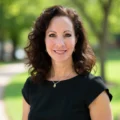
Recha Bergstrom is a women’s imaging radiologist. She is founder and CEO, The Physician Philanthropist, helping doctors learn how to donate effectively and invest responsibly so they can maximize their positive impact on the world, and can be reached on LinkedIn, Facebook, and Instagram. Join the private Facebook group, The Physician Philanthropist Group.
She shares her story and discusses her KevinMD article, “How you can donate effectively after tragedy.”
Did you enjoy today’s episode?
Rate and review the show so more audiences can find The Podcast by KevinMD.
Subscribe on your favorite podcast app to get notified when a new episode comes out.
Click here to earn 1.0 AMA PRA Category 1 CME for this episode.
Also available in Category 1 CME bundles.
Powered by CMEfy – a seamless way for busy clinician learners to discover Internet Point-of-Care Learning opportunities that reward AMA PRA Category 1 Credit(s)™. Learn more at about.cmefy.com/cme-info
Do you know someone who might enjoy this episode? Share this episode with anyone who wants to hear health care stories filled with information, insight, and inspiration.

Hosted by Kevin Pho, MD, The Podcast by KevinMD shares the stories of the many who intersect with our health care system but are rarely heard from.


Transcript
Kevin Pho: Hi, and welcome to the show, where we share the stories of the many who intersect with our health care system but are rarely heard from. My name is Kevin Pho, founder and editor of KevinMD. Rate and review the show at KevinMD.com/rate. Subscribe at KevinMD.com/follow. Today on the show, we have Recha Bergstrom. She’s a radiologist, and she’s the founder of The Physician Philanthropist. We’re going to talk about her KevinMD article, “How you can donate effectively after tragedy.” Recha, welcome to the show.
Recha Bergstrom: Thank you so much for having me here. I’m excited about it.
Kevin Pho: Before we get into the article a little bit, first off, share your story and journey to where you are today.
Recha Bergstrom: Well, it hasn’t been a very direct route, I’ve got to say, but my interest in philanthropy really came about nine years ago, when I found myself on the receiving end of other people’s charity. I had already been a practicing radiologist for quite some time, so I hadn’t expected to need help in that way. But when I was away for what was supposed to be a three-day trip, when I was 32 weeks pregnant, I ended up delivering early out of state, with a baby who needed to be in the NICU for about six weeks. I was completely without any resources and things like that, and I ended up at the Ronald McDonald House, living there for six weeks. I really came to rely on the people who were helping me, and I was really touched by it. I realized that the little things that I had been doing along the way, not thinking that they really made any difference, actually do make such a difference.
So now, many years later, I’m living somewhere where people are making huge financial impacts around me. I’m in Northern California, and there are a lot of people who are able to do a lot of impactful good. I was feeling like I still wanted to be able to make a difference, even though I didn’t have the billions or millions to give. I had been thinking a lot about what I had gone through and what I experienced, and how much I wanted people to understand that even if they don’t have all that money to give, what they do give really does make an impact, and it really can help. As I was doing that, I was also learning that there are ways to give smarter and increase the impact that you can have.
Real physician voices, twice a week
Free, and one click to unsubscribe.
Kevin Pho: Now, before we get into that, one of the things that you mentioned is that sometimes we’re not sure of the impact one makes when donating. So can you give us some case studies or examples of how what could seemingly be a small amount can make a big difference?
Recha Bergstrom: Well, one of the things that I think about is when I was staying at the house there, I didn’t have anything with me, and it was a very vulnerable and terrifying time. The things that I was surprised to find so helpful were the little toiletries, those little travel toiletries that a lot of us donate to different places. That was one of the great things to have. And the pantry foods: I didn’t have to go grocery shopping. I was able to go into the pantry and just grab some food and not worry about it. So I felt like I was taken care of, and I was able to focus on healing and my baby instead of, “Oh goodness, when’s the last time I washed my hair?” So these are little things that actually do make a big difference to the people on the receiving end, and I think that was kind of a surprising thing for me, how much of a difference those things make.
Kevin Pho: So let’s talk more about your KevinMD article. I think it’s very relevant, because whenever there is some type of tragedy, there are so many options when it comes to who we can donate to, and I’m never sure in terms of what to look out for. So I’m certainly interested in hearing your advice and guidance. Your KevinMD article is titled “How you can donate effectively after tragedy.” Now, for those of you who get a chance to read your article, just walk my audience through it. Share the story of why you decided to write it.
Recha Bergstrom: Oh, sure. Well, unfortunately there have been a lot of horrible things happening, and I found that people were coming to me and asking me, “What can I do to help? Where should I donate? What should I do?” What I’m interested in is people empowering themselves to figure out where is right for them to donate, because what I care about might necessarily be what other people care about, or the way to go about it. One of the things that really struck me is that when people would say, “What can I do?” often they had already done something. Often they had already made some kind of donations to different organizations, but they still didn’t feel like they were making a difference or doing anything. So I was struck by those things, and I wanted to give people a little bit of a framework for how to think about things, because these are incredibly complex and difficult issues, and there’s no one right answer or way to go about things. So I wanted to give a little bit of background about how to think of it, and I think of it in kind of three different steps.
The first step that I have in the article is to find your focus, and to ask, in any situation, in any kind of tragedy, what’s the thing that is most important to you that relates to this tragedy? So if it’s something like the war in Ukraine, what can I do about that? Well, it’s a huge, complex topic. But if you already have an idea of what you care about most and what you want to focus on, it can be something like, “Well, I want to help my fellow doctors who are working out there.” Then it can help you kind of start to find a little bit of focus and start to narrow down what you want to help with. Or if you think, “I want to be able to help the displaced children, or children who are disrupted and going through trauma. How can I help the children?” So if you start out by finding your focus, that can help you figure out the next step.
Part of finding your focus is also figuring out and thinking a little bit more deeply about what’s called the theory of change in philanthropy: If you do one thing, what do you expect to be the outcome of that thing? I gave examples in the article about gun violence, because there’s been a lot of that, unfortunately, as well, and there are a lot of different ways to approach that. For example, if you think that if we enact stricter gun control laws, or we have better enforcement of the existing laws, then we’ll have fewer of these tragedies, then that’s what you would want to focus on. But if you are concerned about perhaps mental health or racism or things like that being contributors, then those are the things that you could focus on. So that’s the first step, really finding your focus.
Kevin Pho: Before moving on, I just want to ask, in terms of helping to clarify our focus, let’s say there was a tragedy on the other side of the world, where we’re just not clear in terms of what the options and issues are. How do we go about researching the different avenues that one can donate to, the different causes that are specifically related to that particular tragedy? Where can we go about finding out more about that?
Recha Bergstrom: That’s a great question. One of the things I actually look at when I’m trying to understand what those possible different focus areas might be is Charity Navigator. There’s actually a tab. On a lot of these charity evaluation websites, they do have a tab that has something called hot topics, or something like that, where it’s the most recent tragedies that people are feeling moved to make a difference in. If you go on to their hot topics tab, it actually breaks down, like, these are the different things that they believe are contributors, and here are some examples of groups that are focusing on these different paths to being able to help. So there’s a lot of information there that can help you start finding your focus, if you haven’t already figured out your own personal focus.
Kevin Pho: All right, so once we’ve found our focus, we move on to the next step.
Recha Bergstrom: So moving on to the next step is really assessing your options. As I was saying, doing something like looking at the hot topics on a charity evaluation website can be really helpful, but what I like to do is, once you kind of have an idea, you can just research and Google and see what you find there. The charity evaluation websites can be really helpful for listing different options, but I do recommend being very careful about what kind of information you take away from those websites. They do have certain specific, very helpful information, but they also can be a bit misleading in using things like expense ratios to decide if something is an effective charity or not. That’s not actually evaluating the effectiveness of the organization, but actually their expenses, and that’s not necessarily a helpful proxy. So when you’re evaluating, it’s a good place to start and to think about, because they’ll be able to give you an idea of a list of charities that you might be interested in, if you haven’t come across them.
But aside from that, I do recommend doing at least two other things once you’ve found a charity. One is to Google the charity itself, or search up the charity itself, because you want to make sure that what’s being recommended is really a valid one that’s aligned with what you want to accomplish and what you want to help with. The second thing is really to spend even a few minutes on the website of the organization that you’re interested in contributing to, because those websites usually have a lot of information and can let you know where your money would be going, how they’re going to evaluate their impact, and what kind of outcomes they’re looking for. That can give you a much better sense of whether your money is going where you want it to go.
Kevin Pho: Now, sometimes I hear that with some charities, not all of your money is going to the cause that’s necessarily on the website. So as someone who is not versed in all the different organizations that are out there, what are some red flags that we should look out for? And how do we know for sure that a charity is doing what they’re saying they’re doing?
Recha Bergstrom: That’s a really great question, and it’s not necessarily an easy one to answer. I think this is a very interesting question, and I like to kind of pose it in a different way for doctors, because I think it helps give an idea. There has been a lot of looking at charities and how they function and what they use their money for, and a lot of times they’re evaluated on “this percentage is going to the actual cause, and this percentage is going to the overhead.” They can be judged very harshly in terms of how much is going to overhead versus the cause.
I like to compare that to, for example, a radiologist, who has a huge amount of overhead. We have very expensive machinery. We have a lot of requirements to be able to do our work, so we have a huge amount of overhead. So if you think of that, and how much would be going to the actual cause, or to doing the exams, or to the actual radiologist, it’s a different thing compared to a primary care physician, who might have much lower overhead, where more of the money goes to the primary care doctors. So it kind of helps give a sense of the difference in the expectations. Both fill very important roles in the care of a patient.
It’s the same thing for charitable organizations. Some of the things that the organizations are trying to accomplish are really complex, and they require a lot of either logistics or high-functioning or highly educated and expensive executives, or whoever it is who’s working with the organization, and some really don’t require that. So that’s kind of my first word of caution in trying to judge a charitable organization according to those kinds of expectations.
I would say one of the ways that you can also look at an organization, or look for red flags, is to search up the name in the exact words, in the exact order, and add the word either “scam” or “fraud.” You might be surprised at what you find. When you search them up specifically with those words, there are, unfortunately, some bad actors out there, and you can find them often that way.
Kevin Pho: All right, and let’s talk about the third point in your framework, and that third point is take action. So tell us more about that.
Recha Bergstrom: That’s simply following through, and really feeling like you’re following through. This comes back to that sense of “What can I do to help?” when you’ve already done something. What I hope people will be able to do, if they’ve figured out their focus and figured out where they want to donate and have been a little bit more thoughtful about that, is that when they actually do take action, when they actually do make a donation, they feel like, “OK, I actually have made a little bit of a difference. I have contributed somehow.”
One of the things you can think about is, is this something that I care about that I just want to address one time, and do a one-time donation, or do I want to do some kind of sustaining donation, like a monthly donation to something that deals with the underlying cause or issues? Because I think this is a really important thing. Something like a sustaining donation to an organization that you believe can really make a long-term difference can be really helpful to those charitable organizations, because when they know that they’re not just getting these sudden influxes with a tragedy, but they have a budget that they can count on a little bit more, that can be really helpful. So that’s one piece of it.
And then, again, just to feel like you’ve actually made a difference, one of the things that I do sometimes is put in my calendar for the next year to follow up, go back to the website of the place that I donated to, and look at what they have for their end-of-the-year impact reports or financial reports. Then I’ll see, “OK, I might have only been able to contribute this much,” because, again, I don’t have the billions to contribute, “but my little piece helped move this piece forward.” It can be a very empowering thing, and it can feel much more satisfying. You can feel like you’re making a difference if you go back and realize, “I was able to contribute a little bit toward these specific actions that were taken.”
Kevin Pho: We’re talking to Recha Bergstrom. She’s a radiologist, and she’s the founder of The Physician Philanthropist. We’re talking about her KevinMD article, “How you can donate effectively after tragedy.” Recha, we have an audience of physicians here, and physicians tend to be in a higher-net-worth demographic. So when it comes to donating to a charitable organization, is there any physician-specific piece of advice that you could share with us today?
Recha Bergstrom: Absolutely. One of the things that I learned about that I think is a really wonderful charitable vehicle is called a donor-advised fund. It’s almost a charitable investment fund, and you can establish one at all kinds of different financial institutions, like Fidelity or Schwab or whatever. What you’re able to do is contribute into this fund. If you want to contribute something like appreciated assets, then you can donate them without having to pay capital gains tax. So it’s a tax benefit for you there. It’s kind of a double tax benefit, because you don’t have to pay the capital gains tax, and you can get the charitable deduction as well, for a larger amount. Then you direct the people who manage the fund where you want the money to be put, and so it ends up that the organizations that you’re trying to support also get more money. So that is kind of a win-win. It takes a few extra steps, but it’s not very complicated, and it can be a way to increase the impact of whatever charitable donations you want to make.
Kevin Pho: And just to be clear, these donor-advised funds are available at most major brokerages, correct?
Recha Bergstrom: Yes, they are. Yes.
Kevin Pho: And in terms of resources where one can read more about charitable organizations and perhaps do some of the research, I know that you mentioned a few websites already, but what are some websites, off the top of your head, where other clinicians can do more reading?
Recha Bergstrom: I do have a blog, so I’ve been writing on some of these topics. That’s The Physician Philanthropist blog. But I get a lot of my information from Stanford University, which has a social impact organization that is able to give you a lot of great information about donating.
Kevin Pho: And my final question: What are some of your take-home messages that you want to leave with the KevinMD audience?
Recha Bergstrom: I think I would just reiterate what I was saying before, which is that every little bit counts. You don’t have to be donating a lot. If you can donate a lot, that’s wonderful, but every little bit counts. When you do make a donation, you should feel like you are making a difference in the face of any tragedy or any ongoing issues, and that your money can really be a powerful tool and the most effective way to make a change in the world. When you’re doing it intentionally, when you’ve found your focus, whether donating or investing or spending, whatever it is, it is a powerful way to make change in the world.
Kevin Pho: Recha, thank you so much for sharing your story, time, and insight, and thanks again for being on the show.
Recha Bergstrom: Thank you so much for having me.
Listen and followApple PodcastsSpotifyYouTubeMore apps · Browse all episodes