












Listen and followApple PodcastsSpotifyYouTubeMore apps · Browse all episodes
“The art and craft of being a physician and finding meaning in our care of others are to make poetry out of our lives.”
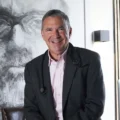
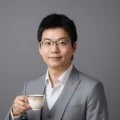
Steven Kamajian is a family physician.
He shares his story and discusses his KevinMD article, “As doctors, caring is our poetry.”

The Podcast by KevinMD is brought to you by the Nuance Dragon Ambient eXperience.
With a growing physician shortage, increasing burnout, and declining patient satisfaction, a dramatic change is needed to make health care more efficient and effective and bring back the joy of practicing medicine. AI-driven ambient clinical intelligence promises to help by revolutionizing patient and provider experiences with clinical documentation that writes itself.
The Nuance Dragon Ambient eXperience, or DAX for short, is a voice-enabled, ambient clinical intelligence solution that automatically captures patient encounters securely and accurately at the point of care. Physicians who use DAX have reported a 50 percent decrease in documentation time and a 70 percent reduction in feelings of burnout, and 83 percent of patients say their physician is more personable and conversational.
Rediscover the joy of medicine with clinical documentation that writes itself, all within the EHR.
VISIT SPONSOR → https://nuance.com/daxinaction
SUBSCRIBE TO THE PODCAST → https://kevinmd.com/podcast
RATE AND REVIEW → https://kevinmd.com/rate
FOLLOW ON INSTAGRAM → https://www.instagram.com/kevinphomd
FOLLOW ON TIKTOK → https://www.tiktok.com/@kevinphomd
GET CME FOR THIS EPISODE → https://earnc.me/VpYVjm
Powered by CMEfy.
Transcript
Kevin Pho: Hi, and welcome to the show, where we share the stories of the many who intersect with our health care system but are rarely heard from. My name is Kevin Pho, founder and editor of KevinMD. Rate and review the show at kevinmd.com/rate. Subscribe at kevinmd.com/podcast. Today on the show we have Steven Kamajian. He’s a family physician, and we’re going to talk about his KevinMD article. It’s titled “As doctors, caring is our poetry.” Steven, welcome to the show.
Steven Kamajian: Thank you very much.
Kevin Pho: We’ll get into the article in a little bit. First off, briefly share your story and journey to where you are today.
Steven Kamajian: I’m an osteopathic family physician in Montrose, California, which is a little bit to the west of Pasadena. I’ve been a family doctor there for almost 40 years. During that time period, I’ve watched how medicine has evolved from exclusively fee-for-service to hybrid models, including HMOs and every other alphabet soup that exists. I’ve watched doctors going from independent to being employees, and I’ve watched the transition from the doctor-patient relationship to a doctor-computer relationship, which has changed immensely how physicians feel and interact.
And my story is relatively simple. I’ve thrived and I’ve prospered by my interaction with patients. My patients and I play sort of an intellectual and emotional tennis game. I lob something over to them; they lob something back to me. And this very personal and long relationship, in many cases, has permitted me the privilege of watching individuals grow and watching them evolve and, unfortunately, grow old in many cases and die. My 80-year-old patients, in many cases, were 40 when I met them. My 40-year-olds were newborns when I gave them their vaccines. And I can tell things to them about their family that they might not even know. I took care of great-grandmothers in some cases. But there’s an emotional give-and-take in the process, where they rapidly pick up whether or not you care for them.
Now, in the process of living in Los Angeles County, I’ve taken care of a lot of artists, and artists need to create. If they don’t create, they get sick. I watch them as patients, and I’ve learned from artists, the artist community in this city, terminology that we as physicians are just never exposed to. My favorite term that I learned from artists is the term “aboxic.” We all grow up learning the phrase, “Well, he thinks inside the box. She thinks outside of the box.” Artists use the term “aboxic.” “A” is the prefix of the absence of something, the absence of the box. They’re not in the box. They’re not outside of the box. For an artist who does art, a box cannot exist, so the box doesn’t define them. They just create. So what type of music do the Beatles write? I don’t know. They write music. It’s not for you or me to define what they’re going to do next.
So I’ve watched young people whose parents are very poor and, in many cases, immigrants, first generation in the United States, and they force children who sometimes have an artistic bent to do something very practical to earn money. “Joey, Johnny, Mary, become a CPA, because it’s the stable life.” Well, what ends up happening to those people is, I watch them go through their life as they become enormously miserable. If you take a person who has an artistic bent and you remove art from their existence, you remove their ability to be creative, they become frustrated, they become ill. Now, a lot of people develop artistic hobbies on the side. They do their painting or their gardening or their cooking, their stamp collection, whatever. They’re doing it on the side. They maintain some sort of creative impetus.
In my lifetime, I’ve watched physicians go from a multi-legged profession, where we have the science of medicine as the primary focus of our being, and we have, obviously, the business of medicine. As charities say, “No money, no mission.” The Red Cross can’t exist without somebody giving the money to exist. So I understand the science of medicine is everything that we do. Without science, we’re not here. I understand the business of medicine. Without business, we can’t open the door. Our employees won’t show up. The rent isn’t paid. The electrical bill isn’t paid. I understand those things. But the third leg of our existence previously has been the art of medicine.
And I first noticed about 20 years ago, when I went to a series of lectures at what was then the Estes Park Institute, which was a management institute, where the Estes Park leaders were trying to completely eliminate the randomness of art from clinical practice. And I would actually raise my hand and say, “What about the art of medicine?” And they would say, “You’re the type of person that’s the problem, because you introduce unpredictability into our accounting. You introduce randomness in what we’re doing.” I would raise my hand again. I said, “We got into this because we have a calling, in many cases, where we have a love of caring for other people. And how can we care for another person without teaching?” And teaching is fundamentally an art. Teaching is not a mechanical skill. Teaching is a journey where you bring somebody into some story, and you teach the patient something of value, and then their humor, the patient’s humor, the patient’s affection, reciprocates back to the clinician, and the clinician then has energy.
And all of this gets down to terminology, which may sound peripheral to your listeners, but I don’t think it’s peripheral, as I’ve watched the art of medicine decline, so that doctors now have a doctor-computer relationship, where the doctor has a relationship as an employee, or they have a relationship to their staff, like an ER doctor or radiologist or a pathologist, but no relationship to the patient. For example, in many cases, where we’re only transiently through the clinic, the urgent care center, whatever, we then strangle the affection which can be engendered and help support us in a rather arduous and long career as caregivers. We’re always giving energy out, or we’re supposed to, and that’s draining.
We always hear about the burnout of physicians, and we heard about the burnout of clinicians, but you didn’t hear about that in a previous generation, not because they weren’t stressed or because they didn’t have problems, but because they were constantly fed a reciprocal relationship with the patients. The patients would bring tomatoes from their gardens or a banana cake that they had made, and they’d tell them about their grandchildren. It had nothing to do with their clinical event that day. And they’d brag about their son or daughter that had gone and graduated from college or medical school or something else. And there was this constant give-and-take which nurtured the clinician, so they were able to go in for this marathon and not just the sprint.
In zoology, they use a term called the keystone species. A keystone species is a species that must exist for an environment to exist. The classic example of a keystone species is the coral of a coral reef. Without the coral, there is no coral reef. The keystone for clinical care, the keystone that permits burnout, is this reciprocity of emotions, where you are able to recharge yourself by the gratitude and the relationship you have with the person that you’re caring for, not the computer that you’re caring for, not the drop-down menu that you’re obligated to do.
Real physician voices, twice a week
Free, and one click to unsubscribe.
Kevin Pho: So let me ask there. When you were in that meeting and you were talking to those administrators, and you were talking about that art of medicine that you want to preserve, and you gave such an impassioned speech, what was their reaction to that?
Steven Kamajian: I remember, if you don’t mind me naming names, I remember an organization from Alaska, I won’t mention their name, a very powerful presenter to change, where the medical director of that organization stood up and said, “You’re exactly the problem. You’re the type of person that’s exactly the problem.” And I said, “No, you’re going to end up with a catastrophic clinical cascade if we don’t permit creativity in this process.” Artists that don’t do art get sick, and I see that going on in the younger generations. They want to quit because they don’t feel participatory in any creative process anymore.
And yes, the drop-down menu’s intent is to make angels out of all of us, if we’re perfect in every compliance that the drop-down menu gives us on our computer screen. We dot and we click everything that we’re supposed to click. That’s the opposite of art. In art, angels are always presented as the opposite of human. Humans have to do something that is unique. Angels are not unique. So that makes it great for business, because there’s a homogeneity, a predictability. Steve can be replaced by Mary and Joe and Sean and whoever else. If I’m a servant to a corporation that has no real importance to them other than the ability to service their cascade, I eventually lose out in my ability to do something which is meaningful to me.
It’s a sad evolution, because the administrative teams want it, or sometimes even insist, because their rewards, their bonuses, the hospital administrator’s bonus, the nursing administrator’s bonus, the office administrator’s bonus, is based upon compliance. There are compliance officers everywhere. That is very fascinating to me, because 20 years ago, physicians were told, “You cannot put in your chart that you’re asking the patient to comply with what you’re doing. You cannot insist on compliance on the patient’s part, and you cannot blame the lack of success on lack of compliance.” On the other hand, you as a physician are rated based upon compliance, where we can’t say, “Well, the person ever took his insulin. The person ever wears eyeglasses and crashed into a tree. The person never took their blood pressure medicine or their cholesterol medicine.” But, “You, Dr. Kamajian, you did not double-check on the ACE inhibitor for the diabetic patient, and therefore you’re doing.” The patient wouldn’t swallow the ACE inhibitor because they just never went to the pharmacy and bought it. They didn’t like taking pills. They have this theoretical objection to chemicals in their body.
So all of this has mutated into an attempt to make us angels, where we are uniform. In every painting, the angel on the right side of the painting and the angel on the left side of the painting look identical. The cherubim are the opposite of what an artist wants in humanity. The humans in the painting look different. The angels look the same. That’s art.
Kevin Pho: So we have two opposing forces, two opposing philosophies here, and you’ve been observing this evolution over the last 30 years or so. What’s the path forward for physicians? Because I think a lot of physicians feel very similarly to what you just articulated there. What can we do about that?
Steven Kamajian: Be yourself. You went into this profession to care. Do a little mischief to your organization. Do a little mischief. Have the courage to tell your story and to tell the patient’s story. There’s an old screenwriter’s adage that if you want to show the true nature of the character in a storyline, in a movie, in a play, you dial up the heat, and the true nature of the character will demonstrate itself. Physicians have had the heat being dialed up for years, and being that we’re so nice, we never want to upset anybody. We just do what we’re told. We’re peacemakers. We’re not there to create chaos. We’re there to create harmony. Whereas the administrators and the computer corporations that are creating these drop-down menus, they’re there for a completely different reason. They’re there to create a monopoly. They’re there to create an ever-expanding business in a portfolio of businesses that make money. Well, great. I want to make money too. I don’t have any objection to making money. I’m not some pie-in-the-sky idiot over here. But my goal is not to make them money. My goal is not to make the hospital chief executive get another $500,000 bonus at the end of the year. My goal is to make sure that the patients feel at peace and at home and understand what’s going on to them.
You know, Richard Nixon was president when I was a young man, and I don’t know if you’ve ever heard of Nixon’s rule of politics. It applies to us as physicians. Richard Nixon’s rule of politics was, when given two choices, always take both. Never take one choice. So when a hospital administrator or somebody walks into the room and says, “You must do this, or this will happen,” I kind of laugh it off, because I do not give them authority. Even when I’m an employee, I do not give them the authority to tell me how to do things. A nursing home doesn’t have a license to see patients. They base their care on my license, just like they base their care on the nurse’s license or the pharmacist’s license. A hospital does not have a license to care for patients.
Now, let’s say they kick it up. Let’s say that you’re the anesthesiologist that says, “This patient can’t have surgery today, because their potassium is off, their EKG is abnormal, they have a 140-degree fever. I will not do anesthetics today.” And the orthopedic surgeon and you, the anesthesiologist, get a phone call from the nursing supervisor and the operating room supervisor: “Hey, we booked this case. We have staff here. We’ve got the equipment here. You have to do the surgery.” “No, I don’t.” At some point, you have to stand up and say, “I have something to offer to this equation.”
You’ve gone from hospital administrator to chief executive officer. You used to administrate for me. Now you’re chief of me. You’re in the C-suite in some sort of thumb-on-my-head position. You’re the Oracle president. You’re the Cerner president. [Remark removed by the editor.] But wait a second. You still need my license. You still need me in the room. Now, at some point, the physicians have to stand up and say, “I can’t function without creativity.”
The poetry of what we do is we take the blank canvas and we put a painting on it. We put something there. It doesn’t exist until we do something with it. And while I may sound silly to you or to your audience, courage is the beginning of wisdom. Without courage, we have no meaning in what we’re doing. We can’t be told where to stand, sit, and walk all the time. We’re not the interns or the residents who are in the process of being taught, where the ACGME or some sort of certification organization says, “Hey, you’ve got to do X number of obstetrical deliveries to get a family practice residency license or certification.” We’re not at that stage. We’re at the other end. We’re at the end where we’re growing as individuals. We’re experiencing the world, and we have the ability to take that experience as an artist.
The point of art is you take the world in, you digest it, and then you express yourself in a rather unique way that somebody else can experience something unique. It’s not derivative. It’s not four guys dressing up to play music like the Beatles and sounding like the Beatles. That’s not art. That’s derivative. What I see the administrative world trying to do is convert us all into a derivative that they can control: “We’re going to press the button for Sgt. Pepper’s Lonely Hearts Club Band. You guys are going to look like this and sound like this. Wear 1960s clothing, and you’re going to do what we tell you to do.” Wait a second. You can do that to me if I’m a secondhand, second-rate musician, but you’re not going to do that to the Beatles. If the Beatles all were reincarnated and showed up someplace today, they’re not going to dress like the ’60s and play oldies all the time. They’re going to add something new to the mix, so that they can continue to expand their soul, their heart. Wisdom requires meaning. Meaning is not just repetition and ritual.
Kevin Pho: We’re talking with Steven Kamajian. He’s a family physician, and we’re talking about “As doctors, caring is our poetry.” Steven, tell us some take-home messages that you want to leave with the KevinMD audience.
Steven Kamajian: An artist cannot do their art without freedom. They have to have the ability, as a physician, as a clinician, to be able to communicate with somebody as a teacher. They have to be able to process the science and even the business of what they need to deal with in such a manner that they can be creative. If they’re not being creative, they will get sick. The quantity of burnout you’ll see will increase. The people leaving the profession at an early stage of their career will increase, or the bitterness will increase. The patient satisfaction will drop, because the artist is unhappy. You can’t castrate our profession the way it’s being castrated without the loss of creativity. That creativity is what made American medicine a magnificent profession, not a job, a profession. The job is not what we have. We have a profession. And what made this a magnificent profession, like any profession, was our capacity to be creative. Remove that, we have jobs. If we have jobs, you can be replaced by a drop-down menu anytime, an absolute drop-down menu anytime. And then they will lower the educational standards constantly, and you’ll be replaced by somebody with one-ninetieth of your education who is operating that drop-down menu. If all you’re doing is drop-down menus, you’re not a physician.
Now, is this pie in the sky? Doctors are being rewarded for operating electronic medical records. They’re not being rewarded for taking care of patients. So if their EMR is not properly completed, their administrator calls them and says, “Hey, Steve, when are you going to do that? You know we’re not going to have you here much longer if you don’t hit this smoking cessation over here.” I say, “96-year-old person with dementia. I didn’t discuss smoking.” “You got to click it over there.” “Hey, Steve, you stopped these medications suddenly. Why’d you stop the medication suddenly?” “Well, the patient died. You got to look at the death certificate.” You know, the silliness of this documentation. I understand that we need to do things properly. I’m not questioning the science. But the silliness of this is driving us into jobs, not into a professional experience.
So please have the courage to be the artist that you wanted to be when you entered the profession. Care with vigor and gusto, vigor and gusto. Don’t let people tell you what to do, and if they do, you’re in the wrong place. You’ll burn out. You’re in the wrong place. There are so many other opportunities. You don’t need to be sitting there. Go someplace where you can be you, you can thrive, you can grow, and your patients will love you ever more for it.
Kevin Pho: Steven, thank you so much for sharing your time and insight. Thanks again for being on the show.
Steven Kamajian: Thank you. Thank you, Kevin.
Listen and followApple PodcastsSpotifyYouTubeMore apps · Browse all episodes