




Listen and followApple PodcastsSpotifyYouTubeMore apps · Browse all episodes
“During addiction, the brain becomes ‘hijacked,’ which then ‘exaggerates the need for the drug and minimizes the dangers associated with the use of the drug.’ This is so affirming because the chemicals in my brain told me I was going to die if the opioid was not available. It was a horrible and terrifying way to live.”
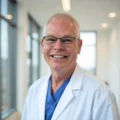
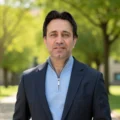
Jeffrey L. Fraser is a family physician.
He shares his story and discusses his KevinMD article, “Let doctors in recovery be able to recover their careers.”

The Podcast by KevinMD is brought to you by the Nuance Dragon Ambient eXperience.
With so many demands on their time, physicians today report record levels of burnout. Burnout is caused by many factors, one of which is clinical documentation. Studies indicate physicians spend two hours documenting care for every hour spent with patients.
At Nuance, we are committed to helping physicians do what you love – care for patients – and spend less time on clinical documentation. The Nuance Dragon Ambient eXperience, or DAX for short, is an AI-powered, ambient clinical intelligence solution that automatically captures patient encounters securely and accurately at the point of care. Physicians who use DAX have reported a 50 percent decrease in documentation time and a 70 percent reduction in feelings of burnout, and 83 percent of patients say their physician is more personable and conversational.
Rediscover the joy of medicine with clinical documentation that writes itself, all within the EHR.
VISIT SPONSOR → https://nuance.com/daxinaction
SUBSCRIBE TO THE PODCAST → https://kevinmd.com/podcast
RATE AND REVIEW → https://kevinmd.com/rate
FOLLOW ON INSTAGRAM → https://www.instagram.com/kevinphomd
FOLLOW ON TIKTOK → https://www.tiktok.com/@kevinphomd
GET CME FOR THIS EPISODE → https://earnc.me/F8jOpG
Powered by CMEfy.
Transcript
Kevin Pho: Hi, and welcome to the show. Rate and review at KevinMD.com/rate. Subscribe at KevinMD.com/podcast. Today on the show we have Jeffrey Fraser. He’s a family physician, and we’re going to talk about his KevinMD article titled “Let doctors in recovery be able to recover their careers.” Jeffrey, welcome to the show.
Jeffrey L. Fraser: Thanks, Kevin. Hey, thanks, first of all, for doing my article and inviting me to do the podcast. It’s great.
Kevin Pho: We’ll get to the article in a little bit, but first off, briefly share your story and journey to where you are today.
Jeffrey L. Fraser: So I’m a family medicine doctor. I’m licensed in both Nebraska and North Carolina. I’ve been a physician in practice, in hospital practice, and then also in my own practice, where I had over 4,000 patients, until this disease finally caught up with me. I developed an addiction to hydrocodone when I had prostate cancer. I had never taken hydrocodone before, and I don’t drink alcohol, and it just destroyed my life. I was up to 60 pills a day. So when I developed the addiction, I started diverting the narcotic. I wrote prescriptions for my patients, they’d bring it back to me, and I’d pay their copay. And so I finally got caught.
On January 22nd, 2018, I had just finished my morning. It was like 11:45 at a beautiful office, everything in it, a lot of patients. I looked down from my office, and two DEA agents came in, a state investigator from the Nebraska DHHS, and two State Patrol agents with guns. I had a concealed carry license, which I had had well before my addiction. So they came in, went down there, and they came in without a warrant, without a subpoena or anything, and they said, “Where’s your gun?” They frisked me. They had their guns. It was a scary deal.
So that all got done. My wife did not know I was an addict. We’ll be married four years in December. So I called her over to my office. My son, who was a med student then, he’s a doc now, came over. She did not know I was an addict, and her first words to me were, “Why didn’t you trust me? Why didn’t you tell me about this?” So that started my road to recovery. I detoxed for 15.
Real physician voices, twice a week
Free, and one click to unsubscribe.
Kevin Pho: Before we go into that story, tell me about the beginning of this, in terms of the initial reason why you were prescribed hydrocodone.
Jeffrey L. Fraser: So initially, I was given it. I had back pain. I was receiving Gamma Knife treatment for prostate cancer, and during my third treatment, I was complaining of back pain, so they gave me hydrocodone. That was my first prescription for hydrocodone, and it just lit up my brain. I had no previous history of addiction. I don’t drink alcohol. And that’s where my addiction began.
Kevin Pho: How long were you on it before you realized you were addicted?
Jeffrey L. Fraser: You know, I got three prescriptions for it, and I kind of knew it from day one. At the end, my radiation oncologist called and said, “Jeff, if you continue this narcotic, I’m going to have to do something about it or do a full bone scan workup,” because I was complaining of back pain, but I was using that excuse to get more of the pain medicine. So that’s a, sorry, Kevin.
Kevin Pho: And you said that you were up to 60 per day?
Jeffrey L. Fraser: Sixty pills a day. My body kept adapting, and so I’d use a lot of patients to get 60 pills a day. Yeah, it was not good, Kevin.
Kevin Pho: And what was the time frame between the start of the hydrocodone and when the DEA agents came to your office?
Jeffrey L. Fraser: So I initially had a prescription in 2012, and I didn’t do anything until 2014. Then there were the pressures of owning my practice, and the fact that my brain was addicted, and we had some bad things happen to one of our daughters, and that’s when I started diverting it. So it was about a three-year period when my active addiction occurred. I put it aside for a couple of years, but then it was from 2014 until the end of 2017.
Kevin Pho: Now, as you were diverting the hydrocodone, was there any thought in the back of your mind that eventually you would get caught?
Jeffrey L. Fraser: Yeah, I tried many times. I Googled how to self-detox. And we’ll talk about this more later, but one of the reasons for my article is that Nebraska doesn’t have a PHP, so I felt all alone. You know, I owned my own practice. I was by myself, and I just thought I’d die if I didn’t have more of it. So the whole goal was to try to not die, and I wouldn’t have, but just to continue maintaining that addiction. It was not a good way to live, Kevin.
Kevin Pho: So you talk more about your story in your KevinMD article titled “Let doctors in recovery be able to recover their careers.” You left off your story at the time where you began your recovery, so tell us about that.
Jeffrey L. Fraser: So I had a detox for 15 days, and I heard about Talbott Recovery Campus in Atlanta, Georgia, where they specialize in the treatment of professionals. It started for doctors. Pilots from around the world come over there, physicians as well, attorneys, and mainly professional people. So I went through a three-month program at Talbott down in Atlanta. It was a great program.
So Nebraska does not have a physicians health program. I didn’t know anything about it; I learned about it in treatment. So when I got back, I knew my license would be suspended in Nebraska. During that year of suspension, for a year, I hired an addictionologist. I did random drug screens, everything as if I was on probation, Kevin. So I got my license back in 2019. I then was recruited to North Carolina, got my medical license in North Carolina, and this story continues too.
Kevin Pho: Yeah, so tell us about that process of getting your license back. How difficult was that?
Jeffrey L. Fraser: Actually, it’s pretty easy, because I submitted to the board all of my meeting lists. I went to meetings, you know, four, five, six times a week. I submitted my drug testing and letters of support from my doctors, my psychologists, ex-patients, and family members. So getting my license back was easy. The problem is that in Nebraska, you go on probation for five years. In North Carolina, you’re not on probation because they have a PHP, which is really what prompted me to write this article.
Kevin Pho: Now, in terms of most states, is Nebraska an outlier in terms of not having a PHP?
Jeffrey L. Fraser: That’s correct. At the time that I went to treatment, we were one of five states. During the past year, we were one of three states, with Wisconsin and California, and then I recently heard we’re now the one state that does not have a physician health program. And that really makes it very difficult, because the purpose of a PHP is to protect the physician from the medical board. North Carolina has a wonderful PHP. They’ve put over 4,000 physicians through that, Kevin, and the medical board treats physicians in a much better way than Nebraska. They’re very punitive in Nebraska.
Kevin Pho: All right, so you completed recovery, you got your license back, and you’re practicing in North Carolina. Is that correct?
Jeffrey L. Fraser: That’s correct. So I was working for CarolinaEast Health System, and I got credentialed for Medicare and Medicaid with full, oh, I didn’t tell you this, but I also got charged with a felony. After a two-year process, I pled guilty and was placed on probation for four years, and they ended it two years early. So despite the history of the felony, North Carolina knew it, my employer knew it, I was credentialed for Medicare and Medicaid, and I was practicing in a small town called Vanceboro, North Carolina. And then on August 3rd, I got a letter from the OIG office. They excluded me from Medicare and Medicaid because of my felony, even though I was practicing and seeing all Medicare and Medicaid patients.
Kevin Pho: So you couldn’t see Medicare and Medicaid patients because of that letter?
Jeffrey L. Fraser: Right. So my practice terminated me, and now we’ve moved back to Nebraska, and I’m working to get back, actually, to that same system, and there’s also an opportunity here in Nebraska. So the OIG exclusion is a very severe consequence of this addiction. It can be overcome, and I can explain that maybe another time.
Kevin Pho: So tell us what you’re doing now. Are you in the process of leaving North Carolina? Are you in Nebraska now?
Jeffrey L. Fraser: We moved back to Nebraska because I thought there was no opportunity here. So I’m looking; there’s a small town in Nebraska that’s interested in me. The State Medicaid director will help me with the OIG exclusion. And also the original practice in North Carolina, that’s where we want to end up, back in North Carolina, if we can overcome this OIG exclusion.
Kevin Pho: So until you got that letter from the OIG, the Office of the Inspector General, you mentioned that your employer was relatively supportive of your journey. Is that correct?
Jeffrey L. Fraser: Oh, they’re very supportive. They knew all about me, except the CEO at that time said he did not know I was a felon when they hired me. I’m not sure how that occurred, but he’s not the CEO anymore. The new CEO has been very supportive, and I hope we will get back there.
Kevin Pho: Now, in terms of your journey and your past, did it ever come up whenever you saw patients in the exam room? Did they look you up online and find out about your history?
Jeffrey L. Fraser: I found that, just like when I had prostate cancer, I didn’t tell every patient I had prostate cancer, but when a patient came in with prostate cancer, I would talk to them about that and share my story. In the same way, the disease of addiction is so rampant in North Carolina and also in Nebraska, so I take that opportunity to say, “Hey, I’m in recovery,” and it would open up. My patients love that, so they’re very responsive.
Kevin Pho: Finally, tell us about the path forward for you.
Jeffrey L. Fraser: So now what I’m doing is working to get back into the practice of medicine. The State Medicaid directors for both North Carolina and Nebraska are working to help me with this process.
Kevin Pho: OK. And in terms of what you’ve learned, what can you share for those physicians who may be undergoing similar issues to what you experienced? What kind of advice can you share with them?
Jeffrey L. Fraser: My biggest thing in my message is you’re not alone. When you’re addicted, you know, your whole brain gets rewired. It gets hijacked. I talked to Robert DuPont when I was preparing my article. He’s a national leader in addiction. He told me the best way to think about this is that your brain becomes hijacked, and so it maximizes the need for the medication but minimizes the dangers. And that’s exactly what happened. So I think it’s: You’re not alone, seek help, seek treatment, and you can recover.
You’re not alone. When you’re in that phase of addiction, you just think you’re the only one. You think you’re a bad person, and it’s horrible. I go to a meeting; ever since I left recovery in Atlanta, they have an alumni meeting, and so the current patients and all the alumni get together every Thursday, and we all share our stories. It’s just amazing how prevalent this is. So my message is you’re not alone, seek help, and you can recover.
And also, it’s a disease. You’re not a moral failure. I think society, medical boards, and the legal system definitely treat this as a moral failure, not a disease. So I think we need to educate society and the legal system and the medical boards about this. And I’m working on getting a PHP in Nebraska. So that’s my goal, and that’s one of the drivers for my article, Kevin.
Kevin Pho: So tell us about those supports. You mentioned that you have had meetings with the alumni over at Talbott. How often are those meetings?
Jeffrey L. Fraser: So that meeting is every Thursday night. Dr. Beatty, who’s the medical director there, leads it. There could be up to 45, 50, even sometimes 60 doctors there from all around the country. I also attend meetings locally. Nebraska has a licensed work group; I do that every Tuesday. And I do NA meetings, mostly by Zoom now. There’s an international meeting that I attend a couple of times a week.
Kevin Pho: So take us into one of those meetings. You mentioned that you meet every week, 50, 60 doctors. What’s that like? What do you guys talk about?
Jeffrey L. Fraser: Well, the nice thing about that is it’s truly a Caduceus meeting. So we’re all sharing our stories, but also the different problems we’ve encountered, or the consequences, because of our addictions. Some people face a lot of problems, like me; I think I’m maxed out. Other patients don’t. They just go right back into their practice. That’s because most states do have a physician health program.
I think a common theme is that when the doctors get there, like I did, we all feel horrible. We feel down. We’re at the lowest point in our life, and they try to build that back up. So it’s amazing: Doctors that have 20, 30 years of recovery are still at that meeting, sharing their stories with other physicians that are just reaching Talbott, and it’s very helpful.
Kevin Pho: Now, for those other physicians who had succumbed to addiction but now have recovered, a lot of times they feel like their professional careers may be at an end, but you’ve proven otherwise. So tell us, what options are there should a physician find himself or herself in your situation?
Jeffrey L. Fraser: So specifically, if you get into OIG exclusion, there are two ways of doing that. One is that to get your felony, in the federal system, you have to get a pardon. There’s no expungement system. But you can get a waiver for that OIG exclusion if you work in a small town, and the State Medicaid director does that. So in Nebraska, the State Medicaid director is committed and devoted. He’s writing a letter that should be sent out this week to the OIG office to request a waiver of this. If you work in a small town, a town that’s underserved, that will qualify. In the town of Vanceboro, North Carolina, where I wanted to return to practice, they hadn’t had a doctor there for several years. There are 900 people, and it feeds the county area, so I think it will qualify as well.
I think the key is that recovery has to be number one if you want to get back to practicing medicine. If you take care of that, everything will fall into place. Continue meetings. Don’t think you have your recovery figured out or take it for granted, because if you do, if I took one pill, Kevin, it’d be all over. I don’t drink alcohol. I don’t even, I’m a Catholic, I don’t use communion wine, and I’m committed to that the rest of my life. So continue treatment, continue recovery, go to meetings, and stay in contact with other doctors that are going through this problem, Kevin. I think that is very essential to good recovery.
Kevin Pho: We’re talking to Jeffrey Fraser. He’s a family physician, and we’re talking about his KevinMD article, “Let doctors in recovery be able to recover their careers.” Jeffrey, what are some of your take-home messages that you want to leave with the KevinMD audience?
Jeffrey L. Fraser: To any physician that’s suffering from this cerebral disease, just know you’re not alone. We all feel unique, isolated, and scared to death. And also, you didn’t choose to become an addict. These medications, like for me, the narcotic addiction, it’s a very addictive medication. I had no idea that I could become addicted. So you’re not alone, you can recover, and you can get your career back. And I’m available to talk to any physician that is facing any professional, legal, or behavioral problems related to this. I’m in contact with doctors all around the country several times a day that are facing problems like this, and it’s good for me, and it’s good for them. So my message is you’re not alone, you can recover, and you can return to the practice of medicine.
Kevin Pho: Jeffrey, thank you so much for sharing your story, time, and insight. Thanks again for being on the show.
Jeffrey L. Fraser: Thanks, Kevin. Thanks a lot for what you’re doing.
Listen and followApple PodcastsSpotifyYouTubeMore apps · Browse all episodes