













Listen and followApple PodcastsSpotifyYouTubeMore apps · Browse all episodes
“Building individual health equity starts with a commitment to price transparency. The current system favors a broader, value-based model that does not require individual fees for services. Resources are allocated based on outcomes and are dependent on complex and expensive data acquisition. In a direct pay model, the physician is accountable only to the patient. It requires shared decision-making and informed consent from the patient, not permission from an insurer.”
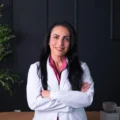
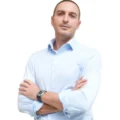
Paula Muto is a vascular surgeon.
She shares her story and discusses her KevinMD article, “Building individual health equity.”

The Podcast by KevinMD is brought to you by the Nuance Dragon Ambient eXperience.
With a growing physician shortage, increasing burnout, and declining patient satisfaction, a dramatic change is needed to make health care more efficient and effective and bring back the joy of practicing medicine. AI-driven ambient clinical intelligence promises to help by revolutionizing patient and provider experiences with clinical documentation that writes itself.
The Nuance Dragon Ambient eXperience, or DAX for short, is a voice-enabled, ambient clinical intelligence solution that automatically captures patient encounters securely and accurately at the point of care. Physicians who use DAX have reported a 50 percent decrease in documentation time and a 70 percent reduction in feelings of burnout, and 83 percent of patients say their physician is more personable and conversational.
Rediscover the joy of medicine with clinical documentation that writes itself, all within the EHR.
VISIT SPONSOR → https://nuance.com/daxinaction
SUBSCRIBE TO THE PODCAST → https://kevinmd.com/podcast
RATE AND REVIEW → https://kevinmd.com/rate
FOLLOW ON INSTAGRAM → https://www.instagram.com/kevinphomd
FOLLOW ON TIKTOK → https://www.tiktok.com/@kevinphomd
GET CME FOR THIS EPISODE → https://earnc.me/0OiIbQ
Powered by CMEfy.
Transcript
Kevin Pho: Hi, and welcome to the show. Rate and review at kevinmd.com/rate. Subscribe at kevinmd.com/podcast. Today on the show we have Paula Muto. She’s a vascular surgeon, and we’re going to talk about her KevinMD article, “Building individual health equity.” Paula, welcome to the show.
Paula Muto: Thank you, Kevin, and thanks for having me.
Kevin Pho: So we’ll get into your article in a little bit, but first off, briefly share your story and journey to where you are today.
Paula Muto: My story. So I’m a surgeon. I am the daughter of a surgeon, a great thoracic surgeon. I am married to a surgeon. I have a brother who’s a surgeon, and two uncles, all in Massachusetts, for a collective century. So you kind of get the picture that it’s in my blood. I’ve been a solo private practice surgeon pretty much all of my professional life. A few years ago, after my second child went off to college, I decided, “Now what?” And I didn’t like the way the system was. I was always railing against it, writing angry letters to The Wall Street Journal and The New York Times.
So I had an idea to be able to kind of disrupt the system, and I created a platform called UberDoc. It basically allowed patients to get direct access to specialists without having to take many steps, and rather than increase the price, we lowered it. So what did we do? We created a connection between patients and doctors that was direct, that didn’t depend on insurance, but it lowered the price.
So that journey has kind of had me, for the last six and a half years, traveling around the country, meeting so many of my colleagues. We started with specialists. We now have a platform that includes all doctors, because all doctors are specialists: our primary care colleagues, our pediatricians, our neurosurgeons, our neurologists, everyone around the country coming to the table to be transparent with their patients. So our mission really is about price transparency and access. A lot of this came from my personal journey, taking care of patients on the front lines, from a family of doctors taking care of patients on the front lines. And I always say the same thing: Medicine isn’t that complicated. Health care kind of gets in our way, and I’m just trying to disrupt the system with price transparency and access.
Real physician voices, twice a week
Free, and one click to unsubscribe.
Kevin Pho: So you went from being a private practice surgeon, and now you’re doing this health startup, UberDoc. As you started this journey, for the last six or so years doing UberDoc, what’s something that you’ve learned doing that? Because starting a startup like that isn’t something that most doctors are trained in.
Paula Muto: Well, it’s interesting. I still practice. It’s important for me to practice. And luckily, I’ve evolved my practice into an office-based practice that doesn’t require any call. My poor husband takes all the call in general surgery. And my father was actually an inventor his entire life. He worked with a great thoracic surgeon. He worked the day he died, and he always invented things. We called him a crazy inventor. I guess you’d call him an entrepreneur now. And he was so energized by the talent in the young people that he was always encountering.
Now I teach residents in family practice. I also have residents now in surgery, and I love young people. Embarking on this project to build a platform, the agile method and creative technology, was fascinating to me. I loved the whole concept. I learned so much. And then you enter into this ecosystem of other physician innovators, and it opens your eyes to where health care really has been and where it’s going. It gives you this amazing perspective, and I have to say, it’s just been so educational and eye-opening for me, and I bring that right back to my patients every day.
So I have to say that when people become entrepreneurs, for me it almost happened to me, as opposed to someone saying, “I’m going to go get an MBA and find a place to work.” For me, it was the opposite. It was like something inside me that I needed to get out. And then as soon as I started to talk to my colleagues and talk to my patients, I realized, “I can do this, and this is important.”
Kevin Pho: Now, for those other budding physician entrepreneurs who are out there, what’s the single biggest piece of advice that you can share with them?
Paula Muto: Patience. Medicine is much more, especially surgery: I diagnose you, I have to take out your gallbladder, I take it out, and we’re done. I make a diagnosis on your leg, and I can fix that. Business isn’t like that. Business has its own cadence, and oftentimes you have to put things out there, and it’s not quite scientific, right? Because there are a lot of things that come into play. You can’t control multiple variables. And as a control freak, a science person, like most of us are in medicine, you have to learn to go with the flow and look at things from different angles. So I think that is one thing. I thought when I built the platform, “We’re done,” right? And it’s like, no, that’s just the first step.
Kevin Pho: All right. So your KevinMD article is titled “Building individual health equity.” How did this article come about?
Paula Muto: Over the past few years, I’ve written a lot and thought a lot, and I’ve had the privilege of speaking with lots of really smart people, including people like yourself, right, who have really thought about health care, because it doesn’t work, right? We’re always looking for an answer: What’s wrong? And there’s a multitude of factors of what’s wrong. But fundamentally, what it comes down to, I feel, is that we need to change the way we think about our patient-doctor relationship. We talk about the erosion of the physician-patient relationship, and we’ve kind of let that happen because of the circumstances. You need to have lots of people, and you have high volume, and you have to have all these things in between. But technology kind of brought us full circle, and technology allowed doctor and patient to get back together again.
When I think of my own practice, things I used to operate on, now I do in my office. I don’t even do operations on patients’ carotids, because we manage them medically. We’re moving from life-threatening, limb-threatening conditions to lifestyle-limiting conditions because of age, and that shift in medicine has not been accounted for in our system.
So because of that, people own their health care, right? They own their health, and we have forgotten about that. We were in this paternalistic model: The doctor knows what’s best for you, and we’re going to fix your problem, diagnose it, and fix it. That’s not what it is. When I operate on a patient now, they don’t stay in the hospital for seven days, right? They don’t stay there until everything works great. They go home that afternoon. So if they live in a sixth-floor walk-up, or live in assisted living with people around them, those outcomes are going to be very different, and we don’t focus on any of those outcomes.
So my concept of individual health equity came about thinking about renting an apartment versus buying a home. When you think about health insurance, we keep paying a premium, paying a premium. It’s like renting an apartment, and now the landlord is making you pay for electricity, pay for utilities, pay for snow removal, pay for everything. Because we put into a system, we don’t feel like we’re getting anything out of it, because you have these high deductibles, co-insurances, co-pays, and restrictions. You can’t bring your pet, right? You can’t do this, you can’t do that. When we buy a home, we lose money, right? Every month we pay into something, but at the end, we know we’re going to have something of value. We’re going to bring that, and it’s going to invest in our future.
And I feel like that’s how we have to think about health care, when we invest in our health care. What if we could build individual health equity? If individual patients could take some of that premium and put it away in a health savings account, because they’re not sick now, but their father had a severe illness that they may be inheriting, they’re going to have some money aside to manage that care. And I think that managing care should be the patient’s. It shouldn’t be a third party’s.
And the patient-doctor relationship has evolved, too. We’re not hierarchical, “We’re going to tell you what to do.” We collaborate with our patients. We make decisions jointly. They come into the office having seen surgery on YouTube or Dr. Pimple Popper, right? So they’re informed. And there’s very good validated data out there, from “Your Life Depends on It,” that wonderful book by Talya Miron-Shatz, who’s done validated research on how patients make decisions, and it has nothing to do with health care literacy. It has to do with being a human and reacting.
So I kind of feel like, with technology the way it is, with our shift toward lifestyle-limiting medicine, and with all of our screening and our precision medicine, we’ve come full circle, and the patient and doctor are together and beginning to invest in individual health equity. That concept is that some of that money needs to be repurposed and not given to a third party, but put back into the patient’s hands. Not necessarily given to the doctor, but to the patient, and let the patient spend that health care dollar and invest in their personal health.
Kevin Pho: So give us an example of this in action, in terms of patients’ health savings accounts building individual health equity. Give us an example of something like that in your world.
Paula Muto: If you think of people who have health savings accounts right now, they’re limited to high-deductible plans, which I believe is like $1,400, not that high. And you have an amount that you can put in, and it’s tax-deferred. When you hit about 65, you’re not allowed to put it in anymore, which is kind of funny. But in my world, I’m thinking you have that health savings account, you go to your primary care, and you pay cash for that. You go to maybe your eye doctor, and you pay out of that for that. And then at the end, you’ve utilized less. When you’re employed, utilization dictates your premium, so literally your premium should come down, and for an entire organization, too, if they are encouraging people to do this.
But I think of it bigger. Why shouldn’t a Medicare patient who doesn’t utilize, who pays their primary care out of pocket, why shouldn’t they get that back in a federally funded HSA? And then the next year, they can use it again, and then use it again, because that will decrease utilization at the Medicare level, give more autonomy to the individual patient, and also provide income to primary care, which right now is pretty much cut out of the equation.
So I kind of feel like shifting the health care dollar into the patient’s hands means that they will pay out of pocket for all the small stuff. Then when you go to the hospital, it should be 100 percent covered. There shouldn’t be any question. When you look at other countries, this is how medicine works. National health care plans that are successful pay for the big stuff. The small stuff is always out of pocket. But right now in our country, we pay a lot anyway, and we don’t get any of that back. So I just want to take some of that and repurpose it to the patient, for their social determinants of health, to help those families when your spouse has to take off work to take care of you after your knee replacement.
Kevin Pho: Now, in our current economic climate, as you know, inflation is rising, and a lot of patients are dealing with higher prices and so many other financial pressures. Do you find that patients have the discipline to do those health savings accounts?
Paula Muto: I think they will when the doctors come to the table with price transparency. I think that the fear is you don’t know the price, right? And so they buy the insurance, and they maybe even pay extra for the PPO, right? They’re literally paying $5 to $10 a week, or per hour, out of their paycheck, right? That’s what health insurance is. It’s an extra $5 at a minimum. So what I’m saying is, why spend that $5? Take $2 of that away, right? I mean, you don’t need to spend all that, because it’s not that expensive to come to me, or to come to you, and there are so many other options. But we have to meet the patients halfway with price transparency. That is a federal law. It is not always being complied with. But the direct-pay option is becoming more and more important.
And I’ll tell you, I looked at my books recently. I’m an average doctor. I have an average payer mix, like everyone else: Blue Cross, Medicare, commercial insurances, and Medicaid, and ours is small. In Massachusetts, everyone has insurance, so there isn’t anybody who’s uncovered. The second-biggest payer to my office right now is the patient. An insured Blue Cross patient, an insured patient who has co-insurance and a deductible, is now responsible for more of my collections than my Medicare patients. This is astounding. If I’m the average doctor, this has to occur everywhere. So we’ve made a huge shift toward patient responsibility already, so we need to make it easier for those patients and be transparent.
Kevin Pho: Now, give us a sense of how difficult it is for patients to find that price transparency. If a patient wanted to, say, look at the price for a specific procedure or a certain imaging test, how easy or difficult is it for them right now?
Paula Muto: It’s nearly impossible. However, that’s one of the things that we’re doing with UberDoc. In our technology, we’re combining this CPT code crusher, through Crush Medical Debt, that’s going to be accessible through our platform, so patients can find at least the Medicare allowable, right, at least that estimate of what their procedure is going to cost. Otherwise, it is very hard to navigate. But the doctors can solve this problem. When we went to our doctors with UberDoc, we said, “OK, would you take a patient for cash? It’s going to be a little less than insurance, but they’re going to pay you immediately.” And they’re like, “OK, sure.” So all of my doctors said, “Yes, we would lower the prices for a patient.” Not below Medicare, but we’d lower the price, because it’s illegal below Medicare. But a lot of my doctors didn’t even know the price. They have no clue. But they all agree, because at the end of the day, it’s just a finite price, and all of our services are finite. And so I do believe that when doctors come to the table with price transparency, when they will lead their institutions, with the patients first and the doctors leading the patients, the institutions will change.
Kevin Pho: And what’s preventing us from price transparency? Is it the insurance companies?
Paula Muto: Lack of imagination and confidence. I think that they’re so embroiled in a system that has so many layers to it, and there’s a lot of cottage industry based around the complexity, that it’s just like, how many people does it take to screw in a light, right? I mean, honestly, would you not want to take cash? The concept of just, you get paid immediately. You deliver someone’s baby, they give you a goat, it’s done, versus bill, collect, a revenue cycle of chase. That is all money that’s spent to get money. So at the end of the day, why have all this in between? We can simplify this marketplace, and technology allows us to do that.
Kevin Pho: So tell me some of the obstacles that are preventing you from scaling. I can only imagine that, like you said, there’s a lot of inertia, there’s a lot of bureaucracy, and there are a lot of forces that are frankly against the system that you’re describing. So tell us how to get from where we are now to where you want to be.
Paula Muto: On the doctor’s side, it’s wonderful. Doctors out there, give me a seat in your waiting room. I don’t care if you’re working at Mass General or you’re working in rural Mississippi. Everyone can give me a seat in their waiting room for a direct-pay patient, because that’s the right thing to do, and it’s a smart thing to do. So that’s the first thing. We’re Ticketmaster for direct pay.
On the patient’s side, where do you start? Well, you can take out billboards and TV commercials and Google and all that, but that’s super expensive stuff. So we started to have conversations. Actually, the state of Massachusetts came to us first and said, “Hey, wow, this is really simple. We need access to specialists. Can we use your platform?” We’re like, “Sure.” Employers came to us and said, “Hey, we’re medical cost-share groups, we’re medical ministries, self-funded plans, people who want access to specialists and physicians who have a transparent price.” So we started partnering with them, and now we’re going to employers and saying, “Hey, this is a smart idea. Plug this into your health plan, and let people start to not use that insurance card.” Wean people off the addiction to their insurance card, and pay for stuff out of pocket, because there’s a benefit to them. They’re going to save money. They’re going to get faster care, better care, and higher value.
So the obstacles are the system itself, the cottage industry built around, I won’t say the profit, but it is the profit, of the middlemen in the system. And it’s very hard sometimes, when you’re in a system, to understand this. You can literally go to a business and say, “Would you like to take this?” If you go to a restaurant and say, “This person is going to pay by credit card, this one’s going to pay cash,” of course you’re going to take a cash payment, because you have that in your cash register. But there are people who actually say, “Well, wait a minute, wait a minute, stop. I need to take your insurance card.” It’s like, but that’s a processing fee, that’s time, that’s a delayed revenue cycle. But again, it’s lack of imagination on that side. Our obstacles really come down to just getting the word out to patients, and it isn’t so much an obstacle. It’s just getting the word out and getting people to participate.
Kevin Pho: We’re talking to Paula Muto. She’s a vascular surgeon, and her KevinMD article, which we’re talking about today, is titled “Building individual health equity.” Paula, what are some of your take-home messages that you want to leave with the KevinMD audience?
Paula Muto: I love medicine. It’s my family business, and I love my colleagues. I’m sad that many of us are really stressed right now and feel like they don’t have independence, they don’t have autonomy. I built UberDoc for my colleagues. I mean, it doesn’t even cost a doctor anything to join UberDoc. That’s how frictionless I wanted to make this. I want them to have confidence that they can be in front of the patient, that they can use modern technology, they can use the internet, they can absolutely be front and center, and that they need to shift in that direction, and that it’s OK. There’s no risk to it, because ultimately the patients will always follow them, because they are super well trained. They’re gifted by their education, and they’re gifted by the experience of taking care of patients, and patients know that. And I want to give my colleagues that confidence that they can in fact do this. They don’t have to give up too soon.
Kevin Pho: Paula, thank you so much for sharing your time and insight, and thanks again for being on the show.
Paula Muto: Thank you very much.
Listen and followApple PodcastsSpotifyYouTubeMore apps · Browse all episodes