














Listen and followApple PodcastsSpotifyYouTubeMore apps · Browse all episodes
“Health care has changed dramatically in the last decades, from the introduction of electronic medical records to the COVID-19 pandemic serving as a catalyst for telehealth and virtual care options to the increased familiarity with digital therapeutics, etc. Just as the industry has transformed over time, the physician’s role has similarly evolved.”
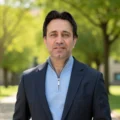
Julien L. Pham is a nephrologist and health care entrepreneur.
He shares his story and discusses his KevinMD article, “The evolving role of physicians in health care.”

The Podcast by KevinMD is brought to you by the Nuance Dragon Ambient eXperience.
With so many demands on their time, physicians today report record levels of burnout. Burnout is caused by many factors, one of which is clinical documentation. Studies indicate physicians spend two hours documenting care for every hour spent with patients.
At Nuance, we are committed to helping physicians do what you love – care for patients – and spend less time on clinical documentation. The Nuance Dragon Ambient eXperience, or DAX for short, is an AI-powered, ambient clinical intelligence solution that automatically captures patient encounters securely and accurately at the point of care. Physicians who use DAX have reported a 50 percent decrease in documentation time and a 70 percent reduction in feelings of burnout, and 83 percent of patients say their physician is more personable and conversational.
Rediscover the joy of medicine with clinical documentation that writes itself, all within the EHR.
VISIT SPONSOR → https://nuance.com/daxinaction
SUBSCRIBE TO THE PODCAST → https://kevinmd.com/podcast
RATE AND REVIEW → https://kevinmd.com/rate
FOLLOW ON INSTAGRAM → https://www.instagram.com/kevinphomd
FOLLOW ON TIKTOK → https://www.tiktok.com/@kevinphomd
GET CME FOR THIS EPISODE → https://earnc.me/QTPwIY
Powered by CMEfy.
Transcript
Kevin Pho: Hi, and welcome to the show. Rate and review at KevinMD.com/rate. Subscribe at KevinMD.com/podcast. Today on the show, we have Julien Pham. He’s a nephrologist and a health care entrepreneur. His KevinMD article is titled “The evolving role of physicians in health care.” Julien, welcome to the show.
Julien L. Pham: Hi, Kevin. How are you?
Kevin Pho: Very well. Thank you so much for joining me, and we’ll talk about your article in a little bit. First off, briefly share your story and journey to where you are today.
Julien L. Pham: Yes. So I’m a son of immigrants, a second-generation physician. I came to the U.S. as a first-generation immigrant by myself when I was 14. I went to undergrad and medical school at the University of Washington in Seattle, did my residency in medicine-pediatrics at the University of Illinois at Chicago, and went into adult nephrology at Mass General Brigham in Boston. I went on after that to build two companies. The first one that I founded was RubiconMD, which was a digital health company that was recently acquired, and the second one was a gene therapy biotech that we took public.
Armed with those two experiences, I decided for this next leg of my journey to be an investor, and so I founded this firm called Third Culture Capital here in Boston. We invest at the intersection of culture and care delivery. We do seed-stage investments and have made eight investments so far.
Real physician voices, twice a week
Free, and one click to unsubscribe.
Kevin Pho: So tell me about your background as an entrepreneur. Have you always had this interest during your medical training?
Julien L. Pham: You know, it’s only looking back that I realized I did. Like many others, I felt medicine was my vocation. I wanted to be the best academic clinician that I could be: teach, do good in the world, treat patients, do some research, and maybe make a name for myself. But I really wanted to do the noble thing. It was really serendipitous when I discovered entrepreneurship, and when I did, I just realized I had always been wired to be an entrepreneur. I just love building things and creating things.
Looking back, even in my clinical journey, there were several instances when things didn’t exist as part of the training program and I felt compelled to build them, not for myself but for the ones after me. And so I think that’s really the spirit of entrepreneurship: to feel that there’s an unmet need or a problem and that you have the passion and energy to build something.
Kevin Pho: Now, what kind of resources did you turn to? Because health care entrepreneurship isn’t commonly taught during medical school and residency. So when you decided that you wanted to build something that would fill that unmet need, what did you turn to for advice and guidance?
Julien L. Pham: I agree with you. In the traditional path of academia, you’re really given three options, right? You can be a clinician educator, you can be a researcher, and maybe you do some administrative work. So the path of a physician entrepreneur is one that you, at least back in the day, had to carve for yourself. I don’t know if you remember, it sounds like you and I are maybe of the same generation, but doing an MBA was very much frowned upon, right? Maybe doing an MPH, which I did, was a little bit more kosher.
But I taught myself, right? I picked up books and learned about entrepreneurship and various models, and it was during the early days of hackathons that I really had the opportunity to learn more about entrepreneurial thinking. And I’ve learned a lot by doing, frankly.
Kevin Pho: And how did you have time to do this, especially during medical training? You mentioned you were in a med-peds residency and then nephrology. How did you have time to have what is pretty much a second career on the side?
Julien L. Pham: This is what I tell people, right? Innovation and creativity for a physician actually start when you start to innovate your career or your schedule. I think that the minute you make a decision to build something and be an entrepreneur, it’s done, right? It’s your destiny. It’s hardwired in you. You are going on the path of entrepreneurship. And what you need to figure out next, from a practical, pragmatic standpoint, is how you innovate your career and your job in order to find that time.
So for me, the way I innovated in order to find time to build and to explore entrepreneurship was to go part-time in academia at Mass General Brigham and to supplement my income by moonlighting in a private practice. I did that in the early days so that I could leverage that clinical experience and be able to supplement my salary in order to explore entrepreneurship.
So it’s hard depending on your specialty, right? If you are a cardiothoracic surgeon and don’t do surgery, it’s not like you can take some time off to build stuff. But if you’re an ER doc, a dermatologist, or a hospitalist who’s seven on, seven off, it’s a little bit easier to tiptoe into building something and explore that path.
Kevin Pho: All right. Speaking of the evolving role of physicians in health care, that’s the title of the article that you wrote on KevinMD. Now, how did this article come about?
Julien L. Pham: It’s something I’ve been very passionate about, because so many physicians at various stages of their careers reach out to me and say, “Hey, Julien, I’d love to emulate your career and build companies or become an investor or something like that. What is the first step? What needs to be done?” And there’s no written path for that. I think you have to explore your own journey and your own risk-taking mindset.
But I would say that the advice that I give people is, number one, try to finish clinical practice, because it’s an incredible privilege. There’s no other life experience that allows you to see what we see as clinicians, right? Do at least your residency. That’s what I tell them. And then after that, it’s wide open. You can invest, you can influence, you can build, you can educate, you can do so many things. So this article came about because I want to help my peers figure out a step in their own journey.
Kevin Pho: Now, for those doctors who want to go on that non-clinical, entrepreneurial path and want to become investors, one of the things that you mentioned is finding a mentor, finding someone who’s already stepped on that path. How does one go about finding people like that?
Julien L. Pham: Yeah. I think you have to be social, right? You have to go and be very intentional about talking to people. The one thing I learned very quickly when I started RubiconMD was how powerful the network of a physician is. We just don’t realize that. I was always looking at MBA students and how social they were. They would create their own business card even though they didn’t have a job, right? It just said “MBA student,” and they would just walk around, introduce themselves, and give out their cards, and they had a very powerful network, true.
But then, when we built RubiconMD and we needed to build a network of specialists, I tapped into my network and I realized, “Oh my God, between medical school, residency, fellowship, and all the people we cross paths with, we have an incredible network that we can leverage.” And so I think it’s important for clinicians to go out there and continue to build these relationships and find people who can be supportive of your goals and your career, especially people who’ve been there before, and find mentorship that way.
Kevin Pho: Now, a lot of doctors have a pretty set path, right? In order to finish residency, you do pre-med, medical school, internship, and residency, and now you’re a physician who can practice. Sometimes making that transition to a non-clinical path can be a little bit jarring, and it takes a little bit of time to transition. So in your case, how long did it take for you to feel comfortable taking that non-clinical path? Was it a big change for you?
Julien L. Pham: It was a big change, right? And I think you have to commit to it. A lot of it has to do with your willingness to take risks, and I was willing to do that, and I was in a position where I could. Part of it was because I innovated my career, right? I was able to do this part-time gig that supplemented my salary. So I think that’s the first step. You have to feel comfortable with how you’re going to survive the next year or two years as you’re building something. But I think making that leap is a very personal decision, and I think you need to just look at what it is that you’re passionate about, that you’re competent with, and that you see yourself doing for the next five to 10 years.
Kevin Pho: Now, when you decided to take the entrepreneurial path, what was the reaction from your colleagues and your family?
Julien L. Pham: My Asian parents were like, “We don’t understand what this is. Why can’t you be a doctor? You’re very good at that, and you were at a great institution. We spent a lot of money and sacrificed a lot for you to be there. So why make that decision?” But that happens in every family, right? So you have to be patient and explain to them what you’re doing, and eventually they understand.
My peers, I think, were the ones who reacted the strongest. I think that back in the day it was still uncommon for a clinician, especially at a top institution, to make that leap and go to industry. In my case, I wasn’t really going to industry. I was really starting a company, which was a different beast in its own right. But at the same time, I felt that there was a certain degree of admiration for the risk-taking, for doing that, and they were like, “Wow, go for it.”
And depending on who you speak with, I think that clinicians get to a point in their career where there’s a certain degree of burnout, and they look at the other side, and the grass always looks greener on the other side. But something that I would like to share with your audience is that, yes, it may seem that the grass is always greener on the other side, but believe me, entrepreneurship is tough, right? It requires a lot of practice. It’s not a luxurious lifestyle, and it takes a lot of sacrifice and effort. It’s maybe not as bad as being on call and working 100-hour weeks, but it’s tough sometimes.
Kevin Pho: Give us an example of some of the sacrifices of entrepreneurship that aren’t apparent.
Julien L. Pham: Yeah. I mean, your salary takes a dip, because you only have so much time, so you have to make some cuts somewhere. I remember that when we were building RubiconMD, I had to make weekly trips to New York, and I couldn’t necessarily afford to stay in a hotel or anything like that, so I slept on my sister’s couch in a tiny apartment for months at a time. We think of that fondly as we think about the success of the company, but your time is split, your relationships suffer, and it’s a work of passion, really.
Kevin Pho: Now, for physicians who want to take that entrepreneurial path, is it necessary that they get an MBA?
Julien L. Pham: I don’t think so. I think it helps, for sure. I think there are wonderful MBA programs out there where you get to network and meet people. If you talk to people who have gotten MBAs, many of them, not all, but many of them, will say that the biggest value of an MBA is the network that comes with it. So it depends on what stage of your career you are at. Obviously, if you’re in your 20s or early 30s, it makes sense to do a joint program, for example, if you’re an MD. If you’re at a later stage, the question is, is it worthwhile to do an executive MBA? That’s crossed my mind, and I think about it on a very regular basis, even now.
But I think there’s so much more to entrepreneurship than getting a degree, right? I think it’s a craft in a way. It’s a mindset. And there is a lot of opportunity to learn on the fly, especially if you surround yourself with people a lot smarter and wiser than you who can mentor you along the way, and you can have this beginner’s mindset, right? You are starting on this path of entrepreneurship in the same way that you started on the path of being an intern, learning and observing and just trying to do the right thing.
Kevin Pho: We’re talking to Julien Pham. He’s a nephrologist and a health care entrepreneur. His KevinMD article is titled “The evolving role of physicians in health care.” So Julien, for those physicians who’ll be listening, who are already in clinical practice but have a kernel of an entrepreneurial idea and may want to pursue it, tell them what their immediate next steps should be.
Julien L. Pham: The immediate next step is to network. Be known as a physician who has that kernel of entrepreneurship, right? And so be connected, be an advisor, be an influencer, be an early adopter for some of these startups around you. And where do you find them? You have to go out there and network and socialize. Go to events, go to hackathons, do whatever it takes. Find CEOs and entrepreneurs and say, “Hey, I’m Dr. So-and-so. This is my specialty. Oh, it looks like you are innovating in the fertility space. It turns out I’m an IVF doctor, and maybe I can give you some insight on what it’s like. Maybe my clinic can be a pilot site for you.” So there are many ways for physicians to get involved. I would say number one is network. Be known within your ecosystem and your community.
And then after that, it’s just the different directions that you take depending on your experience and what you’re willing to do, and you stack experience on top of experience. You may start as an early adopter, the person who is going to try that technology, be very open-minded about it, and give feedback. You may have enough experience to be an advisor, and these companies may say, “Oh, wow, thank you for trying my platform in your clinic for the past six months. You’ve learned a lot about it. You’ve been so helpful to us. Would you be willing to be an advisor for this company?” And take that opportunity if it’s a good fit for you. It doesn’t hurt. I mean, it’s just time and commitment and your expertise.
And then after that, as you grow, maybe you will put your money where your mouth is, and you believe in the technology so much that you can become an angel investor and back these companies, and do all of the above, right? Be an influencer and an adopter, but also be an advisor to these companies as you invest in them.
Kevin Pho: And my final question: What are some of your take-home messages that you want to leave with the KevinMD audience?
Julien L. Pham: I think that the profile, the phenotype, of the physician innovator, the physician investor, is very unique, because we’ve been in the driver’s seat and we have this empathy. And most importantly, most of us went into medicine because we wanted to impact the world, right? I hope that spirit stays as you are transitioning from being a clinician to being an operator or an investor, because maybe you still want to try your best to put a drug out as quickly as possible and as safely as possible so that patients can have access to a new medication. Maybe you want to put a new technology, a new platform, out there.
But at the end of the day, I think what’s most important is to preserve this code of ethics, right, and this oath that we took when we donned the white coat, the Hippocratic Oath: to do no harm. And I think there are many ways to do no harm. You can do no harm in the practice of medicine. You can do no harm as you are scaling technologies, and make sure that what you’re putting out there is efficacious, effective, and safe. And as an investor today, I try to do no harm, because I try to select and invest in companies that I think are going to have an impact in the world while I return capital to my investors. And this “do no harm” from a fiduciary standpoint is, yeah, I don’t want to lose money for my investors, and I don’t want to do financial harm to them. So I think there are many, many dimensions to think about, but I think that we are really hardwired to really create impact in the world, whichever way we apply our skill sets.
Kevin Pho: Julien, thank you so much for sharing your time and insight, and thanks again for being on the show.
Julien L. Pham: Thanks, Kevin.
Listen and followApple PodcastsSpotifyYouTubeMore apps · Browse all episodes