







Listen and followApple PodcastsSpotifyYouTubeMore apps · Browse all episodes
Join us on this episode as we explore the power of gratitude with Cindy Tsai, an internal medicine physician. We all hear about the benefits of gratitude and the importance of being thankful for what we have. But gratitude is not just about thinking positive thoughts. It’s about embodying gratitude, feeling it in your body, and connecting with it on a deeper level. Dr. Tsai will discuss the importance of connecting our mind and body and how this can lead to true wellness. She will also share insights on how to bring more gratitude into our lives, even in the midst of challenges and difficulties. If you want to uplevel your gratitude practice, this episode is for you.
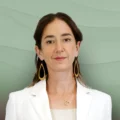
Cindy Tsai is an internal medicine physician and can be reached on Twitter @cindytsaimd.
She shares her story and discusses her KevinMD article, “Don’t make this mistake with gratitude.”

The Podcast by KevinMD is brought to you by the Nuance Dragon Ambient eXperience.
With so many demands on their time, physicians today report record levels of burnout. Burnout is caused by many factors, one of which is clinical documentation. Studies indicate physicians spend two hours documenting care for every hour spent with patients.
At Nuance, we are committed to helping physicians do what you love – care for patients – and spend less time on clinical documentation. The Nuance Dragon Ambient eXperience, or DAX for short, is an AI-powered, ambient clinical intelligence solution that automatically captures patient encounters securely and accurately at the point of care. Physicians who use DAX have reported a 50 percent decrease in documentation time and a 70 percent reduction in feelings of burnout, and 83 percent of patients say their physician is more personable and conversational.
Rediscover the joy of medicine with clinical documentation that writes itself, all within the EHR.
VISIT SPONSOR → https://nuance.com/daxinaction
SUBSCRIBE TO THE PODCAST → https://kevinmd.com/podcast
RATE AND REVIEW → https://kevinmd.com/rate
FOLLOW ON INSTAGRAM → https://www.instagram.com/kevinphomd
FOLLOW ON TIKTOK → https://www.tiktok.com/@kevinphomd
GET CME FOR THIS EPISODE → https://earnc.me/lFC3XS
Powered by CMEfy.
Transcript
Kevin Pho: Hi, and welcome to the show. Rate and review at KevinMD.com/rate. Subscribe at KevinMD.com/podcast. Today we welcome back to the show Cindy Tsai. She’s an internal medicine physician, and today’s KevinMD article is titled “Don’t make this mistake with gratitude.” Cindy, welcome back to the show.
Cindy Tsai: Thanks for having me. It’s good to be back.
Kevin Pho: Now, you’ve been on the show multiple times, but for those who haven’t listened to our first few episodes together, just briefly share your story and journey to where you are today.
Cindy Tsai: Sure. I am an internal medicine physician, and I had always wanted to be a doctor. I worked super hard, did all the right things, and went to all the top schools, and along the way I burned out and got sick, which I talk about in my TEDx talk: what it was like to wake up one day not being able to see, which was terrifying. It really prompted me to pause, slow down, and really think about what I wanted in life. I had this idea and vision of success and of what I wanted my life to be and look like, and I was so focused on that that I lost sight of the present moment, in a way.
So, fast-forward, I did a lot of healing, explored a lot of modalities, and got a lot more training, and now I really see that mindfulness and coaching are very, very powerful tools that help you optimize your well-being. So I transitioned into entrepreneurship, and I now focus on life coaching and speaking to help others on their journeys.
Real physician voices, twice a week
Free, and one click to unsubscribe.
Kevin Pho: You mentioned you gave a TEDx talk back last fall. How was that experience?
Cindy Tsai: It was great. It was definitely a process, and it was work. When I first thought about giving a TEDx talk, it’s such a big stage and a great opportunity, and when I first started the process, I thought, “Yeah, of course that’s work.” But it’s a different type of work, because as physicians we give presentations and talks all the time, especially in our training, right? So I was thinking it would be similar: “OK, I can write my script, give a talk, no big deal.” But part of it was also recognizing that it is not the same, because it’s about being a dynamic speaker. It’s about not just the content but your delivery and your presentation, weaving it into a story, and how to be more engaging. So it was definitely a really great learning experience, and I’m really glad that I was able to do it.
Kevin Pho: Now, when you shared your story on a TEDx stage, what are some of the responses that you received, perhaps from some of the other clinicians who may be listening to this for the first time?
Cindy Tsai: I am really glad that a lot of clinicians have reached out to me to share their own stories and journeys. There are a lot of physicians and clinicians who have been on this nonstop treadmill of constantly going and doing, and then reaching a point of just breaking down sometimes, whether it be some type of health issue, a serious, big diagnosis, that really prompts them to slow down. So there are definitely people who have experienced similar things, and they’re like, “Yeah, it’s so true. We really needed that pause to actually pay attention.” Because I talk about how our body has its own intelligence, how it’s always talking to us, but we never really pay attention until there are really serious signs, like you can’t move, or can’t see, in my case.
And then there are also the other people who recognize the importance of taking an integrative and holistic approach to wellness, and who see that a lot of times with Western medicine we have a tendency to immediately go to the quick fix, looking for the pill to make the symptom go away. For me, I had an autoimmune condition, autoimmune uveitis impacting my eyes, that could have led to full blindness. So of course I did all the immunosuppressants and steroids to halt the inflammation, but I also wanted to look at the underlying root cause: Why was there so much inflammation? What can we do about it, instead of just putting on a Band-Aid, doing that quick fix, and then ignoring it and shoving it under the rug? So I’m glad that it’s been able to open our medical community to these other modalities and paths to wellness. I’m not saying that there’s only one way, but being open to different things could be very helpful.
Kevin Pho: All right, let’s talk about your most recent KevinMD article. It was published last December, and it was titled “Don’t make this mistake with gratitude.” Now, how did this article come together?
Cindy Tsai: Sure. In the personal development space, there’s a lot of talk about this idea of gratitude and how it’s really important. It’s great that there’s a lot of science and studies coming out about it, especially with positive psychology, and it is really important to have that sense of gratitude, with benefits like improved sleep and mood, decreased pain, and all these things. I just wanted to bring awareness to this idea that gratitude is not just something you do and check off your list, because so often we see something and we’re like, “OK, let me do it and check it off,” and we’re done, moving on.
I hear and see people who are like, “Yeah, I did my gratitude, wrote it down in my gratitude diary,” all the things, and then the rest of the day they’re still not very happy. They’re frustrated, annoyed, and upset. And it’s like, OK, let’s pause. We should really understand how powerful gratitude actually can be when you really understand the deeper meaning behind it.
Kevin Pho: So give an example as it relates to a lot of the physicians you talk to. You said that gratitude is very powerful, with a lot of deeper meaning. Tell us more about that, especially for those clinicians who may be listening to this, and how it relates to them.
Cindy Tsai: One of the biggest learnings with gratitude is that it’s about embodiment and being in that state of gratitude. It’s really easy to be grateful when things are going well, right? It’s like, “Oh, great, you finished your notes on time. You saw your favorite patient,” all the good things. But it’s another thing to still be in that state of gratitude when things aren’t working out, for example, the patients who are always late, or who are demanding and have so many questions, the doorknob questions, where the visit is over and then they ask you, “Oh, I’ve actually been having chest pain.”
So it’s about recognizing that gratitude is actually a moment for you to be present. It’s not to say that life is supposed to be always positive, rainbows and daisies. That’s not realistic, and not at all what I’m saying. But it’s understanding, “Hey, this is a moment for me to actually understand, OK, something is going on with this patient. It’s an opportunity to support and to help. How can I be grateful for this? How is this helping me to continue to be of service and to really connect with someone?”
Of course it’s a practice, and in the moment, when you’re stressed out and running late, it’s really hard, I know. But this is why I wanted to bring awareness to this idea and this topic, because a lot of times when we’re stressed out, we just keep feeling more and more stressed out. So we need a way to snap out of that so that we can be more present and shift into a different mindset.
Kevin Pho: So take us into one of your coaching sessions. Let’s say you’re talking to a physician and you want to instill this genuine sense of gratitude, or you want to advise them on how they can stay in the moment when it comes to gratitude. Tell us what you would say to this physician. How would you coach them?
Cindy Tsai: I think the first thing is to remember what gratitude feels like for you, keeping it very simple and easy. Think of something in the last 24 hours that made you really grateful. It could be something as simple as having a really yummy breakfast, or waking up, seeing my kids, dropping them off at school, something beautiful, whatever it is. But really, we first need to know what it feels like, and then stay with that feeling and really remind yourself, “OK, it is possible to be grateful.” Then recognize, “Hey, what was I thinking in the moment that was making me feel grateful?” Then take that apart and apply it to another situation that is maybe a lot more challenging, and recognize, “Hey, what was going on at that point in time?” And how can we actually reconcile the thoughts, in a sense? To say, “OK, what is it that is causing you to feel so stressed? What’s that gap?” And then really take that apart.
A lot of times it’s because we have this expectation of what things should look like, and when there is a gap, it’s very hard for us to accept it, because we’re so attached to how we want it to look. So it’s really just taking a pause, calling it out, and saying, “OK, first, is this realistic? What’s actually going on?” And then really recommitting and choosing again how I would rather feel. So it’s very intentional, and it’s also a very supportive and neutral practice. It’s about really taking all the negative emotions and connotations out of it and becoming this observer so that you can actually look at what’s going on and move to a more supportive place.
Kevin Pho: Now tell us a before-and-after case study, where a physician perhaps took that checklist approach to gratitude, as you say, and then maybe how this physician changed afterward and how that moved the needle in his or her life. So give us a before-and-after case study.
Cindy Tsai: A lot of clients, when we first start working together, hear about gratitude and then don’t really practice it, or they’re like, “Yeah, yeah, whatever.” And I send them a gratitude journal and all the things. So I invite them to create a morning routine. First thing in the morning, instead of immediately looking at your phone, all the emails and social media, pause and quickly check in: “Hey, what are three things that I’m grateful for today?” And really take a moment to appreciate them. I also ask them to, as best as they can, look for different things every day. This really trains the brain to look for what’s working, because initially, when you’re always writing down the same things, like, “OK, I’m grateful for my bed,” and this and that, food, water, we become numb to it. So we essentially have to be very intentional to shift out of that, and a practice I like to share is to look for different things.
I’ve seen that after just weeks of doing this practice, my clients are like, “Yeah, I feel so much more relaxed and calm.” Especially when you start the day with that, it really sets the tone of your day: “Oh, OK, there are so many things that are good, that are working.” And you almost look through that filter as you go through your day. So it really sets you up for success in that way.
Kevin Pho: We’re talking to Cindy Tsai. She’s an internal medicine physician. Her KevinMD article is titled “Don’t make this mistake with gratitude.” Cindy, what are some of your take-home messages that you want to leave with the KevinMD audience?
Cindy Tsai: As I mentioned, gratitude is not just about doing it, writing it down, and then forgetting about it the rest of the day. It’s about checking in throughout the day as things come up and really being in that state of gratitude. A great way to come to this is really thinking about the things you felt grateful for and tapping into that, and remembering that this is a skill. So it’s about practice. Think about it: As you go to the gym, if you want to build muscle, you’re going to go consistently. You’re going to do those reps, do the bicep curls, whatever it is. It’s the same thing with gratitude. In the beginning, when you don’t have a gratitude practice, it’s going to feel really weird. You’re going to roll your eyes, whatever it is, and you’re like, “This isn’t working.” But it’s consistency, it’s practice, and it’s a skill that anyone can develop. The more you’re able to really connect and be in it throughout the day, the easier it will be, and I promise you’re going to see so much more benefit.
Kevin Pho: Cindy, thank you so much for coming back on the show and sharing your time and insight.
Listen and followApple PodcastsSpotifyYouTubeMore apps · Browse all episodes