
















Listen and followApple PodcastsSpotifyYouTubeMore apps · Browse all episodes
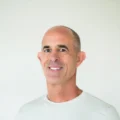
Today’s episode features Brian Gelbman, a pulmonary and critical care physician. The COPD management space is facing a growing crisis, with a shortage of pulmonologists and respiratory therapists, and limited access to pulmonary rehabilitation facilities. This has resulted in a fragmented care landscape that leaves patients with limited options and a lack of continuity in their care journey.
Brian will discuss the urgent need for digital innovation in the COPD care space. He’ll talk about the benefits of virtual care models, including remote patient monitoring, on-demand coaching, and regular touchpoints for patients to engage with their health. These solutions can streamline clinical workflows for providers and monitor for acute exacerbations to improve health outcomes.
Join us as we explore the ways in which virtual care innovations can transform the paradigm of care for patients with COPD. From improving medication adherence to making pulmonary rehabilitation more accessible, the adoption of digital health solutions is crucial to address the growing crisis in the COPD management space.
Brian Gelbman is a pulmonary and critical care physician.
He shares his story and discusses his KevinMD article, “The time is ripe for virtual care solutions in COPD.”

The Podcast by KevinMD is brought to you by the Nuance Dragon Ambient eXperience.
With so many demands on their time, physicians today report record levels of burnout. Burnout is caused by many factors, one of which is clinical documentation. Studies indicate physicians spend two hours documenting care for every hour spent with patients.
At Nuance, we are committed to helping physicians do what you love – care for patients – and spend less time on clinical documentation. The Nuance Dragon Ambient eXperience, or DAX for short, is an AI-powered, ambient clinical intelligence solution that automatically captures patient encounters securely and accurately at the point of care. Physicians who use DAX have reported a 50 percent decrease in documentation time and a 70 percent reduction in feelings of burnout, and 83 percent of patients say their physician is more personable and conversational.
Rediscover the joy of medicine with clinical documentation that writes itself, all within the EHR.
VISIT SPONSOR → https://nuance.com/daxinaction
SUBSCRIBE TO THE PODCAST → https://kevinmd.com/podcast
RATE AND REVIEW → https://kevinmd.com/rate
FOLLOW ON INSTAGRAM → https://www.instagram.com/kevinphomd
FOLLOW ON TIKTOK → https://www.tiktok.com/@kevinphomd
GET CME FOR THIS EPISODE → https://earnc.me/03BJip
Powered by CMEfy.
Transcript
Kevin Pho: Hi, and welcome to the show. Rate and review at KevinMD.com/rate. Subscribe at KevinMD.com/podcast. Today on the show, we have Brian Gelbman. He is a pulmonary and critical care physician. His KevinMD article is titled “The time is ripe for virtual care solutions in COPD.” Brian, welcome to the show.
Brian Gelbman: Thanks, Kevin. Thanks for having me on.
Kevin Pho: So we’ll get into the article in a little bit. First off, briefly share your story and journey to where you are today.
Brian Gelbman: All right, sure. So I’m a pulmonologist. I practice in New York City. I’m actually in private practice, but I’m on faculty at Weill Cornell. I would describe my practice as a general pulmonary practice, but I’ve always kept a hand in research. I try to collaborate with my full-time faculty on clinical research at Cornell when I can. When I was a fellow, I did a lot of research in COPD on genetic studies.
Then, as I’ve been in practice, I’ve been sort of interested in emerging technologies that will complement the care of COPD patients. My first experience with that was with a portable spirometer. Someone was making an alternative to that, and we did some studies in COPD to make sure that it matched the gold standard, which is our pulmonary function testing. Then that evolved to where I met a company called Wellinks. They made a portable nebulizer, and I realized that that was the first step toward this whole array of digital solutions you could come up with for COPD patients: to monitor their spirometry at home, monitor their nebulizer use at home, and monitor their medication use at home.
I had done a pilot study on that, because Wellinks had a platform for collating all that information and following your patients. After that study, I realized that this had tremendous potential. I don’t think there was a lot of knowledge in the general pulmonary community about it, and so that was sort of the impetus for the article: just to broaden the awareness of what’s available now and where the future of this is probably going for COPD care.
Real physician voices, twice a week
Free, and one click to unsubscribe.
Kevin Pho: All right, so before we get into some of the technological advancements when it comes to COPD, just from your practice, what are the biggest challenges COPD patients face today?
Brian Gelbman: So with a lot of these patients, the nature of this chronic illness is that they have limited mobility. A lot of them are homebound, and coming into the office for appointments is a challenge. I was often struck by the fact that, geez, we make decisions on these patients seeing them once or twice a year, and often by the time they show up in my office, they’re very winded. Their oxygen levels are low just from getting there. They don’t look like themselves.
So it’s hard to make adjustments based on these short 15-minute visits that you see once or twice a year, especially in a patient who’s got very limited mobility, like COPD patients have. That was one reason for this article, also: If we have the tools to better assess these patients in their home environment, it’s a lot less taxing on them, and it’s a lot more informative for the physician.
Kevin Pho: All right, so let’s talk about that article, “The time is ripe for virtual care solutions in COPD.” Tell us, how did this article come together?
Brian Gelbman: So the article, as I said, came about after this research project I had done with Wellinks, where we took 20 patients of mine who had severe COPD, who were very limited in their mobility. We wanted to see: Could they adapt to a digital tool, something that was based on an app on their phone, that would monitor their spirometry, monitor their pulse oximetry, and monitor their medication use? To our surprise, these patients did very well with this platform and were eager to see this kind of technology evolve.
So I just felt that, here I am, I’m practicing somewhere where we have a lot of resources, in New York City. I realized that, geez, all these tools, which are being developed by many people, are easily scalable. They are something that could be deployed irrespective of where people live. It’s in the early stages of all this, and I thought it was a good time to sort of broaden physicians’ awareness of what’s available.
Kevin Pho: So take us into that workflow. One of the patients who had this platform could do spirometry at home with the app. Walk us through that and how you would get that data, and tell us what you would do with that data.
Brian Gelbman: Yeah, so I think a lot of these chronic disease management monitors all start as monitoring platforms. The way I think the field’s evolving is that you’ve got these digital tools that can record vital signs, oxygen levels, spirometry, and medication use, and it would collect it and present you with a one-month summary of all the data on the patient. The idea would be that you could pick up changes in these patients as they happen in real time. They’re also set up to provide alerts if there’s a drastic change that happens, say, someone’s oxygen levels are falling in a sustained way. But in general, this would collect all the data and present you a monthly report.
But what’s also evolving with these tools now is that it’s not just data collection with these digital health solutions; it’s also a way to augment patients’ care. One of the biggest potentials with these tools, I think, is that some things where there are very severe limitations, such as pulmonary rehabilitation, can be administered through an app or a digital platform like this. So not only is it receiving information, but now it has the ability to provide information to the patients as well.
Kevin Pho: So tell us the case study of a specific patient, or it could be a hypothetical patient, where you receive this monthly snapshot of their COPD status, and how you made a medical decision based on that.
Brian Gelbman: Yeah, so one of my patients really loved the system and was very diligent about putting in all this information, and we could just see that his medication adherence was very good and those vital signs were stable. So when he would come in for a follow-up visit, let’s say, and said, “My COPD seems much worse,” we’ve already ruled out medication compliance as one reason why there might have been a change in his health. Then you start looking for other things, like, say, a virus that might have exacerbated his COPD, and then you can adjust his care plan accordingly.
Kevin Pho: And in general, are there a lot of different types of platforms like this? How common is something like this?
Brian Gelbman: Yeah, I think there are a lot of platforms in development. Of course, I’m just focused on COPD. It’s probably a little bit more advanced than some other chronic disease states. I know diabetes is far advanced in what they can offer in digital health solutions, between monitoring patients’ glucose levels and then making suggestions about medication changes from that. I think the same is true of congestive heart failure, where they can monitor a lot of things about the patient and then also give feedback to the patient about how to either adjust medications or make lifestyle or diet modifications. I know a lot of companies are doing the same thing with COPD, which is where my interest is, and I think there’s a lot of potential there.
Kevin Pho: Now, in terms of costs, let’s say someone, a primary care physician or a pulmonologist, wanted to implement some type of remote monitoring system like this. What are some typical costs to the patient? Is it covered by insurance, things like that?
Brian Gelbman: That’s an excellent question that even to this day I’m not totally clear on the answer to, because it raises the question of who will have to pay for this at the end of the day. I think most of the modeling I’ve seen does not expect the patient to pay for it. I think the field is evolving where they are trying to convince the payers, the third-party payers, to pay for it, and I think we will get there.
My understanding is that a lot of third-party payers, of course, want to know that this is cost-effective. So a lot of the companies that are developing these platforms are trying to show that this is going to reduce hospitalization, and that this is going to reduce overall cost to the health care system, by having a platform that can help monitor someone’s chronic disease state.
I have seen other models where they actually charge the physician. There are reimbursement fees through Medicare for doing remote patient monitoring. To me, I’m not sure that model makes the most sense. I think ultimately what would have to happen is that these platforms demonstrate that they are cost-effective, and then you get the payers to basically pay for it in order to keep their costs down on these chronic disease states.
Kevin Pho: Now, one of the things with remote patient monitoring is the inundation of data, right? I’m sure you’re very busy. I’m in primary care, I’m very busy, and we have people with Apple Watches that automatically report back things like EKGs and all this data, right? So how do you sift through all that data, in terms of your busy schedule, and separate the signal from the noise?
Brian Gelbman: I don’t think the workflows are in place right now, and I think you’re right. It’s going to be a little bit of a sea change in how we all approach our patient care visits. To me, when a patient comes in with stacks of paper with their blood pressure readings for a month, it’s kind of hard to flip through it and make sense of it. But I think these programs do have the ability to help us synthesize that information in a way that makes a lot of sense. I don’t think anyone knows the ideal way to present months or years of COPD data, for example.
But I can tell you, I’m also a sleep physician, and a good analogy is that I do get these sleep reports for my sleep apnea patients, and they do a nice job of synthesizing how often the patient’s using the system, how much air leak is happening, and what the average pressure settings are. You get used to looking at these summary reports that go on over months, and I could see a very similar output from any of these chronic disease states, where we as physicians will become much more accustomed to looking at this data quickly and realizing how to make changes from it.
Kevin Pho: So you have a general pulmonology practice. How do you incorporate these periodic COPD snapshots from that remote monitoring system into your daily workflow?
Brian Gelbman: Well, I’m not there yet. No system is really mature enough yet to be there. But how I do envision it going ahead is just like you said. Right now, when I see a COPD patient once or twice a year in the office, I’m usually just relying on the vitals I get at that visit. I’m usually just relying on how they’re feeling in the last week or so. What I’d like to see it evolve to is that when you see those patients at their semiannual visits, you’ve now got six months of data synthesized in a way that you can understand, with a summary sheet of that in front of you, and then you can make your adjustments based on that to medications and lifestyle.
Kevin Pho: So from a primary care standpoint, and to those primary care clinicians listening to you, what’s on the horizon when it comes to COPD treatment? It could be treatment, it could be technology. What do we have to look forward to?
Brian Gelbman: Yeah, I think these digital tools will really facilitate the care of these patients without one necessarily even relying on seeing a specialist like myself. I think especially in less resource-rich areas, it’d be wonderful for a primary care physician to refer a patient to these digital solutions, because, of course, it takes a lot of time to manage these patients.
I think these platforms, in addition to all the monitoring we’ve been discussing, will have the opportunity to give patients help with medication use and show them how to use their inhalers. They may be able to connect them with a pulmonary rehabilitation specialist and do pulmonary rehabilitation through the app, or even with some health coaches to talk to them about tobacco cessation and healthy diet. So all the things we know we should do as physicians, and we don’t really have the time to do in a 15-minute visit, I think there are now the digital tools in place to really help the care of these kinds of patients.
Kevin Pho: And how about from the patient standpoint? How easy was it for them to adopt these digital tools? Was it a pretty straightforward uptake?
Brian Gelbman: It was, yeah. That was one of the most surprising things from the study that we did. I think all 20 patients in the study easily understood how to use the app, and they all rated it very highly and wanted to see more of it.
Kevin Pho: And in terms of spirometry at home, what does that entail?
Brian Gelbman: Yeah, so there are a lot of digital spirometers for home. A lot of them are Bluetooth-enabled, and they can connect with many different apps. That was one way the patients could get an objective measure of how their lung function is, and one thing we showed in our study was that it had correlation with the same readings we would get in the office.
Kevin Pho: We’re talking to Brian Gelbman. He’s a pulmonary and critical care physician. His KevinMD article is titled “The time is ripe for virtual care solutions in COPD.” Brian, tell us some of the take-home messages that you want to leave with the KevinMD audience.
Brian Gelbman: Well, I would say to everyone, I think these digital health solutions are definitely going to be the wave of the future, especially for a lot of chronic disease states. I think of them as an excellent complement to everything that we do. I don’t view them in any way as a threat to the physician-patient relationship. There are so many small things we all know we need to address and deal with in these patients, and frankly, our current models don’t really provide the time to sit and speak to patients in depth about tobacco cessation, or maybe spend all the time we need to show them how to use their inhalers, or even make sure they’re using their medications correctly.
So I think we’ve got a huge wave of tools coming in front of us that can really help provide all those missing pieces that are kind of slipping through the cracks right now but really would make a big difference in patients’ care.
Kevin Pho: Brian, thank you so much for sharing your time and insight, and thanks again for being on the show.
Brian Gelbman: Kevin, thank you so much.
Listen and followApple PodcastsSpotifyYouTubeMore apps · Browse all episodes