













Listen and followApple PodcastsSpotifyYouTubeMore apps · Browse all episodes
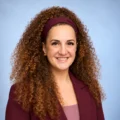
In this episode, we are joined by clinical psychologist and health systems leadership consultant, Nicola F. De Paul, to discuss the importance of psychological safety in health care environments. Nicola shares her personal experience of addressing psychological safety concerns at an academic medical center and the impact of implementing changes in the training environment. We explore the role of health care leaders in creating psychologically safe spaces, the need for self-reflection, and the importance of elevating diverse voices to create a supportive environment for all employees. Tune in as we dive into creating resilient health care systems where everyone thrives and patient care is safer.
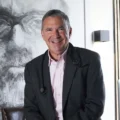
Nicola F. De Paul is a clinical psychologist and a health systems leadership consultant.
She shares her story and discusses her KevinMD article, “Leaders who elevate diverse employees create psychological safety.”

The Podcast by KevinMD is brought to you by the Nuance Dragon Ambient eXperience.
With a growing physician shortage, increasing burnout, and declining patient satisfaction, a dramatic change is needed to make health care more efficient and effective and bring back the joy of practicing medicine. AI-driven ambient clinical intelligence promises to help by revolutionizing patient and provider experiences with clinical documentation that writes itself.
The Nuance Dragon Ambient eXperience, or DAX for short, is a voice-enabled, ambient clinical intelligence solution that automatically captures patient encounters securely and accurately at the point of care. Physicians who use DAX have reported a 50 percent decrease in documentation time and a 70 percent reduction in feelings of burnout, and 83 percent of patients say their physician is more personable and conversational.
Rediscover the joy of medicine with clinical documentation that writes itself, all within the EHR.
VISIT SPONSOR → https://nuance.com/daxinaction
SUBSCRIBE TO THE PODCAST → https://kevinmd.com/podcast
RECOMMENDED BY KEVINMD → https://kevinmd.com/recommended
GET CME FOR THIS EPISODE → https://earnc.me/NTYIXf
Powered by CMEfy.
Transcript
Kevin Pho: Hi, and welcome to the show. Subscribe at KevinMD.com/podcast, and get CME for this episode by clicking on the CME link in the show notes. Today we welcome back to the show Nicola De Paul. She’s a clinical psychologist and a health systems leadership consultant. Her KevinMD article, which we’ll talk about today, is titled “Leaders who elevate diverse employees create psychological safety.” Nicola, welcome to the show.
Nicola F. De Paul: Thank you so much. I’m really glad to be here.
Kevin Pho: So for those who didn’t listen to our first episode together a couple of months ago, just briefly share your story and journey to where you are today.
Nicola F. De Paul: So I’m a clinical psychologist, and I specialize in primary care. I’ve actually been working in primary care clinics as a psychologist, or as a clinician, for about 13 years. In my graduate work, I focused on organizational well-being and employees, so I’ve always had two interests, but they come together really well in my interest in primary care. I’ve spent most of my career doing clinical work and coaching and consulting with primary care department leadership teams to help them really refocus on how we take care of employees and how we create better patient outcomes. From my perspective and in my work, that really starts with employee well-being. So that’s my big picture.
Then things got very personal for me when I experienced burnout a few years ago and had a baby, a couple of years before the pandemic. I changed health care systems and started to see how leaders were struggling in health care systems I was less familiar with. So I became much more aware of some of the challenges that make psychological safety and employee engagement difficult, the challenges that lead to end-stage burnout, which is turnover, people quitting and leaving. So I got even more passionate about what I’ve always been interested in, and then I started my own podcast about a year ago to continue to really dive into those issues.
Real physician voices, twice a week
Free, and one click to unsubscribe.
Kevin Pho: So as you’ve shone the microscope on the systems themselves, and you started talking to clinical leaders within health care organizations, what are some of the surprising things that you discovered?
Nicola F. De Paul: Oh, man, great question. I think the surprising thing to me is always how much leaders can do when so much feels out of their control. When I get invited in, it’s usually when things are not going well. Their numbers or their metrics look really bad, and they’ve had a lot of turnover, or they have a lot of employees complaining about burnout. So I think it’s easy for leaders to get caught up, and I can get caught up in this too, in seeing the big national political challenges impacting health care, or payer reimbursement rates impacting health care.
But when we really dig into things, there’s always so much more that the teams can actually do to take better care of their people and to make a really substantial difference that goes way beyond lip service. So I think that’s my big surprise, and I continue to get surprised by that, because I get pulled into that myth that you can’t do anything. Then I work with these teams and see over and over again that actually you can do so much, and their people are so grateful by the end of the process.
Kevin Pho: Now, we always talk about how bad burnout is and how much turnover there is in the system. You’ve been doing this for many years now. Have you seen the needle move? Have you seen any improvement over the years that you’ve been doing this?
Nicola F. De Paul: Honestly, no. It’s gotten worse. I’m really sad to say that. My own observation is just purely anecdotal, but the data, what people actually research and find out, is that burnout has increased. I think for physicians it’s gone from about 40 percent into the 60s, and for nurses, maybe from the 60s to about 90 percent of people endorsing at least one burnout symptom. Then turnover has also increased pretty dramatically just in the past couple of years, which seems to be at least partially related to the extra stress of COVID. I think pre-COVID, the typical turnover rate for a health care system was about 20 percent, and now the typical rate is closer to 25 percent. It’s definitely higher in certain professions where people are much more stressed. Unfortunately, primary care is also one of those areas where people tend to be more stressed and turnover can be high.
Kevin Pho: All right, let’s shift over and talk about one aspect of that. Your article is titled “Leaders who elevate diverse employees create psychological safety.” Now tell us, how did this article come together?
Nicola F. De Paul: So this is based on my personal experience. I switched health care systems. I’ve been on the training faculty for medical training programs pretty much since I finished my own doctoral program, and I’ve been pretty used to training programs that treat their employees or their residents as whole people, and that are at least thoughtful about engaging them as employees and thinking about their perspectives. I switched to a new program, and they just didn’t seem to have an understanding of why that would matter.
So I walked into this program, and it became pretty clear that the trainees were really unhappy. A big piece of that was that they didn’t feel safe, because they didn’t feel valued or respected and weren’t having their perspectives listened to. As I started to look a little bit deeper, I also noticed that the staff and the faculty seemed to have similar experiences. You could really see the dissatisfaction and the lack of safety in faculty meetings, which just had a very unpleasant feel. It wasn’t conflict, but people clearly didn’t feel safe speaking their minds, and there was a lot of backbiting when people weren’t present.
Kevin Pho: So what was that like? What would you see that made you think that?
Nicola F. De Paul: So one of the things that this particular system was doing was sending trainees out of the conversation. They would bring them in for a brief period of time, then have them leave, and then discuss every trainee’s performance, which isn’t completely unusual. But the discussions were much more negative and much less focused on professional development or supporting the person, and then information seemed to be getting back to trainees in a pretty backwards, roundabout way. So to me, it just seemed like the whole system was not able to communicate openly, effectively, and safely.
Kevin Pho: And when you talked to the trainees themselves, what exactly did they tell you? Or was it written on surveys that gave you the sense of their dissatisfaction?
Nicola F. De Paul: Yeah, so I was one of their group supervisors, so we had a number of conversations about this. They were sharing things like they were worried about being kicked out of the program. They were worried that they were going to be failed. They weren’t sure what messages were going home to their home institution. They were hearing complaints about themselves from people who had no supervisory authority over them. So they just felt talked about and judged, and they were really uncomfortable. One of the trainees ultimately decided to make a complaint to the accrediting body, because they were just so unhappy, and she felt like some of the things that had happened to her in particular had been unethical.
Kevin Pho: I’m going to have you tell the rest of the story, but before we do, you used the term psychological safety. Just to make sure that we’re all on the same page, what exactly is that?
Nicola F. De Paul: So that’s the emotional safety within a group of people. Basically, you’re able to have a difficult conversation, maybe give or receive difficult feedback, talk about tough subjects, and have the other people in the room listen to you without shaming you or judging you. So psychological safety is not the freedom to say anything that is on your mind or to be cruel to other people. It’s really the ability to bring openness to tough conversations, to create innovative ideas, and also to disclose your own failures and mistakes, or talk about mistakes as a team.
Kevin Pho: All right, so tell us what happened next with this program.
Nicola F. De Paul: So what I did, over a period of a few months, was work with the trainees and talk with them about what they could do to advocate for themselves. That went only so far, and then ultimately I decided, “OK, I need to advocate for the trainees and really step into what’s happening in this program.” So I invited the top people in the training program and the department director to sit down with me, and I gave them very direct feedback about what I had observed and what I had heard from the trainees. Unfortunately, they were not very open to the feedback at the time, and basically just told me I was going crazy and not seeing things that were reality-based. So they were very, very defensive.
Kevin Pho: Did they really just stonewall you? Did they actually react in a defensive way when you gave them this feedback?
Nicola F. De Paul: Polite, but they basically said, “We really appreciate you coming to us, but we’re really sorry to see that you have this really odd, totally off-base perspective.” So they weren’t able to hear the feedback then. But just shortly afterward, one of the trainees made the complaint, so it actually got investigated. Then ultimately they did come back, and they were willing to have a more productive conversation.
The good news is that they actually made a number of programmatic changes that dramatically changed the culture of the whole program, and for all the faculty. I thought it was really powerful that their policy changes, just a different approach to how some of these conversations happen and how they managed some of these training situations, had such an impact, because they didn’t take the time to really build the psychological safety or talk about it with their people. But even though they didn’t do that, the policy changes really had profound impacts.
Kevin Pho: Sure. What kind of changes did they make? What are some examples?
Nicola F. De Paul: Yeah, so one of the things that they did was they actually started including trainees in the whole meeting, and they separated out any conversation about trainees so that only direct supervisors were present for those conversations. Then feedback had to be provided to the trainee in writing, in advance of a faculty meeting, if it was significant and negative. So it really closed the loop on communication. It made it dramatically more helpful for the trainee, and the feedback became much more focused on productive, constructive growth and on helping trainees to grow in those areas where they may have been having challenges. So there was no longer any opportunity for the gossip and backbiting experience, and trainees began to report that they felt dramatically safer and much happier in the training system.
Kevin Pho: Do you have any insight in terms of what that turning point was when it came to leadership making that reflective change? Was it the complaint? Did they just have time to think about your feedback and decide to implement those changes? Any insight in terms of what made that change?
Nicola F. De Paul: I think that it was probably a combination. I definitely think that the complaint was the catalyst for the change, but I do think that the persistence of both myself and the trainees in terms of giving feedback was part of that. What I didn’t mention earlier was that I obviously talked with them a couple of times, and the trainees also approached the leadership team, which was very valiant of people with very little power in the system. So I think having multiple points of feedback that were consistent over a fairly prolonged period of time was a big piece of that.
I do see that as being a big piece in helping leadership change and understand what faculty, staff, and trainees are experiencing. When you persistently share the same message, ultimately they are more able to get to a place where they can let go of their defensiveness, be more receptive or self-reflective, and actually hear what’s going on so that they can make those changes.
Kevin Pho: You mentioned that the trainees brought their concerns to administration, and that’s not always the case because of that power differential. Now, is it something that you had to guide them with, or is it something that they came up with by themselves? Because from what I hear, that’s not typically the case, or that’s not often the case.
Nicola F. De Paul: I definitely provided guidance in that. I actually provide training to all of the trainees that I work with, which is focused on how to give difficult feedback to people with more power than you have. It’s one of the first things that we work on together. We really work on the skill, and then I do follow up with them to help them apply it, because it’s actually very common for trainees to have difficult experiences with supervisors, or with faculty who aren’t direct supervisors but have some power over them, or of course with the leadership of their program.
So what we really do is work on the skill of how you take care of yourself in the midst of this scary experience, and then how you go to leadership or your supervisor and make a connection based on your shared values. So this is not basing it on blame, but on shared values, what you both find important and have in common. And then how do you share your perspective in a way that is more likely to be heard and understood? I’m not trying to say, “Say it in a nice way that’s just going to make the person feel good.” It’s sharing your experience in a less defensive way, trying to be as collaborative as possible, and then staying with it to help move toward change, which does take a really long time. But I think it is empowering for these trainees, for sure.
Kevin Pho: I think that’s a tremendously important point, and I would love to be in the room for a conversation like that, in terms of reaching out to one’s superiors to bring feedback. So tell us an example of such a conversation. This could be a whole other podcast topic, I’m sure, but just give us an example of how, with that power differential, a person lower down the power scale can bring some of that feedback. Because this isn’t an uncommon situation, and not only for residents and physicians in training, but for new attendings, and this is something that I read about commonly.
Nicola F. De Paul: Oh, absolutely. So I’m thinking of one of my former trainees, who is a Korean American woman. She was in, I think it was a didactic on diversity, actually, and the person who was leading the conversation made some comment that was unintentionally quite derogatory toward Asian women, and it made my trainee very uncomfortable. I think she tried to speak up in the moment and was just shut down with a defensive reaction, and then she paused and wasn’t quite sure what to do next. So she came to me, and we really talked through the situation. Then she actually ended up scheduling a meeting with the person who was leading the didactic conversation, and she was able to have a full conversation about why the comment had been really painful for her and why it was essentially a microaggression. Then they got to a point where they were able to talk about what would be a more appropriate alternative, or way to have that conversation in the future.
So even though the person wasn’t responsive in that moment when it was happening, she was willing to go back, which I think a lot of trainees, of course, would find pretty scary, especially when they’re being evaluated. But she went back, she had that conversation, and they ended up being very open to the conversation. I think they just had been blind to that particular element and to why the comment was so hurtful to her. For her, I think she ended up feeling quite empowered, because she improved her relationship with this faculty member, and she had that opportunity to share her truth and then be her full self throughout the rest of the training year. I think for her, it would have been harmful if she hadn’t been able to speak up, because that is such a huge piece of who she was. It’s a part of her identity she can’t hide and doesn’t want to hide, so being able to take full ownership of that was really powerful.
Kevin Pho: Tell us some red flags, things that trainees should not do when giving difficult feedback to their superiors.
Nicola F. De Paul: Yeah, I think it is easy to give feedback in a blaming way. I do this myself; we’re all human. When you get caught up in saying, “Well, you did this,” anything that starts with “you,” or “you made me,” it’s really common language that we use, but any of that kind of language is going to be a real red flag. I think also speaking from a place where you are so distressed that you’re not able to take care of yourself can be harmful. You might feel internal pressure and really need to speak up and advocate for yourself, but in that moment when you’re so distressed, it just may not be the time, because you may say something that you regret or say something that discloses more than you intend to disclose. So taking a little bit of extra time to calm yourself can be really valuable.
It can also be really tricky, because I think most faculty really do want to be helpful and have a trainee’s best interest in mind, but are not always effective at acting in those ways and can’t do that independently. It can be tempting to villainize the other person and not see their good intention, especially when their behaviors are pretty egregious. Of course, there are people who are truly malicious, and that, I think, is different. But when the person really does have trainees’ best interest in mind, wants to be helpful, has made maybe more than an honest mistake, and needs feedback, going into the conversation with the best of intentions is going to get you so much farther. When you see no way of being on the same page, you’re just never going to be able to get to the point of collaboration.
Kevin Pho: So let me ask that from another perspective. From a leadership standpoint, what are the red flags, the things they shouldn’t do, when they want to create psychological safety?
Nicola F. De Paul: Oh, I guess in some ways, similar things. Leaders are often very tempted to talk way too much, so leaders need to just be quiet, sit on their hands if they have to, and listen. Stop and hear the other person. Leaders also can sometimes be tempted to listen to just the loudest voices, which in some systems means that that person has more power or more inherent psychological safety. So it can be easy for leaders to miss the people whose voices are quieter or simply not heard, the people with the least amount of power in the room, with whatever diversity characteristic or historical marginalization or simply personality factors contributing to that. So leaders really have to pay attention to their own bias and to who they’re naturally paying attention to, and let that go, or really keep that in check, so that they can hear from a broader variety of their people, their employees.
Kevin Pho: We’re talking to Nicola De Paul. She’s a clinical psychologist and health systems leadership consultant. Her KevinMD article is titled “Leaders who elevate diverse employees create psychological safety.” Nicola, tell us some of your take-home messages that you want to leave with the KevinMD audience.
Nicola F. De Paul: So I really want both leaders and clinicians to remember that you have a lot more power in these situations than you think. That goes beyond just speaking up. You may need to speak up, and that’s a critical part of creating change, but you can also be thinking, “Who can I empower in this situation, and whose voice is being missed?” And then, “What are those messages that I can advocate up, or lift up, elevate into my leadership, so that those perspectives are not missed and there’s more safety created within the system?”
Kevin Pho: Nicola, thank you so much for sharing, again, your time and insight. Thanks again for coming back on the show.
Nicola F. De Paul: Oh, such a pleasure. Thanks for having me.
Listen and followApple PodcastsSpotifyYouTubeMore apps · Browse all episodes