














Listen and followApple PodcastsSpotifyYouTubeMore apps · Browse all episodes
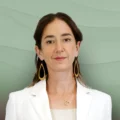
In this episode, we will be joined by Kristen L. Cole, an assistant professor of communication studies. Kristen shares her personal journey with Crohn’s disease and how the pressure to control her health led her to accumulate significant credit card debt. We will dive into the topic of healthism, the cultural and systemic factors that impact health, and the dangers of moralizing health. Kristen offers insights on how we can reframe our understanding of health and promote more compassionate and supportive attitudes towards each other’s health journeys.
Kristen L. Cole is an assistant professor of communication studies.
She shares her story and discusses her KevinMD article, “Yoga and self-care won’t cure my Crohn’s disease.”

The Podcast by KevinMD is brought to you by the Nuance Dragon Ambient eXperience.
Ambient intelligence augments human capabilities to make our lives easier. The applications are many, especially in health care. Ambient clinical intelligence is offsetting the most pressing challenges in health care today, such as burnout, physician shortages, physician and patient dissatisfaction, and underperforming financial outcomes, by applying the technology to clinical documentation.
The Nuance Dragon Ambient eXperience, or DAX for short, utilizes artificial intelligence and natural language processing to automatically document care. It securely listens to and captures the natural, clinician-patient encounter conversation unobtrusively, and turns that conversation into a clinical note for the clinician’s review and signature directly in the electronic health record. You just talk naturally, and DAX does the rest.
DAX is being used by thousands of physicians across 30 different specialties nationwide. It has already won the Silver Stevie award in the health care technology category and was ranked #1 for improving clinician experience in KLAS’s top 20 emerging solutions.
VISIT SPONSOR → https://nuance.com/daxinaction
SUBSCRIBE TO THE PODCAST → https://kevinmd.com/podcast
RECOMMENDED BY KEVINMD → https://kevinmd.com/recommended
GET CME FOR THIS EPISODE → https://earnc.me/B4RYEp
Powered by CMEfy.
Transcript
Kevin Pho: Hi, and welcome to the show. Subscribe at KevinMD.com/podcast and get CME for this episode by clicking on the CME link in the show notes. Today we welcome Kristen Cole. She’s an assistant professor of communication studies. Her KevinMD article is titled “Yoga and self-care won’t cure my Crohn’s disease.” Kristen, welcome to the show.
Kristen L. Cole: All right, thank you for having me.
Kevin Pho: We’ll get to your article in a little bit, but first off, just briefly share your story and journey to where you are today.
Kristen L. Cole: Yeah, so like you mentioned, I’m an assistant professor of communication studies at San Jose State University, and I received my PhD from the University of New Mexico in communication studies in 2013. My area of emphasis originally was mass communication, but then a year after I graduated, in 2014, I was diagnosed with Crohn’s disease, and that actually really changed my perspective on life in a lot of ways. One of the ways that it changed my life was that I decided to start researching health communication, and I feel like everything came full circle.
There are a lot of difficulties when you’re diagnosed with a chronic illness, but one of the positives in my life was that I am now able to sort of bridge an academic perspective of health communication with a patient perspective of health communication, and that’s something that I’m really passionate about.
Real physician voices, twice a week
Free, and one click to unsubscribe.
Kevin Pho: A lot of times, we physicians don’t know what it’s like when our patients get diagnosed with a disease like Crohn’s disease. So give us a story and give us some perspective. You said that your life changed after this diagnosis.
Kristen L. Cole: Yeah. Well, I talked a little bit about this in my article, but I had never really been sick in my life, and I think for most of my life I just assumed that health care worked in a certain way. Then when you’re diagnosed with a chronic illness, you find yourself deep into this matrix of health care that is so complicated to navigate as a patient. There are a lot of aspects of having a chronic illness, the day-to-day of pain management and medication management and things that are really complicated.
But one of the things that I like to think of as, I don’t know if I want to say positive, but very eye-opening, was really getting this glimpse of this system from both the patient perspective and an academic perspective. The veil had been removed from my eyes. I had seen medicine as this very perfectly functioning thing that just cures people of disease, and when you have a chronic illness, the cure is not a possibility, and so you see a lot more complicated layers of health care. I thought, “Oh, wow, I feel like there’s something that I can say about this.” I think that for me was very empowering.
Kevin Pho: You talk a little bit more about your journey in your KevinMD article, “Yoga and self-care won’t cure my Crohn’s disease.” It inspired you to take more of an interest in health communication. So tell us, what surprised you when you delved into this world?
Kristen L. Cole: I think one of the things that surprised me the most when I started getting into health communication was how focused health communication is on educating doctors to be better communicators, which is definitely a positive, but there’s not a lot about patient advocacy, and there’s not a lot from the patient perspective. I think that’s a gap, right? There’s a lot to be said about how patients experience health care, how they communicate with their doctors, how they prefer to be communicated to by their doctors, and the complexities of things that doctors don’t get to see on an everyday basis, like how they’re navigating health insurance or making appointments. There’s the behind the scenes of being a doctor, but there’s also the behind the scenes of being a patient that I think physicians don’t often get a glimpse into. I think that we need more patient-centered research in health communication.
Kevin Pho: So tell us the story behind this article.
Kristen L. Cole: One of the first articles I wrote under the banner of health communication is titled “The paradox of patient consent.” It’s published in Health Communication, and it’s an exploration of my own journey as a patient with regard to autonomy and choice. One of the things I noticed in health communication is that when health communication researchers are talking about how providers should communicate with their patients, there’s this push toward patient-centered care, which is about involving patients in the decision-making process and giving them the tools necessary for self-management of care.
There are a lot of positive things with patient-centered care, but one of the things that doesn’t get talked about enough, I think, is that the patient-centered model really assumes that everyone wants to and can uniformly have control over their health. We know from research that patients from historically marginalized groups don’t have equitable access to health information or the same resources as some patients to make informed decisions about their health care and to manage their own care. We know that women and minorities are consistently underrepresented in the medical research that determines their available choices in health care. And there are a lot of patients who actually aren’t concerned about who’s making the choices but about what choices are available to them. So I think those are some of the things that the patient-centered model leaves out.
Just a brief example from my own experience: When I was diagnosed with Crohn’s disease, my doctor gave me choices from all of these options of medications, and I was overwhelmed, and I didn’t know what to choose. I inevitably chose one, and three months later, I was diagnosed with cervical cancer. I was like, “Is this related to the medication?” At the time, there was no existing research about the safety profile of the medication for patients with cervixes, and particularly those who are at higher risk for cervical cancer from HPV. So I wasn’t able to make a totally informed choice, because there was no existing research. Many years later, I found out that there is a correlation between the medication I was on and risk of cervical cancer, but at the time that I was making that choice, that reality just didn’t exist.
So it really opened my eyes to the fact that when patients are making medical choices, sometimes key information just isn’t there, and that’s not really the fault of anybody, right? It just doesn’t exist. But it really demonstrates how our choices in medicine are enabled and constrained by factors outside of our control, and so the concept of control is complex.
Kevin Pho: So when you were diagnosed with Crohn’s disease and your medical team confronted you with a menu of options, of choices, what did you do next? How did you research what was the appropriate medication to take? Did your medical team offer any guidance, or did you have to do all the research on your own? What happened next?
Kristen L. Cole: Yeah, great question. So I turned to friends and family, right? I’m like, “Connect me to people that you know who have been diagnosed with Crohn’s disease. I want to find out what people have done, what’s worked for people.” My doctor did give me some information, of course, but it was very medicalized information. It’s dark and heavy. It’s very “Here’s the research,” and the research is presented as very black and white, even though now I know it’s more complex than that.
When I turned to friends and family, some people were able to connect me to folks who had Crohn’s disease, but in general, people were like, “Oh, don’t take that medication. There are going to be so many side effects. You’ve got to focus on changing your diet and finding these holistic approaches. There has to be a better way than these really intense medications that your doctor is throwing at you.” And of course, that’s what then threw me into the spiral of control that I talk about in the article.
Kevin Pho: So in an ideal situation, what would you have liked to have seen from your medical team?
Kristen L. Cole: Yeah, so I think one of the biggest things, reflecting now, for me was that I would have really liked for the doctor not to moralize the treatment options, right? I think that was the biggest thing for me.
Kevin Pho: What would be an example of that?
Kristen L. Cole: Yeah, what would that look like? Not to say that this is the right way and the only way, right? Like, “Your only options are these medications.” Even if that’s true, even if that is true, it needs to be framed in a less moralistic way than “This is the best way, this is the right way, this is the only way,” and that medical research is the end-all, be-all in terms of knowledge. And again, even if that is true in the mind of the doctor, and even if now I know that that is indeed one of the best ways for me, I think the framing of it as the best, the right, nothing else is going to work for you, in my mind was very dismissive.
I think in my particular situation, it was packaged like this: When I asked the doctor what else I could do besides these really intense medications, he said, “Well, I know your generation’s really into holistic approaches, but this isn’t something that can be cured by magic pills and diets.” So that was very dismissive, right? For me, the dismissiveness through this moralization of “this is the best way” put me on the defensive, and I immediately was like, “No, no. This person is dismissing me. There has to be a better way.” And so then I spiraled into control. I tried to control everything through diet and exercise, and that’s what inevitably led to the complications later down the road.
I’ve actually had a very empowering encounter with a doctor who said to me, “Medical research is imperfect, but it’s the best tool that we have, and so all we can do is work from this imperfect reality until more information is available.” For me, that was this really transparent conversation about benefits and limitations of the treatment options. That was like, “OK, I can feel my brain sort of relaxing and releasing that control,” because I know that actually control isn’t entirely possible, but I’m just going to work from what we have at the moment, right?
Kevin Pho: What about getting a second opinion, perhaps with a medical team that would treat you more like a partner?
Kristen L. Cole: Yes. I mean, I saw so many doctors. I did get a lot of opinions, and I think it actually took until the third or fourth opinion when I finally found a doctor who was willing to have that realistic conversation with me. I had a doctor at one point who basically, I would say, put the fear of surgery in me. He was like, “Either take the medications or you’re getting surgery.” That was also this binary thinking, and I was like, “Sure. No, there has to be more.” In my mind at the time, I was thinking that the more would be other options.
But then when I met the doctor who finally said, “Yeah, no, medical research isn’t perfect, and medications have side effects, but it’s about weighing your options and the benefits,” when someone really explained it to me in this transparent way that wasn’t trying to hide the imperfectness of the medical system, that’s when it clicked for me: “Oh, the thing I’m searching for is not more control. The thing I’m searching for is just more acknowledgment of imperfection in that process of control.”
Kevin Pho: So what’s the situation now? What’s your relationship with your medical team?
Kristen L. Cole: So I have a team now, and for me that’s been really empowering. With my team, we’re all sort of on the same page now about what is urgent and what needs to be treated. I think when you don’t have a chronic illness and you get sick, it’s like, obviously that needs to be treated. Now, with a chronic illness, it’s more complicated. Things need to be treated, but we also need to acknowledge that some things are normal. I’m never going to be entirely pain-free. Symptoms are going to crop up that don’t necessarily need to be treated, because with the treatment I’m on, it will course-correct at some point.
So it’s just a medical team that really understands how I like to approach treatment, and they’re on board with that, because we’ve kind of met in the middle in terms of “This is what’s urgent, this is what’s not, and this is what’s normal for your body.” I think that’s the key, right? What’s normal for one body is not normal for another body. So really having a deep understanding of, and the empowerment to feel, the intuition of what’s normal for my body, and them being on board with that, I think that’s been really great.
Kevin Pho: We’re talking to Kristen Cole. She’s an assistant professor of communication studies. Her KevinMD article is titled “Yoga and self-care won’t cure my Crohn’s disease.” So Kristen, what are some of your tips? I’d like to ask this in two ways: tips for clinicians who may be listening to this, and tips for patients who may have been recently diagnosed with a chronic disease.
Kristen L. Cole: Yeah, so for physicians, I want to go back to being mindful of not moralizing treatment options and just being really transparent about benefits and limitations of all treatment options, right? Being willing to have those conversations openly and honestly.
Kevin Pho: So what are some things we could say that would make patients feel better, that acknowledgment of “we don’t know”? What are some ways that we can phrase that?
Kristen L. Cole: Yeah, well, like I said, there’s the doctor that I talked to who was basically like, “It’s imperfect.” I talked to a doctor one time who basically explained to me how medical research happens, and that was really eye-opening as well, because he was like, “We don’t know something now, and it’s not like we’re going to know it overnight. Someone might research it, and we’ll have findings, and that’ll take years to trickle down to all physicians,” right?
And I’m like, just knowing the slowness of the medical research process, that was also important. I mean, just any of those kinds of conversations about “This is how things work, this is where we get our information from, this is how knowledge creation happens in health care. We don’t have all the perfect solutions and options, but we know we have really great tools that are effective and have these benefits and these limitations.” So that transparency, I think, is really important, and not just saying, “This is the best way, the only way, the right way,” but, “This is the way that we know works right now.”
Kevin Pho: And then from the patient standpoint, what are some tips?
Kristen L. Cole: Yeah, from the patient standpoint, I really want people to feel like they have permission to let go of control. As I talk about in the article, obsessive control through this ideology of healthism, so this belief that we have to be personally responsible for our health, made me sicker. And I’ve seen that so many times. When I share my story with people, they’re like, “Oh my gosh, same,” right? They have the same experience. So just giving ourselves permission to let go of control, total control and personal responsibility over our health, being kind to ourselves, knowing that we can only control so much, that there are factors outside of our control, and just to be OK with letting some of that go.
Kevin Pho: And my final question: Tell us some of your take-home messages that you want to leave with the KevinMD audience.
Kristen L. Cole: Yeah, let go of control. I mean, I keep coming back to that, but let me phrase it this way. I think it should be: Let’s be more honest with each other and ourselves about the limitations of control over health, right? When we see someone who’s not managing their health the way that we would, I think the instinct is to try to say, “No, no, you’re doing it the wrong way,” but let people take control and let go of control in the way that works best for their own health.
Kevin Pho: Kristen, thank you so much for sharing your story, time, and insight. Thanks again for being on the show.
Kristen L. Cole: Thank you so much for having me.
Listen and followApple PodcastsSpotifyYouTubeMore apps · Browse all episodes