













Listen and followApple PodcastsSpotifyYouTubeMore apps · Browse all episodes
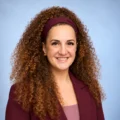
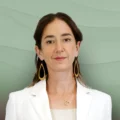
Join Jennifer Lycette, a novelist and rural hematology-oncology physician. We discuss Jennifer’s latest work, The Committee Will Kill You Now, a novel that explores the dark side of the medical world, ethics, and the enduring impact of hidden secrets. Join us as we unravel the inspiration behind the book, its compelling characters, and the powerful themes it addresses. Don’t miss this conversation with a talented author who seamlessly blends medicine and storytelling.
Jennifer Lycette is a novelist, award-winning essayist, rural hematology-oncology physician, wife, and mom. Mid-career, Dr. Lycette discovered the power of narrative medicine on her path back from physician burnout and has been writing ever since. Her essays can be found in The Intima, NEJM, JAMA, and other journals. She can be reached on Instagram, LinkedIn, Facebook, and Mastodon.
She discusses her book, The Committee Will Kill You Now.

Our presenting sponsor is Nuance, a Microsoft company.
Do you spend more time on administrative tasks like clinical documentation than you do with patients? You’re not alone. Clinicians report spending up to two hours on administrative tasks for each hour of care provided. Nuance, a Microsoft company, is committed to helping clinicians restore the balance with Dragon Ambient eXperience – or DAX for short. DAX is an AI-powered, voice-enabled solution that helps physicians cut documentation time in half. DAX Copilot combines proven conversational and ambient AI with the most advanced generative AI in a mobile application that integrates directly with your existing workflows. DAX Copilot can be easily enabled within the workflow of the Dragon Medical application to bring the power of ambient technology to more clinicians faster while leveraging the proven and powerful capabilities used by over 550,000 physicians.
Explore DAX Copilot today. Visit https://nuance.com/daxinaction to see a 12-minute DAX Copilot demo. Discover clinical documentation that writes itself and reclaim your work-life balance.
VISIT SPONSOR → https://nuance.com/daxinaction
SUBSCRIBE TO THE PODCAST → https://kevinmd.com/podcast
RECOMMENDED BY KEVINMD → https://kevinmd.com/recommended
GET CME FOR THIS EPISODE → https://earnc.me/5X63k6
Powered by CMEfy.
Transcript
Kevin Pho: Hi, and welcome to the show. Subscribe at kevinmd.com/podcast. Get CME for this episode by clicking on the CME link in the show notes. Today we welcome back Jennifer Lycette. She is a novelist as well as a hematology-oncology physician. Her latest book is The Committee Will Kill You Now, and that’s what we’re going to discuss today. Jennifer, how are you?
Jennifer Lycette: I’m good. Thank you for having me back on, Kevin.
Kevin Pho: So Jennifer has been on multiple times. Go to kevinmd.com/podcast to search for and see her story in prior episodes, but today let’s talk about her latest book, The Committee Will Kill You Now. So tell us about this book.
Jennifer Lycette: Yeah, so this is the book right here, and this is the prequel to my previous novel, my debut novel, which was called The Algorithm Will See You Now. So that’s where this title came from, trying to kind of, you know, have it match up and be a series. Although they share some of the same characters, the second book is set several decades before the first, and so they actually can be read as standalones or in either order. So you don’t have to read the first one to understand the second if you don’t want to.
Basically, this is a book about an intern in the 1990s who is struggling with his mental health during his internship. There is a trigger warning here for physician suicide. Another intern dies of suicide, and in the wake of that, he’s post-call and sleep-deprived and traumatized, and he makes a medical error. And it looks at themes of medical transparency, and it’s set back in the ’90s, before a lot of the big movement for medical transparency happened.
And in addition to that, from the fiction standpoint, it’s actually sort of the origin story of the antagonist in my book one, who is a woman named Marah Maddox. And so Marah and the intern, whose name is Noah, are older characters in my first book, and then this jumps back and shows their relationship when they were residents and what happened to them during their residency.
Real physician voices, twice a week
Free, and one click to unsubscribe.
Kevin Pho: So there are a couple of really relevant themes here that matter to physicians today. You talk about things like physician suicide; you talk about things like transparency. So what about these themes inspired you to include them in your novel?
Jennifer Lycette: Yeah, gosh. So I think to answer that is to go back to when I first drafted this. I actually drafted this novel in April of 2020. So it was that, you know, early time in the pandemic when a lot of us were holed up, and I think there was sort of this movement where we all started doing these home projects. And I really needed to immerse myself. And my first novel was also out on submission, trying to find a publisher and trying to find an agent. Authors always say the best distraction during that time is to write your next book. So for all these reasons, I really just delved into this project. I did research on YouTube and eBay and got the original articles from the 1960s.
And during that time, also during the pandemic, there was the very sad news that made national media of an emergency medicine physician who died of suicide, Dr. Lorna Breen. And I talk about this a little bit in my author’s notes at the back of the book. I never knew Dr. Breen; I live and work on the West Coast. But her story just really struck me, as I also realized in reading about her that we were the same age. And her family, as many people know, has started the Dr. Lorna Breen Heroes’ Foundation, a real movement to support physician mental health and get rid of the barriers and the stigma. And so in that time, holed up, writing several hours a day during the pandemic, I decided to include a story about physician suicide.
Kevin Pho: I think the book also touches on issues related to gender and power dynamics within the medical profession. So talk more about that as well.
Jennifer Lycette: Yeah, I’m so glad you brought that up. So, going back to my first book, I chose to have the antagonist in my first book be a woman physician, and I got a lot of questions, and actually a lot of people just told me bluntly I shouldn’t do that. But in that first book, I really wanted to explore how misogyny in our culture, not just in the medical profession but really everywhere, actually leads to what we call internalized misogyny, where women sometimes buy into the patriarchy because it’s the only way they can advance.
And when I wrote that first book, I had to really think about the background of my character, like why she was the way she was. And so even though a lot of that character study doesn’t make it onto the page in the first book, I was already thinking about the background of this character, and it led to me really wanting to write another book and tell her story. And really, what I try to explore with these two characters is how we all went through this trauma of our medical training, and we can come out of it in very different ways, depending on our backgrounds and even our childhoods and really the way we respond to that trauma.
And also, at the time, as I think a lot of us were during the early part of the pandemic, I was on social media a lot. I mean, a lot of us were, you know, sharing a lot of good medical info about COVID-19 in the early days. And I also was really inspired by all the women on social media, almost like the younger generation of physicians that really were just speaking out. I think as Gen X women, we were just taught to, you know, keep your head down, work hard, you’ll get to where you need to get, and then this will all get better. Well, you know, it never did get better, and it makes me really sad to see that younger women today are struggling with the same things.
And so a lot of the things that happened to my main character were actually inspired by real-life things that women were sharing on what was called Twitter at the time, and I’m no longer on there. So there’s a scene where Marah, who’s a surgical resident at the time, just kind of shares a list of all the things men have said to her in the OR, and those were all actually taken from real-life things that other women had shared.
So I think that, as I get older, and again, I’m inspired by the next generation of women who are being so brave, I incorporate this in my books to be like, you know, we don’t have to keep quiet about this. We don’t have to just put our heads down and ignore it. And also, there’s a great movement, HeForShe, on social media, where a lot of our male colleagues are really standing up and supporting us too. So that’s, I guess, kind of a long answer to your question.
Kevin Pho: So when you wrote your first book, you had pushback from readers because the antagonist was a woman.
Jennifer Lycette: When you publish, or when you’re trying to get a publisher or an agent, there are certain genre standards, and they were just a little concerned, especially as a debut author; it is very hard to break in. They said, you know, “It’s a little different from the standard genre. Maybe you want to make that character a man.” I said, “Well, that’s good feedback, and I appreciate it, but that’s not the story I wanted to write.” So I kept her the way she was.
Kevin Pho: Now, what are some of the other themes that you want readers to come away with, for people who aren’t involved with the medical profession? A lot of the fiction that you write is grounded in truth. You said a lot of the stories and anecdotes that are included happened to real people. So for those people who aren’t familiar with the medical profession, are there any messages that you’re trying to share from within?
Jennifer Lycette: Yeah, that’s such a great question, and I was thinking about this recently about both my books. If I could put into one sentence what my overarching writing theme is, it’s probably that doctors are only human. And another theme in the new book, The Committee Will Kill You Now, is about imposter syndrome and that you are enough. To medical students and trainees: You are enough the way you are, and don’t let the system make you think otherwise.
It also, for non-medical readers, just tells the story of the background of medical training and the sleep deprivation. And, you know, I throw in some anecdotes about Halsted and, you know, basically his cocaine use during his years in the 1870s and 1880s that led to this really unrealistic picture of, especially, surgical residents not needing to sleep or eat and just, you know, ignoring our basic human bodily needs.
And I was actually really rewarded that it seems to be resonating with non-physicians. There’s an organization called International Thriller Writers, and they put out a publication called The Big Thrill, and they recommended the novel to their readers. It was so validating to read the reviewer’s interpretation. As a writer, when someone gets your book, really gets what you were going for, it’s just so rewarding. So I was really grateful for that review and that it’s getting out to non-physicians as well, because I think when I write, I’m really writing for other physicians, but also hoping it will reach a larger audience as well.
Kevin Pho: We’re talking to Jennifer Lycette. She’s a novelist and a hematology-oncology physician. Her latest book is The Committee Will Kill You Now. So Jennifer, are you at work on your third novel?
Jennifer Lycette: I am trying. Yeah, I will say yes, I am, but I’m not getting as much time to write recently as I would like. But you know, that’s OK. I mean, in all of our practices, things ebb and flow, and right now is just a time where, you know, the majority of my energy is going to my practice and my family. But I am brainstorming and writing here and there. So yeah, it’s slowly coming along.
Kevin Pho: And as always, let’s end with some of your take-home messages that you would like to leave with the KevinMD audience.
Jennifer Lycette: I think my big take-home message is the two things I said before. So number one, doctors are human. We are all human. We don’t need to pretend that we don’t need sleep and rest and to eat and to go to the bathroom. And the second one is, especially to the trainees, that you are enough. And if you’re feeling like you need help, please reach out. There are a number of resources in the back of the book, but, you know, if nothing else, reach out to me, reach out to a friend, reach out to a mentor. But please don’t suffer alone. We all need to support each other in this profession.
Kevin Pho: The book is The Committee Will Kill You Now. Jennifer, thank you so much for sharing your time and insight, and thanks again for coming back on the show.
Jennifer Lycette: Thanks for having me. Good to talk to you again.
Listen and followApple PodcastsSpotifyYouTubeMore apps · Browse all episodes