Subscribe to The Podcast by KevinMD. Catch up on old episodes!
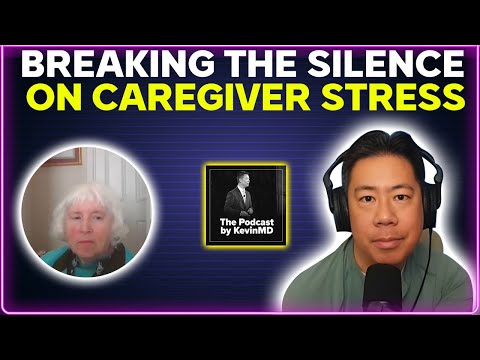
Join R. Lynn Barnett, a patient advocate. We’ll explore the world of caregiving, its challenges, and the profound impact it has on individuals and families. Discover valuable insights on caregiver stress, self-care, and the importance of respite care.
R. Lynn Barnett is the author of What Patients Want: Anecdotes and Advice and My Mother has Alzheimer’s and My Dog Has Tapeworms: A Caregiver’s Tale.
She discusses the KevinMD article, “Rosalynn Carter’s impact on caregivers.”

Our presenting sponsor is Nuance, a Microsoft company.
Together, Microsoft and Nuance are leveraging their rich digital technology and advanced AI capabilities to tackle some of health care’s biggest challenges. AI-driven technology promises to revolutionize patient and provider experiences with clinical documentation that writes itself.
The Nuance Dragon Ambient eXperience, or DAX for short, is a voice-enabled solution that automatically captures patient encounters securely and accurately at the point of care. DAX Copilot combines proven conversational and ambient AI with the most advanced generative AI in a mobile application that integrates directly with your existing workflows.
Physicians who use DAX have reported a 50 percent decrease in documentation time and a 70 percent reduction in feelings of burnout, and 85 percent of patients say their physician is more personable and conversational.
Discover AI-powered clinical documentation that writes itself. Visit https://nuance.com/daxinaction to see a 12-minute DAX Copilot demo.
VISIT SPONSOR → https://nuance.com/daxinaction
SUBSCRIBE TO THE PODCAST → https://kevinmd.com/podcast
RECOMMENDED BY KEVINMD → https://kevinmd.com/recommended

ADVERTISEMENT
GET CME FOR THIS EPISODE → https://earnc.me/srTJTJ
Powered by CMEfy.
Transcript
Kevin Pho: Hi, and welcome to the show. Subscribe at KevinMD.com/podcast, and get CME for this episode by clicking on the CME link in the show notes. Today we welcome back R. Lynn Barnett. She’s the author of My Mother Has Alzheimer’s and My Dog Has Tapeworms: A Caregiver’s Tale. Today’s KevinMD article is titled “Rosalynn Carter’s impact on caregivers.” Lynn, welcome to the show.
R. Lynn Barnett: Thank you, it’s nice to be here.
Kevin Pho: So you were last on the show three years ago. Thank you so much for coming back. For those who didn’t listen to you back then, just briefly share your story and journey.
R. Lynn Barnett: Yes, I’d be happy to. I’m a teacher by trade, an author by choice, and a caregiver by an unexpected choice. My husband and I took care of my mom for five years when she had Alzheimer’s. I chronicle this caregiving journey in the book that you just mentioned, called My Mother Has Alzheimer’s and My Dog Has Tapeworms: A Caregiver’s Tale. I thought of the title when I was driving home from work one day, and I realized that this broad’s once broad life was reduced to the pressing health concerns of my mom and dog.
There are millions of caregivers worldwide, and although each story is unique there are many commonalities. I felt compelled to write and submit an article on caregiving for KevinMD specifically in November, because it had so many designated days that were inextricably intertwined. Not only is November 1st National Authors Day, November is also National Caregivers Month, Alzheimer’s Awareness Month, and the first Wednesday in November is Stress Relief Day. Although the article and podcast will be posted later, it’s an appropriate read anytime you read it.
November was also the month that the late first lady Rosalynn Carter had passed away. She was aware of the role and toll of caregiving, and she so insightfully, acutely, and astutely pointed out that we’re either going to be caregivers or will need caregivers at some point in our lives. And my article explores various aspects of caregiving.
Kevin Pho: So let’s talk more about that article, “Rosalynn Carter’s impact on caregivers.” So tell us about that.
R. Lynn Barnett: Yes. Well, from a personal point of view, caregiving is not an easy journey. When I was thinking about what to address in the article, I wondered, why do we need a national caregivers day in the first place? Why is caregiving at the forefront of so many conversations these days? Is it A, people are living longer and hence often need more caregiving? Is it B, more women work outside the home than in years past, and we’re often juggling many responsibilities at once? Is it C, people are more willing to speak about their illnesses and by extension the caregiving that goes along with it? Or is it D, all of the above? And I submit that it’s D, all of the above.
Caregiving reminded me of entertainers from long ago who try to keep several plates spinning on long poles almost simultaneously. As caregivers we have a lot on our plates, and it can be hard to keep those plates spinning without our heads spinning as a result. We’re often spread too thin. Well, my hips might disagree, but that’s another story.
There’s a movie, Everything Everywhere All at Once, and that’s how many caregivers feel, that we have to do everything and be everywhere all at once. A case in point was almost like a math problem from my youth. I had a doctor’s appointment at 10, which I assumed would be through by 10:30, and I had a meeting at work at 1. How much time had elapsed between the end of my doctor’s visit and my meeting? And the answer to that problem would be two and a half hours. However, what really happened was that my doctor was running late, as often happens, understandably so. I got out of the office very late, I had to check on things at home, and I then had to get to my meeting, which I did with three minutes to spare. There is no answer to that problem.
Sometimes my brain thinks in rhyme. I think I’m a combination of Dr. Seuss and Mother Goose. So with this math example about time, my rhyme would be: running from here to there, taking care of one thing or another, trying to take care of myself and my mother, with only three minutes of free time that had elapsed, I was lucky that I hadn’t collapsed.
I remember learning about parent functions in math. Well, my parent couldn’t function in life, at least not as well as she used to. It’s like we had our own version of The Wizard of Oz. The Scarecrow wanted a brain and the Tin Man wanted a heart. My mom had heart, but Alzheimer’s was slowly and surely reducing her brain’s capacity. Luckily I had both a fully functioning heart and brain, and it took both working in tandem to deal with the many aspects of caregiving. And Dorothy just wanted to go home. My mom would often say that she wanted to go home, wherever that was in her mind. I guess the Wicked Witch of the West was the personification of Alzheimer’s. My mom had a very sharp wit, so maybe the witch would have said, I’ll get you my pretty and witty, and your little dog too. And of course we had one, as is evidenced in my book’s title.
Kevin Pho: Now, you gave the metaphor of caregiving like balancing and spinning many plates at once. What are some tips or strategies that you can offer caregivers to help them keep things balanced?
R. Lynn Barnett: Well, these were things that I wish I knew more about when I first started this journey. I wish I knew more about the many aspects of caring for someone with Alzheimer’s.
I wasn’t prepared for the fiscal, meaning monetary, aspects of caregiving, including reduced income for family caregivers, that would be me, home health care personnel costs, and/or memory care. A friend called a few months ago and said, have you seen the price of eggs these days? Yes, I had. Then she said, have you seen the price of assisted living these days, for her mom? Yes, I had. And neither one was chicken feed.
Not only was I not prepared for the fiscal aspects, but the physical aspects of caregiving as well, such as running after my mom when she wanted to wander, as many Alzheimer’s patients do. I didn’t have time at the time to wonder and ponder why she’d wander.
Since November was also Thanksgiving month, let’s talk turkey plainly, shall we? Caregiving is stressful, but it’s all in how you look at it, at least in part. When I changed my perspective from, I have to take care of my mom, to, I get to take care of my mom, that made all the difference. When my mom was lucid we had nice conversations, even if the stories she sometimes told weren’t true, a part of Alzheimer’s called confabulation, where they make up stories. But that’s a different story.
I learned to make stress my ally and not my adversary. For example, there used to be a TV show entitled Name That Tune, where contestants could name a tune within a certain number of notes that were played. So a contestant might say, I can name that tune in three notes, which would take about three seconds. Well, I could make my mom’s bed in three minutes, a personal best. This was my life. My mom would often run out the door and hubby would follow her if I was otherwise occupied, and I’d watch TV reruns at night. It can be summarized as: she runs, he runs, and reruns.
One of my favorite reruns was I Love Lucy. In one episode Ricky puts Lucy on a time schedule, allotting 10 minutes for this and 15 minutes for that. As she said, she’d need more than 15 minutes for that. She showed her friend Ethel this time chart, and Lucy said that she accomplished everything she wanted to in a day, but she had to add an extra hour borrowed from the next day, and she’d do this for each successive day until the end of the year, when she’d be two weeks short.
Oscar Wilde said life imitates art more than art imitates life, and that was certainly true in this case, when I would have loved to have an extra hour each day to do another load of laundry, to answer more emails, or just to do nothing except sit and polish my nails.
I wish I knew, even with a positive attitude, the toll that caregiving can take on your body, mind, and soul. I had met some friends for breakfast one day. Later that night one of the women emailed me and said that she had never seen me so stressed. That surprised me, because I wasn’t psychologically crumbling or grumbling. But I have rosacea, as you can probably tell here, a ring on my cheek, that manifests itself under stress. So when my mom acted up, my rosacea did the same.
Later that week I spoke with an employee of an assisted living facility, just for information, and he mentioned hospice if that ever became necessary. He said the facility provided respite care for me, and that they could watch my mom and I could temporarily at least be relieved of day-to-day caregiving responsibilities. I’d be entitled to a certain number of days per time period, and if it was an emergency I could request more time. I told him it would never be an emergency, and he said that the way I sounded, it was an emergency yesterday. The following week I spoke with a hospice administrator, again just for information, and she said the exact same thing, about my voice sounding like it was an emergency yesterday. Being unaware of your stress is as bad as being overwhelmed by it.
Additionally, we caregivers, while we are aware of our health, we sometimes put it on the back burner. I had what a doctor referred to as the mother of all sinus infections. Oh brother, he was so right. Speaking of back burners, I had to keep my mom away from all the burners on the stove, because her diminishing cognition no longer allowed for cooking. Just as an aside, she didn’t like cooking anyway, so keeping her out of the kitchen was just fine with her. She said, even though she was an accountant, she couldn’t even cook the books.
One of the questions you sent was, what was I surprised about? I’ve been surprised not only by the number of our friends and family members who are now caregivers, but strangers as well. There are so many people taking care of so many people these days. My husband and I had seen the play Beautiful, about the singer-songwriter Carole King. There was a family behind me with a special needs child who’d kick my seat every so often. During intermission hubby offered to switch seats with me. I thought he just wanted a different view of the stage, so we switched seats. While we were driving home I told him about the child behind me, and he said that’s why he changed seats with me. Now, like the title of the play, wasn’t that beautiful?
Kevin Pho: So tell me about some of the things you’re passionate about.
R. Lynn Barnett: Yeah, I’m passionate about reminding people that, not only during holiday time when this is being filmed but will be posted later, but any time of year, that the best present you can give someone is to be present for them. Pick up a phone and ask someone how they’re doing. It takes five minutes out of your day, but it can make someone else’s entire day. This can be especially important when someone is a caregiver, but really it’s important for everyone.
Kevin Pho: Tell us some resources or support systems that are available to caregivers to help them manage their roles more effectively, or provide even self-care.
R. Lynn Barnett: Yes. If you’re a doctor and you have a patient who’s a caregiver for a family member, ask not only how the family member is doing, but how’s your patient, the caregiver, doing? We’re people first and doctor and patient second. And then if you’re in the same boat and you share that with your patient, you’d be surprised how mutually comforting that exchange of empathy can be.
I would suggest the doctors mention that AARP and the Alzheimer’s Association have caregiver resources. I don’t work for either organization and no one has asked me to say that. And finally, if you’re a doctor who’s directly caring for a patient with Alzheimer’s, tell their caregivers that they should be mindful if the patient is in the kitchen. As mentioned before, my mom didn’t know how to use a stove anymore, but I didn’t know that until I witnessed her difficulties.
All of us caregivers have nurtured our inner fortitude. Mrs. Carter referred to herself as a Steel Magnolia, like the title of the movie with the same name. I think all of us caregivers strive for that balance of toughness and grace. We’ve had to develop our inner mettle, inner strength. It’s not that we deserve a medal, we just deserve a little peace.
Speaking of which, there was a song played at Mrs. Carter’s funeral, written by Jill Jackson Miller and Sy Miller, entitled “Let There Be Peace on Earth.” One of the lyrics is, let there be peace on earth and let it begin with me. I love that sentiment. As a caregiver I sometimes want to tweak that lyric to say, let there be a piece of peace on earth and let it be there for me. To all my fellow caregivers out there, past, present, and future, I wish you the same.
Kevin Pho: We’re talking to R. Lynn Barnett. She’s a patient advocate and author of the book My Mother Has Alzheimer’s and My Dog Has Tapeworms: A Caregiver’s Tale. Lynn, let’s end off with some take-home messages that you’d like to leave with the KevinMD audience.
R. Lynn Barnett: I just want to say, if you’re a caregiver, it’s hard to get through each day, but just put one foot in front of the other. If you can find some humor, that helps. Don’t take insults personally. Sometimes Alzheimer’s patients will insult you. Don’t take it personally. If you have to curse, curse the disease, don’t curse the person. And just take it one day at a time.
Kevin Pho: Lynn, thank you so much for sharing your story, time, and insight, and thanks again for coming back on the show.
R. Lynn Barnett: Thank you.