Subscribe to The Podcast by KevinMD. Catch up on old episodes!
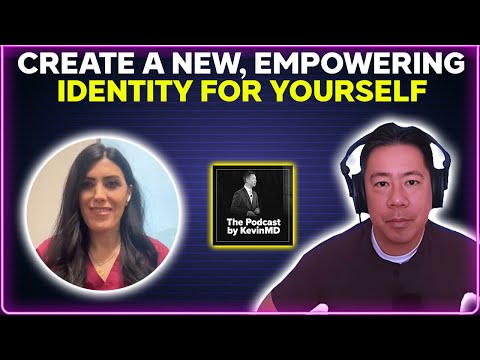
Join Parastoo Jangouk, a gastroenterologist and internal medicine physician. We dive into the challenges faced by business owners and health care professionals in December. It’s a month filled with long hours, patient appointments, and marketing efforts.
But amidst the hustle, we uncover the importance of slowing down and confronting the inner voices that hold us back. These voices are shaped by our past and societal influences, often preventing us from chasing our dreams.
Discover how to rewrite your subconscious mind, creating a new, empowering identity for yourself. It’s a journey that starts with awareness and mindfulness, paving the way for personal growth and success in 2024.
Parastoo Jangouk is dual board-certified in gastroenterology and internal medicine, managing partner at one of the largest gastroenterology groups in the nation, Austin Gastroenterology, chair, GIA Women in Leadership Committee, and co-founder, SOULpreneurMD. She also can be reached on Instagram and TikTok.
She discusses the KevinMD article, “How to shed old narratives and forge a powerful new identity in 2024.”

Our presenting sponsor is Nuance, a Microsoft company.
Together, Microsoft and Nuance are leveraging their rich digital technology and advanced AI capabilities to tackle some of health care’s biggest challenges. AI-driven technology promises to revolutionize patient and provider experiences with clinical documentation that writes itself.
The Nuance Dragon Ambient eXperience, or DAX for short, is a voice-enabled solution that automatically captures patient encounters securely and accurately at the point of care. DAX Copilot combines proven conversational and ambient AI with the most advanced generative AI in a mobile application that integrates directly with your existing workflows.
Physicians who use DAX have reported a 50 percent decrease in documentation time and a 70 percent reduction in feelings of burnout, and 85 percent of patients say their physician is more personable and conversational.
Discover AI-powered clinical documentation that writes itself. Visit https://nuance.com/daxinaction to see a 12-minute DAX Copilot demo.
VISIT SPONSOR → https://nuance.com/daxinaction

ADVERTISEMENT
SUBSCRIBE TO THE PODCAST → https://kevinmd.com/podcast
RECOMMENDED BY KEVINMD → https://kevinmd.com/recommended
GET CME FOR THIS EPISODE → https://earnc.me/bTAh0I
Powered by CMEfy.
Transcript
Kevin Pho: Hi, and welcome to the show. Subscribe at KevinMD.com/podcast, and get CME for this episode by clicking on the CME link in the show notes. Today we welcome back Parastoo Jangouk. She’s a gastroenterologist and internal medicine physician, founder of Soulpreneur MD. Today’s KevinMD article is “How to shed old narratives and forge a powerful new identity in 2024.” Parastoo, welcome back to the show.
Parastoo Jangouk: Thank you so much, Kevin. My pleasure.
Kevin Pho: So Parastoo’s been on in the past. Go to KevinMD.com/podcast, search for her name to see her story and prior episodes. But today let’s jump right into your most recent article, “How to shed old narratives and forge a powerful new identity in 2024.” So tell us about this article.
Parastoo Jangouk: So the idea of the article came to me in December, as I was going through the pre-holiday chaos. And I think, as physicians, it resonates with a lot of our physician audience and you yourself. December is the time that we are really just trying to push hard to finish the work that needs to be done before the end of the year. Also, if people are involved in other gigs outside medicine, you’re trying to wrap things up.
So as I was rushing through everything, I decided to slow down, and with my partner Dr. Soo we both decided kind of to take the month off. And initially I think this was really not very well planned or thought of, but as we moved through that, I think what came to me is that as I started to slow down, both in my clinical work and in the business, I started just listening more to my brain. And then the things that I was hearing was not fun, and I started freaking out, because that pause showed me how much is going on in the background in my subconscious mind.
And it’s very interesting. So this is obviously something that we all know, that there is a conscious mind and there is a subconscious mind, and 95 percent of our activity and our thoughts are constantly running in the background in our subconscious mind. But a lot of the time, as we are going through our day-to-day basis and our daily activities, we forget the significance of the subconscious mind and subconscious thoughts, and the chatter that is happening even when we are not aware of. That chatter is constantly going on.
And when we slow down we start hearing those thoughts, and definitely they’re not pleasant. And that’s, I think, one of the reasons it’s hard for us to slow down and take some time off, because we get scared. As we slow down, these thoughts are coming up and they show themselves to us.
And I think a lot of these thoughts are around the beliefs that we have around ourselves. They form our self-belief. How do we see ourselves, what do we think about ourselves, how much do we think we are worth? It’s all about our self-image.
And a lot of this subconscious programming comes from early on in our childhood, the first seven years of life. And we loan them and we borrow them from our parents, from our friends and family, society, teachers, our friends, and media, these days even social media. And these are the things that shape our self-belief, and we start constantly telling ourselves that story and narrative, and they shape our identity. But they’re not necessarily our true identity.
Most of them are actually horrifying, as I realized. Most of them are around scarcity, around the things that we are not but we want to be. A lot of these thoughts start with, I can’t, and I don’t. I don’t have time, I don’t have money, I can’t, I hate tech, I don’t know how to present myself, I don’t know how to find a better job, I can’t move, I can’t leave my family behind. All these thoughts. And we think this is us, this is truth, and this is our identity, while it’s not. It’s just that brain chatter that’s coming from that subconscious programming.
And a lot of us, as ambitious people, we are all physicians, we have a lot of dreams, we want to basically get to the next phase of our lives, but a lot of us feel stuck here. And I think that old identity, the mind chatter, the narrative that’s constantly going on in our subconscious, is what’s truly holding us here.
And now it’s the beginning of the new year, and I truly believe if we want to set the tone of the year and we want to start differently, if we have something that we want to resolve, the first place to start with is just to pause and become aware of our subconscious programming. What type of thoughts is our subconscious mind offering us, and what is really our old identity? And try to question those, and try to see if those really are true. Which they are not. They are the things that our parents told us, they are the things that our teachers told us when we were kids at school.
And we thought, oh my gosh, if they say that you’re a loud person, just imagine, you’re a seven-year-old kid and you get yelled at at school because they tell you that you talk too much or you’re loud. So what happens? You start holding yourself back and you say, oh my gosh, I’m loud, people get offended by me, I’m not popular. These are the kind of identities that get ingrained into your subconscious.
And I think when you start seeing those, becoming aware of those, you realize that they’re not necessarily true, and you can create new identities for yourself. If you want to be very upfront, if you want to speak up, these are the new identities. And by creating those for yourself and trying to reprogram your subconscious, you can really shed those old identities and move on.
Kevin Pho: So in December, when you took a little bit of that pause and you listened more to your subconscious, what were some specific things that you were hearing from your subconscious?
Parastoo Jangouk: So that’s very interesting. That was scary. I wrote some of my thoughts.
So I think a lot of them were around, why are you taking time off, that means you are lazy, that means you’re giving up, that means you are not going to make it. That was around the same things. That was very interesting, because my pattern is go, go, go, go, go. When I take time off, then my brain starts attacking me and telling me, OK, this is the reason you’re not going to make it. Which is totally false. You can take one month off and nothing goes wrong.
But depending on your upbringing, and what your traumas are, and what kind of scarcity thoughts you have, I think the thoughts that your brain offers you, they usually are similar and they’re usually around one subject.
Kevin Pho: So tell me, what did you do next after your pause?
Parastoo Jangouk: So I really started questioning those after I became aware. I said, ah, that’s very interesting that my brain is shaming me like this. You know, I’m a very successful physician, I’ve done all these things in my life, I’ve achieved all these things, I’ve never been lazy. So bringing evidence from your past, you kind of start negotiating with your brain, back and forth. It’s just like your brain is like an aggressive person who is constantly trying to attack you.
And it’s kind of like a negotiation, back and forth. Why do you think like that? So I’ve never done this. And journaling actually helps, because when you’re journaling you bring all these subconscious thoughts up front and you write them down, and then you start thinking. So why are you telling me that I’m lazy? Why are you telling me that I’m not becoming successful? These are the evidence that I can pull out from my past and show you that I’ve done all these things.
And then when I started doing this, I realized, oh wow, of course I’m going to make it, of course I’ve done this multiple times, I have the evidence, of course taking one month off is not a sign of failure or doesn’t mean that I’m not making it. I intentionally did that.
So, very important to just remind yourself, you decided that, I intentionally didn’t want to do this. Because we forget a lot of times, right? We think, oh, just like, why am I not doing it, is there something wrong with me, why am I not rushing like other people?
Kevin Pho: So you are a successful physician and entrepreneur, and a lot of physician entrepreneurs are out there, I talk to a lot on this podcast and on my site. So those voices of doubt, and you do a lot of coaching, do you find that’s common for a lot of physician entrepreneurs? Do they encounter this a lot?
Parastoo Jangouk: Oh my goodness, it’s so common, Kevin. I think it’s the number one cause. Physicians, physician entrepreneurs, they want to move on, they have great ideas, they have great dreams. The first thing that comes up is always doubt. Self-doubt is the number one reason that physicians don’t go after their dreams.
And I should tell the audience that this is a normal function of our brain. This is an evolutionary function of our brain, that our brain wants to protect us, our brain wants to protect us from unknown, from failure. Because any change gives the alarm to our brain that there is a threat, because our brain functions best in a familiar situation.
And this is what helped us survive the tribal life, when we were exposed to different environmental threats. Because we were coming out of the cave, there were wild animals outside, there were climate threats, there was extreme cold, extreme hot, a lot of people couldn’t survive, there were other tribes coming attacking you. So the brain learned, our subconscious brain learned, to constantly alert us about potential threats outside.
And that’s how our cave man, or cave woman, brain is trying to help us. And we need to know its trick, because when we know its trick, then we know self-doubt is normal, it’s a normal function of our brain, and there is nothing wrong with us. We shouldn’t shame ourselves, we should just listen, take a pause, listen, become aware of this pattern. Because when you know what’s happening, then you’re not the slave of your brain. Then you can just start, as I said, negotiating and showing your brain that you can do that, despite whatever stories and narratives and old identities that your brain is trying to push you in.
Kevin Pho: So tell me, after taking this pause and coming back, how have you changed after that pause? How did that pause change you?
Parastoo Jangouk: So it’s very interesting, because these are not new concepts, and I knew them from coaching, and I read books about them and everything. But something changed in me, Kevin, at a very deep level, that I think for the first time I really decided, I think that decision was made, that I’m not letting my old identity rule my life anymore.
And I think that point of decision is very important. Because a lot of us may know a lot of things, a lot of your audience know whatever I’m saying, but that point that you decide that it’s enough. Enough is enough, I have believed all my life, I have believed all the lies of my brain, and I think I’m now deciding to be different, and I’m deciding to create the identity that I want for myself.
I think that point of decision was very interesting, that I observed happened to me, probably because of the timing. We all go through different kinds of things in our life, and at some point the switch is turned on or off, and they say, oh wow, I should change this.
Kevin Pho: So tell us about how your identity changed. Give us a before and after.
Parastoo Jangouk: So what happened is that I intentionally decided that I’m going to become very careful about my words, and how I talk with myself and also in the outside world with my friends and family, and what kind of words I choose. I don’t say I don’t, or I can’t, or I don’t like.
One of the things I’m sharing with you, I think it makes sense to share, because it makes it more tangible, is that I have a lot of scarcity thoughts around, I don’t have time. Because I work full-time and then I go home and work on my business, so it gives me a lot of sense of rush, overwhelm, a lot of stress.
So I decided that I am not going to tell myself anymore, I don’t have time. And actually I have time, I have done this, I have done both at the same time. I’m not going to create this identity for myself that I’m rushed and I’m overwhelmed because I think that I don’t have time.
And I haven’t, really, since then I haven’t said I don’t have time. I’m actually trying to, whenever I feel like that rush and overwhelm is coming, I start telling myself, you got this, you’re going to make this, you have done this before, you’re going to create this program, you’re going to create this talk, it’s going to go well, you can do that.
Just like that, I think, subtle change. I don’t know, it’s very recent, but I feel it. I don’t know how to tell you, it’s just something inside me, that shift happened, that I realized that, I don’t have time, constantly in the background, was not really serving me.
Kevin Pho: We’re talking to Parastoo Jangouk. She’s a gastroenterologist and internal medicine physician, founder of Soulpreneur MD. Today’s KevinMD article is “How to shed old narratives and forge a powerful new identity in 2024.” So as always, we’ll end with some of your take-home messages to the KevinMD audience.
Parastoo Jangouk: So I think the take-home message is, I really want to invite the audience to create awareness around their subconscious mind and subconscious thoughts, and try to think about it. What kind of thoughts are constantly running in the background that are not serving them? I don’t have time, I don’t have money, I hate tech, I don’t know how to do social media. No, these are all scarcity thoughts. And just by bringing awareness and seeing what is happening in the background, they have come a long way.
And I think the next step, I want them really to make that decision to change this narrative, because otherwise it’s going to be the same thing over and over. So as soon as they’re aware that there is a chatter in the back of their mind saying that, oh, you’re never going to make this, this is not for you, you’re not built for this, you’re not creative enough, just stop it there and decide to choose a narrative that you really love, that gives you energy, that gives you this passion, that you can move forward.
Because we are all, basically, we are who we think we are, and we become who we think we should become. But we are not our thoughts, because most of our thoughts, unfortunately, are not our genuine thoughts. They are the thoughts that we borrowed from our society, culture, and upbringing.
Kevin Pho: Parastoo, thank you so much again for coming on the show and sharing your perspective and insight.
Parastoo Jangouk: Thank you so much, Kevin.