

Subscribe to The Podcast by KevinMD. Watch on YouTube. Catch up on old episodes!
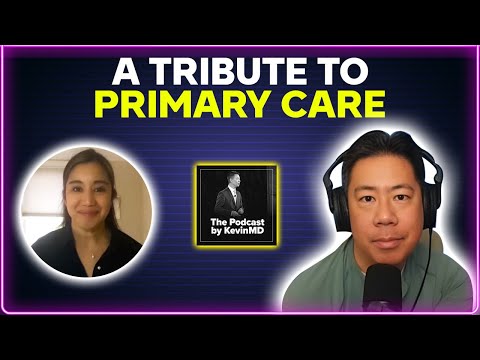
Join family medicine physician Eleanor Bueno as she expresses heartfelt gratitude to a cherished primary care colleague and friend. Eleanor’s letter poignantly reminds us of the profound connections forged in primary care. From guiding families through postpartum challenges to navigating unexpected health crises with compassion, her words highlight the invaluable contributions of primary care physicians.
Eleanor Bueno is board-certified in family medicine and lifestyle medicine.
She discusses the KevinMD article, “Honoring our trusted family physician.”

Our presenting sponsor is Nuance, a Microsoft company.
Do you spend more time on administrative tasks like clinical documentation than you do with patients? You’re not alone. Clinicians report spending up to two hours on administrative tasks for each hour of care provided. Nuance, a Microsoft company, is committed to helping clinicians restore the balance with Dragon Ambient eXperience – or DAX for short. DAX is an AI-powered, voice-enabled solution that helps physicians cut documentation time in half. DAX Copilot combines proven conversational and ambient AI with the most advanced generative AI in a mobile application that integrates directly with your existing workflows. DAX Copilot can be easily enabled within the workflow of the Dragon Medical application to bring the power of ambient technology to more clinicians faster while leveraging the proven and powerful capabilities used by over 550,000 physicians.
Explore DAX Copilot today. Visit https://nuance.com/daxinaction to see a 12-minute DAX Copilot demo. Discover clinical documentation that writes itself and reclaim your work-life balance.
VISIT SPONSOR → https://nuance.com/daxinaction
SUBSCRIBE TO THE PODCAST → https://kevinmd.com/podcast
RECOMMENDED BY KEVINMD → https://kevinmd.com/recommended
GET CME FOR THIS EPISODE → https://earnc.me/tRAGwz
Powered by CMEfy.

ADVERTISEMENT
Transcript
Kevin Pho: Hi, and welcome to the show. Subscribe at KevinMD.com/podcast, get CME for this episode by clicking on the CME link in the show notes. Today we welcome Eleanor Bueno. She’s a family medicine physician, and board certified both in family medicine and lifestyle medicine. Today’s KevinMD article is “Honoring our trusted family physician.” Eleanor, welcome to the show.
Eleanor Bueno: Thanks so much, Kevin, for having me and featuring my article. It’s really a labor of love.
Kevin Pho: Perfect, we’d love to hear more about that. First off, just briefly share your story and journey.
Eleanor Bueno: Sure. I completed a family medicine residency and I started working full time right after. I did not do true full scope family medicine, I didn’t deliver babies, but I did a whole lot of women’s health right off the bat, and had some great mentors that I worked with. And it just became very busy, so full time, it was 36 bookable hours, not a lot of admin time, but I loved it, and I felt right after residency I had the energy.
And then as life started beginning for me and my husband, we had children, and eventually had three children in the span of six years, and it was tough to balance. And that part of the journey I wasn’t expecting, the change in my focus. So I ended up changing a couple of different practices to accommodate for the change in my life, and it worked out where I had left a larger practice, went to urgent care and another larger practice, and now doing some telehealth virtual care. So that’s where I am. But I’ve still maintained my love for primary care, and really incorporated more lifestyle medicine, which I’m really getting to know and love more.
Kevin Pho: I hear your story a lot. Primary care, as you know, is very difficult, seeing however many, 20, 30 patients a day, and being on call and raising a family as well. And when you said that you were looking for some options that may be more conducive to your own lifestyle, how easy or difficult was it to look for something that fit exactly what you were looking for?
Eleanor Bueno: I would have to say it was relatively easy, and there were options out there. But the difficulty was me getting over the fact that I had, especially the first time, the first practice that I had to change, the idea that I was going to go into a practice and stay there for decades, where previous physicians have. And as much as I really respect that lifestyle choice for those folks, it felt a little bit off to me. So I had to get over the difficulty really with my own personal change mindset.
But when I did start looking, there were a lot of different opportunities. Things like part time had come up, urgent care at that time started to really blossom, and I would say blow up, but really blossom and grow, and so that gave me some opportunities to look at. And so that felt better for me, to know, OK, I have somewhere to go. While I was saying no to something, my previous role, I was saying yes to a lot of different opportunities. And I think that change of mindset really was the biggest step to overcome.
Kevin Pho: All right, so let’s talk about that mindset, because as you know, as physicians, traditionally our path is very linear, right? So being a doctor, pretty much seeing patients 8 to 5, or being in a hospital for that. And just that ability to have so many different options and doing more than that has only come to fruition, I’d say, within the last five years or so. Did you have any support, or who did you turn to in order to really be able to help you shift that mindset from what a traditional physician typically was?
Eleanor Bueno: I would have to say the relationship that I had that was surprising was my office manager at the time. I had a really good dynamic with her, and lots of love to Donna. She just knew my role, she knew what role she needed to have and keep the ship afloat, so to speak, but also listen to me as an individual. And just the understanding at that point, she didn’t give me guidance of where I should look, but she looked at, OK, what does your schedule look like, trying to start with that first, how did that change the template? So that was really good, to have a plan with somebody who could change schedules.
And relationships, that’s a big lesson that I had to learn straight off the bat, is that just building relationships and communicating clearly. So that was help. But by the end I also was able to connect with friends in other hospital networks. I think when I opened my eyes to, what are my friends doing, and just learning from support from peers, that was another way of me connecting with other opportunities.
Kevin Pho: And how difficult was it for you to shift your own mindset as to what a physician typically was and should be?
Eleanor Bueno: It was very difficult. My father is a retired anesthesiologist, and we grew up in a small town with a lot of wonderful community doctors who were role models for me, and in fact really provided the drive and desire for me to choose a path in medicine. And just having that at my heart, and knowing how much time and effort they spent with their community. That was something: was I doing something wrong, did I choose wrongly, did I choose a path that wasn’t suited for me, or did I choose a path in medicine that wasn’t for me?
So that piece, once I really came to the understanding that the decisions that I had made in my life were because of the different changes in my family dynamic and balancing as a working mom, those I didn’t really think about before, and now that they were staring me in the face, just leaning on those who had done it. So, looked to colleagues who were also moms and see what they did, versus looking back and knowing that they were still inspirational figures in my life. Just moving forward and choosing something different was more of a testament to me wanting to still have impact in medicine, versus saying, oh, that’s not for me. I just wanted to move forward with something that worked for my family.
Kevin Pho: All right, so let’s talk about your KevinMD article, titled “Honoring our trusted family physician.” For those who didn’t get a chance to read it, tell us what it’s about.
Eleanor Bueno: So it is truly, I would call it like a love letter to my family physician, and it’s a letter of gratitude. She saw me through a lot of different changes, and all through my mindset, all those changes, and she helped me focus on my family, keep them well, when they weren’t well got them better. Even my own health journey, especially medical issues, that was really helpful to have her there.
And I just wrote it in thanks to her, because she had moved on, and sort of reflecting back at those times when I had moved on, I knew that there was another side of the story, which is the really deep relationships I had with my own patients and what that meant to them, and feeling a little bit bad about that. And now knowing that that was me on the other, receiving end, I just wanted to say thank you to my physician, and in a public way, in supporting her, because also she had a change in her professional goals, and I wanted to also say thank you for what you’ve done, and I wish you well on your journey.
Kevin Pho: So sometimes we focus on how important primary care is, and we often tell that story from the perspective of the medical establishment, right? So go into more detail. Tell us specifically how your own primary physician, how did that physician really impact you and influence who you are today, both personally and professionally?
Eleanor Bueno: I was very specific about finding a primary care, a family practice primary care, and she was able to see my husband and my kids and myself, so that was really primary.
And the idea of her caring for the whole, having a continuum of care, was really important to me. And communication with her, direct communication with her, was important. She actually had moved on to different clinics, so that access was a little changed along the way, and so the dynamic of the hospital system and how I access my physician was different. A phone call became an email, even though we were colleagues at one point. And personally, I made it a point not to text her separately, I always kept my communication with my family with the hospital system. But that dynamic did change.
And there was always that elephant in the room, because when I did meet with her I had to have all the list of things I wanted to discuss with her, because I knew outside of those walls it would be very hard, unless I booked a visit with her I couldn’t get that time. And having young kids, when you have the two, four, six month follow-ups, that was really nice, and I got to know her well, she got to know me well and my kids of course, and I had that time with her, and that was great. But then when they started going to yearly time intervals, that was hard, to communicate with her. And I think that was the biggest barrier for me in developing that relationship with my physician, and I see that, and had seen that with my own patients as a physician too.
Kevin Pho: As you know, there is a pretty severe primary care shortage. A lot of new patients when they come to see me, they say they’ve been waiting six, 12 months to see me, and it’s very difficult to look for a primary care clinician. So talk more about that primary care shortage and the effect that will have on the community.
Eleanor Bueno: The benefit of having primary care is really the benefit to the patient in saving lives. It’s not life-saving surgery, but the idea that we’re controlling blood pressure, we’re controlling hypertension, we’re controlling anxiety and depression, those things that primary care manages is really just helping folks along the continuum of their life.
And without that relationship, and someone being a leader of the dynamic and having some perspective on where you might be and setting goals of lifestyle change, et cetera, then if there’s a lack of leadership in the patient dynamic, then there may not be goal achievement for the patient. And so that will lead to patients maybe having to use emergency room visits, and that’s a continued problem. And our urgent care partners, we’re also seeing a lot of visits that are not urgent care visits, like cuts or scrapes or bruises. They’re sort of like refills of medication, or counseling on what to do about cholesterol, because I saw it in the urgent care when I did that.
So the dynamic and the relationship that patients have with their primary care providers, and physicians specifically, as you and I, but providers as well, I have worked with some wonderful APPs, PAs and nurse practitioners who also fill that role, but that type of leadership and goal setting for patients is just a great way of having healthier communities and healthier individuals.
Kevin Pho: Tell us the changes that you’d like to see in primary care to keep more doctors in primary care, or encourage more medical students to choose primary care. You talked about how sometimes full-time primary care is incompatible with work-life balance, especially when raising a family, and I definitely see that as well, because I only work half time primary care, and it’s very difficult, as you know, to practice full-time primary care. What type of changes would you like to see within the primary care field to keep more clinicians doing primary care?
Eleanor Bueno: I would love to see hospital leadership open the door to talking to their primary care providers and saying, we know what full time is, and panel size, et cetera. So shifting the change from panel size and work hours to, what do we have you here for, what do you need to stay? And that discussion can maybe happen one-on-one, but certainly just getting more input from physician voices at what makes sense to handle for a patient.
Because, for instance, a family physician, if they know their panel, they may know how to manage it more than the hospital administrator may know how to handle it. They’re looking on sheer numbers, but the family physician may know their panel. So looking at basics of what the panel is, how you can fit that, and what your needs are, and the ability to shift that. And summertime may be different than winter time, the ebb and flow of patient needs but also the ebb and flow of family physician needs for schedule changes, and partnering with, opening the door to shared panels, that type of thing.
The statement, I’m just a family physician, what can I do to impact change? The thing that we can really do consistently is to share our voices and what we need to do, like this change, and you empower us to do that, Kevin, so thank you.
But also, in primary care there’s a lot of innovation that we can use. AI, whether it is opening up to either ChatGPT to create form letters, or having AI scribes to help with documentation, things of that nature that open up the innovation for primary care to drive change and to provide some really important professional encouragement and the future in primary care. And that’s going to also hopefully inspire folks, and medical students, to come in and look at primary care and say, hey, this is where I can be impactful, I can bring this change, and my voice, and the opportunities are wide open.
Kevin Pho: We’re talking to Eleanor Bueno. She’s a family medicine physician and lifestyle medicine physician. Her KevinMD article is “Honoring our trusted family physician.” Eleanor, as always, we’ll end with some of your take-home messages to the KevinMD audience.
Eleanor Bueno: I think the biggest thing I can say is, own your story. Every little piece of your history is part of you and what shapes you. And while that may change your direction professionally or even personally, it’s OK. And it’s empowering to know that we have our voice and to express it, and find very warm, welcoming places that allow us to share the voice, like with KevinMD.
Kevin Pho: Eleanor, thank you so much for sharing your story, time, and insight, and thanks again for coming on the show.
Eleanor Bueno: Thanks so much for having me.


























