

Subscribe to The Podcast by KevinMD. Watch on YouTube. Catch up on old episodes!
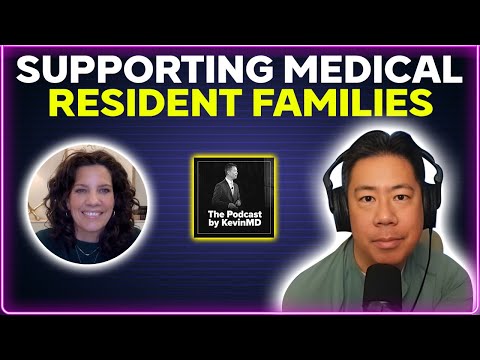
Join Elizabeth Landry, a certified coach, as we explore practical strategies to support medical resident families during the challenging transition into residency. Discover how spousal support programs, inclusive social gatherings, and mentorship initiatives can positively impact the well-being of both residents and their partners. Learn about the importance of recognizing signs of distress in resident physicians and accessing resources for mental health support.
Elizabeth Landry is a certified coach.
She discusses the KevinMD article, “10 ways to help PGY-1 spouses and partners new to your medical program.”

Our presenting sponsor is Nuance, a Microsoft company.
Together, Microsoft and Nuance are leveraging their rich digital technology and advanced AI capabilities to tackle some of health care’s biggest challenges. AI-driven technology promises to revolutionize patient and provider experiences with clinical documentation that writes itself.
The Nuance Dragon Ambient eXperience, or DAX for short, is a voice-enabled solution that automatically captures patient encounters securely and accurately at the point of care. DAX Copilot combines proven conversational and ambient AI with the most advanced generative AI in a mobile application that integrates directly with your existing workflows.
Physicians who use DAX have reported a 50 percent decrease in documentation time and a 70 percent reduction in feelings of burnout, and 85 percent of patients say their physician is more personable and conversational.
Discover AI-powered clinical documentation that writes itself. Visit https://nuance.com/daxinaction to see a 12-minute DAX Copilot demo.
VISIT SPONSOR → https://nuance.com/daxinaction
SUBSCRIBE TO THE PODCAST → https://kevinmd.com/podcast
RECOMMENDED BY KEVINMD → https://kevinmd.com/recommended

ADVERTISEMENT
GET CME FOR THIS EPISODE → https://earnc.me/tuNmr2
Powered by CMEfy.
Transcript
Kevin Pho: Hi, and welcome to the show. Subscribe at KevinMD.com/podcast, and get CME for this episode by clicking on the CME link in the show notes. Today we welcome Elizabeth Landry. She’s a physician spouse and certified coach. Today’s KevinMD article is “10 ways to help PGY-1 spouses and partners new to your medical program.” Elizabeth, welcome to the show.
Elizabeth Landry: Thank you, nice to be here.
Kevin Pho: So we’ll just start by briefly sharing your story and journey.
Elizabeth Landry: Yeah, so what I do is really a combination of all of my life experiences. When I met my husband he was a resident, and I worked in tech here in St. Louis. And short story, we got married, became very clear that I probably should stay at home with the kids, with his schedule and things.
So fast forward through 17 years of marriage and four kids and really great time management skills, it began to dawn on me that, while I’m forever grateful that I was able to stay at home with my kids, that we were in this place. At the same time I realized that since day one of being with my husband I’d been so busy making sure that he was successful and that his needs were being met, that I’d kind of lost who I was.
So I didn’t realize it at the time, but it’s kind of the story with a lot of physician spouses and partners, just because of the nature of a physician’s career. Their hours are demanding, you’re trying to provide some stability for your kids because of their hours, and you kind of come to a place where you realize that your cup isn’t being filled at the same rate as everyone else’s cup.
So I began trying to figure out how I was going to fill my cup in a way that made me grow but also had an impact on others. And what I love doing, and what I’m great at, is supporting others and being their cheerleader and watching them succeed. So it really led me down a path of service. So I ended up getting my coach certification and helping physician spouses not find themselves in the same place that I was.
During that process though, a lot of resident spouses and partners reached out to me, and they were kind of grasping for help, and they couldn’t afford much on a resident salary, much less coaching. So I’d talk to them, and general themes are that they were lonely, and that the medical journey really was terrible for them, and that their spouse worked all the time, and they had to move to a new community and they didn’t know anyone. And that they’d heard a lot of times that it’s nice to be married to a doctor, but there’s really no one who really knows, because this kind of really sucks.
So I love being a coach, but it was really at that time that I knew that I needed to help more physician families, after I heard of all the mental health issues and the loneliness that they were going through. This group is so strong and not helpless at all, but really they were just looking for some guidance and some community.
So it all really began by combining my tech experience with my own experiences as a physician spouse and my background in coaching, that I wanted to help these people that had sacrificed so much, just with some guidance. So that’s how The Med Commons came to be.
Kevin Pho: So tell us some stories about the sacrifices. You and other physician spouses that you meet, just give us a sense of some of the sacrifices that they make.
Elizabeth Landry: Well, one, you can look at residency, and you can look at, they leave family, friends, community, and lots of times their careers, to pick up and go someplace where they’re taken away from all of their social connection. And they don’t have family, friends there. Their spouse is working 80 hours a week, and then when they come home they’re mentally exhausted, physically exhausted, and they really don’t have the capacity to hear what happened to your day.
So that’s part of it. You’re taking away a lot of what these new families, they’re new families a lot of times, they’re just building lives together, you’re taking that away from them just by the nature of medical training.
Other things are, you end up becoming the default parent, because especially in emergency medicine or shift work, you end up becoming the default parent, because you can’t really rely on their schedule or them to be able to help with kids and activities and things like that.
And then also, to a certain extent, you sacrifice your own mental health and mental well-being, because you protect them from things that they don’t necessarily need to hear. So you keep it all in, and you can’t really go voice it to the neighbor, because again, at least you’re married to a doctor, you must be great, when really it’s not that great. So there’s a lot of sacrifices that are made that I don’t think are acknowledged in the health care world.
Kevin Pho: And during residency, are there resources that are available to resident spouses to help them through this period?
Elizabeth Landry: Some residency programs do a great job of it, some really do, some don’t. My husband was at a place that didn’t really do a great job of it, but I was lucky because I didn’t move for residency. We met in my hometown, I was with family, I was with friends.
So some residency programs do a great job with Alliance programs, do a great job of including physician families in their activities. Some don’t. It’s an easy win though. It’s not that hard to do, and it doesn’t cost a lot of money.
Kevin Pho: So let’s talk about your KevinMD article where you share tips for physician spouses. It’s titled “10 ways to help PGY-1 spouses and partners new to your medical program.” Tell us about this article for those who didn’t get a chance to read it.
Elizabeth Landry: Yeah, so this interview is so timely, because we just finished with match and residency programs are preparing for their new set of interns.
So new interns, as a part of training, you’ve got these physicians, they’ve moved across the country, they’re working 80 hours a week, they’re studying, they’re mentally exhausted. They’ve got wellness programs, hopefully, that support their basic psychological needs, autonomy, competence, connection, and that we hope has a positive experience on physician well-being.
Many of them bring their spouses and partners, and most of them are young families, like I said, and they’re stripped of all of their rings of social connectedness. So they’ve lost their community, they’ve lost their family and friends, and really they’ve even lost their spouse to the hospital and training and patients. So now you’ve got someone who is your physician’s biggest cheerleader and their biggest emotional support system, and their basic needs aren’t being met either.
So in this article, why should it matter to health care systems? It should matter because we are their biggest emotional support system. When the physician leaves those hospital doors, we’re the ones who they come home and talk to about all the stories. We’re the ones who keep them going when they want to quit. We’re the ones who keep the household running, so we can take that mental load off of them. We’re the ones who make sure that the house is quiet when they need to sleep.
So knowing that life in medicine really affects these three basic needs for both the spouse and the partner, how do we strengthen the spouses so that they can become the strongest support system for our physicians?
So really it’s about taking a holistic approach to physician well-being and understanding the positive impact that physician families can have on physicians. So this article just shows that it’s not a hard thing to do, and it doesn’t take a lot of time or money to make a big impact, to increase their autonomy, their competence, and help make them feel like they’re really a part of something, like they’re part of a community.
Kevin Pho: So what are some specific things that they can do from the article?
Elizabeth Landry: It’s pretty easy, because you’ve got these cheerleaders who want to be involved. It’s not that somebody doesn’t want to be involved, you’re not trying to pull strings to get people involved, you’ve got people who want to be involved.
So even before they get there, make sure that they know that there are any spousal support systems, or any support systems that you have in place, to help them feel like they’re part of a community. Part of The Med Commons, we have a friending app on The Med Commons, only for physician spouses and partners, so when they do move, it’s not hard for them to find other people in their community. You don’t have to schedule parties, they join this and they find their people.
So include them in get-togethers as much as you can. Don’t just, there are families out there that have kids and babies, don’t just go to bars all the time for events, try to include the families that have little ones too.
Making it easy for when they get there too. So make a list of apartment complexes, make a list of housing, make a list of activities and things that they can do, make a list of programs that you associate with. And that’s not hard, it’s a one and done kind of thing. You just hand it out after match, it’s a welcome packet basically.
But all of those things help physician families feel like they’re connected to a community, and it starts the physician off on the right foot, where they’re not worried about their spouse who’s home for 80 hours a week. They’re building their own lives, that will make them also successful and will also fill their cup. So those are some things out of the article, easy hits.
Kevin Pho: Now, what about programs that don’t have what you’re saying, and if a physician spouse or a young physician family is indeed struggling, what organizations can they turn to? Where can they turn, either online or within your community, for help?
Elizabeth Landry: Yeah, so let’s say they don’t have it. There is something called The Flip Side Life that has weekly coaching meetings. She’s based out of Canada, but she has meetings, they’re mostly weekly, that you can hop on and physician spouses can talk to each other about what they’re going through.
There’s a ton of Facebook groups out there. There’s one that I belong to with 15,000 physician spouses and wives. There’s a stay-at-home moms one, there’s a regular one, there’s ones that like gardening, there’s individual ones for the different areas. It just takes a little bit of looking into on Facebook, where you can connect with these folks.
And then there’s other support systems and communities aside from The Med Commons. So you can join your local AMA Alliance. There’s a Christian program called Side by Side that’s in a lot of communities for dentist and doctor spouses and partners. If you’re a male doctor, there’s Dads Married to Doctors, so that’s kind of fun. Curtis Webster runs that program, and he creates really activities for physician spouses that are men.
So on our website we have a bunch of resources. We do have multiple articles on how to build community when you get there, and also the communities that are available with links to those communities. So those are some things that can help residency programs if they don’t have anything. And then naturally, our friending app, easy hit to help people feel a part of their community and connect people.
Kevin Pho: Now what about dual physician families? Can you talk about some of the unique issues that young dual physician families may face, perhaps both in residency or both around the same point of their careers?
Elizabeth Landry: Yeah, I can talk a little bit about it. I think there are places out there where they are dual physician family coaches, and to teach you how to get through being a dual physician family, because there are things, juggling family, in residency when you’re both, and your schedules are so packed, you don’t have the ability to stay at home like I was able to and take care of the kids.
So as far as advice for them, because I’m not in that realm, I don’t want to talk about all my ideas for how they can handle it, but there are places out there and coaches out there that can help with dual physician families.
Kevin Pho: So knowing what you know now, and if you had to replay your husband’s residency journey again, what are some things that you would do differently, knowing what you know now?
Elizabeth Landry: Oh well, I think that The Med Commons is really a culmination of everything that I would do differently, and other spouses would do differently, not knowing what I knew before or what I know now. You don’t know what you don’t know, right? Which is in a good way sometimes, because you’re not going to meet a physician and they’re not going to come out and say, hey, I’m $350,000 in debt, and hey, you’re going to have to be pretty independent because I’m not going to be around a lot, especially during holidays and special events. So if that were the case, not that a lot of doctors would be married, right?
So that being said, I think The Med Commons is a culmination of all the things that I wish I would have known. And it’s not in a negative way though. We try to keep it really positive by presenting the negative things that can happen and the negative aspects in the medical journey, but letting them know that there’s a way that they can successfully navigate it. And if we can successfully navigate our lives in medicine, then we can help our spouses and partners navigate those challenges that come along with their careers, and not lose ourselves in the process, but instead fill our cups really at the same rate as everyone else.
Kevin Pho: So you mentioned the term fill your cup several times now. So what are some specific ways physician spouses can do that?
Elizabeth Landry: So it’s easy to get lost in the support role. You want to make sure that, like I said, the house is quiet, you want to make sure that they’re fed, you want to make sure that they’re happy, you want to make sure that they are the best humans so they can be the best doctors, provide the best patient care. So this is just as someone who is their cheerleader and someone who loves them.
So in that time you can forget what you need, and you can forget what you enjoy. Really you can forget that, hey, I used to like rock climbing, or hey, exercise is an essential part of my mental health, simple things like that. Other things are, I didn’t realize how much I liked working outside the house, or working period, because I was so wrapped up in making sure that he was happy and he was taken care of.
So setting boundaries as far as what you’re willing to take and what you’re not, sharing household duties, not taking it all on yourself, not allowing things to pass just because you don’t want to deal with them, because you want to protect them from the consequences. Things like that are things that you get lost in.
So make sure that you’re taking care of yourself, so you cannot forget who you are, and you can continue to learn and continue to take care of yourself, your own mental and physical health, and continue to grow, where you aren’t stunted. So I think those are things that are important, to make sure that your cup is filled.
Kevin Pho: We’re talking to Elizabeth Landry. She’s a certified coach and a physician spouse. Today’s KevinMD article is “10 ways to help PGY-1 spouses and partners new to your medical program.” Elizabeth, as always, we’ll end with some of your take-home messages to the KevinMD audience.
Elizabeth Landry: Yeah, so I’ve said it 100 times, I’ll say it 100 times more. Spouses and partners in medicine are probably some of the strongest people I’ve ever met. They do not need their hands held. But supporting their families, acknowledging their wellness and their role in physician wellness, is important. Doesn’t take a lot of time or money to make a huge impact.
So you’ve got the hearts, the ears, and the minds of your physicians’ biggest supporters. So utilize them as an integral part of your physician wellness plan, and nurture them to improve physician well-being. Because when you do, then not only will you see improvements in the physician, but you’ll also see improvements at a hospital and patient level.
Kevin Pho: Elizabeth, thank you so much for sharing your story, time, and insight, and thanks again for coming on the show.
Elizabeth Landry: Absolutely, thank you so much.


























