
















Listen and followApple PodcastsSpotifyYouTubeMore apps · Browse all episodes
How can gratitude guide health care professionals in navigating political uncertainty, misinformation, and the challenges of post-election transitions? Join us as Janet A. Jokela, an infectious disease physician and Treasurer of the American College of Physicians, explores how genuine gratitude fosters resilience, strengthens advocacy, and deepens professional connections. Learn how evidence-based policies and shared values can help us support our patients, communities, and each other during uncertain times.
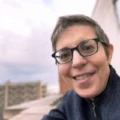
Janet A. Jokela, MD, MPH, ACP’s Treasurer 2022-2025, served as the Regional Dean of the University of Illinois College of Medicine-Urbana, and currently serves as Professor and Senior Associate Dean of Engagement at the Carle Illinois College of Medicine, Urbana, IL.
She discusses the KevinMD article, “The answer is gratitude and it puts you in a good place.”

Our presenting sponsor is DAX Copilot by Microsoft.
DAX Copilot, by Microsoft, is your AI assistant for automated clinical documentation and workflows. DAX Copilot allows physicians to do more with less and turn their words into a powerful productivity tool. DAX Copilot automates clinical documentation—making it available in the EHR within minutes—and clinical workflows, including referral letters, after-visit summaries, style and formatting customizations, and more.
70 percent of physicians who use DAX Copilot say it improves their work-life balance while reducing feelings of burnout and fatigue. Patients love it too! 93 percent of patients say their physician is more personable and conversational, and 75 percent of physicians say it improves patient experiences.
Discover AI-powered solutions for clinical documentation and workflows. Click here to see a 12-minute DAX Copilot demo.
VISIT SPONSOR → https://aka.ms/kevinmd
SUBSCRIBE TO THE PODCAST → https://www.kevinmd.com/podcast
RECOMMENDED BY KEVINMD → https://www.kevinmd.com/recommended
GET CME FOR THIS EPISODE → https://www.kevinmd.com/cme
I’m partnering with Learner+ to offer clinicians access to an AI-powered reflective portfolio that rewards CME/CE credits from meaningful reflections. Find out more: https://www.kevinmd.com/learnerplus
Transcript
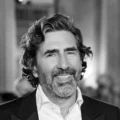
Kevin Pho: Hi, and welcome to the show. Subscribe at kevinmd.com/podcast. Today, we welcome back Janet Jokela. She’s an infectious disease physician, and she’s the treasurer of the American College of Physicians. Today’s KevinMD article is “The answer is gratitude and it puts you in a good place.” Janet, welcome back to the show.
Janet A. Jokela: Thank you so much, Kevin. Delighted to see you.
Kevin Pho: All right. So tell us what your latest article is about.
Janet A. Jokela: I started thinking about this in the aftermath of the election. How do we navigate this as physicians committed to our patients and what’s in our patients’ best interests? So what do we do here? And there were a number of dizzying cabinet appointments which were announced, as we know. And the question is, how do we respond to this? What do we do?
So I started digging deep on this and thinking more about gratitude as well because of the holidays. It’s that time of year, and gratitude’s a good thing to think about, no matter what time of year it is. And I realized that was the way forward, to really focus on real gratitude and focusing on things which were of value to me and colleagues, everybody, to figure out how we navigate the current situation.
Real physician voices, twice a week
Free, and one click to unsubscribe.
Kevin Pho: So for those physicians where the election did not go the way they wanted, from the conversations you’ve had, how does that affect them professionally? How does it affect them in the exam room, where they needed a solution to move forward?
Janet A. Jokela: I think, in general, for people who are disappointed in the election, and of course, as we all know, not everybody was, I think there was certainly a feeling of being stunned and surprised. How could this have happened? And also anxiety in terms of what’s going to happen next.
So given that, when faced with patients in the exam room, as you will know, we have to focus on the patient in front of us and what their needs are and how best to respond to them. So in many ways, I think it’s critical for us, as much as we can, to put those things aside, whatever our personal reactions were, and focus on what’s best for the patient and how you can support the patient and address whatever it is that they need. Easier said than done, but I think that’s what needs to happen and what many people have done.
Kevin Pho: So as you were going through that thought process, tell me about the path that eventually led you to gratitude.
Janet A. Jokela: Well, thinking about it and thinking about how gratitude is an important concept, if you will, or an important practice, no matter what we’re faced with, I realized that it was also important here. And there was a recent Wall Street Journal article talking about kind of fake gratitude, and that’s not what I was getting at.
Kevin Pho: What is it? What is fake gratitude?
Janet A. Jokela: The Wall Street Journal article that I referenced in my article touches on it, but it’s almost anti-gratitude or kind of a rebellious approach to gratitude. “I can’t feel gratitude. I’m angry about blah, blah, blah.” And being more embracing of one’s resentment or one’s anger and all that, as opposed to trying to force false gratitude or being grateful even though we may not really feel that way. I don’t want to go down that path.
The path was, where can we really find gratitude in the circumstances in which we find ourselves now? And I realized, all right, if you step back and think about it, there are a few things that I landed on. One was the policies, American College of Physicians policies, which are fabulous policies. And we can be grounded in that. We can be grounded in the ACP values, the values that are espoused by our professional organization. And also our colleagues, and we can be grounded with them and work together with them to figure out ways forward. And that seemed to help.
I also thought, with gratitude, it helps with certainly mental health and kind of how we flourish. And gratitude’s a good place to be, but it’s also a place, I realized, where fear dissipates and anxiety dissipates, and things become more clear in terms of the next steps to take. So those are the reasons I came to gratitude in this post-election kind of situation.
Kevin Pho: So tell us today, despite all the challenges that physicians face, and if you’re disappointed with the outcome of the election, what do we have, physicians, what do we have to feel thankful for?
Janet A. Jokela: Oh my goodness, actually a lot. A lot. And it’s easy to look at the cup perhaps as being half empty. But it’s equally easy, and maybe it doesn’t come as naturally to many of us as opposed to the other way, but it’s equally easy to look at the cup being half full.
So for instance, with these ACP policies, I realized that ACP has a ton of policies on a myriad of different issues and all kinds of important issues that our patients face, our colleagues face, day in and day out. You realize they’re evidence-based. They’re based in science, sound research. The ACP’s policy staff, they’re awesome. They just work so hard with the ACP leadership and the committees to develop these policies.
And you realize those are things that we can speak to when the occasion arises, and they also ground all of ACP’s advocacy efforts that the college undertakes in whatever situations arise. So that I found, in many ways, just very comforting and reassuring in many ways.
Kevin Pho: Any specific policies that come to mind that you give us an example of, in terms of moving the needle to better the professional lives of physicians and the care we get for patients?
Janet A. Jokela: Well, again, Kevin, how much time do you have? There are so many policies out there, it’s not funny. There is a policy or a statement that was recently issued by our president of the ACP, Dr. Isaac Opole. It was issued on November 15, talking about the importance of vaccines, vaccinations, and also the public health infrastructure.
So for instance, the ACP, within the past year or so, had published an updated policy, another paper on the importance of modernizing the U.S. public health infrastructure. I mean, who knew, right, that the ACP has a policy on that? But it’s there, and it lists some very specific actions that could be taken to modernize the public health infrastructure.
But by having policies like that, for instance, that permits the ACP and everybody else to speak out in support of such actions and such positions when the need arises. So there’s a ton of policies, but that’s one, for instance, that comes to mind that I think is quite pertinent today.
Kevin Pho: Now, with the incoming administration, of course, there’s going to be changes at the heads of all the public health services in our country. Tell us how the ACP’s advocacy is going to be changed with this new administration.
Janet A. Jokela: That’s a really good question. Here’s my sense on that. The ACP is nonpartisan, and it works with congressional leaders on both sides, all sides of the aisle. So there may be some positions that a particular individual has that are also in alignment with the ACP. Other positions, that same individual may not be in alignment with what the ACP supports or does.
So in many ways, it’s a little bit of walking a fine line to really stick to our policies, support our policies, and work with the new administration and whoever is in positions of leadership to try to further these policies, which ultimately help our patients and our colleagues.
Kevin Pho: Now, even within the ACP, there’s going to be some political disagreement, of course, right? So take us into one of these policy sessions. What’s it like when people within the ACP or within the membership often have these debates from one side of the political aisle versus another?
Janet A. Jokela: That’s a really good question, too. And it’s interesting. You’re absolutely right. ACP has a membership of over 160,000 members. So of course, not everybody in the ACP thinks alike on perhaps these policies or on a number of different issues. So how is policy created?
Well, policies are created. They bubble up through the chapters, ACP chapters in every single state across the country. There are other international chapters as well. So they bubble up there. They are vetted within the Board of Governors and debated. And then, when these new policies are approved at that point, they come to the Board of Regents for implementation.
And the ACP policy staff had been involved all along as well. But that’s where just a very careful vetting of the evidence, the current evidence to support one or another position, comes into play. And so it’s a very deliberate, thoughtful process that incorporates multiple viewpoints, if you will, and also the evidence. And if the evidence isn’t there, the paper doesn’t get written, or those specific points don’t get added to the policy paper.
So it’s a very careful, thoughtful process. And I guess, Kevin, as we’re talking about it, that’s another thing I’m very grateful for, is the process.
Kevin Pho: That’s right, because evidence shouldn’t be nonpartisan, right?
Janet A. Jokela: Exactly. And when you drill down to gratitude, my goodness, we can be really grateful for that. And that’s a good thing.
Kevin Pho: Now, take us through an example where gratitude helped you through a time of a professional challenge. And it doesn’t have to be political, like we’ve been talking about. Give us an example of a difficult time that you had, or perhaps a colleague had, and gratitude really helped you or that colleague through that time.
Janet A. Jokela: Good question. I’ll share a personal story with you. I had gone through a breast cancer diagnosis within the past handful of years, and gratitude was really important in that space. And it was really interesting to go through, certainly as a physician, and then kind of suddenly flipping, and now you’re the patient getting poked and getting chemo and all that stuff. And you realize there’s a lot of really important things to be grateful for, really grateful for.
The American Cancer Society had printed a book some time ago, just like a handbook for patients going through the process. And on the last page, there was a whole list of things to be grateful for. And it was really interesting. And I was kind of into the gratitude thing anyway before this, but to read this list, it was things like, “I’m grateful to get up in the morning and feel the cold floor under my feet because that means I’m alive.” It’s like, my goodness, all right, we’ll take that. Or, “I’m grateful to be receiving chemotherapy because that means I didn’t die suddenly of a heart attack,” or things like that.
And it just really encapsulated for me just how many different ways we can look for gratitude, no matter what our circumstances are. And that, I think, was really powerful.
Kevin Pho: Talk about the gratitude that you have towards patients and how that strengthens your relationship with patients.
Janet A. Jokela: Oh, sure. Listen, I love patients. I’ve always loved my patients. I adore my patients. We learn so much from our patients. I think our colleagues challenge us, but our patients certainly challenge us, too. They make us better people. They fundamentally make us better people. We’re challenged to think outside of our box or our normal way of thinking and doing. And that’s important. It helps us grow personally, and it helps us be better doctors to better take care of our patients when the situation arises.
Can I tell you a short little story of a patient some time ago now, an HIV patient who I cared for for a number of years? Sad outcome. I’ll tell you, it’s a sad outcome. And he had gotten just very sick, just very, very sick, and he knew he was sick. And anyway, he drove himself to our local VA hospital. And this was late at night or very early in the morning. And he wanted to go to the hospital and be there because he knew that I would be there in the morning. And he knew that he wanted to be in this place where I would be able to be there as the infectious disease physician to take care of him and keep an eye on him.
Long story short, very sad, but he passed away in the middle of the night. And I missed him. I missed him before he passed away. But to hear that he drove to the hospital, which was probably about 40 miles away or so from his home, to be there potentially to be with me, I mean, it just brings tears to your eyes. I mean, it was incredibly touching, and I was incredibly, incredibly grateful to know him.
I’m not sure how literate he was, Kevin, in terms of being able to read. Anyway, there were limitations that he had. He really struggled, I think, day to day in various life circumstances. But to know that he made that effort to do that, oh my goodness. I mean, I was deeply touched, but also very grateful for him.
Kevin Pho: We’re talking to Janet Jokela. She’s the treasurer of the American College of Physicians and an infectious disease physician. Today’s KevinMD article is “The answer is gratitude and it puts you in a good place.” Janet, as always, we’ll end with some take-home messages that you want to share with the KevinMD audience.
Janet A. Jokela: Sure. Thank you. Thank you, Kevin. I’m grateful for you. I’m grateful for my colleagues far-flung, whether they are close by or on social media, wherever they are. I think our colleagues make us better, and they challenge us.
I’m grateful for evidence-based policies that can help point us in the right direction when challenging or controversial issues arise. And they point the way, and they show us where to go. So thank you so much.
Kevin Pho: And as always, thanks again for sharing your perspective and insight. Thanks again for coming back on the show.
Janet A. Jokela: Thank you so much, Kevin. Happy holiday.
Listen and followApple PodcastsSpotifyYouTubeMore apps · Browse all episodes