









Listen and followApple PodcastsSpotifyYouTubeMore apps · Browse all episodes
Join us for an insightful conversation with emergency physician Drew Remignanti as we explore the complexities of transitioning to Medicare for all. We’ll discuss the potential benefits, pitfalls, and misconceptions surrounding the concept, the importance of primary care physician leadership, and the impact on patient care and cost management.
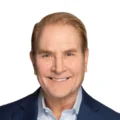
Drew Remignanti is an emergency physician.
He discusses the KevinMD article, “Medicare for all could work if doctors lead the way.”

Our presenting sponsor is DAX Copilot by Microsoft.
Do you spend more time on administrative tasks like clinical documentation than you do with patients? You’re not alone. Clinicians report spending up to two hours on administrative tasks for each hour of patient care. Microsoft is committed to helping clinicians restore the balance with DAX Copilot, an AI-powered, voice-enabled solution that automates clinical documentation and workflows.
70 percent of physicians who use DAX Copilot say it improves their work-life balance while reducing feelings of burnout and fatigue. Patients love it too! 93 percent of patients say their physician is more personable and conversational, and 75 percent of physicians say it improves patient experiences.
Help restore your work-life balance with DAX Copilot, your AI assistant for automated clinical documentation and workflows.
VISIT SPONSOR → https://aka.ms/kevinmd
SUBSCRIBE TO THE PODCAST → https://www.kevinmd.com/podcast
RECOMMENDED BY KEVINMD → https://www.kevinmd.com/recommended
GET CME FOR THIS EPISODE → https://www.kevinmd.com/cme
I’m partnering with Learner+ to offer clinicians access to an AI-powered reflective portfolio that rewards CME/CE credits from meaningful reflections. Find out more: https://www.kevinmd.com/learnerplus
Transcript
Kevin Pho: Hi, and welcome to the show. Subscribe at kevinmd.com/podcast. Today, we welcome back Drew Remignanti. He’s an emergency physician. Today’s KevinMD article is “Medicare for all could work if doctors lead the way.” Drew, welcome back to the show.
Drew Remignanti: Thanks a lot for having me, Kevin. I appreciate it.
Kevin Pho: So let’s jump straight into this most recent article about Medicare for all. Before going into it, just tell us what led you to write it in the first place.
Drew Remignanti: Well, my reflex feeling about Medicare being run by the federal government was one of just unease, because I don’t really trust them to do it right. And CMS, the Centers for Medicare and Medicaid Services, typically, when they do something that affects physicians, they reduce the amount of money they want to give to physicians. This year, I think they’re planning another 2.9 percent decrease in physician pay, which I think is the fifth year in a row they’ve decided that the way to solve our health care problem is to pay physicians less.
So I started off with a reflex skepticism about Medicare for all as this concept. And then I read this book by the health care journalist Ken Terry, who goes into a fairly extensive explanation for how it could work. And the immediate appeal to me was that he proposed doing it over a ten-year period rather than an overnight fiat.
I think, as patients, we like the idea. It’s appealing: “Gee, if I can get the government to pay for all my health care, then I don’t need to worry,” which is true. You won’t have any financial worries. But I don’t think it’s even the right way to start. I think we need to figure out how to do things better between patients and physicians.
Real physician voices, twice a week
Free, and one click to unsubscribe.
Kevin Pho: So tell us the proposal that you have that was inspired from you reading a book. What would you like to see?
Drew Remignanti: Well, as Mr. Terry recommends, I think we should put physicians in charge of making any transition in terms of how we pay for health care. In the book that I wrote, I promote a patient-physician partnership. And we’ve developed a passive role as patients, and the system sort of encouraged that passive role. I think patients need to become much more active participants in their health care, and I think they need to have a stronger relationship with their primary care physician. I think that’s the key place to start, and we can do that regardless of who’s paying for it.
So we could start that part right now. And there are plenty of studies that I quote in my book in which patients who have the kind of trusting relationship with their primary care doctor that they can discuss their concerns and hear what the doctor has to say, that might not agree with their concerns, and together formulate a plan, a treatment plan for their condition, a diagnostic and treatment plan. Those patients who become better informed, more involved in the planning of their treatment, are subsequently more adherent to those treatment plans.
And here’s an amazing finding in my research: They then have half the mortality rate of people who are less knowledgeable, less engaged, and less informed and less adherent. So that’s a pretty big payoff. If it was a 10 or 15 percent reduction in mortality, you’d say, “Well, that’s interesting.” But a full half. And there’s study after study showing that same reduction of mortality.
Kevin Pho: You talk about strengthening the primary care physician-patient bond, but how is that strengthened bond going to lead to an overhaul in our health care system? Because it sounds like we’ve been trying to strengthen that bond for decades now, and I talk a lot about this on my podcast, about the deterioration of that primary care bond. So, assuming we have it, how is that going to lead to complete reform of our health care system?
Drew Remignanti: I think patients need to do that first because they gain immediate benefit from it, from the reduction in mortality risk. The system would gain from it ultimately because patients would be seeking out fewer unnecessary treatments. And so there’ll be cost reduction because you trust your physician who says, “No, you don’t need that particular test.”
I came across some interesting options. You can apparently, without even a physician’s order, if you’re anxious enough about it, order a total-body MRI scan. I think it’s a mere $1,500. I can’t remember, $5 or $2,500. And so the business people in health care want the physician out of the way so that they can appeal to that insecurity and incomplete awareness on the part of patients and say, “Hey, this is a service that you need.”
And there are other online lab services where you can order your own lab tests. How are you going to know what to order if you don’t have a relationship with your primary care physician? I think we need to incentivize primary care for both the physicians and for the patients.
Kevin Pho: So how can we get to that point? Because, like you said, we don’t have that strong bond between patients and primary care physicians, and there’s a shortage of primary care physicians today. So what do you propose in order to build up our primary care workforce?
Drew Remignanti: I would say we need to incentivize primary care physicians by literally paying them more, giving them more time to spend with patients. The thing that strengthens the patient-physician relationship is when you don’t feel rushed, like your doctor is trying to get you in and out the door as quickly as possible.
I had a friend say to me, “When I go to my doctor, he barely even sits down. He’s talking to me as he comes in the door. He’s talking to me as he leaves the door. But an actual conversation face to face, so I can express my concerns and reservations, there’s no time for it.”
I think we need to pay primary care physicians more so that they can have a smaller patient panel that they need to see, so they can spend more time with patients. That’s something that would have to come from above. Insurers would have to be saved. And the hospital and emergency department administrators need to take their focus off productivity, like, “How many widgets are you producing in an hour? How many patients are you seeing in an hour?”
The fact that, as primary care doctors, you’re given fifteen or twenty minutes to have an interaction with a patient and hear what they’re trying to say and explain what you think they need to hear, it’s totally unrealistic. And yet it’s become an accepted part of modern health care.
Kevin Pho: How would you get more medical students to be interested in primary care? Because, as you know, when the majority of them graduate, they tend to go to specialty care because of that disparity in pay, and they graduate with hundreds of thousands of dollars of medical school debt. How would you incentivize them to go into primary care?
Drew Remignanti: I think that has to come from the top down. The CMS needs to say, “The solution to our problem in health care is not to pay physicians less. The solution is to pay them more, and specifically pay primary care physicians more.” Not necessarily rob Peter to pay Paul, or pay other physicians less. But I really feel it’s probably the most important specialty right now. We’re trying to solve our health care mess, which is to get more people to go into primary care.
And you’re right, it’s a major hurdle, because when I graduated medical school, I had $35,000 in debt, and I thought, “I’m really way underwater.” But more typical now is a couple hundred thousand in debt. And if you know your pay as a primary care doctor is going to be much smaller than specialty care, it’s a natural reaction to go into specialty care.
I think it has to be mandated from above. I think the only institution in our country that has the power to institute those kinds of things from above is the federal government, as much as I’m leery and distrustful of them.
Kevin Pho: If you’re in charge of Medicare, if you were in that new role, tell us the first things that you would do to shift the health care system into your vision.
Drew Remignanti: I just read something today where the incoming president is proposing that the AMA, the American Medical Association, needs to be taken out of the process. In other words, doctors need to be removed from the process of determining what physicians get paid. And the thing I liked about Ken Terry’s book is that he’s saying, “Oh, no, they need to be the ones who lead this.”
Specialists might balk a little bit at, “Gee, why should we pay primary care doctors so much?” But I think that has to be step number one. I would probably almost double their pay overnight. I’d say, “OK, you take away this whole idea of productivity from health care and quality.”
I’m not talking about socialized medicine, but medicine has to be individualized and humanized. And you can’t have an individualized and humanized interaction with a patient, even one you’ve known before, but particularly one you’ve never met before, in fifteen or twenty minutes. It just can’t be done. That’s a business concept: “Time is money, and let’s make everything happen in a shorter time period.”
So I’d put physicians back in charge of decision-making there. It’s like if you want to send a rocket ship to Mars, and you don’t fire all the aerospace engineers and bring in the aerospace graduate students. You leave the aerospace engineers with experience in place.
Really, what they’re trying to do in this modern era is reduce costs by substituting. I hate that phrase “provider.” I’ve been a patient with a chronic autoimmune disease my entire life, and I’m offended, as I never thought of myself as a consumer of medical services. I felt myself to be a patient who’s having to utilize medical services for my condition. I certainly never thought of myself as a provider.
But they’re trying to develop a false equivalence that anybody who can see patients and make some decisions is the equivalent of a physician. So the non-physician providers, again, a money-saving effort by dollar-driven decision makers.
Kevin Pho: So how can physicians lead? We’ve been talking about all these changes that need to be from a grassroots level, and physicians often aren’t in positions of leadership or in positions of influence. So what are some of the steps that physicians can take to better position themselves in that leadership role?
Drew Remignanti: Again, I see it at two different levels. One is societal, and one is individual. Individually, both patients and physicians could decide, “We’re going to do things different in the office now. When I meet with you, I’m going to expect you to be knowledgeable about your health care conditions. I’m not expecting you to go home and study things, know everything overnight. But when we have a discussion about your diabetes, I expect you to be somewhat knowledgeable about what we’re talking about. And I promise to listen to all of your concerns, and we’re going to take as much time as we need to listen to your concerns.”
And the patient has to come in with the idea, “OK, I’m an active participant in this.” So that can happen overnight between any physician-patient dyad. You’re going to step on some toes, and your office is going to say, “Gee, Kevin, you’re not seeing enough patients here.”
On a societal level, again, I think it has to be imposed from above. You have to get somebody who’s a decision maker understanding these concepts and saying, “Yeah, non-physicians should not be practicing medicine and making health care decisions in our country.” We’ve let the business people take over health care, to the point where they’re not afraid to even point that out.
In one of my essays I adapted from my book, I point out a health care administrator with thirty years of experience who was quoted in a health care business journal saying that patients need primary care, but not necessarily a physician relationship. She felt totally comfortable saying that out loud and seeing it in print under her name. Those kinds of thought processes need to be reversed.
And I think the only way that can be reversed is by somebody like the federal government, who has the power to say, “We’re instituting these rules.” It’s a little pie-in-the-sky wishful thinking on my part, but I don’t see any other way it could be done.
The positive part for patients and physicians is we could change overnight how we interact with each other in a more trusting partnership. It’s not an equal partnership. We have different skill levels. The patient knows exactly what they’re feeling, what they hope to get from their health care, so that’s what they bring to the table.
What we bring to the table as physicians is: How can we get you where you want to go? And what is the meaning of those symptoms that you’re having? What tests do we need to do? And I’m going to trust you to follow through on the advice I give you. You have to trust me to listen to everything you say.
Kevin Pho: We’re talking to Drew Remignanti. He’s an emergency physician. Today’s KevinMD article is “Medicare for all could work if doctors lead the way.” Drew, let’s end with some take-home messages that you want to leave with the KevinMD audience.
Drew Remignanti: As I mentioned briefly before, I’d say to any patient that you should stun your doctor by going in the next time you’re in the office. You say, “Doctor, I listened to this crazy conversation between Kevin and Drew, and I’m convinced that I need to play a more active role in my health care. And I’m committed to playing a more active role, a more knowledgeable, more active role in my health care.”
And, of course, then you’re going to have to take a pause and walk across the room and assist your doctor back up off the floor into their chair, because I think we’re beyond ready as physicians to hear that. I think many of us. Some of us are probably not. Some of us will probably put up our hands and say, “Hey, that’s not your role. You need to remain in that passive role.” But I think many doctors are ready for the fact of having more engaged and educated patients.
So that could be done overnight by a patient who listened to this. They could say, “Well, I’m going to give that a try.” And if your doctor is one of the ones who’s not ready for that kind of change, you might want to consider moving on to a doctor who’s more open-minded.
So that’s one of the points I make in my book repeatedly, and every time I talk about the concept, is getting patients more knowledgeable and engaged. And you don’t need anybody’s permission to do that. You can make that decision overnight and, first thing tomorrow morning, initiate that change in your own role, in your own life.
Kevin Pho: Drew, thank you so much for sharing your perspective and insight, and thanks again for coming back on the show.
Drew Remignanti: Hey, Kevin, thanks so much for having me and listening to me go on.
Listen and followApple PodcastsSpotifyYouTubeMore apps · Browse all episodes