
















Listen and followApple PodcastsSpotifyYouTubeMore apps · Browse all episodes
Emergency physician Drew Remignanti discusses his KevinMD article, “High tech should not replace high talk and high touch in health care.” In this episode, Drew examines the limitations of artificial intelligence and high-tech solutions in addressing the complexities of the U.S. health care system. He emphasizes the irreplaceable value of compassionate, personal interactions between patients and physicians, highlighting how technology can supplement but never substitute the human touch essential for effective patient care. Drew also critiques the profit-driven consumer-provider model, explores the disparities in health care access, and offers actionable strategies for restoring meaningful patient-physician relationships to improve health outcomes and reduce costs.

Our presenting sponsor is DAX Copilot by Microsoft.
DAX Copilot, by Microsoft, is your AI assistant for automated clinical documentation and workflows. DAX Copilot allows physicians to do more with less and turn their words into a powerful productivity tool. DAX Copilot automates clinical documentation—making it available in the EHR within minutes—and clinical workflows, including referral letters, after-visit summaries, style and formatting customizations, and more.
70 percent of physicians who use DAX Copilot say it improves their work-life balance while reducing feelings of burnout and fatigue. Patients love it too! 93 percent of patients say their physician is more personable and conversational, and 75 percent of physicians say it improves patient experiences.
Discover AI-powered solutions for clinical documentation and workflows. Click here to see a 12-minute DAX Copilot demo.
VISIT SPONSOR → https://aka.ms/kevinmd
SUBSCRIBE TO THE PODCAST → https://www.kevinmd.com/podcast
RECOMMENDED BY KEVINMD → https://www.kevinmd.com/recommended
GET CME FOR THIS EPISODE → https://www.kevinmd.com/cme
I’m partnering with Learner+ to offer clinicians access to an AI-powered reflective portfolio that rewards CME/CE credits from meaningful reflections. Find out more: https://www.kevinmd.com/learnerplus
Transcript
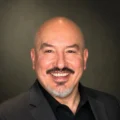
Kevin Pho: Hi, and welcome to the show. Subscribe at KevinMD.com/podcast. Today we welcome back Drew Remignanti. He’s an emergency physician, and today’s KevinMD article is “High tech should not replace high talk and high touch in health care.” Drew, welcome back to the show.
Drew Remignanti: Hey, thanks a lot for having me again, Kevin. I appreciate it.
Kevin Pho: All right, so tell us what this latest article is all about.
Drew Remignanti: Well, I think what we’re losing a clear grasp of the importance of is the interpersonal interaction between a patient and their physician. That’s being devalued rapidly. It’s being replaced by this new model, which is the consumer-provider model, which is both more expensive and less effective than a true one-on-one connection with a physician who knows you and who you feel known by.
Real physician voices, twice a week
Free, and one click to unsubscribe.
Kevin Pho: Now, what are some examples that you see that make you say that?
Drew Remignanti: Well, all throughout my career, I worked forty years as a board-certified emergency physician, and progressively throughout my career, more and more pressure was placed upon me and my colleagues to see patients, see them faster, keep them more satisfied, and, oh, by the way, don’t make any mistakes during that process.
And what we learn in emergency medicine, I think we learn as physicians all across the board, is when is it time to slow down and when is it safe to speed up. When you’re with a patient, when do you need to slow down and truly understand what that patient is trying to communicate with you? Intense pressure, to the point of not being directly threatened with firing, but indirectly saying, “Gee, if you want to keep your job, you have to become more productive.”
There are no products in health care. There’s information, interventions that are useful and appropriate for the patient and some that are less useful and less appropriate for the patient, but there are no products in health care. And certainly, as patients, we don’t feel like consumers, or I never did.
Kevin Pho: Now, when you said that when you were working as an emergency physician there was more pressure on you and your colleagues to see more patients, was that pressure explicit? Did administrators literally come up to you or write to you and say, “You have to see more patients”?
Drew Remignanti: Very much so. I mean, they kept data. How many patients you saw per hour is the way it’s done in emergency medicine, probably across the board: how many patients per work hour, per workday in primary care or other specialties. Literally to the point where you need to see more patients.
My response always was, I tried to say in a polite way, “Look, when I’m with a patient, you’re not there. It’s me and the patient. I need to decide how much time we need to take to have this communication.” And obviously in the emergency department, sometimes you need to know there are other people who might need your attention. So balancing that juggling act in emergency medicine is a pretty sophisticated thing, probably not all that different from what you do in an office practice, where you have three or four patients in different rooms, and who do you spend time with, and who can you spend briefer periods of time with?
And if you’re not being productive enough, well, you’re definitely getting bonuses based on how productive you are, and then you’re told, “Well, gee, you’re not productive enough, and you’ve got to improve that.” I sold that every single year during my annual evaluations by my department chairman. It got progressively more offensive as I was thirty-five-plus years into my career. I did, you know, by somebody who was a good doctor. I mean, they were clinically experienced physicians, but often with far less experience than I had. And when you’re not in the room there with me and the patient, looking at it from the outside and saying, “You need to spend less time with that patient, Drew,” you have to fairly stick to your guns and say, “No, you know, that’s for me to decide.”
Kevin Pho: Now, what were some of the repercussions if you weren’t as productive as they would like? Did you see that your colleagues would lose their jobs because they weren’t productive enough or they didn’t see enough patients?
Drew Remignanti: It was that constant pressure there, and I had a progressive concern towards the end of my career. I decided at a certain point that I was going to try to make it working full time till 2020, because I graduated medical school in 1980, so that was my goal. So I thought, yeah, I’d hate to be fired at the very end of my career because I wasn’t productive enough. But much more important to me was spending the amount of time I needed to with each patient.
And in my book that I wrote, I described several patients that I came whisker-close to making a life-threatening decision on, on the basis of making the wrong decision. It would have been life-threatening to that patient. It was a constant pressure.
Kevin Pho: Now, your article talks about the infiltration of technology into that doctor-patient relationship. So overall, before we dig down into that, do you think that technology has helped or harmed the doctor-patient relationship over the years?
Drew Remignanti: I think it’s helped us to come to more accurate decisions and treatment plans with our patients. I mean, I wouldn’t trade the high tech at all, but it’s a tool that’s used. It doesn’t necessarily promote the patient-physician relationship, but it can be used as an effective tool in coming to the right decision for your patients.
Kevin Pho: Now, what are some examples of high tech or tech tools in the emergency department setting that have most impacted the field over the decades that you’ve been practicing?
Drew Remignanti: We’ve become much more sophisticated in our X-ray imaging. For example, CT scans were a novel thing during my training, and a lot of hospitals just didn’t even have a CT scanner. And you had to decide as an emergency physician: Is this patient safe enough, and is it in this patient’s best interest to put them in an ambulance and transfer them to a facility that has an actual CT scanner to further investigate this condition? And sometimes you had to do that. And if you had an unstable patient, it became a difficult decision: What’s more important, stabilizing and keeping an eye on the patient right next to them or sending them off in an ambulance?
Now every hospital has a CT scanner, and many have MRI scans as well, and you get much, much more sophisticated imaging with an MRI scanner and a CT scanner over a plain X-ray. So that’s been an amazing improvement. However, whether it’s being overutilized, I don’t think anybody would argue with you that it’s not being overutilized.
And actually, this is a funny thing I came across the other day. You can actually order your own total-body MRI scan, literally from head to toe. They’ll scan your entire body. You don’t even need a physician’s order. You just have to have the money, $2,500 it costs to get that done. You have to have the money and desire to do it and the anxiety that you think is going to be put at ease.
So that’s an example of a tremendous improvement of X-ray imaging, but being misused by patients who want what they think is going to be the reassurance of having that scan appear normal. What they don’t understand, of course, is that sophisticated imaging picks up minor things. Incidentalomas is the medical term we jokingly use, an incidental finding, a little collection of tissue here that looks slightly different. And then the question comes: Is that a new growth of cancer? Is that a scar from a prior inflammatory process? Is it clinically significant or not?
Kevin Pho: Now, do you find these advances in technology sometimes take the place of establishing a doctor-patient relationship? For instance, in the emergency department, where it’s so busy, do you feel sometimes it’s easier to send a patient off to a scan rather than taking the time to do a careful history and physical?
Drew Remignanti: No doubt about it. In most busy emergency departments, like I worked in, the nurses were actually deputized to send the patient over for a CT scan of the brain if they thought it was necessary. And many of the times they made a wise decision, but quite a few times they scanned the patient that I would not have. And then they get an incidental finding, you know. Now I have to take the time and call the radiologist and say, “In this clinical setting of what happened to that patient, is that significant?” If the answer is, “No, that’s not significant at all,” I understand. And as a patient, then, you know, we get reassured when we get a high-tech intervention. You know, more information seems to be always the best thing.
Kevin Pho: Now, how do you push back against that? You’ve been practicing for decades, and you resisted the pressure to be more, proverbially, productive. You were able to maintain that connection with patients despite all the incentives that dissuaded you from doing so. How did you, as a physician, push back against that?
Drew Remignanti: We had to be confident enough in our ability to determine what’s in the best interest of this patient at this time. And when you came to that conclusion, you had to keep an open mind that you may be wrong, so you’re constantly second-guessing yourself and evaluating: Does this patient need this now or not?
One of the things we had to do in emergency medicine, for example, if a patient came in with an injury: Do you institute a trauma alert, which activates the trauma surgeon, the X-ray department, the lab department? Everybody is, like, all hands on deck for this patient. And it wasn’t until late in my career that I realized every time you do that, the hospital makes a bundle of money, because then they can submit a charge for having activated a trauma alert. And sometimes it’s just not appropriate.
So I would make my own decisions, and I often caught grief, because having worked as long as I had, and having worked in the years before CT scans, I got fairly confident in my clinical judgment as to what the patient needed. And again, I constantly have that gnawing, nagging. So it’s sometimes easiest to just go with the program, which is, “OK, yeah, call a trauma alert,” and then I can stop thinking. The patient’s going to go get a pan-man scan, we called it, where they get scanned from their head down to their pelvis. They didn’t bother to include the extremities in the emergency department. It’s easier for me to just say, “Yeah, do everything,” and then let somebody else figure out what’s important. And I was fairly resistant to doing that, since I’m kind of a stubborn individual, and it was important for me to do what was best, in the best interest of my patients.
Kevin Pho: So in the years since, this reliance on technology and a focus on productivity has only increased. Now, of course, we have things like private equity buying up a lot of emergency departments and physician clinics, and there’s just much more of a commoditization of medicine and much more, like you said, focus on productivity. So for those physicians who are still practicing and those physicians who are newly entering the field, what kind of advice do you have for them? Because the pressure to go against what you’re saying and resist some of the temptations to be more productive is very hard to push back against.
Drew Remignanti: The pressure is enormous, and it’s totally enormous. And I’m sympathetic to anyone who is in that stage of the game where they’re trying to learn when to rely on their own judgment. And you need to always listen to all points of view. The patient’s, obviously, was equally important, but your colleagues, if they think, gee, well, I mean, I worked with emergency physicians who, anytime somebody came in with chest pain, that was an automatic admission to the hospital, which I considered, you know, basically not meeting your duty as a physician.
If you got the hospitalist or the primary care doctor to admit every patient with chest pain, well, then you would never make a mistake. You would never miss anything, but you would generate charges for that patient. You would put that elderly patient in the hospital, susceptible to contracting a hospital-acquired infection, which might be difficult and more dangerous than the thing they came in with.
So you have to develop your own confidence in your abilities, yet at the same time be of two minds about it. You’re constantly trying to develop confidence and know when to proceed with what things with patients. At the same time, you’re constantly questioning yourself: Am I making a right decision now, or am I being too cavalier? I think that’s why, even now, physicians are experiencing burnout. Those of us in emergency medicine have the highest rates of burnout, at 63 percent, because that constant pressure of trying to make the right decision on behalf of your patients is difficult to live with.
Kevin Pho: So where do you see us going? The trend does not look promising. Do you see any hope in the coming years?
Drew Remignanti: I do. I’m a perpetual optimist, despite all the evidence to the contrary. In my book, I refer to the process as health care going to hell in a handbasket. It really is. And we need to basically rejuvenate the patient-physician relationship as the key interaction in health care, and money works against that. The consumer-provider model basically wants to declare the patient-physician relationship dead. You don’t really need a physician. You can have a mid-level provider, a non-physician provider, and you don’t need to really consider which test to order. Just order a lot of tests, and we’ll figure it out after we get the results.
Kevin Pho: We’re talking to Drew Remignanti. He’s an emergency physician, and today’s KevinMD article is “High tech should not replace high talk and high touch in health care.” Drew, as always, let’s end with some take-home messages that you would like to leave with the KevinMD audience.
Drew Remignanti: For patients, and I’ve been a patient myself, I’ve been a patient longer than a physician. I have a fifty-plus-year career as a chronic autoimmune disease patient. You need to think of yourself not as a consumer of health care. You can be a consumer of health care information, if you want to call that consumption, but you need to find a physician whose judgment you can trust, who you know well enough to trust their judgment, and you feel known by them.
Because, as I quote in my book, study after study shows that patients who become more informed about their own health care play an active role in their health care. They become more informed, and then they can participate in creating a treatment plan for that condition. Subsequent to doing those two things, you are more adherent to that plan because you feel ownership of it, and the payoff is enormous. The mortality rate risk is cut in half for patients who follow that program of being more educated, more involved, and more adherent.
So that’s something we can do as individual patients starting overnight. You know, we can decide today, “I’m going to become a more knowledgeable, more engaged patient in the relationship with my partner, with my physician, in addressing my health care concerns.”
This is a book that I wrote on the basis of my forty years as a physician and fifty years as a patient, raising the health care interaction to a partnership between the patient and the physician. It’s hard to, when I talk about these concepts. I want to say everything that I put in my book, which obviously I can’t, but I think it gives a much more rational and gradual explanation of the points I’m trying to make.
Kevin Pho: Drew, thank you so much for sharing your perspective and insight. Thanks again for coming back on the show.
Drew Remignanti: Hey, Kevin, thanks again for having me.
Listen and followApple PodcastsSpotifyYouTubeMore apps · Browse all episodes