Skip to content
  • About
  • Contact
  • Contribute
  • Book
  • Careers
  • Podcast
  • Recommended
  • Speaking
  • All
  • Physician
  • Practice
  • Policy
  • Finance
  • Conditions
  • .edu
  • Patient
  • Meds
  • Tech
  • Social
  • Video
    • All
    • Physician
    • Practice
    • Policy
    • Finance
    • Conditions
    • .edu
    • Patient
    • Meds
    • Tech
    • Social
    • Video
    • About
    • Contact
    • Contribute
    • Book
    • Careers
    • Podcast
    • Recommended
    • Speaking

A pediatrician’s medical service in war and peace

Ronald L. Lindsay, MD
Physician
December 6, 2025
Share
Tweet
Share

I was the expectant team leader at Minot, the one designated to survive “a little longer than the others” if nuclear war came. My role was not glamorous. It was a reminder that even in medicine, some of us were expendable. Years later, I was nearly sent to the First Gulf War, and I watched colleagues deployed to Afghanistan, developmental pediatricians pressed into service far from the children they were trained to help. Some came back grievously injured.

Even as a child, I understood that death was my greatest enemy, one I vowed to confront armed with every ounce of medical knowledge I could gather. And yet I swore an oath to God to defend the Constitution of the United States with my life. That paradox (fighting death while pledging my own life) followed me throughout my career and into “retirement.”

That vow carried me to countless premature births, each one a battle between fragility and hope. I stood at the front lines, the first to respond to every code, praying for the skill to save each child. But sometimes, God’s answer was “No.” In those moments, I carried the weight of a life too brief. The base chaplain taught me to baptize with glucose water, a ritual that became my prayer, my offering of peace for children who came home to Paradise far too soon.

My other role as a medical officer was chief of the expectant team: for war fighters who had no hope of survival. I would administer morphine to ease pain; the chaplain would administer last rites to ease the soul. Thank God I never had to serve that role, missing the First Gulf War by only 32 days. But every premature birth, every code, reminded me of the fragility of life and the certainty of death.

From the nursery to the runway, the paradox followed me. Had Ronald Reagan declared a conventional war against the Soviets, my posting would have been at an aid station barely 100 yards from the runway. Instead of using four years of medical training, I would have relied on a two-week C-4 Combat Casualty Care Course: performing tracheostomies, placing tourniquets, packing wounds, an overtrained medic, not a pediatrician. I carried a gas mask with glasses inserts already installed, ready for chemical or nerve agent attack. Drop the helmet, don the mask, suit up, and get back to work.

One colleague returned from Afghanistan with a shattered leg. A developmental pediatrician trained at the cost of millions of dollars, sent as cannon fodder while internists and family physicians remained safely in their offices. The Army adopted the Marine Corps mantra “every man a rifleman,” as if we were interchangeable soldiers. She came home, after a long recovery, carrying a K-Bar knife in her boot (against regulations) not for combat, but to kill any rapist who threatened her.

We ultimately used that knife for a peaceful purpose: unscrewing battery cases in ADOS-2 toys to replace old batteries. Not quite swords into plowshares, but knives into screwdrivers for children’s assessments. You won’t find that parable in the Bible.

Later, in Phoenix, even the building itself became hostile. My colleague’s “sick building” complaints were dismissed as hypochondria, but they led to real medical crises for me. Typing reports while receiving albuterol nebulizations left my hands shaking so badly I couldn’t finish. Twice I ended up in the emergency room. And yet, the final blow was not the building or the asthma, it was being fired for seeing too many Hispanic children. Equity was treated as insubordination.

I signed a blank check to the Constitution, payable with my own life. That oath was not symbolic; it was lived in every deployment order, every expectation that developmental pediatricians could be treated as expendable. My colleagues carried scars from Afghanistan, and I carried the memory of being designated “expectant” at Minot, the one meant to survive just long enough to bear witness. Even our survival tools, like a K-Bar knife hidden in a boot, were repurposed for children’s assessments, not combat.

What we gave was not expendable. It was service, sacrifice, and dignity. If the nation can honor surgeons, it must also honor the pediatricians who stood ready to help children even in war zones. Our blank checks were cashed in ways that ethics should never allow. It is time to reckon with that truth.

Ronald L. Lindsay is a retired developmental-behavioral pediatrician whose career spanned military service, academic leadership, and public health reform. His professional trajectory, detailed on LinkedIn, reflects a lifelong commitment to advancing neurodevelopmental science and equitable systems of care.

Dr. Lindsay’s research has appeared in leading journals, including The New England Journal of Medicine, The American Journal of Psychiatry, Archives of General Psychiatry, The Journal of Child and Adolescent Psychopharmacology, and Clinical Pediatrics. His NIH-funded work with the Research Units on Pediatric Psychopharmacology (RUPP) Network helped define evidence-based approaches to autism and related developmental disorders.
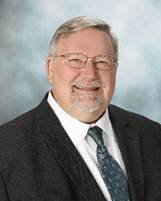
As medical director of the Nisonger Center at The Ohio State University, he led the Leadership Education in Neurodevelopmental and Related Disabilities (LEND) Program, training future leaders in interdisciplinary care. His Ohio Rural DBP Clinic Initiative earned national recognition for expanding access in underserved counties, and at Madigan Army Medical Center, he founded Joint Base Lewis-McChord (JBLM) CARES, a $10 million autism resource center for military families.

ADVERTISEMENT

Dr. Lindsay’s scholarship, profiled on ResearchGate and Doximity, extends across seventeen peer-reviewed articles, eleven book chapters, and forty-five invited lectures, as well as contributions to major academic publishers such as Oxford University Press and McGraw-Hill. His memoir-in-progress, The Quiet Architect, threads testimony, resistance, and civic duty into a reckoning with systems retreat.

Prev

How an AI medical scribe saved my practice

December 6, 2025 Kevin 0
…

Kevin

Tagged as: Pediatrics, Psychiatry

Post navigation

< Previous Post
How an AI medical scribe saved my practice

ADVERTISEMENT

More by Ronald L. Lindsay, MD

  • Institutional inbreeding in developmental-behavioral pediatrics

    Ronald L. Lindsay, MD
  • Developmental-behavioral pediatrics: the lost identity

    Ronald L. Lindsay, MD
  • Why not all ADHD generics are created equal

    Ronald L. Lindsay, MD

Related Posts

  • Humanity’s crossroads: peace or nuclear war?

    Nathan Swidler and Jennifer Obel, MD
  • Medical school gap year: Why working as a medical assistant is perfect

    Natalie Enyedi
  • End medical school grades

    Adam Lieber
  • Navigating mental health challenges in medical education

    Carter Do
  • The role of income in medical school acceptance

    Carter Do
  • Medical students in Korea face expulsion for speaking out

    Anonymous

More in Physician

  • Rural health care access: Japan vs. U.S.

    Vikram Madireddy, MD, Hana Asami, and Taiga Nakayama
  • The devaluation of physicians in health care

    Allan Dobzyniak, MD
  • A doctor’s ritual: Reading obituaries

    Emma Jones, MD
  • The physician’s change cycle: Why doctors stay stuck

    Shannon M. Foster, MD
  • How stigma in psychiatry affects patients

    Devina Maya Wadhwa, MD
  • Physician emotional fatigue: When burnout becomes a blind spot

    Tomi Mitchell, MD
  • Most Popular

  • Past Week

    • Patient modesty in health care matters

      Misty Roberts | Conditions
    • California’s opioid policy hypocrisy

      Kayvan Haddadan, MD | Conditions
    • A lesson in empathy from a young patient

      Dr. Arshad Ashraf | Physician
    • A pediatrician’s medical service in war and peace

      Ronald L. Lindsay, MD | Physician
    • Why modern dentists must train like pilots [PODCAST]

      The Podcast by KevinMD | Podcast
    • How medicine reflects women’s silence

      Priya Panneerselvam, DO | Physician
  • Past 6 Months

    • Why you should get your Lp(a) tested

      Monzur Morshed, MD and Kaysan Morshed | Conditions
    • Rebuilding the backbone of health care [PODCAST]

      The Podcast by KevinMD | Podcast
    • Direct primary care in low-income markets

      Dana Y. Lujan, MBA | Policy
    • The flaw in the ACA’s physician ownership ban

      Luis Tumialán, MD | Policy
    • The psychological trauma of polarization

      Farid Sabet-Sharghi, MD | Physician
    • Why CPT coding ambiguity harms doctors

      Muhamad Aly Rifai, MD | Physician
  • Recent Posts

    • A pediatrician’s medical service in war and peace

      Ronald L. Lindsay, MD | Physician
    • How an AI medical scribe saved my practice

      Ashten Duncan, MD | Tech
    • Physician boundaries: When compassion causes harm

      Gerald Kuo | Conditions
    • Rural health care access: Japan vs. U.S.

      Vikram Madireddy, MD, Hana Asami, and Taiga Nakayama | Physician
    • A lawyer’s essential checklist for physician side hustles [PODCAST]

      The Podcast by KevinMD | Podcast
    • When TV shows use food allergy as murder

      Lianne Mandelbaum, PT | Conditions

Subscribe to KevinMD and never miss a story!

Get free updates delivered free to your inbox.


Find jobs at
Careers by KevinMD.com

Search thousands of physician, PA, NP, and CRNA jobs now.

Learn more

Leave a Comment

Founded in 2004 by Kevin Pho, MD, KevinMD.com is the web’s leading platform where physicians, advanced practitioners, nurses, medical students, and patients share their insight and tell their stories.

Social

  • Like on Facebook
  • Follow on Twitter
  • Connect on Linkedin
  • Subscribe on Youtube
  • Instagram

ADVERTISEMENT

ADVERTISEMENT

  • Most Popular

  • Past Week

    • Patient modesty in health care matters

      Misty Roberts | Conditions
    • California’s opioid policy hypocrisy

      Kayvan Haddadan, MD | Conditions
    • A lesson in empathy from a young patient

      Dr. Arshad Ashraf | Physician
    • A pediatrician’s medical service in war and peace

      Ronald L. Lindsay, MD | Physician
    • Why modern dentists must train like pilots [PODCAST]

      The Podcast by KevinMD | Podcast
    • How medicine reflects women’s silence

      Priya Panneerselvam, DO | Physician
  • Past 6 Months

    • Why you should get your Lp(a) tested

      Monzur Morshed, MD and Kaysan Morshed | Conditions
    • Rebuilding the backbone of health care [PODCAST]

      The Podcast by KevinMD | Podcast
    • Direct primary care in low-income markets

      Dana Y. Lujan, MBA | Policy
    • The flaw in the ACA’s physician ownership ban

      Luis Tumialán, MD | Policy
    • The psychological trauma of polarization

      Farid Sabet-Sharghi, MD | Physician
    • Why CPT coding ambiguity harms doctors

      Muhamad Aly Rifai, MD | Physician
  • Recent Posts

    • A pediatrician’s medical service in war and peace

      Ronald L. Lindsay, MD | Physician
    • How an AI medical scribe saved my practice

      Ashten Duncan, MD | Tech
    • Physician boundaries: When compassion causes harm

      Gerald Kuo | Conditions
    • Rural health care access: Japan vs. U.S.

      Vikram Madireddy, MD, Hana Asami, and Taiga Nakayama | Physician
    • A lawyer’s essential checklist for physician side hustles [PODCAST]

      The Podcast by KevinMD | Podcast
    • When TV shows use food allergy as murder

      Lianne Mandelbaum, PT | Conditions

MedPage Today Professional

An Everyday Health Property Medpage Today
  • Terms of Use | Disclaimer
  • Privacy Policy
  • DMCA Policy
All Content © KevinMD, LLC
Site by Outthink Group

Leave a Comment

Comments are moderated before they are published. Please read the comment policy.

Loading Comments...