The attending scrolls through the chart before morning rounds. The progress note is polished. The assessment is structured. The differential is surprisingly thorough. A predictive model flags the patient as high risk for deterioration within 24 hours. He did not write most of it.
An AI assistant drafted the note. A risk algorithm generated the alert. A decision-support tool suggested broadening the workup. He reviewed it. He agreed with most of it. He clicked “sign.”
If the patient decompensates tonight, who is responsible for that reasoning? More importantly, who is accountable for it? Hospitals across the country are embedding artificial intelligence directly into clinical care. AI now drafts notes, suggests diagnoses, flags sepsis risk, prioritizes imaging findings, and recommends treatment pathways. In many cases, it influences decisions before a physician ever types a word.
Yet we have not answered a basic question: If an AI system generates clinical insight, and no human is legally considered the author, what exactly is the accountable clinical artifact? This is not academic. The U.S. Copyright Office has made clear that AI-generated content is not copyrightable without meaningful human authorship. At the same time, most vendors contractually assign ownership of outputs to the user. So where does that leave us?
Real physician voices, twice a week
Free, and one click to unsubscribe.
The model generates reasoning. The vendor disclaims responsibility: The clinician reviews and signs. The health system deploys the tool. And the output becomes part of the medical record, one of the most legally consequential documents in medicine. In another industry, this would be a debate about intellectual property. In health care, it is about liability.
The medical record is not a draft.
A clinical note is not a convenience. It serves several critical functions:
- A legal document
- A billing instrument
- A regulatory artifact
- A quality signal
- Evidence in a malpractice claim
When AI-generated reasoning meaningfully shapes care, authorship determines accountability. If an algorithm suggests a diagnosis that alters management and harm follows, who stands behind that reasoning? The physician who signed the note? The hospital that purchased the platform? The vendor whose terms limit liability?
The legal system has not fully resolved this. But it will. And history suggests it will do so after an adverse outcome, not before.
Distributed intelligence, diffused responsibility
We are entering an era of distributed clinical intelligence. Decisions are now shaped by several emerging technologies:
- AI documentation copilots
- Predictive analytics engines
- Automated triage systems
- Risk scoring algorithms
- Embedded treatment recommendations
There is enormous promise here. AI can reduce clerical burden and surface patterns humans miss. But medicine has always rested on a nonnegotiable premise: Someone is responsible.
AI muddies that clarity. When reasoning originates from a system that cannot hold a license, carry malpractice insurance, or testify in court, accountability does not disappear. It transfers. Right now, it is transferring quietly. Click. Review. Sign. But clicking “sign” is not the same as authorship. And passive review is not the same as owning the reasoning.
Governance is lagging behind adoption.
Health systems are rapidly adopting AI amid burnout, staffing shortages, and financial pressure. Governance structures are not evolving at the same pace. Few institutions have clear policies answering this simple question: When AI generates a clinical recommendation, what level of documented human engagement is required before it becomes authoritative?
Before AI becomes fully normalized in care delivery, health care leadership may need to adopt a firm standard: No AI-generated clinical recommendation should carry authority without explicit, documented human attestation. Not silent integration. Not background automation. Documented accountability.
That means implementing several safeguards:
- Clear labeling of AI-generated content
- Defined expectations for clinician review
- Audit trails demonstrating meaningful engagement
- Governance bodies with clinical oversight
This is not resistance to innovation. It is the protection of professional responsibility.
The trust question
Patients assume their physician authored their medical record. They assume diagnostic reasoning reflects human judgment. They assume that if something goes wrong, responsibility is clear. If AI meaningfully contributes to care without transparency or defined accountability, that assumption erodes. Health care trust is already fragile. Ambiguity will not strengthen it.
AI will not slow down. It will draft faster. Predict better. Integrate deeper. The question is not whether AI will influence clinical reasoning. It already does. The real question is whether we will clearly define who stands behind that reasoning before a courtroom does it for us.
Technology can assist. It can recommend. It can draft. But in medicine, responsibility cannot be automated. If AI writes the note, a human must still own the consequences. And that line must remain unmistakably clear.
Harvey Castro, known as DR GPT™, is an emergency physician, author, keynote speaker, and physician futurist. He is advisor to the CEO of Phantom Space. He writes and speaks about artificial intelligence in health care, digital health, space medicine, and the future of human-centered care. Explore his speaking topics and availability.
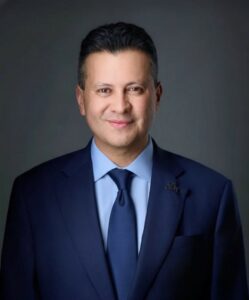
He is the author of Bing Copilot and Other LLM: Revolutionizing Healthcare With AI, Solving Infamous Cases with Artificial Intelligence, The AI-Driven Entrepreneur: Unlocking Entrepreneurial Success with Artificial Intelligence Strategies and Insights, ChatGPT and Healthcare: The Key To The New Future of Medicine, ChatGPT and Healthcare: Unlocking The Potential Of Patient Empowerment, Revolutionize Your Health and Fitness with ChatGPT’s Modern Weight Loss Hacks, Success Reinvention, and Apple Vision Healthcare Pioneers: A Community for Professionals & Patients.
He shares updates on LinkedIn, YouTube, Facebook, Instagram, and X. #DRGPT