“The problem is not that physicians play games. The problem is that we are embarrassed to admit we need ways to feel alive again.”
At 3:17 a.m., we called the code. Thirty minutes of compressions. Three rounds of epinephrine. A room filled with controlled urgency. When it ended, the monitors fell silent before the hallway did. I finished my documentation. I washed my hands. I walked to my car. And I did not open a medical journal. I logged in. Not to escape medicine. But to remain human inside it.
The coping strategy we rarely name
Physician burnout has become institutional vocabulary. Emotional exhaustion. Moral injury. Productivity pressure. We prescribe resilience workshops and mindfulness modules. We talk about yoga and reflective journaling.
Real physician voices, twice a week
Free, and one click to unsubscribe.
But many male clinicians decompress differently. We play. And we do not say it out loud. Because it sounds adolescent. Because it does not match the image of professional stoicism. Because “serious doctors” are not supposed to unwind with controllers. Yet what if gaming is not regression, but regulation?
Why games work when medicine does not
In medicine, effort does not guarantee outcome. You can make every correct decision and still lose the patient. In games, feedback is immediate. Improve, you see it. Coordinate, you win. Fail, you respawn.
This February, “Resident Evil: Requiem” became one of the most discussed releases in global gaming. At its core, it is not about zombies. It is about triage. Limited ammunition. Scarce resources. Risk assessment under pressure. Deciding when to retreat. Sound familiar?
The same cognitive circuits we use in emergency medicine, prioritization, rapid threat analysis, and resource allocation, are mirrored in survival gameplay. The crucial difference? In the game, failure is reversible.
That reversibility matters more than we admit. It allows the nervous system to discharge accumulated stress within boundaries. It lets us rehearse intensity without irreversible consequence. For clinicians who live daily with permanence, reversibility is restorative.
Competition, coordination, and cognitive reset
Consider global esports. Teams like T1 competing in the LCK under Riot Games demonstrate something many outside gaming culture misunderstand: Elite gameplay is structured teamwork. Macro strategy. Micro execution. Clear role identity. Communication under pressure.
These are not distractions from medicine. They are parallel systems of disciplined cognition. And in 2026, cooperative titles like “Reanimal”, built entirely around shared survival, reflect a broader cultural hunger for collaborative challenge. Whether coordinating a team fight in “League of Legends,” surviving a co-op horror environment, or strategizing in a “Pokemon” tournament, shared goals restore something burnout erodes:
- Agency
- Connection
- Competence
Depersonalization fades when you are part of a functioning team again, even a digital one.
The other side of the screen
But nuance matters. In the same digital ecosystem where we log in to decompress, we are also aggressively targeted. Sports betting apps like bet365. Instant scratch-off simulations. Crypto day-trading platforms promising rapid returns. Algorithmic reward systems engineered to exploit uncertainty.
The difference is not the screen. It is the structure. Gaming at its healthiest is mastery-based. Gambling is outcome-based. Gaming builds skill. Gambling exploits hope. Gaming strengthens social bonds. Compulsive betting isolates.
When clinicians feel depleted and powerless, the craving for control intensifies. If that search for agency shifts toward chasing wins instead of building mastery, the relief becomes hollow. The dopamine hit is immediate. The emptiness afterward is deeper. Healthy play restores. Compulsive chasing consumes. We must distinguish between the two.
Burnout and the need for restoration
Surveys continue to show alarming burnout rates among physicians and nurses. Emotional exhaustion. Depersonalization. A diminished sense of accomplishment. Healthy gaming, at its best, directly counters each:
- Emotional exhaustion becomes controlled adrenaline discharge
- Depersonalization becomes voluntary teamwork
- Reduced accomplishment becomes measurable improvement
In medicine, teamwork is sacred but strained. In games, teamwork is voluntary and often joyful. That contrast recalibrates identity.
The ICU and the respawn screen
In the ICU, death is permanent. In a game, failure is temporary. That psychological contrast reminds us of something we forget during long call nights:
- Mistakes do not define identity.
- Effort can be retried.
- Improvement is visible.
When the shift ends, many of us are not escaping reality. We are restoring agency.
A cultural blind spot
Medicine still prizes stoicism. But stoicism without outlets becomes suppression. Not every nervous system resets through silence. Some reset through engagement. Through strategy. Through mastery.
If a surgeon coordinates a raid at midnight, if an ER physician decompresses through structured competition, or if a resident survives digital horror after surviving clinical reality, that is not immaturity. That is adaptive regulation.
Health care organizations invest heavily in wellness programming, often centered on introspection. Perhaps we also need to acknowledge action-based recovery. Not every coping mechanism must look serene to be healthy.
When the shift ends
Some clinicians run. Some meditate. Some write. Some of us log in. Not to abandon medicine. But to return to it steadier.
The problem is not that physicians play games. The problem is that we live in a culture where we are embarrassed to admit we need ways to feel alive again.
When the shift ends, we log in. And sometimes, that is exactly what allows us to log back in tomorrow, to medicine itself. We do not log in to escape medicine, we log in so medicine does not erase us.
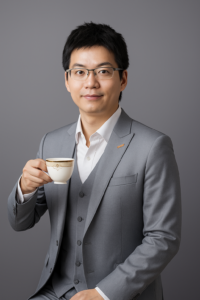
Gerald Kuo, a doctoral student in the Graduate Institute of Business Administration at Fu Jen Catholic University in Taiwan, specializes in health care management, long-term care systems, AI governance in clinical and social care settings, and elder care policy. He is affiliated with the Home Health Care Charity Association and maintains a professional presence on Facebook, where he shares updates on research and community work. Kuo helps operate a day-care center for older adults, working closely with families, nurses, and community physicians. His research and practical efforts focus on reducing administrative strain on clinicians, strengthening continuity and quality of elder care, and developing sustainable service models through data, technology, and cross-disciplinary collaboration. He is particularly interested in how emerging AI tools can support aging clinical workforces, enhance care delivery, and build greater trust between health systems and the public.