Picture this. You finish another long day caring for patients who need you. You head home exhausted but fulfilled. Then the worry creeps in. Will another complaint land on your desk tomorrow? Will your take-home pay cover the mortgage in this state? You love California. You trained here. You built your life here. Yet more and more of us are scanning job postings in Texas, Florida, or Arizona, not because we stopped caring about our patients, but because the daily grind has become too heavy to carry alone.
The financial strain of Medi-Cal
The financial side hits hard, especially with Medi-Cal patients. This program covers millions of Californians, yet its reimbursement rates still fall far short of what it actually costs to deliver care. A routine new-patient visit can leave your practice losing money once overhead is tallied. Many doctors quietly limit how many Medi-Cal patients they see. They do not do it lightly. They simply cannot keep the lights on otherwise. Primary care already faces a projected shortage of thousands of physicians, and this squeeze only makes recruitment and retention tougher.
The heavy toll of medical board scrutiny
What really wears so many of us down, though, is the constant scrutiny from the California Medical Board. In fiscal year 2024-25, the board received 9,707 complaints. That number is nearly identical to the year before. Roughly one thousand of those complaints move forward to full investigation. Those probes can drag on for three or four years. During that entire time, doctors sit in painful limbo. A sitting board member, Eserick TJ Watkins, has publicly renewed calls to make serious investigations public sooner. He points out that the public stays blind to a doctor’s true record while cases linger. For the physician on the receiving end, even an unfounded complaint means months or years of stress, legal bills, and the quiet fear that one allegation could end a career built over decades.
Real physician voices, twice a week
Free, and one click to unsubscribe.
The process feels opaque and relentless. It turns medicine from a calling into a constant defense. Physicians describe profound exhaustion. They feel the system no longer trusts them to do the work they trained for. Research on physician wellness links this kind of regulatory pressure directly to higher burnout rates and decisions to leave practice or the state altogether.
The crushing weight of taxes and living costs
Then come the taxes. California’s top marginal income tax rate sits at 13.3 percent, the highest in the nation. It kicks in on earnings that most practicing physicians reach. Add property taxes, sales taxes, and everything else, and a solid-looking paycheck shrinks fast. You work harder, carry more responsibility, and watch a bigger share disappear than in lower-tax states.
Finally, there is the cost of simply living here. Housing prices remain brutally high. Mid-tier homes cost more than twice the national average. Mortgage payments on a typical house can run around $5,500 a month. Even successful doctors find themselves stretched thin, worrying about affording a home, saving for retirement, or giving their kids opportunities without constant financial anxiety. The cost of living sits well above the national average and erodes any salary advantage. California has led the nation in outbound moves for years. Physicians are part of that quiet migration.
A quiet migration and a warning from the front lines
This combination hits us on a personal level. You train here because you love the state and its people. You stay for residency and early practice because the communities feel like home. Yet the structural pressures make you question whether it is still worth it. Many of us feel a quiet grief watching colleagues pack up, knowing patients in places like the Central Valley or Inland Empire will face longer waits for care. Despite training plenty of new physicians, persistent shortages in primary care and rural areas keep growing because retention is failing. Doctors who complete training here often head elsewhere for better balance, pay, and peace of mind.
At its core, this is not just about spreadsheets. It is about dedicated healers feeling undervalued, over-regulated, and financially trapped in the very place they wanted to serve. The frustration builds until one day you say, “I love my patients, but I cannot keep doing this to my family or my own well-being.”
If we do not address the low reimbursements, the Medical Board’s lengthy scrutiny, sky-high taxes, and crushing living expenses, California risks becoming a state that trains excellent doctors only to watch them leave for places where the math and the mission line up again. The Golden State shaped us. Right now it is pushing too many of us out. Policymakers and leaders need to hear this not as criticism but as a heartfelt warning from the front lines. Without real change, the physician shortage will deepen, access will suffer, and patients will pay the ultimate price. We owe it to the next generation and to the communities we care for to make California a place doctors actually want to stay and thrive. The clock is ticking.
Kayvan Haddadan is a physiatrist and pain management physician, and president and medical director of Advanced Pain Diagnostic & Solutions, a multidisciplinary pain management practice in California that he founded in 2012. A physician and surgeon licensed by the Medical Board of California, he is double board-certified in pain medicine and physical medicine and rehabilitation. He is also certified in controlled substance registration through the DEA and serves as a qualified medical examiner through California’s Department of Industrial Relations Division of Workers’ Compensation.
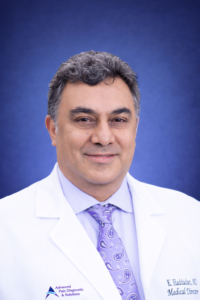
Dr. Haddadan earned his Bachelor of Science degree from the College of Alborz in Tehran, Iran, and his medical degree from Shahid Beheshti University of Medical Sciences. He later received his Educational Commission for Foreign Medical Graduates certification in Philadelphia, completed an internship in medical surgery at Loyola University Medical Center’s Stritch School of Medicine in Illinois, and finished his residency in physical medicine and rehabilitation at the same institution. He completed his fellowship in pain medicine at California Pacific Medical Center’s Pacific Pain Treatment Center and also trained in medical acupuncture for physicians at the University of California, Los Angeles David Geffen School of Medicine.
Dr. Haddadan has contributed to 29 research publications across multiple specialties, including pain management, cardiology, pulmonology, endocrinology, gastroenterology, and infectious disease. His work has examined topics such as hyperlipidemia in high cardiovascular risk patients, hyperuricemia and gout management, type 2 diabetes and hypertension, chronic obstructive pulmonary disease and asthma therapies, influenza treatment, irritable bowel syndrome, and opioid related complications in chronic pain care. His research has also included clinical outcome studies in spinal cord stimulation and award-winning presentations on neuropathic pain management and neuromuscular disorders.