Listen and followApple PodcastsSpotifyYouTubeMore apps · Browse all episodes
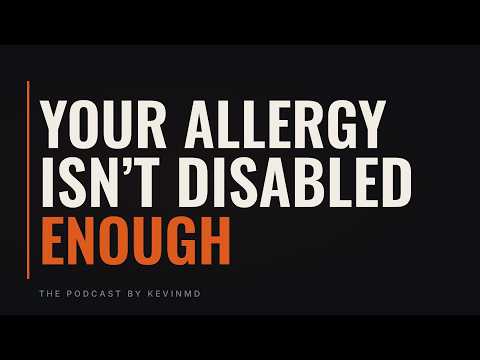
A federal agency recognized food allergy as a disability, then limited boarding protection to one allergen category. Lianne Mandelbaum, a leading advocate for airline safety measures to protect food-allergic passengers, returns to explain how the March 2026 DOT ruling created a hierarchy within a single medical condition, leaving passengers with egg, sesame, milk, shellfish, and wheat allergies without the same pre-boarding rights granted to those with peanut and tree nut allergies. This episode is based on her article “How the new DOT ruling on food allergies threatens air travel safety,” published on KevinMD. You will hear about a Southwest captain who removed a passenger for asking to pre-board with a pistachio allergy, an allergen that is covered under the new ruling. You will also hear why a Northwestern survey of 4,704 food-allergic travelers found that 98 percent experience flight anxiety and 70 percent were promised accommodations that never arrived. Hear why the guest says this ruling cements airline inconsistency as federal policy, and what physicians can do to push back.

Tune into our episode “2026 Cholesterol Guidelines: LDL goals, lipoprotein(a), and coronary calcium scoring,” brought to you by Novartis Pharmaceuticals Corporation.
For the first time in eight years, LDL cholesterol goals have changed, and preventive cardiologist Seth Baum says the new guidelines are a long-overdue course correction. He breaks down the new LDL targets for your highest-risk patients, why the LDL hypothesis should be retired in favor of the LDL fact, why lipoprotein(a) screening finally belongs in every patient’s workup, what a coronary calcium score over 300 really means for how aggressively you treat, and how to talk to statin-skeptical patients without losing their trust. Listen now at KevinMD.com/cholesterol.
VISIT SPONSOR → https://kevinmd.com/cholesterol

Partner with me on the KevinMD platform. With over three million monthly readers and half a million social media followers, I give you direct access to the doctors and patients who matter most. Whether you need a sponsored article, email campaign, video interview, or a spot right here on the podcast, I offer the trusted space your brand deserves to be heard. Let’s work together to tell your story.
PARTNER WITH KEVINMD → https://kevinmd.com/influencer
SUBSCRIBE TO THE PODCAST → https://www.kevinmd.com/podcast
RECOMMENDED BY KEVINMD → https://www.kevinmd.com/recommended
Transcript
Kevin Pho: Hi, and welcome to the show. Subscribe at KevinMD.com/podcast. Today, welcome back Lianne Mandelbaum, a leading advocate for airline safety measures to protect food-allergic passengers. Her latest KevinMD article is “How the new Department of Transportation ruling on food allergies threatens air travel safety.” Lianne, welcome back to the show.
Lianne Mandelbaum: Thank you. It’s a pleasure to be here.
Kevin Pho: All right, so tell us what led you to write this article on KevinMD.
Lianne Mandelbaum: Well, this horrendous DOT decision that came down. Well, there was some good news. It affirmed that food allergy is a disability under the Air Carrier Access Act, as it should be, which is why we have the right to pre-board an airline with a food allergy, with the disability groups, to be able to make the area safe. But it had a caveat that this protection only extended to peanuts and tree nuts, which, I mean, as a physician, is absurd.
Any trace amount of an allergen on an airline to somebody with a food allergy can potentially cause anaphylaxis, and the point of being able to pre-board is to keep your area safe. So they’re affirming that food allergy is a disability and that’s why you get to get on early to make your area safe. How they can only extend, and we can go into their reasoning, which is completely flawed, it creates a safety risk and, quite honestly, a hierarchy that shouldn’t be there for all patients, passengers with food allergy.
And I was one of the organizations that brought the original complaint to DOT, because what had happened, we have to step backwards in order to look forwards. So myself and Mary Vargas, disability rights attorney, we had filed cases that in 2019 actually for the first time affirmed that food allergy was a disability under the Air Carrier Access Act. And we changed it. It was the decision that changed everything.
What happened in 2022, as part of my advocacy work, I collect testimonials from families and adults traveling with a food allergy. We started noticing that Southwest had decided to ignore that ruling, and instead was letting food allergy passengers board what they called with more time, which meant that you didn’t board with passengers with disabilities, and that other passengers could pay to pre-board ahead of you, which is not how disability rights works for any other disability. And DOT had affirmed that food allergy was a disability.
So we filed a DOT, an official DOT complaint with FACT and AFA, Allergy and Asthma Foundation of America, saying that this was discriminatory and that DOT had affirmed that food allergy was a disability. And DOT ended up dismissing that claim, because they said, the minute we filed it, Southwest, a week later, it might have been two weeks later, withdrew the policy and they reinstated. And in the decision, DOT said, we are dismissing this because Southwest has reinstated the ability to pre-board for peanuts and tree nuts.
And we answered, that’s not good enough, because this extends to all people with food allergies. And so this decision that I’m writing the article on now is the fact that DOT came back and said, no, it’s only for peanuts and tree nuts. So that’s the lay of the land.
Kevin Pho: So before this ruling came down, I’m sure that there was a lot of back and forth in the events leading up to that ruling. So tell us about some of the nuts and bolts that went behind the final decision and all the advocacy work that you did to kind of shape it, or I guess the other people who influenced that ruling.
Lianne Mandelbaum: I mean, honestly, we’ve been waiting for this decision since 2022, and DOT has taken an absurd amount of time in answering complaints. We’ve just been waiting, we’ve been in this, pun intended, holding pattern, waiting and, in the meantime, collecting for myself other continuous testimonies of people not being able to pre-board no matter what allergen they have. And specifically on Southwest, which is somewhat amusing, is that I’ve gotten a whole bunch of testimonials of late that they have been denying pre-board to people with peanut and tree nut allergies. So they’re not even in compliance with what DOT says they’re in compliance with.
But as we waited, we never expected them to come forth and say food allergy is a disability, but only certain categories. So now, I mean, honestly, now more work begins, because DOT itself, when you file a complaint, not even official, but they categorize and catalog and they number the amount of complaints from each disability. And so under each column is how you can see how many complaints are filed. We do not have a column for peanut and tree nut allergies. DOT has a category specific to food allergy. So even within their own classification system, they list food allergy. It’s just so absurd.
And in the decision, they came back and they said, well, the cases we’ve decided in the past were based on passengers with peanut and tree nut allergies. So they’re taking a characteristic of a specific patient, passenger, and applying that as a broad rule, which is, if that passenger had had sesame allergy or milk allergy, that’s how the decision wouldn’t have read. That wouldn’t have meant that people with peanut and tree nut allergy shouldn’t pre-board. So you can see where the entire thinking is just ludicrous. There’s no other word.
And maybe people don’t understand what it means to pre-board. Like why are these people getting on ahead of me? Why do people have to get on? And the truth of the matter is, the most likely route of an exposure on an airline is going to be who sat in the seat before you. And the fact that airlines, we all know this, do not clean in between flights thoroughly. So oftentimes before pre-board was law, I’ve boarded the plane and I have found what I can only describe as goopy crusts. Could be anything, could be sesame, could be Doritos, could be peanut shells. I’ve picked up peanut shells. I’ve picked up pistachio shells.
There’s no way in a general board, when everyone is there, that you can get all the crumbs. And it is just a crumb that can cause anaphylaxis, not because you’re going to inhale it, but because you’re going to have it on your finger and you’re going to touch your mouth, you are going to rub your eye. So people don’t understand. They’re like, just don’t eat the food. But it’s not, a leftover smear from somebody else’s sandwich could be dangerous for that person, and they’re just asking for a few extra minutes.
In fact, I would argue by not letting people pre-board, if you have to stand in the aisle and wipe, you’re going to delay the boarding process even more. And when I have pre-boarded, once the law was official, I would come out with, it was so disgusting what would come up on my wipes, that people around that boarded for other reasons were like, do you have any extras? We’d like to wipe down our area too. So we’re helping them clean the planes. The planes, we know, aren’t being cleaned.
And the other thing is, we all know that if you’re not in group one or group two, by the time you get to group three, they’re gate checking your luggage, right? And what’s in your luggage? Safe food and medication. So it’s also really important to get that safe food and medication on, because we don’t recommend that you take the airline meal. We’ve talked about that so many times. There’s no regulations in the air insofar as labeling. And so what if you’re delayed for six hours on the plane? There’s so many reasons why the pre-board is a medical decision. It’s not a perk. People look at it as like, we’re not giving these people a free perk. And quite frankly, people still look at food allergies as an inconvenience, not a medical condition. And that needs to change.
Kevin Pho: So as it stands today, because of the decision, those with peanut and tree nut allergies are allowed to pre-board, but any other allergies, they’re not allowed to do that.
Lianne Mandelbaum: Correct.
Kevin Pho: And so just, just for those who aren’t versed in the food allergy world, what are some other common food allergies that lead to anaphylaxis that’s not peanuts and tree nuts?
Lianne Mandelbaum: Eggs, shellfish, wheat, milk, sesame. And imagine little sesame seeds. You just need to be able to wipe them out. I mean, you can be allergic to almost any food, but those are truly the most common. It’s alarming. I always talk about that. My favorite phrase is, the only consistency when you’re flying with a food allergy with airlines is the inconsistency. Airlines are consistently inconsistent, and this is actually making airline inconsistency a cemented policy. It’s like, because you’re leaving it up to the crew to decide if someone with an egg allergy can pre-board, or the gate agent.
And I just had someone ask to pre-board on Southwest, and the captain threw them off. The captain threw them off for asking to pre-board the area, because Southwest now serves pistachios and the person had a pistachio allergy and was being seated in the pistachio section. And that’s a tree nut allergy. It’s crazy. It’s just crazy. And so they’re not even, like I said, they’re not even following what they’re supposed to be following. And the captain has the last word. So if you start kicking up a fuss, they will kick you off.
Kevin Pho: So what would you like to see happen in terms of next steps? Are there any recourse, like what are you doing in appeal? What would you like to see?
Lianne Mandelbaum: This is an appeal. This is an appeal of an appeal. So we’re looking into, there are ways that we think there might be a way to file an appeal. I’m, we’re looking into, can you have a citizen’s petition? Is there another avenue besides DOT? I’ve met with actually a different attorney that suggests taking a completely different route that seems interesting. Won’t mention it here yet, don’t need to give anyone a heads up. But it does seem interesting.
In the meantime, I tell people that if for some reason you’re not able to pre-board, you can still clean your area. Is it going to be as thorough? Are you going to be more stressed? Yes, but you can eliminate a lot of the risk by cleaning, even if it’s not as thorough.
What I’d like to see is pre-boarding standardized for all allergies. No matter what, it’s an easy ask. It’s a medically necessary ask. And I’d like to see the right medication for anaphylaxis on the planes. It’s absurd that we’ve talked about so many physicians calculating doses on the fly or crowdsourcing for a medication that is clearly needed. Airlines continue to serve meals. People have no allergies and need backup. People have first-time reactions on planes.
We need to have the right, we can foresee this as an emergency in the air, and we can also foresee that you might need oxygen. So what do we carry in the EMK? We have an oxygen tank. We can foresee that people may need a defibrillator for a best outcome, not just CPR. So now we have defibrillators on planes. Well, we also know the best outcome for anaphylaxis is not that ancient syringe, which by the way, in the U.S. is under an exemption. So they may not be there anyway, meaning the planes can take off without them. So you need the autoinjector or the nasal spray. We’ve got choices now. They need to be on there. It’s like calling up a physician and saying, here, treat with archaic medication when we have the right tools. It’s just crazy. I don’t know what you think. Have you ever been called up for an emergency on a plane?
Kevin Pho: Knock on wood, I haven’t. A lot of my colleagues, of course, have, but I’ve heard so many stories. People wrote those stories even on KevinMD. I’ve interviewed them. But personally, knock on wood, I haven’t.
Lianne Mandelbaum: Yeah. I mean, I just think it’s, this is easy, just like the pre-board is easy. Having the right medication, and we will find out in May if it makes it into FAA reauthorization, and then we can, I’ll write about it no matter which way it goes, and we will have a conversation about it.
And I also wanted to mention that I was part of some research that came out of Northwestern CFAR. We did a survey, 4,704 people, and 98 percent of people flying with food allergies have anxiety. It’s not because they’re anxious, it’s because everything is so inconsistent. That’s a problem. And the other thing is that 70 percent of people asked for or were promised accommodations that never came to fruition. Again, we talk about the inconsistency, and this rule, again, it just like cements this inconsistency as airline policy, and that’s not OK either.
So I think that that’s very, that’s what’s very dangerous about this decision. It like takes the wild west and it’s no medical sense behind it, and it just makes everything even more wild west than it was, because now it’s a legal wild west as opposed to just something that was out there.
Kevin Pho: So when you said that you would like to see people with all allergies be classified as a disability and be allowed to pre-board, is that a little bit broad? Should there be some type of defined definition as to what an allergy is that allows them to pre-board?
Lianne Mandelbaum: I mean, I don’t think so, because from the people that I speak to, yes, I think there can be bad actors. I think there could be someone that says, I have an allergy, and they want to go pre-board. I don’t think that’s, I think they’re outliers, and I think we don’t frame disability rights on bad actors. We frame them based upon what is legally necessary to take to protect people with the medical condition.
My son, if he’s flying with his team, he doesn’t ask to pre-board because he knows everyone’s around him, and he wipes down. The only time he asks, and that’s his choice, the only time he asks is he flew Frontier once, and they actually still serve peanuts. And I said, you must get on early and clean, because you know it’s there. And so he agreed to do that. I don’t think people, my point is, I don’t think people ask for what they don’t need. People don’t want to be thrown off a plane. People are not nice to people with food allergies. People do see food allergies as not a medical condition, sorry, but as an inconvenience.
I remember pre-boarding on JetBlue once, and we were going to a tennis tournament in Florida, and we got to the seat, and I’m picking up peanuts that were at the seat, even though JetBlue doesn’t serve peanuts. But I’m in like a cold sweat by the time everyone else comes on the plane. I’m like, Josh has his headphones on. We’re ready to go. And their policy is to tell the row in front and the row behind not to eat the allergen. So they came and they made the announcement. They don’t identify who the person is. There’s someone in this general area, they have a peanut allergy. We asked you not to take out peanuts.
And this guy, who was being so affable, like chatting with his son, he was a lawyer, he was from Sarasota, I remember all the details because they’re burned into my head, and he’s like, so this whole plane has to suffer because one fricking jerk of a child has a peanut allergy? And I remember that, and I’m texting my husband, he’s like, please don’t say anything. Josh needs to go to this tournament. Please don’t get thrown off the plane.
And it was interesting because I didn’t say anything back, because the flight attendant said, well, I had a peanut butter sandwich to eat for my lunch on this plane, but I’m going to eat it when we land because I wouldn’t want to harm anybody. And the whole plane ride, he’s still muttering, and literally I’m sniffing the air the whole plane ride, because I’m convinced he’s going to take them out anyway. And you could tell, again, he viewed food allergies as an inconvenience, not a medical condition. And we need to change that.
And physicians need to realize that this is what many of their patients face, not just in the air, but on the ground too, that food allergies are an inconvenience. And it’s not inconvenient to have your throat close. It’s potential life and death, and in the air is a special condition where you can’t leave the plane, and you can’t get quick access to medical care. So having this policy that just takes a few extra minutes and mitigates most of the risk of an in-flight reaction is a no-brainer. Just like having the nasal spray or autoinjector in the EMK is a no-brainer. It makes no sense to me why people would oppose it, why it’s not on the planes already, and why we just don’t get the respect and dignity of a medical condition. I’ll be on my soapbox for a long time, I think.
Kevin Pho: We’re talking to Lianne Mandelbaum, a leading advocate for airline safety measures to protect food-allergic passengers. Today’s KevinMD article is “How the new DOT ruling on food allergies threatens air travel safety.” Lianne, as always, you have take-home messages they want to leave with the KevinMD audience.
Lianne Mandelbaum: Be kind to people who have food allergies, even if they look normal. They don’t look normal if they’re exposed to their allergen. I have seen my son completely lose the light in his eyes, like there’s a shine in his beautiful brown eyes, when he was exposed to peanut, until that autoinjector was administered and the light came back. It is scary. People are not acting because they want to inconvenience you. They’re just trying to stay safe in a situation which is not the ground. So it is a riskier situation, not just because of the circumstances of getting to advanced medical care. And think about if it was you, your spouse, your friend, your loved one, and how you would want them to be treated.
And support any efforts that come through to stock the right medications on planes. Please speak up if you treat people with food allergies. If you could speak up to DOT and tell them that you can’t separate allergens by peanut, tree, egg, sesame, milk, they’re all traces of any food for any person can lead to anaphylaxis. And so that person needs to make their area safe no matter what the food is. And so please support that. It’s an easy ask.
I think the way the decision was written, it was almost as if they were afraid that the floodgates would open, and everybody would try to pre-board. But the reality is, since the 2019 decision, everyone with a food allergy has been pre-boarding and has had that right, or has thought they have that right. You don’t see any of the airlines presenting evidence that this has harmed them in any way, that it has caused longer lines, that there have been any delays. So that’s another piece of evidence I would put forward to you, that we have been pre-boarding, and I think we’ve been pre-boarding pretty successfully, and we’re not getting in the way of airline operations. In fact, like I said, I think it’s actually the flip side.
So if you know anyone in the airline industry, like showing them the ludicrous nature of the argument that has been set forth, I don’t understand the decision. I think it’s a bad decision. It needs to be repealed. We need to figure it out, because this is not how disability law works or is applied, and it’s shameful. Shameful is the best way to end this. It’s shameful, and everyone who treats someone or knows someone with a food allergy should step up and say it’s wrong.
Kevin Pho: Lianne, as always, thank you so much for sharing your perspective and insight. Thanks again for coming back on the show.
Lianne Mandelbaum: It’s a pleasure. Thank you very much.
Listen and followApple PodcastsSpotifyYouTubeMore apps · Browse all episodes