When people ask me why I left health care, I tell them it was for personal reasons. I tell them that it was to support my daughter and her family. That was one reason, but there are others.
Back when I was a RN I shadowed a CRNA at the hospital where I worked. I spent the day with other CRNAs and students and I had the opportunity to observe and to ask questions. I was in a room during a general surgery, and one of the anesthesia providers looked at me and said, “You need thick skin in order to do this job.” This comment gave me pause. I see myself as hard-working, determined, and I love to learn new things, but I have always thought of myself as overly sensitive. I decided I wasn’t going to use my sensitivity as an excuse, and I had a successful career for almost 20 years. I learned about pushing past my comfort zone and my limits in ways I never imagined.
So after working hard to obtain my degrees and my certification, what were the other things that pushed me out the door?
Broadly, health care has progressively become less about patient care. Caring for people is why I chose the profession in the first place. It instead has become a race to maximize profits, and the people who need and deserve care have become an afterthought. Many health care systems own their own insurance companies. This puts each portion of the entity at odds with the other. The insurance company makes money by managing care which in most cases means limiting services, or at least making them very difficult to obtain. They are incentivized to deny treatment, especially with patients with diagnoses that are difficult and extremely expensive to treat. Cancer is an example of this. Doctors and nurses on the provider side of the equation are incentivized to treat the patient despite the cost based on gold standard practices and professional standards. This tension causes a conflict of interest where the patient is the loser every time. The longer one remains in health care, the more morally disturbing this tension becomes.
Real physician voices, twice a week
Free, and one click to unsubscribe.
There is also the constant stress. While I was working, it didn’t occur to me that taking over the vital functions of another human while they undergo surgery or a procedure was stressful. It was my job, and I didn’t question it, but now I realize how inherently stressful it was. Though I didn’t consciously realize it, my body did. My stomach was constantly upset. During particularly stressful days, I would feel the stress as tightness in my chest. When I took a traveling position, the joints in my hands started to ache. Most of these physical symptoms have resolved since I left.
Then there was also the production pressure. Management started to monitor the time it took from when the patient went out of the room headed to the recovery room to when the next patient came through the operating room doors for the next case. We had 26 minutes. If any number of things went wrong from an adverse medical issue, a difficult IV stick, or having to escort a patient to the bathroom, arriving to the room late had to be documented with a reason for the delay, and it was a ding against anesthesia. Health care is expensive and complicated, and efficiency is important, but I firmly believe it should not come before the reason that we are there, patient care.
Throughout my career, the health care system has been plagued with medication shortages which caused shortages and impacted care. There were also IV shortages from two separate hurricanes. Hurricane Maria in 2017 was one of the most destructive hurricanes to ever hit Puerto Rico and it destroyed a plant that manufactured IV fluids. This caused nationwide IV shortages.
After an event so impactful, one would think a plan would be in place to prevent a shortage from happening again. One would be wrong. Hurricane Helene hit North Carolina in 2024 again destroying an IV fluid production facility and the shortages started all over again.
Just-In-Time materials management strategy was developed for production, but increasingly used in the health care setting to avoid the high cost of warehousing equipment and supplies. This system fell apart spectacularly during the pandemic. There was a shortage of personal protective equipment (PPE) almost immediately. The shortages that ensued were catastrophic for both the patient and the health care workers who cared for them. While we saw other countries’ health care workers donning proper equipment, we saw health care workers in the United States trying to protect themselves with trash bags.
I vowed to myself that while I felt it was my duty to get our country through this pandemic, once we were through it, I wasn’t sure how much I had left to give. I knew I would never work through another pandemic, especially after the general population decided it wasn’t real and the conspiracy theorists took over regarding vaccines. It was a betrayal to every health care worker and every one of the million people in this country who died of COVID.
The lack of respect is sometimes subtle. I worked with a surgeon at a trauma hospital while I was training. He told this story about how when someone does something stupid (according to him) he just whistles, “If I Only Had a Brain” from the Wizard of Oz. He explained that it was his way of coping with incompetence, and kept him out of trouble with HR because everyone just assumed he was mindlessly whistling a familiar tune, not making a comment on performance. Everyone in the room laughed. Maybe some found it humorous, maybe others were reacting with a fawning response because of what I mentioned before. We work with the same people, including surgeons, every day. No one wants conflict with a surgeon, so the tendency is to laugh off inappropriate behavior.
Health care is a critical service industry. There are many improvements that would help the way our health care system functions in this country. One of the primary ones is to improve how health care workers are treated and supported within the system.
This article is discussed on The Podcast by KevinMD: Why business pressure and threats ended a career she loved.
Christine King is a certified registered nurse anesthetist (CRNA) with 20 years of experience in a field that demands precision, empathy, and a deep understanding of health care. Her clinical background informs a holistic perspective she brings to life’s challenges, whether in the operating room or in everyday life.
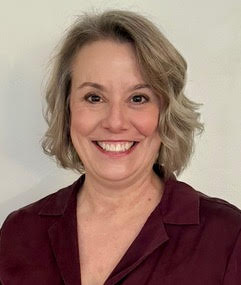
Now focused on writing, she draws on two decades of practice to explore the human side of medicine. Her work has appeared on KevinMD, and she writes at The Best Third and on Medium. She shares updates on LinkedIn.