We all make assumptions based on beliefs that may or may not be true. We all have made the mistake of judging books by their cover and been wrong. Making assumptions is not always intentional or inherently bad. Our human brain uses these mental shortcuts to classify things in this large, ever-changing world we live in. We learn very early to classify things by color and shape, and this system of classification gets more sophisticated as we get older.
It’s important to me in my practice to respect every person with whom I come in contact, whether that is a patient or a colleague. I make a point to pronounce names properly and also use preferred pronouns. How someone else wants to be addressed is their business and their decision. My job is to treat the person in front of me with dignity, the way I would want to be treated.
Not making assumptions is sometimes more aspirational than not. There are several times I have imperfectly executed this, and there are times that those around me have done the same. Examples of this range from embarrassing and absurd to sometimes life-threatening.
There was a time that I went to start an IV on a patient. This is a skill that I have mastered. The patient was nervous and I was trying to calm her, assuring her that not pulling back her hand would make this procedure a lot easier for me and less painful for her. A male colleague of mine, another CRNA, was standing close by, and she pointed at him and said, “I want that doctor to do it.” I continued to reassure her and successfully started her IV without my colleague’s intervention.
Real physician voices, twice a week
Free, and one click to unsubscribe.
I ignored the twofold assumption that, first, he was male, so he must be a doctor, and second, he was more skilled than I was because he was male and she thought he was a doctor. Neither assumption was true.
Before I get too offended at the misogyny that exists in society in general or medicine in particular, I have to admit that I made a very similar mistake. I was doing post-operative anesthesia rounds in the ICU, and I had a question about a patient who had surgery the day before and was still intubated and on multiple drips. I saw a female provider outside of this patient’s room who had the patient’s chart open and was typing, and I assumed she was the nurse assigned to his care. I stopped and asked her if she was the nurse taking care of the patient about whom I had questions. She looked at me levelly and said, “I am the doctor taking care of all of the patients on this floor.”
I was talking to the ICU hospitalist, a doctor that I had never met. I assumed she was the nurse because she was taking care of the patient in question, not a doctor taking care of every patient on the floor. She was outside my patient’s room, she was in his chart, but also, she was female, and my assumption was “nurse.” I apologized profusely for my mistake and she was able to answer my questions. I was embarrassed and it made me realize that I still had work to do and needed to check my own assumptions.
Probably the most absurd assumption was made by the firm that designed the hospital. The building opened in 2012 and was beautifully designed. They thought of everything like huge windows and natural lighting, all private rooms, and state-of-the-art equipment. The operating room staff had a male and female changing room and a separate changing room for all of the physicians, both male and female. When the hospital opened in 2012, no accommodations were made for female surgeons or anesthesiologists. They were expected to change from street clothes to scrubs in a co-ed environment. The hospital installed a curtain that the physicians could pull for some privacy, which became an indicator that the room was occupied. The physicians learned to call out to see if the person changing was male or female before proceeding into the room or waiting patiently outside.
Was the design an oversight? Or was the assumption made that all surgeons were male and so, due to space constraints, only one physician changing room was necessary? Or did they think that surgeons of all genders should change in the same place without incident? All of these assumptions were not only erroneous but also inefficient and potentially awkward.
The worst type of assumption is one in which patient safety is at stake. The health care environment is one where life and death decisions have to be made quickly and sometimes based on limited information. I was in charge one day, and walked through the post-op area where a patient was yelling out, “I can’t breathe!” The patient was previously stable and was off all of the monitors, ready for discharge, but was now obviously in distress. He had not had anesthesia for his procedure, but I walked over to the bedside anyway. The very experienced recovery nurse taking care of him explained that he had dementia, and she thought he was acting out because of that and the fact that his wife was not at the bedside. I asked what procedure the man had in interventional radiology, and she replied, “Lung biopsy.”
I started to put monitors back on the patient. He was tachycardic, tachypneic with oxygen saturation in the 80s. I then placed an O2 cannula on the patient. This gentleman was extremely anxious, but not because of his dementia. His lung collapsed as a direct result of the procedure. The nurse was treating his anxiety, which was real, by attempting to be reassuring, but he needed to go back to interventional radiology for a chest tube placement to re-inflate his collapsed lung. We alerted the proceduralist of the patient’s deteriorating condition, and we returned him to the interventional radiology lab where a chest tube was inserted. I checked on him later, and he was resting comfortably in the recovery room, his wife by his side. He was calm and in no distress.
The recovery room nurse, who was very experienced, was basing her assessment on the fact that up to that point, the patient’s vital signs were stable, and he was ready for discharge when he became anxious and upset. She assumed his anxiety was behavioral due to his dementia diagnosis. He was in a strange environment, and his wife, who was his primary caretaker, wasn’t with him. Thankfully, she was open to someone helping her gather more information and take steps to intervene in the situation before the patient suffered serious harm.
In medicine, as well as life in general, take the time to ask questions and communicate. It’s up to us to put our assumptions down and gather information. Learn to talk to each other, listen to each other and share information. It could save some embarrassment or maybe even a life.
Christine King is a certified registered nurse anesthetist (CRNA) with 20 years of experience in a field that demands precision, empathy, and a deep understanding of health care. Her clinical background informs a holistic perspective she brings to life’s challenges, whether in the operating room or in everyday life.
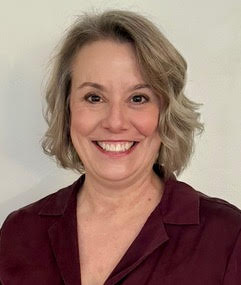
Now focused on writing, she draws on two decades of practice to explore the human side of medicine. Her work has appeared on KevinMD, and she writes at The Best Third and on Medium. She shares updates on LinkedIn.