














For six years, I carried my medical history into every new appointment. The content wasn’t in a medical record. It was in my head, in notes on my phone, in a spreadsheet I had assembled. Fertility treatment had failed repeatedly, my diagnosis was unexplained, and I had no way of knowing which detail a new specialist would need. So I found myself recounting all of it, from the beginning, every time.
No one held the complete record. Each clinic had a piece of my complicated history. I had the lived experience, and I was often treated as an obstacle for bringing it forward.
Health care has spent two decades worrying about the “difficult” patient: the one who searches online, arrives with a printout, a long list of questions, perhaps a few journaled article abstracts, and now, advice from a chatbot to review with her doctor. The assumption is that more information pulls patients away from professional care. The evidence points the other way. The greater risk is the patient who arrives with nothing, because the system never equipped her to participate in the discussion.
The data runs the other way
A study published in September in Open Medicine tested the self-diagnosis fear directly. Researchers surveyed 847 outpatients aged 18 to 43 at Gazi University Hospital in Ankara, Turkey, measured their digital health literacy, and compared it with what they did when they felt unwell. Patients with stronger digital health skills did more research online and made more visits to health care providers. They used the internet to prepare for care and to seek it out. The better a patient could interpret health information, the more likely she was to bring it to a clinician.
Real physician voices, twice a week
Free, and one click to unsubscribe.
Two other findings matter to anyone who builds or pays for health technology. First, these patients had access to e-Nabız, Turkey’s national personal health record, so the population that moved toward care could see its own records. Second, patients in poorer health had more difficulty navigating online portals. The conclusion here is that digital tools fail first for the people who need them most.
The study is cross-sectional, drawn from one hospital and one age group, and shows association rather than cause. It is consistent with more than a decade of earlier research.
Earlier evidence points the same way
In 2012, researchers gave more than 13,000 primary care patients at three U.S. health systems access to their doctors’ visit notes for a year. Many physicians expected confusion and longer visits. Among the more than 5,000 patients who read notes and answered the survey, 77 to 87 percent said they felt more in control of their care, and 60 to 78 percent of those on medication reported better adherence. Between 1 and 8 percent reported worry, confusion, or offense. No more than 5 percent of doctors reported longer visits. None of the participating doctors opted out at the end of the year.
A 2020 study in JAMA Network Open found that about one in five patients who read their notes reported a mistake, and about four in ten of those judged it serious. The most serious errors involved diagnoses, medical history, and medications. From this, we can take away that patients with access to their records become their own form of unpaid quality assurance.
Research on patient activation points the same way. A 2013 Health Affairs study found that the least activated patients, those with the least knowledge, skill, and confidence to manage their care, had costs 8 to 21 percent higher than the most activated, after adjusting for severity. A 2024 Cochrane review of patient decision aids, covering 209 studies and more than 107,000 people, found that informing patients increases their knowledge, produces more realistic expectations, and raises participation in decisions.
None of this research shows informed patients are inclined to bypass their clinicians. It shows them taking their medication, catching errors, and making decisions with their clinicians. That, folks, is patient engagement in action.
The uninformed patient carries the risk
Clinical encounters are short. In one study of recorded visits, patients invited to state their concerns were interrupted after a median of 11 seconds. The causes are largely structural: crowded schedules, documentation burden, burnout. The result is that a patient whose history isn’t organized in advance often doesn’t get to tell it. Clinicians spend a disproportionate amount of time reviewing notes and taking history rather than valued time with their patient. That is frustrating for all parties.
Medication histories are a known weak point. A systematic review in the Canadian Medical Association Journal found that up to 67 percent of medication histories taken at hospital admission contained errors, many of them potentially clinically important. Patients, often sick, frightened, or cognitively impaired, are asked to recite from memory what the record should already show.
Sometimes there is no medical record to consult. My colleague Matt spent a weekend in the emergency department a month or so back. The hospital had no record of the emergency care he had received in another part of the country four years earlier for a potentially life-threatening condition. He reconstructed his own history for the staff treating him and was told, in effect, that this is how the system works. As he put it afterward: “We aren’t going to fix the system. We need to be the system.”
The failure belongs to the system, not to the nurse or the physician working a double shift. Governments fund records that cannot easily follow a patient across jurisdictions or a change of clinic. Labs route results to a doctor’s inbox but not to the patient. Hospitals keep detailed internal notes and send the patient home with a short discharge summary. When patients try to close those gaps themselves, the system calls it risk.
Patients already use AI
OpenAI says more than 300 million people ask ChatGPT health and wellness questions each week, and its data show roughly seven in ten health conversations happen outside clinic hours. Patients are not credulous about it. In a 2024 KFF poll, most U.S. adults, including most AI users, said they were not confident that chatbot health information is accurate.
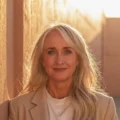
Alvina Nadeem’s experience shows what careful use looks like. An engineer and mother of two, she attributed worsening cramping and fatigue to burnout or perimenopause until she suspected something more serious. She asked ChatGPT to reason through her age and symptoms objectively, as a medical student evaluating a patient would. When it raised ovarian cancer as a possibility, she took the question to her doctors. She was diagnosed at 36 with stage 1 high-grade ovarian cancer, a disease with no reliable screening test that is usually found late and carries with it a 50 percent survival rate.
“I should have fallen through the cracks,” she readily admits. She has described a tool like ChatGPT as a first step toward self-advocacy. She also used it between appointments to understand complex medical information and plan lifestyle changes while in chemotherapy. Thanks to her use of AI, Alvina reached out to her clinician sooner and better prepared, the same pattern the Ankara study found across 847 patients.
Whether patients use AI is not up for debate. What remains open is what information they give it. Most patients today supply fragments: a symptom recalled from memory, a lab value from one of several portals, a half-remembered diagnosis. OpenAI has acknowledged that its answers are more reliable when users provide key context. The patient is best placed to supply that context, provided she has her record.
Who holds the record matters. A hospital chatbot built on a hospital portal sees only that hospital’s portion of a patient’s history. A complete record kept by the patient, enriched with her own data and lived experience, follows her across clinics, states, and countries.
What a patient-held record changes
Clinicians reasonably worry that more patient information means more work. The OpenNotes data suggest the added burden is small, and the benefits are concrete.
Visits start with the current problem. A patient who arrives with a timeline of diagnoses, procedures, results, medications, and past treatments means that valuable minutes of that consult aren’t spent reconstructing that history.
In this scenario, clinicians have a window into what happens between visits. They’ll learn about symptoms that come and go, how a medication was tolerated, family dynamics that may have a bearing on the patient’s well-being, and gain insight into a family history pieced together over years. None of this information sits in the electronic health record (EHR). These systems were not built to capture it. A personal health record rounds out that picture, so clinicians see the whole person, not just the diagnosis. Furthermore, when a patient has a personal health record in hand, errors surface sooner. One in five clinical note readers already finds a mistake. Wider access means more of those errors are caught before they cause harm.
Shared decision-making gains an engaged participant. Health systems endorse this concept, but seldom explain to patients what shared decision-making is, or what role they are expected to play in it. A patient who understands her own history and is engaged in adding to it can better weigh options and state her priorities.
Finally, continuity of care stops depending on circumstance. Doctors retire, patients move, and clinics change systems. A personal health record can become a vital information bridge for maintaining that continuity.
A personal health record is never a substitute for an EHR or for clinical judgment. It simply supplies important information that rarely informs clinical judgment.
What should change
Clinicians should treat a patient’s research and personal record-keeping as important information to discuss. It was important enough that the patient thought to assemble that knowledge. It should be acknowledged and respected. A systematic review found that online health information can improve the patient-physician relationship, depending on whether the patient discusses it with the physician.
- Health systems and vendors should release results, notes, and reports to patients when they release them to clinicians, in a form patients keep after they change providers. Portals should be designed for the sickest users, not the healthiest.
- Governments should stop funding records that end at an institution’s walls. Interoperability is incomplete until the patient has the record.
- Payers and investors should treat patient-held records as infrastructure. Activated patients cost less, and the evidence for that is more than a decade old.
- Patients and their advocates should request records, keep copies, and document what happens between appointments.
A personal health record built by patients for patients is built on the premise that the person who lives the story should own it. Doctors, hospitals, and diagnoses change over a lifetime. The patient is the only constant. Health care should stop treating the informed patient as a risk and start treating her as an engaged partner.
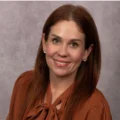
Jessica Chalk is a Canadian entrepreneur, patient advocate, and the founder and CEO of myStoria, a health record built by patients, for patients.
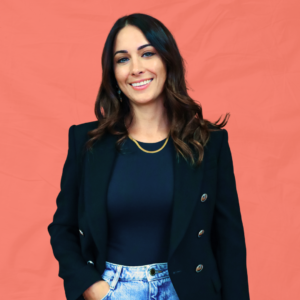
Before myStoria, Chalk cofounded and led TrafficSoda, a technology-driven digital marketing firm she grew and sold in 2023. She built myStoria after six years of fertility treatment in Canada and the U.S., an endometriosis diagnosis, a miscarriage, and more than $100,000 in out-of-pocket costs. Through it all, she was the only person carrying her full health history from provider to provider.
That experience drives her work: making sure every patient owns a complete, usable record of their health and can take it anywhere care leads.
Chalk writes The Personal Health Record on LinkedIn and has served on the boards of Fertility Matters Canada and the Alzheimer Society of Waterloo Wellington. A Wilfrid Laurier University graduate, she received the university’s 2022 Alumni Association Award of Excellence for Entrepreneurship. She shares updates on Instagram and Threads.