The looming threat of LSCO
It has been decades since the United States has experienced sustained, high-casualty large-scale combat operations (LSCO) at the level of the Second World War, the Korean War, and Vietnam. However, in the changing geopolitical landscape, the possibility of the U.S. entering LSCO is high. Within the next decade, these conflicts are most likely to be with near-peer adversaries in complex, austere, and ambiguous environments.
In the immediate battlefield space, LSCO would likely be one of the largest challenges that the American military has seen in nearly a century, with numbers of wounded service members approaching that of the Second World War. The challenges would be immense. In the absence of reliable air support, the U.S. military would no longer be able to count on the “golden hour” of medical evacuation it had during the Global War on Terrorism (GWOT), or the historically low rates of lethality from battlefield injuries seen during this period. The increasing prevalence of drones would further limit logistics and medical evacuation, leading to prolonged care in the field under extremely austere conditions. Any military health care facilities in the homeland would be rapidly overwhelmed by the numbers of patients. A whole-of-nation effort would be required, necessitating the use of the entire civilian health care system within a matter of days.
The threat that this poses to the American health care system cannot be overstated. Current unclassified planning factors estimate that contemporary LSCO would generate approximately 1,000 patients per day, a massive volume of combat casualties far exceeding the Department of War’s (DoW) health care capabilities. These patients would return to the U.S. homeland for care at a rate not seen since the First World War. Rather than the brief surge of patients seen in the past with various disasters, this stream of casualties could persist for months. The American health care system, optimized for peacetime conditions, has multiple vulnerabilities to such a state, including a critical bottleneck of operating rooms, difficulty in responding to geographically dispersed events, relatively small capacity for burn beds and critical care beds, and limited abilities to coordinate patient care across a widely disparate health care system.
The current model of American civilian health care, where the majority of hospitals routinely operate at over 95 percent capacity, is built for temporary medical surges that simply cannot handle the stresses of a prolonged conflict. In LSCO, the majority of care will have to be performed by civilian hospitals, which already operate on tight financial margins and have few resources, staffing, and beds for a sustained conflict. Without proper preparation, the financial cost to civilian hospitals could be immense without deliberate planning and mitigations to prevent displacement of civilian patients, leading to significant revenue loss by civilian health care systems.
Real physician voices, twice a week
Free, and one click to unsubscribe.
Unfortunately, many of our civilian counterparts are unaware of the threat of LSCO, and of the subsequent strain that this will place on the overall American health care system.
Preparation
Preparation is key, and central to preparation is understanding the mechanics of patient regulation and load-balancing. During LSCO, initial casualties will be managed at military treatment facilities to the extent that capabilities can support quality care. Once that threshold is crossed, casualty flows into the civilian system may arrive as a trickle, stream, or surge but will be geographically dispersed nationwide and span a continuum of care from acute management to long-term rehabilitation. To build an efficient framework without overwhelming an already burned-out workforce, readiness activities must be organized across system, institutional, and individual clinician levels.
Individual clinicians
Civilian clinicians may be called to support wartime care, requiring leadership, adaptability, and training to bridge the military-civilian cultural divide. Rather than adding to the existing task burden, individual clinician preparation should focus on streamlining clinical habits and reframing the mental load associated with clinical management. On a daily level, clinicians can prepare by:
- Optimizing patient flow dynamics: Recognizing a care “style” as maximalist or precautionary and acknowledging the need to transition to more decisive, criteria-based clinical milestones during contingency and crisis conditions. Additionally, identifying additional modes of communication permits transition from linear patient care to parallel task-batching. For example, pairing charting with direct conversations with other clinicians and hospital staff. Many clinicians already do this; all must do so for a whole-of-nation response.
- Reframing mental load: Focusing clinical decisions strictly on data that immediately changes patient management or disposition, recognizing that resource stewardship preserves system integrity. Accepting that institutional leadership will make select operational decisions during crisis states further alleviates individual decision fatigue.
- Identifying resources early: Knowing who delivers notifications for transitioning to contingency and crisis operations and locating the facility’s mass casualty incident (MCI) plan in advance enables rapid orientation when an initial surge occurs. While combat casualty receipt will likely be prolonged and necessitate far more than an MCI plan (e.g., recall the duration of recent armed conflicts), facilities will likely borrow from established plans, making familiarity a helpful initial knowledge gain.
Institutions
Hospitals must establish plans with data-driven triggers to expand physical capacity, reallocate staff, and conserve resources as operations shift between normal, contingency, and crisis care levels. In addition to ensuring mental health support for personnel and normalizing vulnerability in high-intensity, complex clinical environments, institutions begin readiness activities through:
- The “4S” framework: Clear protocols must be created and drilled to scale space, staff, systems, and supplies, alongside explicit guidelines detailing who holds authority for institutional and clinical decision-making during contingency and crisis operations.
- Rates of discharge: Institutions must move from urgent decompression activations to planned decanting options to maintain flow, including safe discharge to post-acute care facilities and home care with telehealth, starting with dedicated discharge waiting areas for patients awaiting transportation or social work support.
- Medical operations coordination: Establish formal institutional agreements within the local and regional health care landscape for linking emergency services, public health, and hospitals. Medical operations coordination centers, regional disaster health response systems, and health care coalitions are excellent mechanisms through which these agreements can be developed.
System and sector level
Caseload surges are associated with increased risk of patient mortality, necessitating systems-level partnership development between military and civilian health care to anticipate future conflicts, as opposed to preparing for the low-intensity conflicts of the last generation. Developing systems-level, interoperable military-civilian health systems with shared communication standards, adaptable policies, and national-level situational awareness mechanisms will maximize patient load-balancing and care.
- Administrative burden: Bottlenecks must be preemptively removed through emergency licensing portability and cross-sector functional credentialing. Pre-arranged policy waivers can eliminate administrative burdens that delay patient throughput.
- Civilian health infrastructure investment: The costs of providing care to service members during LSCO and the associated needs by the civilian health care system must be estimated. A clear combat operational and medical readiness financial support mechanism should be established to ensure civilian hospitals are protected from losses if combat casualties displace civilian care and lower payment models based on Tricare displace commercial payments.
- End-to-end definitive care: Care coordination and case management must be streamlined across the entirety of the nation’s health care sector to permit smooth transition between hospitals, post-acute care facilities, rehabilitation centers, and outpatient care options.
Conclusion
The challenges facing the American health care system are immense, especially in a more chaotic, dangerous world. However, with adequate planning and preparation, these challenges can be minimized, and even serve as an opportunity to streamline health care across the nation. Ultimately, the growing threat of LSCO in the future should serve as a call for action for increased collaboration between military and civilian health care institutions, and preparation on an individual, institutional, and nationwide level.
Matthew Turner is an emergency medicine physician at Womack Army Medical Center in Fayetteville, North Carolina. His scholarship spans emergency medicine, military medicine, infectious disease, medical history, and the intersection of medicine with warfare and public health. He has authored more than 35 peer-reviewed publications, with work appearing in Cureus, Military Medicine, the Emergency Medicine Journal, Emerging Infectious Diseases, the American Journal of Neuroradiology, and other journals.
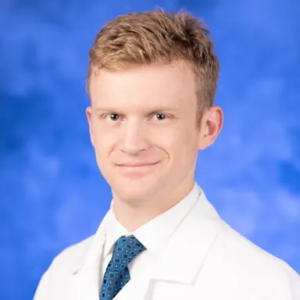
Dr. Turner has long been interested in the intersection of medicine and history, with publications examining historical disease outbreaks, biological and chemical warfare, ancient pathology, toxicology, and military medical lessons. His work has explored topics ranging from yellow fever and anthrax as possible tools of biological warfare to the medical legacy of historical figures such as Akhenaten, Henry I, Justinian II, and Dominique-Jean Larrey. He also writes about the evolving world of counterinsurgency and counterterrorism, including modern conflict medicine and the use of chemical weapons by violent non-state actors. Professional updates are available on LinkedIn.
Kaitlin Rainwater-Lovett is a health care executive.
The opinions and assertions expressed herein are those of the author and do not reflect the official policy or position of the Uniformed Services University of the Health Sciences or the Department of War. The views expressed herein are those of the author and do not reflect the official policy or position of the Henry M. Jackson Foundation for the Advancement of Military Medicine Inc.