Skip to content
  • About
  • Contact
  • Contribute
  • Book
  • Careers
  • Podcast
  • Recommended
  • Speaking
KevinMD
  • All
  • Physician
  • Practice
  • Policy
  • Finance
  • Conditions
  • .edu
  • Patient
  • Meds
  • Tech
  • Social
  • Video
  • All
  • Physician
  • Practice
  • Policy
  • Finance
  • Conditions
  • .edu
  • Patient
  • Meds
  • Tech
  • Social
  • Video
    • All
    • Physician
    • Practice
    • Policy
    • Finance
    • Conditions
    • .edu
    • Patient
    • Meds
    • Tech
    • Social
    • Video
    • About
    • Contact
    • Contribute
    • Book
    • Careers
    • Podcast
    • Recommended
    • Speaking
KevinMD
  • All
  • Physician
  • Practice
  • Policy
  • Finance
  • Conditions
  • .edu
  • Patient
  • Meds
  • Tech
  • Social
  • Video
    • All
    • Physician
    • Practice
    • Policy
    • Finance
    • Conditions
    • .edu
    • Patient
    • Meds
    • Tech
    • Social
    • Video
    • About
    • Contact
    • Contribute
    • Book
    • Careers
    • Podcast
    • Recommended
    • Speaking
  • About KevinMD | Kevin Pho, MD
  • Be heard on social media’s leading physician voice
  • Contact Kevin
  • Discounted enhanced author page
  • DMCA Policy
  • Establishing, Managing, and Protecting Your Online Reputation: A Social Media Guide for Physicians and Medical Practices
  • Group vs. individual disability insurance for doctors: pros and cons
  • KevinMD influencer opportunities
  • Opinion and commentary by KevinMD
  • Physician burnout speakers to keynote your conference
  • Physician Coaching by KevinMD
  • Physician keynote speaker: Kevin Pho, MD
  • Physician Speaking by KevinMD: a boutique speakers bureau
  • Primary care physician in Nashua, NH | Kevin Pho, MD
  • Privacy Policy
  • Recommended services by KevinMD
  • Terms of Use Agreement
  • Thank you for subscribing to KevinMD
  • Thank you for upgrading to the KevinMD enhanced author page
  • The biggest mistake doctors make when purchasing disability insurance
  • The doctor’s guide to disability insurance: short-term vs. long-term
  • The KevinMD ToolKit
  • Upgrade to the KevinMD enhanced author page
  • Why own-occupation disability insurance is a must for doctors

The true crime community is radicalizing kids online

Dexter Ingram & Matthew Turner, MD & Stephen Sandelich, MD
Physician
April 26, 2026
Share
Tweet
Share

As physicians who regularly work with pediatric patients, and experts in counter-terrorism, we know firsthand the dangers that online radicalization poses to youth. Nihilistic violent extremism (NVE), which glorifies violence for the sake of violence, is on the rise globally. Many of these decentralized online networks, such as the 764 Network, specifically target children for recruitment. 764 has seen a sharp increase in popularity, and has become the subject of increased scrutiny from the U.S. government. While public awareness of 764 is increasing, the threat from similar agents in the online ecosystem remains critically underreported. Unfortunately, we have found that the majority of parents have never heard of 764, or similar radicalization networks operating on platforms that their children use daily, including Roblox, Discord, Snapchat, TikTok, and Instagram.

However, while 764 is beginning to break into the public consciousness, one of the most underreported and rapidly growing threats can now be found in the true crime community (TCC).

The true crime genre is enormously popular. Podcasts such as My Favorite Murder average up to 19 million listeners a week, and a 2024 YouGov poll found that 57 percent of Americans consume true crime content. While true crime is not a new phenomenon, it has exploded in popularity over the past decade, aided by the large online communities that have formed around it. The self-identified TCC may be found on Discord, Telegram, X, and Tumblr, as well as on youth-oriented online forums including Roblox and TikTok. The typical age of TCC participants is often shockingly young, often between 13-18 years.

While the vast majority of TCC participants will display a benign and harmless interest in true crime, there is a dangerous tendency in the community to develop unhealthy parasocial relationships with both the victims and the perpetrators, ultimately resulting in increased negative feelings and a decline in overall well-being, as demonstrated in a recent Boston University study. Further progression into deeper levels of the TCC evolves from curiosity about perpetrators to glorification of them, often portraying them as sympathetic victims lashing out against an unjust world. TCC participants may become obsessed with prior perpetrators of mass attacks, with groups such as “Columbiners” coalescing in a fandom for the Columbine school shooters, or “Roofies” for fans of the 2017 Charleston shooter Dylann Roof. As radicalization within the TCC increases, TCC members sink into an online ecosystem that evolves from obsessively following the digital footprints of past perpetrators to fanfictions, art, and AI-generated videos on TikTok of mass shooters.

Curiosity leads to glorification leads to imitation. In the deeper levels of the TCC, participants often mimic the clothing and style of past perpetrators. Online games such as the massively popular Roblox feature servers such as “Active Shooter Studios”, which allow players to participate in digital recreations of Columbine or the Uvalde shootings.

It is this participatory aspect of the TCC, where adherents begin to see themselves as part of this “pantheon of death” that the community coalesces around, that is the most dangerous. One of the most notable recent examples is the 2024 Abundant Life Christian School shooting in Wisconsin. The perpetrator, 15-year-old Natalie Rupnow, fatally shot two victims and injured another six before taking her own life. Rupnow had been fascinated with the TCC for at least four years prior to the attack, and left behind a manifesto that included references to a 2007 mass shooting in Finland, a 2018 shooting in Crimea, and a mass stabbing in Turkey in 2024. Just prior to the attack, Rupnow uploaded an image to X of her hand forming the “OK” symbol over her combat boots on a tiled bathroom floor.

Rupnow’s addition to the TCC quickly made her a central figure within the online fandom and triggered multiple downstream effects. One month later, one of her followers on X, a 17-year-old student who had urged Rupnow to “Livestream it” when she uploaded her final image, murdered another student at his high school in Nashville. Just a few months later, a shooter at Evergreen High School in Colorado uploaded an image imitating Rupnow, while also wearing a t-shirt labeled “Wrath” in a reference to the 1999 Columbine shooting. Still another attack occurred in November 2025 at a high school in Indonesia when a 17-year-old student detonated several explosives. His social media directly referenced Rupnow’s “OK” image, with hashtags that included #tcc and #teeceecee, and he carried several replica rifles with references to shootings at Columbine, Christchurch, and other attacks with him.

All this serves to demonstrate the memetic, self-referential nature of the TCC. Violence metastasizes in clusters from TCC attacks, as other TCC participants seek to achieve similar notoriety in this ecosystem, often by tying themselves into the wider TCC pantheon. In this international network, geography and ideology do not matter. Only the act of performative violence, and inserting oneself into the wider TCC mythos, matters.

The increasing danger that the TCC poses to public health cannot be overstated. TCC-linked violence is on the rise globally. Victims have been as young as eight years old when they were first exposed. It is imperative that parents be aware of the severe risk that this online community poses to their children. These networks operate without borders or ideology. Only the performance of violence matters. The Indonesia attacker referenced an American school shooting, a New Zealand mosque attack, and a Wisconsin teenager he had never met. No single government can monitor, interdict, or disrupt these pipelines effectively on its own. Meaningful prevention requires coordinated action between governments and platforms across jurisdictions, and that conversation is long overdue. For their part, physicians should be aware of the threat that the TCC poses to public health and include it as part of their routine screening. The sooner that the wider public becomes aware of the dangers posed by the TCC, the more lives that can be saved.

Matthew Turner is an emergency medicine physician at Penn State Milton S. Hershey Hospital in Hershey, Pennsylvania. His scholarship spans emergency medicine, military medicine, infectious disease, medical history, and the intersection of medicine with warfare and public health. He has authored more than 35 peer-reviewed publications, with work appearing in Cureus, Military Medicine, the Emergency Medicine Journal, Emerging Infectious Diseases, the American Journal of Neuroradiology, and other journals.
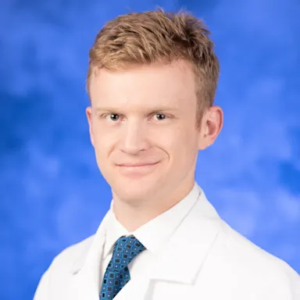
Dr. Turner has long been interested in the intersection of medicine and history, with publications examining historical disease outbreaks, biological and chemical warfare, ancient pathology, toxicology, and military medical lessons. His work has explored topics ranging from yellow fever and anthrax as possible tools of biological warfare to the medical legacy of historical figures such as Akhenaten, Henry I, Justinian II, and Dominique-Jean Larrey. He also writes about the evolving world of counterinsurgency and counterterrorism, including modern conflict medicine and the use of chemical weapons by violent non-state actors. Professional updates are available on LinkedIn.

Stephen Sandelich is an emergency physician. Dexter Ingram is a national security consultant.

Prev

Why the doctor-patient relationship survives when trust in public health fails

April 26, 2026 Kevin 0
…

Kevin

Tagged as: Psychiatry

< Previous Post
Why the doctor-patient relationship survives when trust in public health fails

ADVERTISEMENT

Related Posts

  • How to balance confidence and humility online

    Brian A. Primack, MD, PhD
  • Marijuana rescheduling: Why the medical community’s silence is dangerous

    Farid Sabet-Sharghi, MD
  • Online eye exams spark legal battle over health care access

    Joshua Windham, JD and Daryl James
  • Mental health issues and the African American community

    Lashawnda Thornton, MSW
  • 911 call turned deadly: It’s time we invest in our community

    Ashlee Guzman
  • Why prescribing medicine to kids scares even experienced doctors

    Dr. Damane Zehra

More in Physician

  • Navigating medical training and residency as a female plastic surgeon

    Smita Ramanadham, MD
  • 13.1 reasons running a half marathon beats practicing medicine

    John Wei, MD
  • Why experiential consent is replacing traditional medical consent forms

    Ron Tongbai, MD
  • Why career pivots are a valid path in medical training

    Whitney Black, MD
  • Why early detection technology and precision medicine are failing patients

    Julie Chen, MD
  • Physician autonomy is not separate from patient care

    Corinne Sundar Rao, MD
  • Most Popular

  • Past Week

    • Medicare practice expense cuts will hurt patients

      John Birkmeyer, MD | Policy
    • When shared decision making gives way to medical paternalism

      DeAnna Pollock, MD | Physician
    • How xenotransplantation could finally solve organ shortages

      Rafael S. Garcia-Cortes, MD | Conditions
    • The true crime community is radicalizing kids online

      Dexter Ingram & Matthew Turner, MD & Stephen Sandelich, MD | Physician
    • The human side of medicine in quiet clinical moments

      Devina Maya Wadhwa, MD | Physician
    • Trusting clinical intuition to spot an atypical heart attack

      Anonymous | Physician
  • Past 6 Months

    • Why clinicians fail at writing expert reports

      Tracy Liberatore, Esq, PA | Conditions
    • Rethinking the role of family physicians vs. specialists

      Ronald L. Lindsay, MD | Physician
    • Clinicians are failing at value-based care because no one taught them the system [PODCAST]

      The Podcast by KevinMD | Podcast
    • Why clinical listening skills outpace artificial intelligence

      Ryan Egeland, MD, PhD | Tech
    • Why Florida physician background checks are driving doctors away

      Tamzin A. Rosenwasser, MD | Physician
    • The hidden clinical cost of HCC coding in primary care

      Jeffrey H. Millstein, MD | Physician
  • Recent Posts

    • The true crime community is radicalizing kids online

      Dexter Ingram & Matthew Turner, MD & Stephen Sandelich, MD | Physician
    • Why the doctor-patient relationship survives when trust in public health fails

      Myles Deal, MD | Conditions
    • Navigating medical training and residency as a female plastic surgeon

      Smita Ramanadham, MD | Physician
    • Why cooking for better health makes dietary changes easier

      Oliver Power | Conditions
    • How blood-based brain biomarkers predict Alzheimer’s progression

      Marc Arginteanu, MD | Conditions
    • Overcoming the fear of health care AI in data abstraction

      Brandy Sue Greif | Tech

Subscribe to KevinMD and never miss a story!

Get free updates delivered free to your inbox.


Find jobs at
Careers by KevinMD.com

Search thousands of physician, PA, NP, and CRNA jobs now.

Learn more

Leave a Comment

Founded in 2004 by Kevin Pho, MD, KevinMD.com is the web’s leading platform where physicians, advanced practitioners, nurses, medical students, and patients share their insight and tell their stories.

Social

  • Like on Facebook
  • Follow on Twitter
  • Connect on Linkedin
  • Subscribe on Youtube
  • Instagram

ADVERTISEMENT

  • Most Popular

  • Past Week

    • Medicare practice expense cuts will hurt patients

      John Birkmeyer, MD | Policy
    • When shared decision making gives way to medical paternalism

      DeAnna Pollock, MD | Physician
    • How xenotransplantation could finally solve organ shortages

      Rafael S. Garcia-Cortes, MD | Conditions
    • The true crime community is radicalizing kids online

      Dexter Ingram & Matthew Turner, MD & Stephen Sandelich, MD | Physician
    • The human side of medicine in quiet clinical moments

      Devina Maya Wadhwa, MD | Physician
    • Trusting clinical intuition to spot an atypical heart attack

      Anonymous | Physician
  • Past 6 Months

    • Why clinicians fail at writing expert reports

      Tracy Liberatore, Esq, PA | Conditions
    • Rethinking the role of family physicians vs. specialists

      Ronald L. Lindsay, MD | Physician
    • Clinicians are failing at value-based care because no one taught them the system [PODCAST]

      The Podcast by KevinMD | Podcast
    • Why clinical listening skills outpace artificial intelligence

      Ryan Egeland, MD, PhD | Tech
    • Why Florida physician background checks are driving doctors away

      Tamzin A. Rosenwasser, MD | Physician
    • The hidden clinical cost of HCC coding in primary care

      Jeffrey H. Millstein, MD | Physician
  • Recent Posts

    • The true crime community is radicalizing kids online

      Dexter Ingram & Matthew Turner, MD & Stephen Sandelich, MD | Physician
    • Why the doctor-patient relationship survives when trust in public health fails

      Myles Deal, MD | Conditions
    • Navigating medical training and residency as a female plastic surgeon

      Smita Ramanadham, MD | Physician
    • Why cooking for better health makes dietary changes easier

      Oliver Power | Conditions
    • How blood-based brain biomarkers predict Alzheimer’s progression

      Marc Arginteanu, MD | Conditions
    • Overcoming the fear of health care AI in data abstraction

      Brandy Sue Greif | Tech

MedPage Today Professional

An Everyday Health Property Medpage Today

Copyright © 2026 KevinMD.com | Powered by Astra WordPress Theme

  • Terms of Use | Disclaimer
  • Privacy Policy
  • DMCA Policy
All Content © KevinMD, LLC
Site by Outthink Group

Leave a Comment

Comments are moderated before they are published. Please read the comment policy.

Loading Comments...