Just after one in the morning on August 6, 1997, Korean Air Flight 801 was descending toward Guam in rain. The captain had been scheduled for a longer trip to Dubai, but he was not rested for it. The airline gave him the shorter run to Guam instead. About twenty minutes before the end, the cockpit voice recorder caught him talking about crew rest rules, and then, in a pause, saying he was really sleepy.
Most big airports send out a radio beam called a glideslope, which guides an airplane down a steady slope to the runway in cloud or rain. The one at Guam was out of service that night. Without it, the crew had to fly a harder approach, stepping the airplane down from one set altitude to the next. The captain still seemed unsure whether the beam was working. He descended early. The first officer and the flight engineer watched the altimeter unwind and said almost nothing. The 747 hit Nimitz Hill, 3 miles short of the runway. Over two hundred people died as the plane was destroyed by impact and fire.
I wrote in these pages before about crews who see a problem and stay quiet, and Flight 801 has that problem too. But the National Transportation Safety Board named something else alongside it. Among the factors it found contributed to the crash was the captain’s fatigue. A tired man led, and two other men followed.
Aviation took a long time to write rules that match what it learned from nights like that one. The current rules for U.S. airline pilots, issued in 2011, give a pilot a rest period of at least ten hours before flying, with a chance at eight hours of uninterrupted sleep inside it. The part I find most striking is short. A pilot who reports too tired to fly safely cannot be assigned the flight, and a pilot who becomes too tired partway through cannot be made to continue. And before every flight, each pilot must affirmatively state that he or she is fit for duty. It is a sentence said out loud, and it puts the burden where it belongs: on the person at the controls, and on the company that has to accept the answer.
Real physician voices, twice a week
Free, and one click to unsubscribe.
For years I have given grand rounds to residents on sleep and fatigue, and on what they can do about it. One study I always show comes from NASA. Long-haul pilots were given a planned 40-minute rest in their seats during the quiet middle of the flight. Nearly all of them fell asleep within a few minutes, and they were more alert than the crews who stayed awake when it mattered most, on the descent and landing. Another slide quotes the requirements that every residency program works under: “Experiencing fatigue in a supervised environment during training prepares residents for managing fatigue in practice.”
In practice, the supervision ends. Duty-hour rules cover residents, not the surgeons who teach them. I am an attending surgeon, and no rule tells me how much I must sleep before I operate. The best evidence on people like me is, to be fair, reassuring. A study from Ontario followed nearly 39,000 patients whose elective operations were done by surgeons who had worked past midnight, and compared them with the same surgeons’ patients on rested days. It found no difference. A later American study of nearly half a million daytime operations, again comparing each surgeon with himself or herself, found the same.
A smaller study looked more closely. Researchers watched sixty attending surgeons and obstetricians operate, some after a night on call and some rested. After call they made no more errors, but they worked more slowly, as if they knew to compensate. What slipped were the things observers rated outside the hands: situational awareness, decision-making, and communication with the team. That is nearly the same list the safety board wrote about the cockpit over Guam. The captain’s hands could still fly the airplane. His judgment about where the airplane was, and his crew’s willingness to question it, were what failed.
So I do not think the answer for surgeons is a strict hour limit. It would not work for many of us. A surgeon who covers call alone cannot hand the night to someone else, and an appendix does not wait for a rested surgeon. The pilot’s sentence is a better fit, and it costs nothing. Before an elective case, the surgeon could say out loud, to the room, whether the night allowed real sleep. The anesthesiologist could say the same. If the answer is no, the team decides together, without blame, whether the case goes now, goes later, or goes with more help.
The second half of Flight 801 matters here too. The first officer and the flight engineer watched a sleepy captain fly them into a hill. A declaration only helps if the people who hear it feel free to act on it. A nurse or a resident who hears “I got two hours” should be able to ask, plainly, whether we should wait, and expect a real answer.
Pilots had to lose a great many airplanes and lives before they learned to say “I am fit to fly” before every trip. I think the operating room can learn that sentence more cheaply. It only has to be willing to say it, and to hear the answer.
Colin G. Knight is a board-certified pediatric surgeon at HCA Florida Lawnwood Hospital in Fort Pierce, on Florida’s Treasure Coast. He is a clinical assistant professor of surgery at the Florida State University College of Medicine and at the Florida International University Herbert Wertheim College of Medicine.
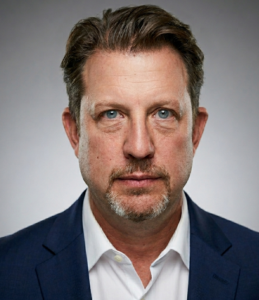
Knight earned his undergraduate degree at Yale University and his medical degree at the University of Virginia, where he also completed his surgical internship. He then served four years on active duty in the United States Air Force as a flight surgeon, work that shaped his interest in operating-room safety and the subject of his essays here. He completed his general surgery residency at Allegheny General Hospital in Pittsburgh, including a research year in robotic pediatric surgery at Children’s Hospital of Michigan, where he later completed his pediatric surgery fellowship.
His research spans minimally invasive and robotic pediatric surgery as well as the management of pediatric appendicitis, with work appearing in the Journal of Pediatric Surgery, the Journal of Laparoendoscopic and Advanced Surgical Techniques, and Archives of Surgery. His practice website is ped-surg.com, and he shares updates on LinkedIn, Instagram, and X.