









I am an engineer and businesswoman who has spent the last twenty years growing living tissue in the lab, and building the business that will bring it to patients. As we’ve traveled the path towards product-market fit, many of my best teachers have been surgeons. The most growthful days I spend at work likely include hearing the sentence: “Here’s how this is used in the OR.”
I have a name for the holders of that kind of knowledge (the hard-won judgment about what works in a real body, in a real clinic, on a Tuesday): nerds. As an engineer, I mean this in the most respectful way! Those devoted to their craft and deep in their practice. Traditionally, the venture capitalists (VCs) who fund biotech companies may get nerdy, but they’re not nerds, or have not been nerds in a long time. However, the growth of physician angel groups and crowdfunding platforms has allowed those with deep domain knowledge access to the investment side of the technologies they do or will use in the clinic. This is a growing movement, and I’m calling it “nerd capital.” My argument is that nerd capital is real capital, and the clinicians who hold it should be able to own a piece of what it helps build. Patients and doctors both need that to happen.
What patients are living with
Take the field I know best, musculoskeletal repair. Cartilage does not heal on its own. For a worn joint, the main options are still to manage the pain or, eventually, to replace the joint with metal and plastic. Orthopedics grew up as a hardware business, and in my view the companies that lead it have been slow to wake up to biological repair.
Regulation opens a second gap. A living tissue product is regulated as a biologic. It needs the FDA’s go-ahead before the first trial patient, and years of studies before it can be sold. I think that scrutiny is right. But many procedures performed in the office with a patient’s own blood or cells never go through premarket review at all. A 2021 study in Cell Stem Cell counted 2,754 U.S. clinics selling stem cell treatments that are not FDA approved, up from 570 five years earlier.
Real physician voices, twice a week
Free, and one click to unsubscribe.
Thus, the patient who wants an orthobiologic treatment today is caught between too slow and too loose. The carefully tested option is years away. The available option is often cash pay only, with thin data behind it. With few exceptions, the physicians who offer these procedures are thoughtful and careful. The system simply gives them, and their patients, very little evidence, and not much more than that in terms of efficacy.
What doctors are living with
According to the American Medical Association, Medicare physician payments fell 33 percent from 2001 to 2025. The share of physicians working in private practice dropped from 60.1 percent in 2012 to 42.2 percent in 2024.
Clinicians sit at the top of the knowledge chain. Why should you stay by the bottom of the financial one? You are paid for your time and your procedures, yet the lasting value goes to whoever owns the product and the platform. More of the newest care is paid for in cash, which gives patients a louder vote and gives you more room to choose what you offer, but it does not change the upstream economics.
Many of you also have a garage full of ideas, and no clear path to execute them. When a company wants your insight, the standard offer is an hourly consulting agreement. Early in my career I worked as a consultant to drug and device companies, and I saw how much money gets spent trying to approximate clinical judgment from the outside. An investor can expend months learning what you can grasp in ten minutes: whether the device fits the workflow, whether the trial endpoint matters, whether a colleague would ever use it. Then the meeting ends, and so does your stake in the outcome.
Treat it like capital
There are three honest ways to put nerd capital to work.
- Advise for ownership: When a young company asks for your judgment, it is fair to ask for a small equity stake that vests over time, in place of some of the hourly fee. You are taking a risk on them, and that is what equity is for.
- Invest, even modestly: Physician angel groups are one route. Another is newer: Since 2016, federal crowdfunding rules have let companies open their rounds to everyday investors in small amounts. Early-stage investing is risky and most startups fail, so only put in what you can afford to lose. But a clinician can judge the science in a way few other investors can.
- Co-develop: If the idea began with your problem, your sketch, or your data, ask about inventorship and a share of what it becomes.
Each of these changes the odds for the company, too. In my experience, a technology shaped early by the people who will use it is far more likely to work in the real world. That may be the most valuable thing nerd capital buys: efficacy.
The line in the sand
It must be said that ownership can never be payment for prescribing. The return should come from your judgment and from the capital you put at risk, never from what you choose to use on a patient. That means telling your patients and your institution about any stake, stepping out of purchasing decisions where you hold one, and staying well inside the anti-kickback and self-referral rules. Have your own attorney read any agreement. If a deal only makes sense when you steer patients toward a product, walk away.
I should be clear about my own stake in this argument. I run a company in this field, and clinicians are among our investors and advisors. I have seen what changes when the doctor across the table is not only a future customer, but a partner. The questions get harder, the process gets realer, and the product gets better.
Doctors and biotechs have spent decades driving innovation together. I think it is time for them to share in the rewards as well. The next time someone asks for your opinion on a new technology, give it. Then ask what it would take to be an owner.
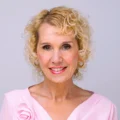
Nina Tandon is a tissue engineer and the cofounder and CEO of EpiBone, a clinical-stage company growing living bone and cartilage from a patient’s own cells. She trained in electrical engineering at Cooper Union and MIT, earned her PhD in biomedical engineering and her MBA at Columbia, and worked at McKinsey with pharmaceutical and medical device companies.
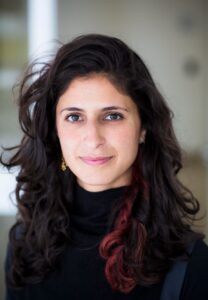
A TED Senior Fellow, she was named one of Fast Company’s 100 Most Creative People in Business, and her TED talk asks whether tissue engineering could mean personalized medicine. She champions what she calls “nerd capital”: the idea that the clinicians and scientists closest to the problem should be able to own a piece of the solution. She shares updates on Instagram and her personal website.
Your KevinMD author page is one of the top results for your name. Turn it into a premium profile, publish in 1 to 3 days, and get a guaranteed podcast slot.