









Listen and followApple PodcastsSpotifyYouTubeMore apps · Browse all episodes
“The USMLE has failed the medical education community, and subsequently, future patients, as medical students will undoubtedly have irreplaceable damage from this experience; however, like all tests, it is possible to learn from mistakes and improve. In these unprecedented times, we as students understand the need to be flexible, but in return, we ask not to be forgotten and left abandoned by the USMLE. Let us work together, find solutions, and move onward.”
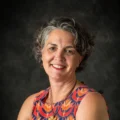
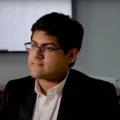
Colin Quinn is a medical student.
He shares his story and discusses his KevinMD article, “How the USMLE fails COVID-19.”

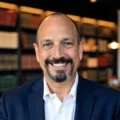
Hosted by Kevin Pho, MD, The Podcast by KevinMD shares the stories of the many who intersect with our health care system but are rarely heard from.


Transcript
Kevin Pho: Hi, and welcome to the show, where we share the stories of the many who intersect with our health care system but are rarely heard from. My name is Kevin Pho, founder and editor of KevinMD. Today on the show we have Colin Quinn, who is a medical student. He just finished his second year, and he wrote the KevinMD article “How the USMLE fails COVID-19,” the USMLE being the United States Medical Licensing Examination. Now, we’re going to talk about that later on, but first off, Colin, why don’t you share your story and journey to where you are today?
Colin Quinn: Yeah, so I’m actually originally from the Northeast, Massachusetts. I did my undergrad at the Ohio State University, and now down here in the South, completing my medical degree as well as getting a PhD.
Kevin Pho: All right, fantastic. So now let’s get into your article here, “How the USMLE fails COVID-19.” Now tell us the reason that you wrote it and the story behind that.
Colin Quinn: Yeah, absolutely. So I’m not going to lie, I think part of this, in the writing, was a little bit out of frustration. And just that day when I wrote the article, I had gotten a second email from Prometric, the testing site center that administers the USMLE exams, that my exam once again had gotten canceled. So rescheduling the exam, I was definitely frustrated by it.
But I think the bigger issue that a lot of students across this country are facing right now is the lack of communication and willingness of not only the USMLE, but Prometric, the testing site center, and the NBME, which is the National Board of Medical Examiners, to accommodate and help students during this pandemic. And I think that was really the basis behind why I wrote this, and to get a voice out there for many medical students who felt like they were just thrown to the side.
And this exam, especially the one that I will be taking, which is Step 1, has a tremendous amount of pressure on students, because it is career-determining in the sense your score can determine what residencies you can go into. And I know there are a bunch of other articles on your site as well that talk about the new changes coming to the Step 1 exam, where it becomes pass/fail, and it all has to do with this insurmountable amount of stress put on this exam. And now, to combine that stress with the stress of a pandemic, and just no clear communication on when this test will be next, is really why I wrote the article. And so people could see that your future doctors, who are going to be taking care of you in the next pandemic, are just getting thrown to the wayside during this entire time.
Real physician voices, twice a week
Free, and one click to unsubscribe.
Kevin Pho: So can you give more clarity in terms of what their plan is and how they communicated as to when you’re going to take this exam?
Colin Quinn: Yeah, I honestly wish I could say there is a clear-cut plan, but still, I wrote this article about a month ago, and still, a month later, there is no, I think, really clear plan on when people will take it. Thankfully, right now I have a test date for June 10th, but I mean, it’s still up in the air whether it can be canceled.
It all started out back in March, when the virus started picking up and we started having social distancing requirements, and the testing center, Prometric, had sent a bunch of emails out, unbeknownst to the USMLE, that they were canceling exams. And then, just from that point forward, there was a lack of communication between medical schools, the USMLE, and Prometric about whether these exams were happening, how they were happening.
And it was frustrating for medical students, too, when you see other organizations, such as the AAMC, who is responsible for administering the MCAT, the medical school admissions exam: They were making adjustments, they were contacting prospective students. The NCLEX, the group responsible for nursing, they were making strides to help students during this time, where it just felt like the USMLE really disregarded us and didn’t even attempt to help students in taking this exam.
Kevin Pho: So why do we go into that a little bit? What are some specific actions that you think the USMLE should take to help clarify and help with the communication regarding Step 1?
Colin Quinn: Absolutely. So for about a month, they didn’t even say if they were going to administer extra testing sites due to all the cancellations. Currently, right now, is when a majority of students would be taking all their Step exams. And so, thankfully, about two weeks ago, they started saying that they would administer new testing site centers at schools, but that’s absolutely incredible, that it took them two months to finally set up alternative testing sites. And keep in mind, these testing sites are only going to be available to a select group of schools. My school, unfortunately, is not included in one of those areas that can administer these tests at their schools and have alternate testing dates.
A second option that many students asked for was potentially allowing the medical schools themselves to administer this test. A lot of medical schools have testing centers within the school to allow for integrity, reliability, and safe administration of this testing with social distancing requirements. And again, that still has not happened. The USMLE claims to be investigating this, but we’re now at almost three months, and they still are investigating this.
And then, I think, something that a lot of students have complained about, and I think rightfully so, is they should have just canceled the exam and pushed it back until it was safe to take it, because some students have valid concerns about having to go take these tests where they could be exposed to COVID-19. And again, I think that’s a valid concern.
And then the final option is many students had called for the USMLE to push their deadline up for when it becomes pass/fail. So for those listeners that don’t know, they are changing the exam to pass/fail, to no longer have a score, starting in 2022. And similar to other state testing or national testing organizations, they moved their exams to pass/fail, so it only seemed plausible that maybe the USMLE could do that.
And I know I touched on this in the article, but they very quickly gave a very callous response, in saying that moving this exam date up to pass/fail would hurt their constituents. And many students had the same question I did, like, who are your constituents, other than the students? Who are you so concerned about benefiting, other than your test takers? So I think those are a couple options that they are now gradually starting to work on, but mind you, it is two months later.
Kevin Pho: So if you’re a medical student and you’re prepared to take Step 1, and I know that there’s a lot of uncertainty just everywhere right now because there is no playbook for this, what advice can you give to your fellow medical students who are in the same position that you are in?
Colin Quinn: Yeah, great question. I think our schools actually advised us to keep studying, but if you have uncertainty, don’t waste practice tests, don’t waste your time and money spending on extra resources. A lot of students, including myself, spend a considerable amount of money to take practice courses or to buy resources to help you study for this, and thankfully, those resources have been willing to extend the subscription period and so on and so forth.
And I think making sure you’re taking advantage of that, and not killing yourself, because with the uncertainty of not knowing when you take Step, it might be less beneficial to your mental health and your studying habits if you continuously try to study 12 hours every day, whereas maybe you can break it up and only do four hours a day.
Kevin Pho: So let’s take a step back. You mentioned that you’re just finishing your second year in medical school, and of course the pandemic has thrown a wrench into medical education. So tell me how the last few months have been for you and your classmates.
Colin Quinn: I think, in one word, to sum it up, it’s stressful. I think, particularly for our class, we don’t know what medical education is going to look like now. I mean, the way our school is designed, we’re about to go on to the clerkships, and especially in Alabama now, with COVID cases rising, we don’t know how that’s going to look from our education perspective. It’s very hard to get a medical education from a Zoom call, so you can’t necessarily have your clinical rotations all be over Zoom.
So I think there’s uncertainty there. There’s still a bunch of medical students who haven’t taken this very important exam, and then we don’t know how it looks for the future of applying to residencies, and what it’s going to look like in the fall, and how the virus will continue to impact our education.
Kevin Pho: And tell me one thing that you’re curious about, or one thing that you’ve been passionate about lately.
Colin Quinn: Yeah, I think one thing I’m really passionate about, and continue to be passionate about, is medical education. I think this virus has shown that there are gaps in the education, and we need to work on improving. So I think, hopefully, in my career I’d love to go into academic medicine and continue to fill those gaps in and make sure students feel supported, especially during times of uncertainty and stress.
Kevin Pho: And my final question: What’s your take-home message for the KevinMD audience?
Colin Quinn: Yeah, absolutely. I think the biggest take-home message: Whether it be the USMLE, Prometric, or NBME, your constituents are frustrated. We understand that you’re also dealing with difficulties and hardships as well. We’re not blind to that, but we ask that this is a two-way street. It feels like it’s only the medical students who are having to take the brunt of it and work through this. We would appreciate and are open to conversations and willingness to work. And I think it’s a call to action on all three of those organizations to help improve students’ mental health, education, and careers moving forward.
Kevin Pho: All right. So on the show we have Colin Quinn, who is a medical student. He wrote the KevinMD article “How the USMLE fails COVID-19.” Thank you so much for being on the show.
Colin Quinn: Thank you. I appreciate it.
Listen and followApple PodcastsSpotifyYouTubeMore apps · Browse all episodes