












Listen and followApple PodcastsSpotifyYouTubeMore apps · Browse all episodes
“Faced with the prospect of not being able to provide all COVID-19 patients with the life support that they may need, physicians and nurses are working in conditions that have been described as ‘hell.’
How are providers to cope with the trauma they are experiencing in New York and Italy, and presumably other nations as well? How are they to cope with the moral implications of the brutal decisions they will be called on to make if two critically ill patients compete for the same life-sustaining treatment when only one is available?”
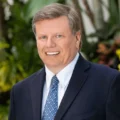
Geoff Tyrrell is a palliative care chaplain.
He shares his story and discusses his KevinMD article, “Faced with terrible decisions, but making the right choices.”
This podcast represents his private opinion and not that of the VA, his endorser, or board certification organization.
Did you enjoy today’s episode?
Please click here to leave a review for The Podcast by KevinMD. Subscribe on your favorite podcast app to get notified when a new episode comes out!
Do you know someone who might enjoy this episode? Share this episode to anyone who wants to hear health care stories filled with information, insight, and inspiration.

Hosted by Kevin Pho, MD, The Podcast by KevinMD shares the stories of the many who intersect with our health care system but are rarely heard from.


Transcript
Kevin Pho: Hi, and welcome to the show, where we share the stories of the many who intersect with our health care system but are rarely heard from. My name is Kevin Pho, founder and editor of KevinMD. Today on the show, we have Geoff Tyrrell. He is a palliative care chaplain, and he wrote the KevinMD article “Faced with terrible decisions, but making the right choices.” Geoff, welcome to the show.
Geoff Tyrrell: Thank you so much, Kevin. Very happy to be here.
Kevin Pho: So we’re going to get into your article in a bit, but first, tell me your story and your journey to where you are today.
Geoff Tyrrell: All right. I’m Irish. I came to the U.S. about 30 years ago. I was lucky enough to win a green card in one of those immigration lotteries. Back in the ’80s, we were having a big recession, so everybody was leaving, and the joke was, “Last one out, turn out the lights.” So I got a start, and I worked in high tech in the Bay Area.
I went to school part-time doing a Doctor of Ministry degree, studied psychotherapy, somatic psychotherapy, in the Bay Area, and then I eventually became a chaplain resident at Stanford Hospital. Once I became a chaplain, I worked in home hospice in San Francisco, and I liked it. I liked the teamwork. And so I was offered a chance to do a fellowship in palliative care at Stanford, not at Stanford, at the VA in Palo Alto, and that’s how I got started with palliative care.
Real physician voices, twice a week
Free, and one click to unsubscribe.
Kevin Pho: Share with the audience some of the things that you do on a day-to-day basis.
Geoff Tyrrell: Sure. Well, my main role is visiting patients, and so I will just check in with them and say hello. I try to put them in the driving seat so they know that if they don’t want to talk to me, that’s completely fine. I’m basically establishing trust and trying to help them to find ways of finding strength, finding meaning, and finding comfort.
In the hospital setting, I’m also involved in some institutional interventions to help staff, physicians, nurses, doctors, I mean all disciplines, through Schwartz rounds and Balint groups. Those are opportunities for people to come together and share their experiences, to integrate things that might have happened, that might be troubling them, cases that might have been really hard in one way or another, and to find support from other members of the community of health care workers and build compassion. So those are probably my main focuses.
Kevin Pho: And what are some of the ways that you use to bring comfort to patients and their families?
Geoff Tyrrell: Well, it very much depends on what’s meaningful to them in the moment. So if they are open to it, I’m happy to pray with people, of course. I listen a lot. I try to be very empathic, to let them know that, in fact, somebody’s listening to them and taking the time to be with them. I think those are the main things we do.
Obviously, there are the things you’d expect, sacramental ministry. We have a national cemetery about a mile away from us, on our campus, and the chaplains will go down there and do memorials, funerals, that kind of thing. But most of my work is actually one-on-one with the patient. These days, we’re calling families, trying to make sure they know we’re here for them as well.
Kevin Pho: And over the last four to five months, during the pandemic, how has that changed what you’ve been seeing day-to-day, either in a palliative care setting or in the hospital?
Geoff Tyrrell: Well, I would say maybe one of the big changes is just the level of fear and worries that staff have. So we’ve really tried, and something I have tried, to take more time to connect with the staff, with the nurses on the floor. We’ve been doing more virtual Schwartz rounds, so we’ve been doing it like this, offering Schwartz rounds in this forum. It’s different, but it’s still providing connection and support to staff members.
Kevin Pho: And you mentioned Schwartz rounds a couple of times. For those listeners who may not be familiar with Schwartz rounds, could you explain what they are?
Geoff Tyrrell: Sure. Schwartz rounds are groups where all members of the institution are invited to come. They’re not for patients and not for families. They’re a place where we can come and talk about our subjective experiences: what it felt like when we were taking care of this kind of patient, what it meant to me when I heard somebody telling me this, things that might rankle, that might cause us to doubt ourselves, that might have been upsetting or painful in some emotional or inner way. So that’s what we do. We don’t have a lot of those kinds of opportunities.
We really began it because we were having folks really struggle with hard things. Specifically, in one case, a resident’s friend, who was also a resident in New York, committed suicide, and the attending on his team was really reaching out to wonder, “How can we support this resident?” Then the same resident had a procedure in the ICU that he was doing that had a bad outcome the very next day after the suicide. So it was a very tough time for him and his team.
We tried different things, and we tried Schwartz rounds. What we found, though, is receptivity to that; folks would participate. Sometimes that’s a challenge. Who’s got time in a busy day to talk about these things? But somehow, folks will take the time out and come and participate.
Kevin Pho: I think it’s tremendously important for anyone within the health care milieu to have that type of support from their peers. So you wrote the KevinMD article “Faced with terrible decisions, but making the right choices,” and I want to read a short excerpt from that article. You write, “How are providers to cope with the trauma they’re experiencing in New York and Italy, and presumably other nations as well? How are they to cope with the moral implications of the brutal decisions they’ll be called on to make if two critically ill patients compete for the same life-sustaining treatment when only one is available?” Now, tell me the story behind that article and why you decided to write it.
Geoff Tyrrell: Sure. So this was going back to those very early days when the virus was really taking off, catching fire, and the worry was that there really weren’t going to be enough resources. What were we going to do if we did have that situation where there really were not enough critical care resources? We were having real conversations in palliative care. There were ethical issues; there were organizational issues.
As we were thinking about that, my spiritual side was thinking about scripture, and I remembered that there was this story from ancient India, in the Bhagavad Gita, of a great warrior who is faced with a tremendously hard choice. Whatever he did, he would have to kill somebody or disgrace his family or worse. So there were no good outcomes. What was he going to do? I thought that by bringing that kind of piece into this question about really hard choices in the hospital, it might help folks to think about it, to find a little bit more space around these really tough choices.
Kevin Pho: Well, thank you so much for sharing that. I think it was a tremendously poignant read. We’re talking to Geoff Tyrrell. He’s a palliative care chaplain, and he wrote the KevinMD article “Faced with terrible decisions, but making the right choices.” Geoff, as a palliative care chaplain, what’s the number one tip that you could share with the clinicians who may be listening to this podcast?
Geoff Tyrrell: Number one tip. I’m going to step back a little bit and give you a quote from Rumi: “Out there beyond ideas of right doing and wrongdoing, there is a field. I’ll meet you there.” I think what that’s talking about is going beyond ideas. We have to work with ideas in our job. We have to know a lot of things. We have to build on experience, our own and other people’s. But there comes a point where, to be wise, to be healthy, to be able to cope with stress, we have to go beyond the intellect, and Rumi says beyond the intellect, there’s a field.
I think as scientists, as clinicians, you can think about quantum fields. You can think about quantum mechanics. You can think about things having very different laws of nature working at different energy levels and time and distance scales. And so the mystics really understood something very practical, which is that by going beyond thought, beyond the intellect, beyond knowledge even, we find something very real and something very nourishing. This is why many wise people have encouraged meditation and, for people who believe in a deity, prayer and spiritual practice.
And I’m saying it’s not just a matter of belief; it’s a matter of experience. We need the experience of going beyond the intellect. We need to be able to go beyond the things that are troubling us and find nourishment within. So we create Schwartz rounds and Balint groups, and there are other interventions that one can do to cope with stress, but I think that inner nourishment is very important too.
Especially these days, when folks are very, very overworked, when they’re troubled, they’re seeing people on the beaches going to bars without masks, and feeling really upset. This is another moral dilemma. It’s another moral injury. The doctor might be saying, “I’m sitting here, or I’m working all day long with a mask on, with gowns, PPE. I’m going through this to save your life, and you’re not willing to wear a mask outside.” These kinds of stressors demand a response.
And I would really say, without trying to be a sellout or trying to sell a spirituality, that there really is value in finding a way to that field where you can let go of all of the memories and the stressors and feel some peace. Once you have that peace within, you can go back out into the world again. You can go back out onto the battlefield, rested in a spiritual sense.
Kevin Pho: Well, thank you so much for sharing your insight and perspective, and thank you for the time and being on the show.
Geoff Tyrrell: Thank you very much, Kevin.
Listen and followApple PodcastsSpotifyYouTubeMore apps · Browse all episodes