

Listen and followApple PodcastsSpotifyYouTubeMore apps · Browse all episodes
“I firmly believe that if physicians leveraged themselves and their knowledge of medicine, there would be no need to for them to undertake ventures in the fields that they know little about. The old adage goes like this: Physician, heal thyself. I call on my fellow physicians to heal themselves by dropping the cloak of victimhood and taking charge of their professional and personal destiny. We all spent years in medical school, residency, and for many, fellowship to become experts in our field. Let’s apply that expertise and regain control of the practice of medicine by understanding the business of medicine in order to secure the integrity of medical practice and our financial future. If I could do this, so can everyone else. Audentes Fortuna Juvat.”
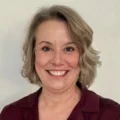
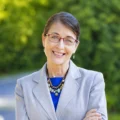
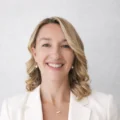
Sandra R. Weitz is an anesthesiologist.
She shares her story and discusses her KevinMD article, “Fortune favors the bold: How a physician lives up to that motto.”
Did you enjoy today’s episode?
Please click here to leave a review for The Podcast by KevinMD. Subscribe on your favorite podcast app to get notified when a new episode comes out!
Do you know someone who might enjoy this episode? Share this episode to anyone who wants to hear health care stories filled with information, insight, and inspiration.

Hosted by Kevin Pho, MD, The Podcast by KevinMD shares the stories of the many who intersect with our health care system but are rarely heard from.


Transcript
Kevin Pho: Hi, and welcome to the show, where we share the stories of the many who intersect with our health care system but are rarely heard from. My name is Kevin Pho, founder and editor of KevinMD. Today on the show, we have Sandra Weitz. She is an anesthesiologist and pain management specialist, and she wrote the KevinMD article “Fortune favors the bold: How a physician lives up to that motto.” Sandra, welcome to the show.
Sandra R. Weitz: Thank you so much for having me.
Kevin Pho: So, again, the article in a little bit, but first off, can you share your story and journey to where you are today?
Sandra R. Weitz: Sure. I went to BU medical school, decided to do a surgery internship, which I did at the University of California, San Francisco, stayed and did an anesthesia residency and a pain management fellowship, and then became the director of the pain service and stayed on faculty for five years. Long story short, we took a pay cut every year working in academics, and I lived in San Francisco, and we realized this is not going to work. So I picked up, moved cross-country to Baton Rouge, Louisiana, and initially joined a group who said that they wanted a pain specialist. Along the way, after about 18 months, it became apparent that they actually had no idea what a pain specialist did or what they really wanted. And so I said, “OK, well, I guess I’m on my own,” and went into private practice.
I initially started this practice by myself, camping out, renting space at a hospital, and ultimately went to the hospital and said, “Hey, I have no more hours in the day. I need to see more patients. I need to grow this thing. Can you help me? I want to form a joint venture. Can you help me bring in another physician?” Their response was, “We’re the thousand-bed hospital. We don’t have to do that. Sorry.” And I said, “OK, that’s fine,” left, and basically, in the end, started my own practice, built it to 11 providers, built a 25,000-square-foot building to house the practice, and then ultimately a multi-specialty ambulatory surgery center, an anesthesia company, an imaging center, PT, massage, chiropractic care, and psychological services, and then ultimately sold those businesses to private equity and to publicly traded companies. And here we are.
Real physician voices, twice a week
Free, and one click to unsubscribe.
Kevin Pho: Wonderful. There’s a lot to unpack there, and I’d love to go into more detail on that story, and you wrote more about that story in your KevinMD article, “Fortune favors the bold: How a physician lives up to that motto.” Sandra, let me ask you. When you were at UCSF, a lot of people like that comfort of being in a large academic medical center. Now, what were some of the decision points that caused you to leave the relative safety of the academic medical center and move to Louisiana?
Sandra R. Weitz: Well, there were a couple of things. First of all, I was very fortunate in that they appointed me to the finance committee for the department of anesthesia, and as a result, I got to learn how to read a profit-and-loss statement. I came to understand how much money the department was bringing in in terms of revenue, I understood what the dean’s tax was, and I understood that basically our compensation was minuscule compared to the amount of revenue that we were generating.
At the same time, we were taking a pay cut every year. This was in 1997, the height of managed care, the height of when Stanford and UCSF merged, and they ultimately got divorced. But long story short, we were taking a pay cut, and I went, “All right, wait a second.” I live in Silicon Valley, because it’s the height of the dot-com boom, and that was the place to live that was most convenient for us. I’m taking a pay cut, and I know that the department is making a lot, a lot of money on my pain service. I can do something else.
Kevin Pho: You had the benefit of reading that profit-and-loss statement. What about your other anesthesia colleagues who were working there? Were they aware of the financial situation they were in?
Sandra R. Weitz: They were aware that they were taking a pay cut every year. They were not aware of how much money the department brought in until I told them, and I basically said, “We’re being taken advantage of.” And I think that one of the most important things in this conversation with you, Kevin, is teaching people to know their numbers, to learn the business of medicine, to really be able to understand how much money do I generate, and what’s it actually costing to have me. Those numbers are empowering.
Kevin Pho: And obviously, you took matters into your own hands and did something about it. I’m curious, what was the reaction of most of your colleagues when you told them?
Sandra R. Weitz: It was really split. Half of the people were, “Oh my God, I can’t believe you’re that brave,” and the other half of the people were like, “You’re moving where? You’re leaving San Francisco and moving to Louisiana to do what?” But now, I am still in contact with a lot of those people, and I retired five years ago and built this huge empire, and they look at it and go, “Boy, I wish I had done that.”
Kevin Pho: Is it fair to say that at the time you moved to Louisiana, a lot of those staff anesthesiologists stayed on and continued to be taken advantage of financially?
Sandra R. Weitz: Absolutely.
Kevin Pho: Now that you’re in Louisiana, tell me about the genesis of your pain management practice and all the other businesses that you built down there. How did that all get started?
Sandra R. Weitz: Basically, the UCSF model of pain management is a multimodality, multidisciplinary model. I personally believe that pain is treated in a biopsychosocial manner, and so the practice that I had, even when I worked for the group, was not only just doing interventional pain management but referring people to psychology services, to physical therapy. And so when I started my own practice, I kept track of who was referring patients to us, but also who we were referring out to, and it became apparent. I was sending people to the MRI to see what’s going on. I’m sending them to the physical therapist to be treated. And ultimately, I had no control over those experiences.
Initially, it wasn’t really even about money at all. It was really about the quality of care that I was able to deliver to these patients. By bringing these services under my umbrella, I could actually deliver a better quality of care to the patients. The patients had basically a one-stop shop, and as a result, it was a win-win. Yes, I generated revenue, and my practice generated revenue for all of my partners, but also the patients ended up with a much better level of service.
Kevin Pho: Now, did you have any mentors or any training that taught you that business side of medicine in order to create what you did in Louisiana?
Sandra R. Weitz: Not at all. Honestly, it was my time on that finance committee, to really come to understand how to read a profit-and-loss statement. After that, it has been all trial and error. I will say, however, that when I decided to build this 25,000-square-foot building, I had a wonderful commercial realtor who walked me through the logistics of building a building. I had hired a consultant who did a feasibility study with me, who got me in touch with an architect who designs multi-specialty ambulatory surgery centers and actually wrote the code for that. I had amazing health care attorneys.
But the thing is, I think, for your listeners, you can’t abdicate your role when you hire a consultant. You have to learn to read those contracts. Yes, they read them and they tell you, but you can’t just go, “OK, well, you read it, so I don’t have to read it.” No, you have to learn all of the terms. You really have to be able to communicate with each one of these consultants that you are involved with.
Kevin Pho: Now, when you enter a relationship with one of these consultants, when you’re building up the center, what are some red flags that physicians should look out for if they want to do something similar?
Sandra R. Weitz: It’s like anything else. You have to vet them, right? You need to actually interview several of them before you decide who you’re going to want to end up with. It’s kind of like dating. Similarly, you need to ask for references. You want to see what other work they have done, how much effort they have put into a project, and how much effort you have to put into micromanaging them. I will tell you that I’m a witch, and my expectation is that if I email you on Sunday, you’re going to email me back. And so it really is about managing your expectations of them and really coming to see whether it’s a fit.
Kevin Pho: Now, obviously, what you did was very successful, but tell me some of the challenges along the way to building what you did.
Sandra R. Weitz: I think the biggest challenge is, as you can hear, I’m a woman originally from the Northeast who trained in California, and I came to the Deep South, and this is truly a good-old-boy network. Anybody who’s listening who’s from the South is going to tell you that everybody went to the same couple of schools, they all play golf together, and really trying to create a name for yourself when you are not part of that community was probably the biggest hurdle. I ultimately did it by saying, “You know what? I’m not a good old boy, but I’m going to deliver better care and better everything for your patients.” And in the end, I prevailed. But that was probably the hardest of the things when I first got here.
Kevin Pho: Now, can you share a story or an example where it showed that you were not accepted, not coming from that area?
Sandra R. Weitz: Yeah, absolutely. About two years into being here, the hospital, the same hospital, invited me to come to a meeting with a group of neurosurgeons and orthopedic spine surgeons to talk about how to build a pain program for the spine guys. There was a neurosurgeon, he was probably about 60 years old, [removed by the editor], and I was describing what a multidisciplinary approach to pain looks like. He looked at me and he said, “Young woman, that is not how we do things here.” And I went. I was the only woman in the room, so there was no mistaking who he was talking to. And then and there, I can tell you about another 20 stories of the same flavor.
Kevin Pho: Now, how long did it take you to be accepted in that area, and how long did it take you to build up your practice to be self-sustaining?
Sandra R. Weitz: Really, about a year and a half to two years from the time I got here. When I first got here, I was part of this group, and that was really the way in which I got the first set of patients and I got exposed to the first referral sources. And then really, by the time I went out on my own completely, I already had a pretty full book of business. And so about a year and a half to two years, I would tell you. I mean, there is definitely a startup period.
Kevin Pho: After reflecting back on the success of your career, is there anything that you would have done differently?
Sandra R. Weitz: I would have done it sooner. I would have done it sooner. I probably would have been bolder in terms of bringing on more physicians and bringing on more satellites. As it was, we had three satellites and 11 docs, so it was pretty big, but if I were to do it again, I would have done it bigger, better, faster.
Kevin Pho: We’re talking to Sandra Weitz. She is an anesthesiologist and pain management specialist, and she wrote the KevinMD article “Fortune favors the bold: How a physician lives up to that motto.” Sandra, as you know the statistics, fewer and fewer physicians are going into private practice. A lot of young doctors and residents are choosing employed models, partly because of the security, partly because of the lack of business acumen, and partly because they graduate with almost half a million dollars in loans. Now, for those who are on the fence and considering private practice, what’s some advice that you could share with them?
Sandra R. Weitz: Before I tell you that, let me tell you that when I finished, I had $300,000 in loans, and it wasn’t until I went into private practice that I was able to effectively pay off those loans, in less than five years. What I would tell you is that as a medical student, as a resident, as a young attending, while you’re in that employed situation, learn your numbers, learn how to code, and learn how they actually come up with a bill, so that you can evaluate whether you’re an employed physician or going into private practice. Right? Even if you’re going to be employed, you have to negotiate a contract. How do you know how much you’re worth if you don’t know how to code and how much revenue you can generate?
And for all of your listeners, it’s super easy. Go to the Medicare fee schedule lookup, and you can look at your own codes that you bill on a daily basis and figure out, just ballpark, how much money does my job actually collect from the work that I’m doing. That will empower you to make a more educated decision. Going into private practice can be scary, but if you understand the risks and you come up with ways to mitigate those risks, that really is not nearly as scary as it seems.
Kevin Pho: And for those who want to follow in your footsteps or consider private practice, what other resources or mentors or books can you recommend?
Sandra R. Weitz: I don’t know that I have a book that teaches you how to do that. Certainly, really and truly, it’s mentors. There are people like me. There are multiple Facebook groups. There’s my Facebook group, which is the Private Medical Practice Academy. If you listen to my podcast, I basically walk you through step by step how to figure out what place to put your practice, how to figure out the demographics, and how to come up with the financials to project how long it is going to take you to ramp up. There are plenty of private practice doctors who are out there who are motivated to help you do this.
Because ultimately, the reason that I wrote this article, the reason that I am desperate to get this message out there, is I’m petrified that there will not be doctors to take care of us when we all get old, because everybody is going, “Oh my God, this is so undoable.” It’s not undoable. It’s actually something that anybody can accomplish.
Kevin Pho: And my final question: What’s your take-home message that you want to leave with the KevinMD audience?
Sandra R. Weitz: I think I just gave it to you. Really, empower yourself. Take control of your medical practice, and you can control your own destiny. This business of “I’m burned out, I’m miserable, I need some other side gig,” you know what? We all have a unique set of talents. We all have a medical education. Take that medical education and actually learn the business of medicine and put it to work for you so that you can control your own life.
Kevin Pho: You mentioned you had a Facebook group and a podcast. How can people reach you?
Sandra R. Weitz: Both the Facebook group and the podcast are called the Private Medical Practice Academy. They can also find me on my website, which is thepracticebuildingmd.com.
Kevin Pho: Sandra, thank you so much for sharing your time and insight, and thanks again for being on the show.
Sandra R. Weitz: Thank you.
Listen and followApple PodcastsSpotifyYouTubeMore apps · Browse all episodes