











Listen and followApple PodcastsSpotifyYouTubeMore apps · Browse all episodes
“No one anticipated how the pandemic would impact their Deaf colleagues’ work environment and career opportunities. Yet, 15% of adults report some form of hearing difficulty. This number increases dramatically with advancing age, with 50% of those aged 75 years or older experiencing hearing difficulty. The exact number of Deaf/Hard of Hearing (DHH) physicians and other health care providers is unknown. However, according to the Association of Medical Professionals With Hearing Losses, the numbers have increased over the past few decades. This increase is in part due to legislation (such as the Americans With Disabilities Act of 1990) and evolving technologies (such as electronic and visual stethoscopes and speech-to-text applications). Although these changes have enabled more DHH professionals to work in health care, none was sufficient to address the COVID-19 pandemic’s effect on DHH physicians.
I grieved this change in my life. I could not rely on my usual communication methods to understand people. To succeed in this new reality, I had to advocate for full-time interpreters at work to treat my patients, urgently help a colleague with their shift, or attend a last-minute meeting. I needed to select skilled, compatible interpreters while consciously redesigning my work environment to consider their needs, methods, and availability.”
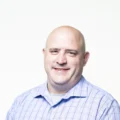
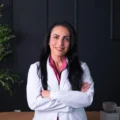
Carolyn Stern is a family physician.
She shares her story and discusses her KevinMD article, “Practicing medicine as a Deaf physician is an uphill battle. COVID makes it worse.”
 This episode is sponsored by Pattern, physician disability and life insurance made simple.
Shopping for disability insurance can be complicated and time-consuming. Wondering if you are getting the best prices and discounts while in training can make the process even more overwhelming. Pattern believes doctors have more important things to do than spend hours sorting through numerous insurance options. This is why thousands of doctors trust Pattern to help them compare and understand the insurance they are buying. They do this in three simple steps: First, request your quotes online. Second, compare your options and ask questions. And third, secure your policy. Be confident that you have the right policy so that your income is protected. With huge discounts for doctors in training and fewer requirements on labs and physicals, now is truly the best time to request your disability insurance quotes with Pattern at patternlife.com.
Did you enjoy today’s episode?
Rate and review the show so more audiences can find The Podcast by KevinMD.
Subscribe on your favorite podcast app to get notified when a new episode comes out.
Reflect and earn 1.0 AMA PRA Category 1 CME for this episode.
Also available in Category 1 CME bundles.
Powered by CMEfy – a seamless way for busy clinician learners to discover Internet Point-of-Care Learning opportunities that reward AMA PRA Category 1 Credit(s)™. Learn more at about.cmefy.com/cme-info
Do you know someone who might enjoy this episode? Share this episode with anyone who wants to hear health care stories filled with information, insight, and inspiration.

Hosted by Kevin Pho, MD, The Podcast by KevinMD shares the stories of the many who intersect with our health care system but are rarely heard from.


Transcript
Kevin Pho: Hi, and welcome to the show, where we share the stories of the many who intersect with our health care system but are rarely heard from. My name is Kevin Pho, founder and editor of KevinMD. Rate and review the show at KevinMD.com/rate. Subscribe at KevinMD.com/follow. Today on the show, we have Carolyn Stern. She is a family physician. She wrote the KevinMD article “Practicing medicine as a Deaf physician is an uphill battle. COVID makes it worse.” Dr. Stern is deaf, and we are accompanied today by Brittany Best, who is an American Sign Language interpreter. Carolyn, welcome to the show.
Carolyn Stern: Thank you, Kevin. It’s really nice to be on the show, and it’s an honor, so thank you very much.
Kevin Pho: So we’ll get into your article in a little bit, but first off, share your story and journey to where you are today.
Carolyn Stern: I was born deaf because of German measles, or rubella, and at that time they didn’t know very much about rubella. It was at the very tail end of the epidemic, and at that time they didn’t have the vaccine. So the physicians examined me and thought, oh, I was fine. But then, around eight months, my grandmother noticed, “She’s not waking up when I’m going into the room,” and she told the doctor, “Can you please check her hearing?” The doctor did clap, clap, clap, and of course, because it’s a visual representation, I looked up. They had me do a few things, and I could read lips at that time. So the doctor said, “She’s just slow. She’ll pick up. She’ll start talking later.” At that time I was eight months old, so I was already picking up some visual cues and learning what they meant.
Later, around 14 months, my great-aunt had a friend of hers who was a doctor blow a whistle, and everybody in the room jumped except for me. I was just happily playing. The doctor said to everyone, “Your daughter is deaf, and you need to bring her for special services,” yada yada. So they brought me to an audiology clinic, and I had a severe to profound hearing loss in my left ear, and I was completely deaf in my right ear. So they fitted me with hearing aids, and my mom, my grandparents, and my dad brought me to audiology, speech therapy, and rehab. According to my mom, I had a cute auditory student who would chase after me and put pictures on the wall followed by the word, so that I could recognize the picture and the word. So it seems, from what I’m hearing, that I learned to read visual cues and some auditory cues, and by two I was reading, you know, like “window,” and then “my window,” and that’s kind of how it went.
So I got into medical school. I applied to about 17 different universities, because I wasn’t sure if they would take somebody who’s deaf. I put in my personal essay that I am deaf, and that it was a positive thing: that I can relate to patients with medical issues, and that I will face them one-on-one for conversations. People enjoyed that, and I got into three. I got into Northwestern; Case Western, where I went to college; and another medical school, University of Health Sciences/The Chicago Medical School in North Chicago. I chose Northwestern.
Northwestern was great, to put it delicately. In my second year, they showed me a bill for interpreting services, which cost about $900 at that time for the semester. I was paying probably about $25,000 plus for medical school, room, and board, and $900 didn’t seem like a lot of money to me. But they said, “Oh, we can’t provide you with interpretive services.” So I went after the school, and I said, “You can’t do that. I’m qualified. You’ve selected me as an applicant, and that’s not legal under the law,” which was Section 504. That was before the ADA, which is the Americans with Disabilities Act. The result of the lawsuit, after many, many hours on the phone with attorneys and meetings with their attorneys, and going through medical school at the same time, was that it finally settled out of court at the end of medical school, and they had to set up an office for students with disabilities at the school. I kept thinking to myself, “Well, should I bother?” And I said, “I need to pave the way for other students who may follow me into medical school or other programs within the university.” So that was a lot of sweat and anxiety, trying to navigate through medical school.
For my residency program, I chose family medicine because I couldn’t find one field that I felt was worth being part of, so family medicine was great. I also needed interpretive services. But two months into my residency program, I had been up all night for a pediatric rotation, and I was giving morning report to a group of people, and I said to the interpreter, “I don’t hear anything. So I’m going to check my battery. I’m going to check my stethoscope.” I had a special amplified stethoscope, and I also had an interpreter who did like a three-way, so I would talk to the patient, the patient would speak, and the interpreter would interpret, and often the patient didn’t realize that there was somebody there interpreting. So that’s how I communicated with physicians.
So I went down to audiology and I checked my hearing and my equipment, and the audiologist said, “No, it’s you. You’ve lost the rest of your hearing.” One week later came vertigo and tinnitus, so I was hearing ringing and buzzing. Then, one year later, I got my implant. And then I went into the deaf community. I felt that God must have had a reason behind this, or somebody must have had a reason behind this, and I needed to figure out where my goals needed to be, and I wanted to work within the deaf community.
So I went around and spoke, and over the course of 30 years, I’ve traveled, I’ve spoken, and I’ve worked with universities and interpretive programs and the ACCME, which is the Accreditation Council for Continuing Medical Education. I said, “You are approving courses and allowing continuing medical education providers to provide CME that’s not accessible.” They said, “OK, fine.” They came back two weeks later and said, “OK, we want you to present to CME providers on how to make your courses accessible under the ADA,” not as a lawyer, but just how to do it and make it work. So I did that for five years. That was an amazing experience.
Real physician voices, twice a week
Free, and one click to unsubscribe.
Kevin Pho: So you’re a family physician practicing in urgent care. Tell me some of the biggest challenges that you have when you see patients in the exam room.
Carolyn Stern: Before COVID, one-on-one with patients, I was fine. I relied on lipreading. I would ask questions, and I would make sure that I understood them by repeating specific things, so that they felt I understood what was going on. When COVID came, I needed to wear masks, and all of a sudden, it felt like overnight, everyone had to wear masks and gloves and shields, which made lipreading a little bit difficult, because you can’t see through the mask. So I found out that there was a clear mask, and I advocated that the university provide them for me and for patients. But unfortunately, there was a huge shortage of supplies and PPE and equipment, so I could only have the mask for me and the interpreter that I had to work with. I required interpreters now, because I couldn’t rely on my hearing or on reading lips.
So that was another challenge, because I felt, well, they still want me at the job. I know it’s required by law, but at that time, also, it was department by department deciding, “Would you accept the accommodation or not?” Thankfully they did, and I didn’t really have a whole lot of issues. But I needed to pick a team of three interpreters, and some floats that would also cover when those three were not available. So the interpreters go into the room with me. They keep me updated on, you know, the environment and what’s going on: some emergency up at the front desk, or there’s a lab result that they yell out, or if they’re ordering food. Just simple things that you don’t think about as a professional working with another professional who has a disability or hearing loss, and how to be more inclusive of that professional, so that they feel like a part of the group rather than standing out on their own. So that took a lot of teaching and learning amongst all of us, and right now it’s almost like the interpreters are just part of the team.
For phone calls, I had to go through an interpreter as well, and that was pretty typical. So I really needed somebody who could interpret at a higher register for language, so if I was talking to a physician on the other line, they could understand the vocabulary and what was required for me, so I could better understand them in as efficient a manner as possible.
Kevin Pho: Now, what about parts of the physical exam that rely on hearing, like using a stethoscope? How did you overcome those challenges?
Carolyn Stern: So, good question. I have an implant that’s a Nucleus, and I got the N6, which is one of the newer implants that was compatible with mine, because I got mine implanted in ’91 and it’s not been changed. That type of implant allows Bluetooth, so it can connect to a microphone that can connect to a stethoscope called the Thinklabs One, which is basically a bell, and it’s amplified. So that has really helped me, and I’ll get the stethoscope in just a minute, but that helps me to understand heart sounds and lung sounds. So it’s actually very helpful. I can put it inside a plastic bag. I don’t need to put anything in my ears or around my neck, so it doesn’t interfere with PPE, and that’s worked really well for me. There’s a lot of interference, because, you know, you also hear the shirt rustling and you hear other sounds in the room, but that can be modified as well. So I’ve been very happy with that. There are other deaf individuals who use other types of stethoscopes, and they work well for them.
So if I can just demonstrate briefly, this is a remote for the microphone, which is a simple Bluetooth microphone, and I attach it to the stethoscope bell, and then I can turn it on, and you can see that the volume is up. It’s got different things that you can do. You can have it on like a telecoil, you can have it on microphone, and music. So theoretically, I could plug this right into my phone and be able to understand music or people on the phone as well. So it’s a really neat tool that has made my life a lot easier.
Kevin Pho: Now, during your journey as a physician, has anyone discouraged you and said it’s not worth going through this path, or have most of the people that you’ve dealt with along the way been completely supportive?
Carolyn Stern: It’s a good question. You will always meet people who will doubt you and not believe that you can accomplish things, especially when I was going through university, just like with my dean of the department, or of the university. Also, many physicians tried to tell me, “You know, Carolyn, you really need to think seriously about your career and what you’re going to be able to do, so you don’t jeopardize patient safety.” And I say this is something I think about every day in my life: Am I jeopardizing their safety, or am I being of value to my patients? And there are other physicians who support me 100 percent. So I understand their perspective and their concerns, but I felt very strongly that I had a lot to offer the field. I could have gone into X-ray and radiology or pathology, where I probably wouldn’t have to interact with people, but I’m a people person, so I enjoy that relationship with people. Plus, I can work with deaf patients without any trouble.
But even with the mask and COVID, that created some challenges as well, even with deaf patients, because a lot of sign is facial expression and mouth movements. So if you’re saying something is thin or fat, just for an example, you rely on this, and the mask completely covers all of that. You might catch some of the eyebrow movements, like, “I’m sorry, I didn’t understand,” or something like that, but it requires a lot of experience and practice to figure that part out with the masks.
Kevin Pho: Now, for those listening to this podcast who are deaf or hard of hearing and interested in pursuing a career in medicine, what kind of wisdom or advice do you have for them?
Carolyn Stern: For people who are deaf or hard of hearing considering medicine as a career, I would say go for it. And if you have to fight, there are other people who have been there already, and that should not deter you from trying. Of course, if you’re not qualified, that’s a different story. But if you have the grades and you have the skills and you have a drive to be involved in medicine, nursing, or other fields, then go for it, because you will always find people who will try to get you down or say, “Don’t do it.” But you need to listen to all the other people who will be supportive of your situation.
Kevin Pho: And my final question: What are some of your take-home messages that you want to leave with the KevinMD audience?
Carolyn Stern: I would say don’t give up. I would say work with people. We are a medical team, and in teams, we can best take care of people. So basically, we need teamwork. If you exclude one person because of the disability, or because of whatever reason, then you’re losing valuable input into decision-making, discussion, and how to make lives better for patients. That’s really why we’re here. We’re here to, yeah, we save lives, but we also help people get the best care that they can.
Also, don’t decline interpreting services. Don’t ask the deaf person to pay for the interpreter, or ask the patient to bring their own interpreter. That’s not legal. So overall, diversity really makes the world a better place.
Kevin Pho: Carolyn, thank you so much for sharing your story, time, and insight. Thanks again for being on the show.
Carolyn Stern: Thank you so much.
Listen and followApple PodcastsSpotifyYouTubeMore apps · Browse all episodes