













Listen and followApple PodcastsSpotifyYouTubeMore apps · Browse all episodes
“As doctors, we are called to heal. We are called to serve. It’s in us. Our ability to heal and serve others does not have to be limited to the hospital and clinic walls. I want all our brilliant doctor minds to be part of the solution to the growing epidemics. However, many of us are caught in the epidemics ourselves right now.
Living with passion is beautiful. It’s peaceful. It’s contagious. It will allow you to help at a larger scale and live a purpose-driven life. Healing ourselves first will allow us to have the energy and inspiration we need to tackle these epidemics and other challenges that we are facing as a nation.
Life will always have its ups and downs. At times, it will be hard. However, when we care for ourselves and follow our passions, then it becomes less hard and more rewarding. Only by saying #MeFirst can our creative minds blossom to their full potential. Only by saying #MeFirst can we see how much of a gift this life is.”
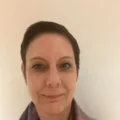
Liz Aguirre is an internal medicine physician.
She shares her story and discusses her KevinMD article, “Nurture yourself, get rest, and allow yourself the space you need to heal. #MeFirst.”
Did you enjoy today’s episode?
Rate and review the show so more audiences can find The Podcast by KevinMD.
Subscribe on your favorite podcast app to get notified when a new episode comes out.
Click here to earn 1.0 AMA PRA Category 1 CME for this episode.
Also available in Category 1 CME bundles.
Powered by CMEfy – a seamless way for busy clinician learners to discover Internet Point-of-Care Learning opportunities that reward AMA PRA Category 1 Credit(s)™. Learn more at about.cmefy.com/cme-info
Do you know someone who might enjoy this episode? Share this episode with anyone who wants to hear health care stories filled with information, insight, and inspiration.

Hosted by Kevin Pho, MD, The Podcast by KevinMD shares the stories of the many who intersect with our health care system but are rarely heard from.


Transcript
Kevin Pho: Hi, and welcome to the show, where we share the stories of the many who intersect with our health care system but are rarely heard from. My name is Kevin Pho, founder and editor of KevinMD. Rate and review the show at KevinMD.com/rate. Subscribe at KevinMD.com/follow. Today, we have Liz Aguirre. She is an internal medicine physician. Her KevinMD article is titled “Nurture yourself, get rest, and allow yourself the space you need to heal. #MeFirst.” Liz, welcome to the show.
Liz Aguirre: Thank you. Thank you so much for having me.
Kevin Pho: So we’ll get into the article a little bit. First off, briefly share your story and journey to where we are today.
Liz Aguirre: Yeah. I don’t know, my journey has been a little convoluted, and I realized within the last few years that I have been running from myself, and it was something I didn’t realize for a long time. I grew up in extreme poverty, and a lot of people don’t really know what extreme poverty is. Well, I was the kid who lived in a tent for a while, who dug out of dumpsters for food, and just had a really challenging childhood. I remember the specific moment that I decided I would never live that life again, and it just made me work really hard.
I had always had that work-hard approach. It took hard work and grit to succeed, and it got me through medical school. And then I found myself burned out over and over again, and I got scared the third time it happened, because I realized that my work-harder approach wasn’t working anymore, and I didn’t know what to do. So that’s when I had to really take the time to focus on myself and figure out where I was, how I got there, and why it wasn’t working. At the end of the day, it came down to the basic fact that I was too tired. I was too sleep-deprived, I had no energy, I had an empty cup, and I had nothing left to give.
That started my journey into focusing on myself and my well-being, and realizing that the key to all of our success is really to be the best version of ourselves. This led to me speaking and sharing my experience with others, and then I created a podcast and newsletter. This whole journey started because I figured out that it was me that I was running from. Not the systems, not the patients, not how many charts I had to do. It was me.
Real physician voices, twice a week
Free, and one click to unsubscribe.
Kevin Pho: So give us an example of what it was like during one of your episodes of burnout. What exactly were you feeling, and at what point did you realize that working harder wasn’t going to solve that problem? Give us a picture of what exactly that was like.
Liz Aguirre: Oh, man, that’s so easy. My first job out of residency, I was working a 36-hour shift every third day, and the in-between shifts were anywhere between 12 and 18 hours. I had twins my first pregnancy. On the way home, I told my husband, “Do not put them to bed. I will be there.” Well, I had to turn around because the patient wasn’t doing well, and I got there 30 minutes late. He was standing at the bottom of the stairs, my baby girls were not in his arms, and I just broke down crying, because it had been three days since I even saw them. They were asleep when I left, and they were asleep when I got home. I decided I wouldn’t do that anymore. I resigned the next day, and I had to give a six-month notice. I worked out that contract.
I went to my next job, and I thought, “Wow, I can’t believe people are complaining about this. This is the most amazing job ever. I will never complain about this job.” And then I got burned out in that job too. I would get home, and I was agitated with my kids. I was spending time with them because I needed to. I was their mom, and I didn’t want them to not know their mom and not have a connection. My husband would say, “This isn’t time that they’re going to remember. They’re just going to remember you being angry and frustrated.”
So that led to me resigning from that job and going into a nonclinical job. It was when I experienced burnout in the nonclinical job that I realized, “Wait a minute. I’m not working 12-hour days. I’m not on pager. I’m not working weekends. I have all evenings, holidays, and vacation. I have it all. Why am I burned out? Why am I overwhelmed? Why do I not feel happy? I’m not happy.” That’s when I realized I keep running and I keep running, and right now this is the easiest I could ever imagine it being, and I’m burned out again. That’s when I realized I had to change.
Kevin Pho: And we’ll talk more about some of the changes that you implemented. Your KevinMD article is titled “Nurture yourself, get rest, and allow yourself the space you need to heal. #MeFirst.” Now, for those of you who get a chance to read that article, just walk my audience through it and share the story of why you decided to write it.
Liz Aguirre: Yeah. I never intended for this to be an article that was published. I live in Texas, and an hour and a half away from me, the major shooting, the Uvalde shooting, occurred. I was so overwhelmed by emotion, and I didn’t know how to release it. It had been a couple of days now, and I could not shake that feeling. One, it’s in my home state. Two, it’s very close to me. Three, my daughters are in fourth grade. There was just so much there, and my inclination is, “How can I help? What can I do?” And I just felt hopeless.
And then I realized, “Look, I am doing what I feel I can do to give back, to help others, by sharing my message and sharing how I’ve evolved and how I take care of myself to be the best version of myself.” Because guess what? I do not have the answers for everything, but I do know that there are other people who have some ideas on how to handle the gun situation, how to handle obesity, and how to handle depression, but they’re too tired. They’re overworked, they’re sleep-deprived, and they can’t even begin to be part of the solution because they also have nothing left to give.
So I realized that my giving was helping others understand that we do not need to continue this culture of self-sacrifice, of not taking care of ourselves and doing our jobs at the expense of our well-being. We will never achieve optimal success as long as we’re doing that. That’s how the article was born. My emotions just came out of me, and I realized, “You know, I don’t have all the answers.” But together, if we can learn to nurture ourselves, that’s when things start to become more clear, that’s when our ideas start to flourish, and that’s when the best of ourselves comes out.
Kevin Pho: So take us deeper. What are some of the exact changes that you made to improve your situation?
Liz Aguirre: Yeah. First of all, I had to learn to start saying no. It was very customary for me to just say yes to everything, because I thought everybody else had it figured out and it was so easy for them, and saying no wasn’t even a possibility. Number one, I thought that I would lose my job because I wasn’t keeping up with my peers and I wasn’t performing as well. In reality, we were all suffering. We just didn’t know it.
Number two is one of the hardest things, I think: to be open to something that does not seem possible. At the time, it seemed impossible to get an eight-hour night of sleep when I had charts to finish, I had kids I needed to give time to, and I had a husband and a marriage that I did not want to see fall apart. So it didn’t seem possible for me to say, “I’m sorry, I’m going to put everything on hold because Mommy needs some sleep right now.” But I had a very supportive husband who was like, “No, we want you. We want the real you, and this person that we’re getting is not it.”
So I was very fortunate that I had my husband, who was seeing me and seeing the suffering, and he said, “I want you to sleep. No, before you go spend time with the kids, I want you to sit down and eat. You don’t need to do the laundry. You don’t need to do this. I’m going to help you with this.” But I didn’t have that insight. I felt like, “What kind of mom am I if I’m not doing all of this?” So my husband helped me learn to take a step back, realize I didn’t have to do it all myself, and spend the time and effort where I was really hurting: sleep, eating, getting outside just to go for a walk.
And one of the biggest things, where I was like, “There’s no way I’m ever going to do this,” is meditating. It truly has allowed me to have that space, to just feel like I have a moment to myself without any demands or any expectations, just to be. These little things are so simple, but I had to convince myself that I was allowed to do them. So when I give talks and when I speak to other people, that’s the first thing I say: “I give you permission to get the sleep you need. I give you permission to stop and eat.” It seems so silly, but we don’t give ourselves permission. We automatically tell ourselves, “It’s not possible. I have too much to do.”
Kevin Pho: So I want to talk about that first point, about saying no and setting boundaries, because I hear a lot of physicians have trouble with that. Take us into that process in terms of the ability to say no, because as you know, as physicians, we’re conditioned to be people pleasers. We say yes to everything. So tell us a little about that process, so physicians can understand what it took for you to say no and set those boundaries.
Liz Aguirre: Yeah. Just to give an example of how bad I was before, how I would not say no and would not advocate for myself: When my daughter was six months old, she had to go in an ambulance to the emergency room, and I had 26 patients I had to round on in the hospital. There was only me and another physician, who had an equal number of patients. My husband called me, and I said, “Call an ambulance. Get her to the emergency room.” But not for one second did I entertain the possibility of being able to say, “No, I can’t round today. I can’t take care of these patients. I have to go.” Not for one second. I went into a bathroom, I cried my eyeballs out, and I was distracted the entire day until I knew my daughter was safe. So that’s where I came from.
Fast-forward to now: If I were to do things differently, first, I wouldn’t accept the self-sacrifice. I would understand there is always somebody to help. If I were in a car accident and I died today, they would figure it out. So it doesn’t make sense. Our logical minds are not thinking logically.
I just heard a story the other day about a news anchor who was suspended because she was slurring her words when she was speaking live. It came out that she had done a 6 a.m. broadcast and a 6 p.m. broadcast, and she was scheduled for the 11 p.m. broadcast, and she had been doing that for weeks. That’s what we do as doctors. When we hear that story, we say, “That’s ridiculous,” but that’s what we do as doctors.
So how do you set those boundaries? We have to start the communication. If we go to our leadership and say, “It is not physically possible. I am going to have a car accident and die. I am so exhausted. I absolutely cannot do this shift,” are they going to say, “I’m sorry, you have to. I know you feel like it’s not safe and you’re going to die, and maybe it’s not safe for the patients, but you have to”? They’re not going to say that. And if they do, we have the choice to say no. We can say, “I will not put my patients in jeopardy, and I will not put my life in jeopardy,” and they will have to figure it out. The problem is we don’t believe that. We don’t think they’ll have to figure it out, but they do. We should not sacrifice our well-being or that of our patients.
Think about the Hippocratic Oath. I was just thinking this the other day. As physicians, we took an oath to do no harm. All of us have been in this position through residency, where we have caused harm to ourselves. That oath definitely applies to us too.
And I think the biggest thing is realizing that, yes, it is possible, even if it doesn’t seem like it at the moment. When you’re in that sleep-deprived, stressful, hungry, angry situation, you just can’t see the possibilities. You just think, “I have no choice. I have to do this.” But we always have a choice, and the choice should never be to sacrifice our well-being or that of our patients. That’s not to say that we’re going to have some challenging times, and we will have to do some overnight shifts, and we will have some weeks that we have to work more than others. But there should always be that recovery. That should always be built in, and if there’s not that recovery, it’s not reasonable, and any reasonable human being should understand that.
Kevin Pho: Let’s say I’m a physician listening, and what you’re describing, I’m sure, describes the situations of a lot of physicians today. You presented a lot of fantastic tips and guidance, but I wonder what the immediate next step would be, because doctors who listen to this think to themselves, “Hey, this sounds like me, but what do I do next?” So I want you to talk to these doctors. What should they do next?
Liz Aguirre: Yeah. I think communication is critical. The problem is we tell ourselves no before we give our leadership a chance to say no. We tell ourselves no, just like I didn’t even ask if I could be in the emergency room with my six-month-old and leave. I didn’t even ask. To me, the answer was automatically no. So I think it starts with communication, and it starts with vulnerability. I was so afraid that people would find out that I was not a good doctor because I couldn’t handle it. I did not want anybody to see that part of me, to think I’m the only one that can’t handle it. So I told myself no.
When I really started struggling in that second hospitalist position, and I went to them, you know what they told me? They told me, “We’ll figure it out. We’re going to get someone to cover you. Tomorrow, you take the day. You need it.” That’s what I was told. But in my mind, the answer was no. So the answer is we have to be willing to be vulnerable and be OK with other people seeing that we’re not made of steel, because we’re not.
And as we get further into, I think, the health care crisis, more and more physicians are leaving health care, and we’re going to be in big trouble. I think this speaks volumes to the fact that everybody is tired, we’re not invincible, we are human beings, and the culture does have to change. So communication is critical. Nobody wants to see doctors leaving their practices. Nobody wants to see people leaving medicine. And I think the tides are changing, where if we put our foot down and say, “It’s not physically possible. I just can’t do it,” then I think they’re going to be more receptive than we think. That has certainly been the case for me. I just didn’t realize it at the time.
Kevin Pho: We’re talking to Liz Aguirre. She is an internal medicine physician. Her KevinMD article is titled “Nurture yourself, get rest, and allow yourself the space you need to heal. #MeFirst.” Liz, what are some of your take-home messages that you want to leave with the KevinMD audience?
Liz Aguirre: I think the biggest thing for me is, if we’re not nurturing ourselves and we’re not taking care of ourselves, we can’t see the possibilities. It’s so remote and so foreign that even for someone who is extremely challenged right now, is extremely tired, and is still practicing clinical medicine, the immediate thoughts that are going to come to mind are resistance and “It’s not possible.” So my biggest take-home message is understanding that there is always a possibility for change, and you always have a choice. When we start to create that space for ourselves, and we get sleep and we take care of our needs, then we start to see the possibilities that we couldn’t see before.
Now I’m in a much different place. Now I know I won’t sacrifice myself like that again, because actually, I am way better right now, the way I am, because I’m taking care of myself. So the biggest take-home message is: Don’t discount the possibility, and take care of yourself, because then the possibilities start to explode before your eyes.
Kevin Pho: Liz, thank you so much for sharing your story, time, and insight, and thanks again for being on the show.
Liz Aguirre: Thanks so much, Kevin.
Listen and followApple PodcastsSpotifyYouTubeMore apps · Browse all episodes

















