






Listen and followApple PodcastsSpotifyYouTubeMore apps · Browse all episodes
“I acknowledge that as a physician, I am overall financially secure. However, after jumping over multiple extra hurdles to prove myself throughout my medical career, I couldn’t help but feel I have been handicapped financially compared to my non-immigrant colleagues. While others are being celebrated for bridging the healthcare gap in rural areas, I have been “punished” to a later start in life.
There is only one primary care physician for every 2,500 patients in rural America, compared to one for every 1,800 in urban regions. Foreign-born physicians are vital in many isolated, rural communities in the U.S. Offering loan repayment or forgiveness options to providers like me is not just a matter of fairness but a necessary step to mitigate provider shortage in underserved areas.”
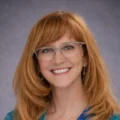
Zed Zha is a family physician.
She shares her story and discusses her KevinMD article, “Stop financially handicapping non-citizen physicians.”
Did you enjoy today’s episode?
Rate and review the show so more audiences can find The Podcast by KevinMD.
Subscribe on your favorite podcast app to get notified when a new episode comes out.
Click here to earn 1.0 AMA PRA Category 1 CME for this episode.
Also available in Category 1 CME bundles.
Powered by CMEfy – a seamless way for busy clinician learners to discover Internet Point-of-Care Learning opportunities that reward AMA PRA Category 1 Credit(s)™. Learn more at about.cmefy.com/cme-info
Do you know someone who might enjoy this episode? Share this episode with anyone who wants to hear health care stories filled with information, insight, and inspiration.

Hosted by Kevin Pho, MD, The Podcast by KevinMD shares the stories of the many who intersect with our health care system but are rarely heard from.


Transcript
Kevin Pho: Hi, and welcome to the show, where we share the stories of the many who intersect with our health care system but are rarely heard from. My name is Kevin Pho, founder and editor of KevinMD. Rate and review the show at kevinmd.com/rate. Subscribe at kevinmd.com/follow. On today’s show, we have Zed Zha. She is a family physician. Her KevinMD article is titled “Stop financially handicapping non-citizen physicians.” Zed, welcome to the show.
Zed Zha: Thank you.
Kevin Pho: We’ll get into the article in a little bit. Just briefly share your story and journey to where you are today.
Zed Zha: My name is Zed Zha. I’m a board-certified family physician who’s practicing full-scope family medicine with obstetrics in rural Washington State right now. I serve a predominantly immigrant community in a federally qualified health center, an FQHC. Currently, I attend outpatient clinic, we admit people to the hospital, we deliver babies, up to C-sections, and we round in nursing homes to provide hospice care. So cradle to the grave. I’m the upcoming fellow in the underserved dermatology fellowship in family medicine as well.
I grew up in Beijing, China. I was 20 years old and two years into my medical school training in Beijing when I came to the United States to pursue further education. I graduated from the Geisel School of Medicine at Dartmouth in 2012 and completed my residency at the Mayo Clinic La Crosse Family Medicine Residency in 2016.
Real physician voices, twice a week
Free, and one click to unsubscribe.
Kevin Pho: So you’re practicing the full spectrum of family medicine in a federally underserved area. Tell me some of the biggest challenges and rewards of such a practice.
Zed Zha: The biggest challenge, I would say, is just the lack of access for our patients. It ranges from the smallest things that we don’t even think about in our own lives. Some of my patients don’t have legal status. Some of them don’t have an ID that they can show anybody that they’re legal here, and so they’re afraid to even drive out of town to pursue specialty care. So a lot of times, although we’re just family physicians and we don’t have a lot of specialty care on-site, we kind of have to be it for people. We frequently step a little bit further away from our comfort zone in order to care for the people who just could not afford and cannot get to specialty care.
Kevin Pho: Tell me some of the rewards of practicing in an underserved area.
Zed Zha: Oh, my patients are amazing. Their families are amazing. This is a really family-oriented, family-value-based population. They really are so grateful whenever you do something for them that’s a little bit out of the usual scope of practice or even your comfort zone, or you go the extra mile to help people. People really appreciate it. They take you in as their own, they make you food, they bring their fruits over. It really is really fun to work with them.
Kevin Pho: All right, so let’s talk more about your KevinMD article. You talk about some of the challenges that you’ve had training overseas and coming to the United States to practice. It’s titled “Stop financially handicapping non-citizen physicians.” Now, for those of you who get a chance to read your article, just walk my audience through it and share the story of why you decided to write it.
Zed Zha: I became pretty passionate about this topic when colleagues I precept in clinic shared the good news of their loan repayment options with me, federally qualified loan repayment. Then subsequently, somebody else assumed I worked here at the FQHC for the loan repayment program benefit, which I don’t benefit from. So when I explained to them that I don’t qualify for such a program as a non-citizen physician who has private loans, they didn’t really know what to say.
That’s when I began to realize that this category of physicians I belong to is very small. We’re people who are American-trained non-citizen physicians who have private loans, with high interest on these loans, while working in rural areas, underserved areas, because we have a passion for being a country doctor. So I’m providing the same quality service and access to the same population, but I don’t financially benefit from doing so, while I precept those who do. It seems a bit unfair to me, to be honest. So I wanted to write about this topic because I feel that we, as a small category of physicians like me, just never had a voice in this matter. So this is a great platform to get the word out about us.
Kevin Pho: So tell us more about this group. You mentioned it is a relatively small group, U.S.-trained but not born in the United States. Tell me some of the unique challenges that you and other physicians in this demographic face.
Zed Zha: Most of the time, it’s because we started off on a student visa. Most of us are on an F-1 visa. You’re limited in terms of where you can apply to for medical school and residency. Most United States residency programs and medical schools do not sponsor a visa, so these are simply not an option for us. And the admission rates, the acceptance rates, for this category of people are really, really small, substantially smaller than for citizen physicians or green-card-holder physicians or applicants. So it’s really hard to get into a program. There are not that many programs to choose from. And when you do get into the programs, sometimes there aren’t financial aid options for you. Especially, we don’t qualify for federal loans for student loans.
Kevin Pho: Now, what about residency? Any challenges applying to residency as part of this demographic?
Zed Zha: Yes. In residency, we face about the same issue, where there are a lot of programs we simply do not have access to. Some of my top choices just don’t sponsor a visa. So we just have to try and keep asking. And a lot of times when you do get into a program, the program might not be super familiar with this group of people, so they might be struggling a little bit to get you to the right spot. Sometimes you start a little late because of your visa status, and sometimes they email you about things that really aren’t relevant.
About that, in my own case, I did get into my top choice program, but when I first applied, after I sent them an application, I got this automatic rejection from the program, because as soon as they read that my nationality was China, they assumed I was an international graduate. Meanwhile, I’m actually trained in the United States. I went to medical school at Dartmouth. And so that email said, “Sorry to inform you, but we only accept ACGME GME dual-certified programs. So thank you for applying.” And so I was like, “With all due respect, I think Dartmouth is dually accredited.” So that was a misunderstanding. We later laughed about it. I had a great experience at my residency, but it just goes to tell you how unfamiliar people are with my group of physicians.
Kevin Pho: So we have a lot of program directors and administrators who listen to this podcast. What’s the message that you want to share with them? You have a platform here. What would you like to share with them?
Zed Zha: I would like to share with folks in general, who are citizen physicians or people who grew up here, just to let people know how many extra hurdles we have to jump through to be here with you. And so while we really congratulate you and celebrate your achievement, it is important to be conscientious about the privileges that we all have. So it’s so great that you enjoy the loan repayment programs in serving marginalized communities, but just know that some of us don’t qualify for it. Don’t assume that’s what we’re here for. And advocate for your colleagues who are non-citizens accordingly.
Kevin Pho: So any stories that you hear from your colleagues, from hospitals and programs that assume you’re there for the federal loan repayment program, assume that you’re there for whatever financial or economic benefit? Do you sense any bias? Have you heard stories about that?
Zed Zha: Oh gosh, every day. I’m about to move on to a fellowship, and I’ve been in my current job for three years. This is the end of my three years. I love this job. I love the population. If I wasn’t pursuing a fellowship, I would really stay here for a long, long time. But before I leave, I’m going around telling people, “I’m about to leave. It’s nice to work with you. Let’s be in touch.” And people often say, “I’m sad you’re leaving, but I’m sure you got your loans paid off, so I’m glad you came here for three years.”
So this kind of assumption is hurtful sometimes, because I’m not here for the loan. I did not get it. And at the same time, it makes me feel like I should have gotten it, because we work just as hard, maybe even harder, to be working here. And this is a tough job. We don’t just work as a family physician. We work as the obstetrics physician, we work as a surgeon, we work as a hospice care provider, we round in nursing homes and hospitals, and we deliver babies on our time off, during our lunch, and in the middle of the night, and the next day we still have to attend clinic. That’s a full schedule. So it’s hard work. So comments like that, I know they’re innocent, but it stinks a little bit in this situation.
Kevin Pho: Now, when you were telling your story, you mentioned that you were born in Beijing and you came over to the United States to train at Dartmouth, and you mentioned a lot of obstacles that you had overcome. Just so we can really understand, what are some examples of some of those obstacles that you talk about?
Zed Zha: So I actually had to restart undergraduate. Before I went to Dartmouth, I spent four more years in undergrad in order to get into medical school, because I think almost all medical schools only accept undergraduate schools within the United States. And so we talked about how few options I had. I probably applied to every single program that said, or even indicated, that they accepted or sponsored a visa, probably like 50 programs out there. I only got into two programs, and I’m really happy where I ended up.
One of the programs that I was accepted into, instead of accepting me into their regular four-year program, called me and said, “Congratulations. We would like to offer you a five-year program, and this extra year of medical school is designed to help you learn the language and the culture of America.” And I was like, “I’m pretty sure, having gone through undergraduate here and having learned English since I was 12, I’m pretty confident with my language and cultural awareness within the United States, so I don’t really think I need that.” So I declined the offer, and then they called me again. They said, “Oh, congratulations. We are going to offer you the regular four-year program, among our citizen applicants. But because you’re not a citizen, we don’t really have any financial aid options for you. We would like you to pay the full four-year program tuition fee up front, right now.”
This is a private school, so the tuition fee is about $70,000 a year, not counting living expenses. So this is like $200,000 or $300,000 right now that I need to pay. And I think it’s kind of unfair, and maybe even absurd, to assume anybody would have this kind of money lying around, especially somebody who’s an international person.
Kevin Pho: So what kind of advice do you have for other people in a similar situation, people who weren’t born in the United States but want to train and go to medical school in the United States? You’ve done that path. Any pieces of advice for people on a similar journey to yours?
Zed Zha: I just would like you to know that we are here, and I see you. I know you’re working super hard, and I hear your stories, and I share the same stories as you. Please reach out. We can talk. I want to encourage you. When I was going through this journey, I think 90 percent of the comments I received, from either the international community or the local community, had just been negative, discouraging. I like to encourage people. I know you can do it, and you inspire me every day. So that’s the message I want to get to my small category of physicians.
But for the people who have the power to make policy changes, I think the unfairness of loan forgiveness programs to our private loans and non-citizen physicians working in underserved areas like mine really needs to stop before we run out of doctors who are willing to do this type of hard work. And for the citizen physicians who work with us, please know that those of us who didn’t grow up here, chances are, have had to work really hard to be where we are, to be alongside you, and we love to continue to be here and work together. And so let’s all be conscientious about the privileges that we all enjoy.
Kevin Pho: We’re talking to Zed Zha. She’s a family physician. Her KevinMD article is titled “Stop financially handicapping non-citizen physicians.” Zed, any take-home messages that you want to leave with the KevinMD audience?
Zed Zha: This is a great platform. This is where people get to tell stories that are not often heard, and I encourage people to submit articles to kevinmd.com. This is a really good opportunity to get your story out there. Thank you so much for having me.
Kevin Pho: Zed, thank you so much for sharing your story, time, and insight. Thanks again for being on the show.
Zed Zha: Thank you.
Listen and followApple PodcastsSpotifyYouTubeMore apps · Browse all episodes