












Listen and followApple PodcastsSpotifyYouTubeMore apps · Browse all episodes
“In my medical training, we were taught five ways to treat pain: lifestyle modifications, physical therapy, medications, injections, and surgery. Lifestyle modifications are positive changes in diet, exercise, sleep, and stress levels. This is the first-line treatment for painful inflammation. Yet we tend to overlook this option in favor of tools that produce quicker results. Passive treatments (medications, injections, some surgeries) can relieve acute pain or nerve damage but do not always provide lasting relief for ongoing or recurring pain. And even these passive treatments work better when coupled with lifestyle changes. To decrease chronic pain, we must consider what we consume. Better fuel reduces inflammation, improves function, and restores balance.”
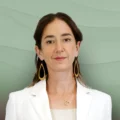
Saloni Sharma is a pain management and rehabilitation medicine physician and author of The Pain Solution: 5 Steps to Relieve and Prevent Back Pain, Muscle Pain, and Joint Pain without Medication.
She shares her story and discusses her KevinMD article, “Current pain treatments and their deficiencies.”
Did you enjoy today’s episode?
Rate and review the show so more audiences can find The Podcast by KevinMD.
Subscribe on your favorite podcast app to get notified when a new episode comes out.
Click here to earn 1.0 AMA PRA Category 1 CME for this episode.
Also available in Category 1 CME bundles.
Powered by CMEfy – a seamless way for busy clinician learners to discover Internet Point-of-Care Learning opportunities that reward AMA PRA Category 1 Credit(s)™. Learn more at about.cmefy.com/cme-info
Do you know someone who might enjoy this episode? Share this episode with anyone who wants to hear health care stories filled with information, insight, and inspiration.

Hosted by Kevin Pho, MD, The Podcast by KevinMD shares the stories of the many who intersect with our health care system but are rarely heard from.


Transcript
Kevin Pho: Hi, and welcome to the show, where we share the stories of the many who intersect with our health care system but are rarely heard from. My name is Kevin Pho, founder and editor of KevinMD. Rate and review the show at kevinmd.com/rate. Subscribe at kevinmd.com/follow.
Today on the show, we have Saloni Sharma. She’s a pain management and rehabilitation medicine physician, and she’s the author of the book The Pain Solution: 5 Steps to Relieve and Prevent Back Pain, Muscle Pain, and Joint Pain without Medication. There’s an excerpt from the book on KevinMD. Saloni, welcome to the show.
Saloni Sharma: Thank you for having me, Kevin. I’m happy to be here.
Kevin Pho: So we’ll talk about your excerpt and book in a little bit, but first off, just share your story and journey to where you are today.
Real physician voices, twice a week
Free, and one click to unsubscribe.
Saloni Sharma: Sure. I’m actually trained in physical medicine and rehabilitation, and also in pain management. But once I started going into the field, you realize there aren’t as many tools as we would like for people with pain. So I became trained in acupuncture and, eventually, integrative medicine. And that’s sort of how I got here.
Kevin Pho: All right. So walk us through a typical day of your practice. What kind of patients do you typically see? What kind of treatments do you typically perform?
Saloni Sharma: Sure. I mostly see spine patients, so back and neck pain pretty much all day. I’m in a very niche multispecialty orthopedic group. I start out with back and neck pain, and I’ll do physical therapy recommendations, medications, injections, sort of the typical spiel. I’ll do epidurals some mornings.
And then I’ve started a new integrative medicine center, so it’s an orthopedic integrative health center, and that’s where a lot of the things I’m talking about today relate to. We’ll go through a 45-minute visit with a patient and really get to dig into lifestyle factors that affect pain and ways to treat pain without relying on medication so heavily.
Kevin Pho: And how do patients typically find you?
Saloni Sharma: Referred. I’m part of a large group, so they come in pretty well through our marketing department. But the integrative medicine center, that’s the new thing that we just started. And so that’s something we’re trying to build up a little more awareness about, because there’s just such a problem right now, like we were talking about earlier, with the opioid and pain crisis, that people need better options.
Kevin Pho: All right. So let’s go into those options. You talk more about that, of course, in your book. It’s titled The Pain Solution: 5 Steps to Relieve and Prevent Back Pain, Muscle Pain, and Joint Pain without Medication. And there’s an excerpt from that book on KevinMD titled “Current pain treatments and their deficiencies.” Now, for those who didn’t get a chance to read your excerpt, just walk my audience through it and share the story of why you decided to share that particular one.
Saloni Sharma: I think it’s because it applies to a lot of people in your audience, who are health care providers: physicians, nurses, and other providers. And it’s not blaming physicians, and it’s not blaming other providers. We all know we’re part of a broken system, and we’re all trying from within to fix it.
When someone comes in with pain, they get divided into organ pieces. If they have back pain, but they also have some depression or difficulty sleeping or other issues because of their pain, they might see a pulmonologist for a sleep workup, they might see a psychiatrist for the depression, and they might see someone like me for the back pain. But unfortunately, none of us are given the time or space to take a step back and look at how these pieces fit together.
And I still think all these specialists are valuable, of course. But when you only have 10 minutes, sometimes less, unfortunately, depending on your administrators and insurances, to spend with a patient, you really can’t look at these things. So that’s where taking an integrative approach can be helpful, but also giving patients tools, whether it’s handouts or resources like the book, to empower them to take control of their health again.
Kevin Pho: So tell us about your approach to pain, and tell us exactly what you do from that integrative lens.
Saloni Sharma: Sure. The book is based on the Relief 5-R Plan, which is something I came up with, and that’s what the integrative program works around, too. The first R is refuel, so it’s looking at nutrition and how food can program your body for more inflammation and pain, or less. I think there’s some information out there about obesity or diabetes and hypertension, but most of the time, you don’t go to an orthopedist and get a prescription for nutrition, right? That’s just not a typical thing. So it’s taking a step back and saying, “Well, look at this lifestyle stuff.”
So the first part is refuel; that’s nutrition. The next part is revitalize, which is activity and movement, and it doesn’t have to be formal time in the gym, because for a lot of people, including ourselves and patients, that’s daunting. So just little bits of movement throughout the day. And then it’s recharge, which is focusing on sleep; refresh, which is stress and mindset; and then relate, which is supportive relationships with others and yourself.
Kevin Pho: So if someone comes to you, say, with chronic back pain, give us a story or case study that really illustrates these Rs and how they would be put into practice. Describe a typical case study that you would see in the exam room, and tell us exactly what you would say and do.
Saloni Sharma: Sure, thank you for that. So it would start out, especially if someone’s in my integrative program, where I get a little more time to really go through the Rs with them.
There was a patient who was status post bilateral hip and knee replacements, and she was still using a walker and also using a wheelchair two years later. Her hardware was in perfect position. She had met with her surgeons multiple times, and she just couldn’t get away from it. She was a nurse, so she was well educated in the medical part of it, but she was still stuck in her head with the fear, the fear of going back to her pain and all those things happening again, so she wouldn’t let go of her assistive device. It was like a crutch for her, and it was affecting her marriage, it was affecting her life, it was affecting her confidence, and it was causing depression. It was that whole trickle-down effect.
So we sat down and I talked with her, and I had her walk without her walker in the first visit. We went through her diet, and she wasn’t aware of circadian eating and limiting sugars at bedtime and some basic things. Again, a lot of people think about this for diabetes or heart disease, but not for pain. And it’s really the same thing because, as we know, they’re all inflammatory diseases. So if you reduce inflammation, it’s going to help diabetes, it’s going to help blood pressure, but it’s also going to help pain. I think really making that connection for her was helpful. So we tweaked her diet and when she eats, limiting desserts at night and things like that.
And then we talked about her sleep. She had a lot of anxiety and stress, so I taught her some breathing exercises. We also talked about a meditation app she could use. And we talked about walking. She was really scared of exercise, really afraid of aggravating her pain. So we just talked about two 10-minute walks, and one of them we broke up into 5 minutes because she was very anxious about it. We said, “Get rid of the wheelchair.” I got her a walker with a seat, because she just had a standard walker, so she felt confident that she could take breaks when she needed to.
And then after that, we talked about stress, which was a big piece. So again, the breathing part, and what she could do if she felt pain. If she felt a little twinge of pain, she was done. That was it. She wasn’t going to walk anymore for the rest of the day. That was it. And so that was really stopping her progress and her function, really improving her function.
So we went through some topical treatments. There are some that are over the counter that she could use, like Voltaren gel or lidocaine patches, very basic things where she felt in control and empowered that she can do something. If her pain flares up, she has tools in her pocket that she can use that are very basic and fairly low risk.
And then we talked about relationships. She had a good, supportive husband, but he was a little frustrated that he was still pushing her in a wheelchair two years later at the grocery store or at her doctor’s visits. So working as a team with both of them was helpful.
I’ve seen her several times. She doesn’t use a wheelchair at all now. She uses a cane a lot. Sometimes she uses a walker; coming into a hospital appointment where you have to walk to multiple buildings, she’ll use her walker. But I think it’s just giving people tools so that they’re in control and it’s not so passive. And it’s that Eastern versus Western philosophy in some ways, where Western medicine traditionally is very passive, and it’s like, “Doctor, heal me.” And it’s like, no, we’re a team; we have to work together. When I see people like that who are motivated, it just revitalizes me and it revitalizes them, and that’s the best part.
Kevin Pho: So what’s a typical treatment or time course for this integrative approach? How often would you have to see them, and how long does it normally take for that patient to see some results?
Saloni Sharma: Typically, I would see them four to six weeks after the first visit. And for some people, like a person I saw yesterday, that was too soon. She hadn’t been able to enact some of the changes that we wanted to make. She’s suffering from some substance abuse and some other issues, which are overlying, but it was still a useful visit because she came in and said, “Well, I don’t feel judged. I thought I was going to come here and you were going to say, ‘Oh my gosh, you didn’t do X, Y, and Z that we talked about last time.'” And I said, “No, you did this little piece, and you have a reason, and we’re going to tweak these things, these little goals.”
In the book, I talk about micro boosts, which are little steps that add up to big pain relief. So just little tiny things you can do to feel better about your health and know that you’re making a difference, even if you don’t see it right away, because it’s going to build up and make a difference. And so we tweaked that. Someone else like that, I’d probably see every two months, and they have progress.
And I always tell them, “You don’t have to come see me anymore. We have a plan we developed at the first visit. You can go back to your primary orthopedic or primary care physician.” And most of them want to see me because they really want this time. I think that’s what people are thirsty for, physicians and patients included: to have the gift of time to spend together and really figure out the source of the problem.
Kevin Pho: So as you know, I’m a primary care physician myself, internal medicine, and a lot of other primary care physicians, like you said, have 15 minutes per visit. Are there any tips that you could share with us so that we can use a little bit of that approach in the exam room when we ourselves see patients in chronic pain? What are some high-yield things that we can do in the exam room?
Saloni Sharma: I think, first off, just mentioning that food impacts pain is key. And hearing it from a physician makes a huge difference; having a staff person talk about it isn’t enough. And I 100 percent hear you. You don’t have time, and other primary care physicians don’t have time as well, with so many different complaints. But if you can just mention it and then have a handout to reinforce it, I think that’s important.
I think you could give them a handout about an anti-inflammatory diet or the Mediterranean, which are both great things. Dr. Weil has a pyramid, too. Whichever one it is, it’s all basically a Mediterranean approach. If you have something like that that you hand someone, you have to say it first. You really have to say, “This is important, and this can make a difference in your pain. It reduces inflammation, which reduces pain.”
I give patients the analogy of knee arthritis. If you have arthritis of your knees and you take the X-rays, the arthritis is always there, right? The bone on bone or degenerative changes. But it’s not always painful. It gets red, hot, and swollen; it gets inflamed, and then it gets painful. So if we can cut that inflammation, then you can have fewer bouts of severe pain.
So I think for a clinician to just say, “Look, you may not have thought of it this way, but this impacts pain. And I’m going to give you a handout. If you can follow through on little tweaks, that can make a big difference.” And then the next time, you could talk about a handout for sleep and say, “You know what? Sleep makes a big difference, too. My assistant’s going to give you a handout before you leave.” And then when you see them next time, you can just be like, “Hey, did you get to try that sleep thing? Did you get to try that diet change?” And see if they can just make these little small boosts without a big difference in terms of their lifestyle and your time.
Kevin Pho: As everyone listening to this show knows, we’re in the midst of an opioid crisis. How does your approach play into that? Can your approach be a solution to the opioid crisis that we have for pain?
Saloni Sharma: I hope so, but I think it can be a tool. I think it can be a tool in a multipronged solution. The concept, again, is you tell people, “Don’t take pain pills,” right? That’s part of the opioid crisis, and that’s what the CDC and a lot of organizations say as well: The best prevention for opioid addiction is never to take an opioid, right? So, to never start.
And so that’s what a lot of the tools in the book and the things we’re talking about today are. It’s building pain resilience and reducing whole-body inflammation so that you don’t get that severe pain, and if you do, you can manage it. And perhaps if you have a major surgery or things like that, you just need the opioids for a couple of days as opposed to an extended period. We know that the longer you’re on it, the more likely you are to have an addiction risk, and so we want to limit that.
So I think building pain resilience and building whole-body health is really key, and hopefully not having to take opioids at all, if possible. But I think this book gives some choices, right? So it’s not just, “Don’t take the pills; it kind of stinks to be you.” It’s, “Don’t take the pills, and here are alternative things to do.”
Kevin Pho: We’re talking to Saloni Sharma. She is a pain management and rehabilitation medicine physician. Her book is titled The Pain Solution: 5 Steps to Relieve and Prevent Back Pain, Muscle Pain, and Joint Pain without Medication. Saloni, what are some of the other main messages that you want to share with my audience about the book?
Saloni Sharma: That it’s really about building health. So even if you don’t have pain right now, I think it can be helpful, even for ourselves as clinicians. There are a lot of things about stress reduction, and, as we know, burnout, and I would prefer the term, I think, physician abuse in some ways, and physician wellness are huge areas that are impacting health care for everyone.
So there are little tweaks in there, like even just having a mindfulness app on your way home. Before you leave the hospital garage or your office garage, just sitting in your car for 5 minutes and listening to a mindfulness app and doing exercise can really reduce your stress. It can be a transition from work you to home you, and it can help reduce your whole-body inflammation, too. It sounds a little kooky, but these little tiny bursts of resetting actually make a big difference.
Kevin Pho: My final question: What are some of your take-home messages that you want my audience to come away with?
Saloni Sharma: That even though the system’s broken, as clinicians, we can peck away and hammer away at it and make a difference. And some of it is empowering our patients, empowering ourselves, and role modeling. So, building our own house so we can build their health. My book’s a resource. It’s obviously not the only resource, but if you can give your patients more tools to work on lifestyle factors, they think that’s going to be a win-win.
Kevin Pho: Saloni, thank you so much for sharing your time and insight. Thanks again for being on the show.
Saloni Sharma: Thank you, Kevin.
Listen and followApple PodcastsSpotifyYouTubeMore apps · Browse all episodes