

















Listen and followApple PodcastsSpotifyYouTubeMore apps · Browse all episodes
“A prospect seeking a career in medicine must start with their own awareness of boundaries and perfectionism before entering the field. This inner work must be indoctrinated in schools and encouraged through residencies and mentorships. Furthermore, administration must model this and valued it as highly as continuing education, credentialing, and skill training.
In a profession that is innately human, we have to bring humanity back for it to be sustainable.”
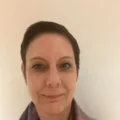
Amanda Gwin is a nurse and physician assistant.
She shares her story and discusses her KevinMD article, “What and who needs to change in medicine for it to be sustainable?”
Did you enjoy today’s episode?
Rate and review the show so more audiences can find The Podcast by KevinMD.
Subscribe on your favorite podcast app to get notified when a new episode comes out.
Click here to earn 1.0 AMA PRA Category 1 CME for this episode.
Also available in Category 1 CME bundles.
Powered by CMEfy – a seamless way for busy clinician learners to discover Internet Point-of-Care Learning opportunities that reward AMA PRA Category 1 Credit(s)™. Learn more at about.cmefy.com/cme-info
Do you know someone who might enjoy this episode? Share this episode with anyone who wants to hear health care stories filled with information, insight, and inspiration.

Hosted by Kevin Pho, MD, The Podcast by KevinMD shares the stories of the many who intersect with our health care system but are rarely heard from.


Transcript
Kevin Pho: Hi, and welcome to the show, where we share the stories of the many who intersect with our health care system but are rarely heard from. My name is Kevin Pho, founder and editor of KevinMD. Rate and review the show at KevinMD.com/rate. Subscribe at KevinMD.com/follow. Today on the show, we have Amanda Gwin. She’s a nurse and a physician assistant. Her KevinMD article is titled “What and who needs to change in medicine for it to be sustainable?” Amanda, welcome to the show.
Amanda Gwin: Thank you so much, Kevin. It’s such an honor.
Kevin Pho: We’ll get to the article in a little bit, but first off, just share your story and your journey to where you are today.
Amanda Gwin: Yes. I started off in medicine as a nurse and initially thought that I was just burned out with pediatrics, because that’s where I started. Then, 10 years later, on a long journey, I figured out that I was actually beginning the burnout within medicine, but I didn’t quite realize that yet. So I went back and got a bunch more education, became a physician assistant, joined a really busy internal medicine practice, worked as a nocturnist, and just kept going and going and going until my body said, “No more.”
I was actually put on bed rest at 24 weeks because I went into premature labor, and the physician who was my obstetrician said, “There’s absolutely nothing wrong with your body or this pregnancy. You are the problem.” So I had to really assess what I had been living within, what I had been prescribing to, and just how I lived my life. That’s where I realized that I was burned out.
Real physician voices, twice a week
Free, and one click to unsubscribe.
Kevin Pho: So what happened next? You realized that you were burned out, you were having these symptoms, and people were telling you that you were exhibiting some symptoms of burnout. What were some of your next steps?
Amanda Gwin: Yeah, so after the baby was born healthy, thankfully, everything happened wonderfully, and then I had to kind of sit back and assess. I had been in a lot of therapy in my younger years, probably 20 years total, on and off. I felt like I had done a lot of work on myself, and I felt like I was really strong, but I just didn’t quite feel like I had the skills that I needed to navigate being my own advocate, taking care of myself, healing my people pleaser, and looking at where my validation was lying.
So I hired a coach, and that was me really healing my burnout and getting to the bottom of it. Burnout is kind of a symptom of what’s going on below. It can be very situational, but burnout is a symptom. So I really got to the bottom of where my burnout was rooted and was able to heal that root. Then I decided, “Whoa, this is so powerful. I need to be doing this for other people in medicine,” because the way that this system is going to sustain is that we heal the people in medicine. So the next coach that I hired was somebody to whom I said, “I need you to teach me how to do this. I want to learn how to help other people do this.”
Kevin Pho: So when you went to see that coach, you said this coach got to the root of your burnout. What exactly did this coach do, and what exactly was the root of your burnout?
Amanda Gwin: Oh, it’s such a great question. What I’ve found is that a lot of people who go into medicine have experienced a lot of trauma in their lives, or have just really had a hard time. When you talk to people in medicine, more likely than not you’re going to have a group of people who understand pain. I think that’s what makes them so good at what they do: They really are able to empathize with people in crisis and in pain, which is really beautiful, right? I mean, we don’t want to change that. That’s what makes them good at what they do.
But when we don’t heal, for example, say you were a child of an alcoholic and you did not heal that people pleaser, that need for all of the external validation, that big fix-it wound within you, then that’s going to come through in your medical practice. So it’s taking a step back. The root of mine was that I was a big-time people pleaser, and it was a big-time need for external validation, which were really, really well stroked within medicine if they weren’t checked.
Kevin Pho: All right, so let’s talk more about your KevinMD article, where you go deeper into this. It’s titled “What and who needs to change in medicine for it to be sustainable?” Now, for those who didn’t get a chance to read your article, just walk my audience through it and share the story of why you decided to write it.
Amanda Gwin: Yeah, so it just came through one day. I was like, “This needs to be talked about.” I was trained on the nursing model and worked with a nursing structure, and then I was trained in physician assistant school under the physician model and worked with physicians. I really, truly experienced this toxicity on both sides. The problem is that there is no room for you in medicine. There is no room for error. There is no “Hey, you’re learning, you messed up, let’s talk about this.” It is definitely you who are the person that is attacked when you make a mistake.
Of course, there’s always room for learning and everything, but I feel like this is the root of what makes it unsustainable: People go into it feeling like they have to be perfect, and it’s really ingrained very, very early on in nursing school, early in nursing training. Then I saw it when I was in my PA training, working at a university hospital. I see it within the med students. There is just this extreme pressure for perfectionism and performance. There’s no room for the human in this innately human system.
Kevin Pho: So how can we go about making room for us, making room for the human? Because this sounds like a systemic problem. It’s ingrained in us in our training, whether you’re going through the nurse pathway or the physician or physician assistant pathway. How do we make time for the human in medicine?
Amanda Gwin: Yeah, I love that question. It all begins with everybody in medicine holding up their own end of the bargain, which means doing their own healing, but then also making it just a general conversation. On one of your recent podcasts, they were talking about neurological system regulation, and I know that’s kind of a buzzword right now, but there is so much validity in that. Just even making it understood, thoughts like, “Hey, you’re going to be in a stressful situation. You’re dealing with people’s lives here. Let’s teach you how to regulate your own neurological system.” And then let’s make that a common conversation: “Hey, can you take over for 10 minutes? I’ve got to go regulate my neurological system.”
That’s what will keep us sustaining: just healing ourselves and making this a conversation. This has to come from the top, and it has to come from the bottom. Part of how we are to take care of people has to be also taking care of ourselves.
Kevin Pho: So give us a real-life example of that. You are a physician assistant. What would be an example of implementing that in a typical day that you would experience?
Amanda Gwin: Yeah, that’s a good question too. Right now my practice is in neurocritical care. A big, big part of my job is having end-of-life discussions with families, siblings, and children. It’s very emotionally taxing. I definitely have to take time throughout the day to go sit in a call room and breathe. I have to take time to allow for what I have been dealing with all day so that I can be present for my family when I get home. And I have to take time before I even get there to kind of align myself: “Hey, I know there are going to be some really hard things today that I’m going to have to do, hard conversations I’m going to have to have.” A morning meditation is very important to me.
I think that’s more of a day-to-day thing. Then there is also educating people on really the symptoms of burnout, recognizing them, and putting them throughout the entire span of the workday: “Hey, I recognize that you’re kind of at your end. Can you take 10 minutes and go take a break?” Because in medicine, we’re very bad about taking breaks. So this is starting the conversation among everybody.
Kevin Pho: We’re talking to Amanda Gwin. She’s a nurse and a physician assistant. Her KevinMD article is titled “What and who needs to change in medicine for it to be sustainable?” So, Amanda, like you said before, there is a culture of perfection, a culture where the human is removed from medicine, and you’re suggesting wonderful tips that health care professionals can apply during a typical workday. But sometimes there’s that peer pressure, right? Sometimes that culture is so pervasive in terms of enforcing that perfection that it’s hard to push back against. Now, what kind of advice do you have if that culture pushes that perfection and makes it difficult to implement some of the things that you suggest, makes it difficult to take that break to breathe? How do you push back against that?
Amanda Gwin: A couple of things. The biggest thing, and I told my clients and my kids this too, is that the way somebody treats you has so much more to do with what’s going on inside of them than with what’s going on inside of you, or a reflection of what your issue is. So I think it’s a matter of separating those opinions and the system from who you are, what you need, what is sustainable for you, and what you’re able to give when you go home. I mean, our lives are not all in the hospital. There’s also a part of us that we want to be available to the people in our homes when we go home.
So much of this is separating what is the system and what is you, and that is a very big ask and a very big call, and something that takes a lot of support, which is what I really love doing: sitting with people and helping them embody this separation from the system and the human.
Kevin Pho: All right, and my final question: What are some of your take-home messages that you want to leave with the KevinMD audience?
Amanda Gwin: I have a lot of people who say to me, “Well, I’m so miserable in medicine. I’ve spent so much money in this profession. I’m stuck.” And I say, “No, you’re not.” I talk to people all the time who have either successfully left medicine, and they’re very happy. They see their training and their path as part of their journey, and they’re very happy with where they are. And I see people who heal these things that we’ve been talking about, their people pleasers, separating the system from the human, and they learn to really thrive in medicine.
If I can say anything to this population, I want to say: You are not stuck. You are not stuck, one side or the other. You’re not stuck in medicine. And if you do want to do medicine, and I love medicine, I love the science, it’s such a beautiful thing, and the profession is wonderful, if you want to stay in medicine, there is a way for you to be happy and prosper in medicine.
Kevin Pho: Amanda, thank you so much for sharing your time and insight. Thanks again for being on the show.
Amanda Gwin: Thank you, Kevin. It was an honor. I appreciate it.
Listen and followApple PodcastsSpotifyYouTubeMore apps · Browse all episodes