







Listen and followApple PodcastsSpotifyYouTubeMore apps · Browse all episodes
“I was first diagnosed with stage 1 breast cancer, DCIS (ductal carcinoma in situ), on May 15, 2015, at 41 years old. I had my annual exam with my gynecologist and told him I felt a small, pea-sized lump under my right armpit close to my breast. He confirmed what I felt and said it was probably nothing but still wanted me to get a mammogram. I got an appointment the next day, and with much squeezing, because my itty-bitties measured as A minuses (in size), the technician couldn’t find or see anything during the mammogram. But I told her where I felt the lump, and she also felt it, so she brought out the ultrasound machine.”
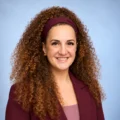
Bianca Haines is a patient advocate.
She shares her story and discusses her KevinMD article, “Candid about my breast cancer.”
Did you enjoy today’s episode?
Rate and review the show so more audiences can find The Podcast by KevinMD.
Subscribe on your favorite podcast app to get notified when a new episode comes out.
Click here to earn 1.0 AMA PRA Category 1 CME for this episode.
Also available in Category 1 CME bundles.
Powered by CMEfy – a seamless way for busy clinician learners to discover Internet Point-of-Care Learning opportunities that reward AMA PRA Category 1 Credit(s)™. Learn more at about.cmefy.com/cme-info
Do you know someone who might enjoy this episode? Share this episode with anyone who wants to hear health care stories filled with information, insight, and inspiration.

Hosted by Kevin Pho, MD, The Podcast by KevinMD shares the stories of the many who intersect with our health care system but are rarely heard from.


Transcript
Kevin Pho: Hi, and welcome to the show, where we share the stories of the many who intersect with our health care system but are rarely heard from. My name is Kevin Pho, founder and editor of KevinMD. Rate and review the show at kevinmd.com/rate. Subscribe at kevinmd.com/follow. Today on the show we have Bianca Haines. She is a patient advocate. Her KevinMD article is titled “Candid about my breast cancer.” Bianca, welcome to the show.
Bianca Haines: Thank you for having me.
Kevin Pho: We’ll get into your article in a little bit. First, just briefly share your story and journey to where you are today.
Bianca Haines: I felt I wanted to share my journey because I didn’t really see a lot of representation of Asian women, Asian American women, sharing the breast cancer journey. With the poking and prodding of my children, I figured, “Let me start sharing my journey,” just to have more representation across the board and to make it more relatable, so that people can see that you can catch it. Everybody catches breast cancer, or can get it, but I wanted people to hear another perspective and to have more representation within the Asian community.
Real physician voices, twice a week
Free, and one click to unsubscribe.
Kevin Pho: Give me a sense of how often you see Asian American patients share their medical journey. Is it something that you’ve never seen? Is it infrequent? Just give us a sense of how often that is.
Bianca Haines: I’ve never seen it. When I had my first breast cancer diagnosis at 41, I was looking for women of color with breast cancer, Asian women with breast cancer, to read articles. My first physician at the time said, “Well, it’s very odd for you to have breast cancer, because Asian women don’t catch it; it’s such a small percentage.” Then I felt like, “What did I do wrong to have breast cancer?”
Kevin Pho: Now, why is it important to you culturally that Asian Americans or Asian women share their stories, specifically about breast cancer?
Bianca Haines: Because I feel that as Asian women, we’re more or less told, and I mean in my family, “Just work hard, get through it. You’re going to be fine. You’re going to fight this. It is what it is. Keep your personal information private. Don’t share, don’t divulge.” I did that during my whole journey while I was teaching full time. My students were asking me questions, because I taught elementary K-5 and had over 400 students a week. They saw my hair falling out, and they saw me try the wig and the hat, and I really kept a lot of that to myself.
Mental health-wise, it was the worst thing I could have done. I really wish I had shared my journey back in 2015, and then again in 2016 when I was re-diagnosed, because I think it would have helped my own personal health and well-being. It would also have provided some representation for other women and other Asian women who might be having the same fight, so they know that we have a voice, and we should share our voice and our concerns together.
Kevin Pho: All right, let’s talk about your story. You wrote it in this KevinMD article, “Candid about my breast cancer.” For those who get a chance to read it, just walk my audience through it.
Bianca Haines: This was just a little snippet. I had just started sharing; my kids were like, “Just put it on your Instagram and share little posts.” But I wanted to talk about discovering the lump myself and going to the doctor. Because I was 41, everyone was like, “Oh, it’s nothing. It’s probably clogged milk duct stuff. You’re fine.” It was about how quickly I went through everything, where the news just kept getting worse and more dire, and it wasn’t the optimistic outcome that I was hoping for.
That is why I shared my journey in little snippets: what to expect, how I found my lump, and then leading into my first biopsy. They really need to give you more information about what to expect during those.
Kevin Pho: So what did they tell you about your first biopsy? Tell me about that experience.
Bianca Haines: It was funny, because at the time I went in for my biopsy, I was told it was going to be a physician-led, student-run biopsy. As a teacher, as an educator, I thought, “No, this is fine. It’s fine.” I kept asking, “Is there any pain? Should I be bracing myself for any pain, or what should I expect?” They said, “Oh, it’s really simple. We’re going to numb the area, get our sample, put the clip in, give you a butterfly stitch, and you’ll be fine.”
No one said, “You’re going to be in excruciating pain. You’re going to be able to see this whole procedure on the flat-screen TV above your head.” They lie you down on the bed, and there are no grips. I kept saying, “I need a grip,” because that’s how painful it was. I consider myself to have a pretty high threshold, and for me that was excruciating. But at least it gave me something to gauge, because I had three more biopsies afterwards, and I knew what to expect with each one.
Kevin Pho: I always like to ask patients about their interactions with the medical team. You did mention one thing that the team could have improved. Was there anything else that the medical team could have improved during your journey? And then perhaps also say something that they did well.
Bianca Haines: The first time I had breast cancer, better communication would have been helpful. I had an excellent nurse navigator, but it was so run-of-the-mill for them. I was just another breast cancer patient. I needed things in layman’s terms so I could understand them better, and I wasn’t really comprehending what was happening because I was so overwhelmed. So I think just better communication, or information with bullet points. A lot of the time it was, “Just go to breastcancer.org, go to cancer.org, and you can find information there.” Working with an excellent team of communicators, I think, would be essential.
In my second bout with breast cancer, I had an amazing team, which I really want to call the trifecta of breast cancer. When I say team, it wasn’t just my oncologist, my radiation oncologist, my surgeon, and the plastic surgeon, but it was all of my oncology nurses and all my physical therapy nurses. They all worked with me as one person, and everyone knew who I was before I got there. So, in a nutshell, MD Anderson was my second team, and I can’t say enough about how amazing they are, how they made me feel like a person, and how they made me feel like part of the family. They still do, because I still go for monthly treatments, and every time I walk in, it’s like we’re best friends or something.
Kevin Pho: So what are some specific things that MD Anderson did that, like you said, made you feel like a person and made you feel like family? What are some specific things that they did to do that?
Bianca Haines: They would share with me. I guess they have patient meetings where they all meet together and discuss the patient and what the plan is for that patient, but they shared that with me. At every meeting I went to with every different specialist, they said, “Oh, well, we discussed this. This is the plan that we came up with.” Everyone knew me before I got there because they had always discussed my plan. Even then, I was still being discussed weekly and then monthly, and right now I’m more in a maintenance phase, but they still say, “Oh, we were just talking about you the other day, because of blah, blah, blah.” To me, the best thing was the communication that they shared with me, but also the communication that they shared with each other. I think that was essential in everything.
Kevin Pho: One of the things that you mentioned earlier is that as an Asian woman, there is a cultural or familial tendency not to share something so intimate and personal. So when you did share your story, what was the reaction from your peers and your family?
Bianca Haines: My peers, my co-workers, and everyone were very happy that I was not keeping everything bottled up like I normally do. My family was more surprised and astounded, because they were like, “Oh, just keep it personal. We don’t share that information with the public.” They were just like, “You just have to deal with it on your own, and you did it. You fought cancer, so you’re done now.”
As an Asian woman, and as an Asian American woman who has a daughter, I want to empower her to feel comfortable to communicate. The same way I teach my students to communicate and to be their own advocates, I want to do the same thing. So for me, that’s all I wanted to make sure of.
Kevin Pho: When you had these conversations with your family, and there are certainly two perspectives here that are a little bit in tension, how did those conversations go?
Bianca Haines: My family, to me, is more of a stiff upper lip; you really just don’t communicate it. They saw me sharing my journey, and they were like, “Well, you really shouldn’t do that,” and that was more or less it. There was no real elaboration or communication on it. I don’t know if that’s just a cultural thing across the board with my family and the culture I was raised in, but with most Asian friends I’ve had, more or less the parents are like, “Oh, just take care of it. It’s fine.” Or they try to hide the fact that I had cancer: “Aren’t you going to put your wig on? We’re going to go over here,” or something, and I’m like, “Seriously?” But that’s just my family’s culture, just trying to show that everything’s fine, even though I just went through eight rounds of chemotherapy.
Kevin Pho: So you were obviously brought up with that Asian culture, that stiff-upper-lip mentality. At what point did you realize, “Hey, I shouldn’t do this. I should speak out”? When did you realize that?
Bianca Haines: My second diagnosis of breast cancer. It was at that point where I realized, “I have a voice. I have to share it. I have to be my own advocate, and it’s OK to share my personal journey whether or not my family approves of it.” I didn’t know if I was going to survive it the second time, and every year that I do survive, I’m just happy to be here, and I just want to enjoy every minute. I want to share my journey, hoping that it’ll help another woman, or another Asian woman, who’s fighting this disease, and show them that it’s OK to share, it’s OK to have a friend group that supports you, and it’s OK to discuss it and not be ashamed of it.
Kevin Pho: We’re talking to Bianca Haines. She is a patient advocate. Her KevinMD article, which we’re talking about today, is “Candid about my breast cancer.” Bianca, for those other Asian women who may be going through a diagnosis or journey with breast cancer, what is your message to them?
Bianca Haines: Find a strong support group of friends that you can feel comfortable confiding in. I would even say get a therapist. The second time I was diagnosed, having a therapist and going through therapy was very helpful. Try to have those conversations with your family, where they might want you to be quiet about it, but just share how you feel. Then just take every day one day at a time, and you will get through it. It’s going to feel like it’s your darkest moment, but with a great friend group and a therapist by your side, and even journaling how you feel, I think that’s a great way to deal with that diagnosis and to get through it.
Kevin Pho: My final question: What are some of your take-home messages that you want to leave with the KevinMD audience?
Bianca Haines: I’d just like to say, as a two-time breast cancer fighter, I really want everyone out there who’s listening to know: If you are diagnosed with cancer or any type of illness, be your own advocate, have a great support group, and don’t be afraid to share your journey with other people. I think that’s very important.
Kevin Pho: Bianca, thank you so much for sharing your story, time, and insight, and thanks again for being on the show.
Bianca Haines: Thank you very much. It was a pleasure.
Listen and followApple PodcastsSpotifyYouTubeMore apps · Browse all episodes