Listen and followApple PodcastsSpotifyYouTubeMore apps · Browse all episodes
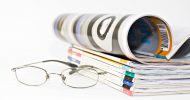
“For the better part of two decades in medicine, I considered printed journals an old friend. Getting my latest medical journal in the mail, opening it, enjoying the feel, look, and even the smell of the journal was almost like getting a monthly present. During training, Journal club was the substitute I needed for the Book of the Month clubs I could not attend with other friends. To this day, I still consider reading them time well spent.
Yet, I cannot ignore their environmental impact in an era of alarming climate change. The plastic shrink wraps, commonly made from substances like polyvinyl chloride, polyolefin, polypropylene, and polyethylene, are not readily recyclable. The same is true for the glossy paper on which most journals are printed. Adding a glued-on advertisement to the cover does not help matters either.”
Cynthia Anderson is a radiation oncologist.
She shares her story and discusses her KevinMD article, “The case for ending printed medical journals.”
SUBSCRIBE TO THE PODCAST → https://kevinmd.com/podcast
RATE AND REVIEW → https://kevinmd.com/rate
FOLLOW ON INSTAGRAM → https://www.instagram.com/kevinphomd
FOLLOW ON TIKTOK → https://www.tiktok.com/@kevinphomd
GET CME FOR THIS EPISODE → https://earnc.me/L6vdWf
Powered by CMEfy – a seamless way for busy clinician learners to discover Internet Point-of-Care Learning opportunities that reward AMA PRA Category 1 Credit(s)™. Learn more at about.cmefy.com/cme-info
Transcript
Kevin Pho: Welcome to the show, where we share the stories of the many who intersect with our health care system but are rarely heard from. My name is Kevin Pho, founder and editor of KevinMD. Rate and review the show at KevinMD.com/rate. Subscribe at KevinMD.com/podcast. Today on the show, we have Cynthia Anderson. She’s a radiation oncologist, and her KevinMD article is titled “The case for ending printed medical journals.” Cynthia, welcome to the show.
Cynthia Anderson: Thank you so much for having me.
Kevin Pho: We’ll get to the article in a little bit. First off, briefly share your story and journey to where you are today.
Cynthia Anderson: I’m a radiation oncologist. I’ve been in practice now for almost 22 years. I am practicing here in my hometown of Jacksonville, Florida. I grew up here and then went and did my training at Emory University for medical school and residency, and it was a circuitous path to get here. We’re a small field, or at least we were very small when I was in my training. Now I think a lot more people know about radiation oncology. I very much feel passionate about what I do. I know that I’m in the right field for me, and I’ve been taking care of both children and adults for, like I said, over 20 years now.
Real physician voices, twice a week
Free, and one click to unsubscribe.
Kevin Pho: All right. We don’t have very many radiation oncologists on the show, so take us through one of your typical days.
Cynthia Anderson: Sure. A typical day for a radiation oncologist is a mixture of seeing patients in consultation and follow-up as part of their overall oncologic care, but we’re also a very technical field. Our patients are treated on a machine called the linear accelerator, and there’s a lot of technical planning that goes in with that. We are constantly moving back and forth between clinic and going to the linear accelerator to approve patients before they get started on their treatment. We’re coming up and checking their films and making sure that they’ve set up correctly, on either a plain film or a cone-beam CT, as it’s called.
Then we are taking our patients through a treatment planning process to get ready for radiation, which means they go through something called a simulation. That is where they lie down on the CT scan table, get set up in the position that they’ll be in for treatment, and then get scanned. Then we take that scan, and we work with a whole host of people on the team called dosimetrists and physicists, who help us to make the plan look exactly like what we need it to do and make sure we’re treating the cancer and protecting the organs around it.
So there’s a lot of technicality and computer-based work in our field. It’s also a very procedure-based field. We do a lot of internal implanting of radiation, whether it’s for prostate seed implants or for gynecologic cancer. It’s a very rewarding field in that there’s a lot of thinking. You have to have your thinking cap on all day long as you’re taking a patient through complex radiation treatments.
Kevin Pho: Now, we have a lot of medical students who listen to this podcast. What kind of characteristics or traits should they have if they are interested in radiation oncology?
Cynthia Anderson: I would definitely say compassion is a big part of being a radiation oncologist. We are caring for patients in probably one of the most difficult chapters of their life, and there’s a lot of empathy that needs to come with that. We have to not only have a strong knowledge base about cancer, the cancer staging system, and all of the new treatments out there that are developing for them, but we also have to have a compassionate and empathic approach to help guide patients through the myriad of decisions that they’ll make all through their journey. Then we really have to have the interest in wanting to see them through, whether we are seeing them to cure or whether we are seeing them transition to what could be the final phase of their life.
Kevin Pho: All right, let’s talk next about your KevinMD article. It’s titled “The case for ending printed medical journals.” Now, for those who get a chance to read your article, just walk my audience through it and share the story of why you decided to write it.
Cynthia Anderson: Certainly, climate change and climate-related topics are garnering more and more of our attention these days, and people have different feelings about it, depending on where they are in the spectrum. But it’s really been hitting home for me here in Florida. We have faced several devastating hurricanes and floods, and it’s really just been resonating with me: What more can I do to minimize my impact?
As I was thinking about that one day, it was during my trip to the mailbox. I opened it up, and I had this whole stack of medical journals that had come to me. Most of them are shrink-wrapped in plastic. They’re all printed on high-gloss paper, and so the recyclability of that is pretty low. So I started looking into it and just said, “What is this plastic wrap made out of?” It was really a lot of petrochemicals. I just happened to keep Googling and seeing how much of this is really recyclable, and the answer really is very little.
As I started thinking more and more about it, I said, “You know what? For all the journals that I get every month, every week, what percent am I really reading, and reading thoroughly, cover to cover?” A few things started to come to mind. There are a lot of journals that are multipurpose and cover broad spectrums in medicine, and for journals like that, there’s a good chance that very few of the articles will have a relevant practical implication on my day-to-day practice. Then, even if I got a field-specific publication, whether it’s an oncology journal, for example, all the articles in there may not relate to the types of cancers that I see.
So I thought, “Wow, for the amount of printed material that’s coming into my house, the amount of time that I’m actually spending on everything that’s in it is probably pretty low.” For that reason, do I really need to get all this stuff coming to my house and generate all that trash and waste, some of which may only go straight from my hand right into the trash? As I really started thinking about it, I thought this is the place where maybe we can make more of an impact than we realize, on something we probably don’t even think much about in terms of our environmental impact in the field of medicine. So that’s really what led to it for me.
Over the last several months, I’ve really been trying to bring it all into practice. I’ve reached out to all the journals that I get. I’ve had to open up the front cover and read really small fonts to find where the contact information email is, and I say, “Please just unsubscribe me from the print version. I’ll just read the online version.” I don’t print out articles anymore unless I really need to. I can PubMed anything and quickly get through it and not have to generate all this paper waste.
Kevin Pho: Now, just to clarify, a lot of these journals that come to your house, do you actively subscribe to them?
Cynthia Anderson: They’re the ones that come with membership. When you renew your dues and your membership, you tend to find that the journal is what comes with it. So it’s almost just like a bonus or a benefit for your society to use.
Kevin Pho: Just to give us an idea, in a typical week, how many of these journals would you say you get over the course of a month?
Cynthia Anderson: I’m probably getting, on average, somewhere between five and seven medical journals that are coming to me.
Kevin Pho: In terms of reading that information online, how much online access do you have? How much do you read these academic journals online?
Cynthia Anderson: I’m 100 percent a strong believer in reading, just reading in general. I think that probably one of the best things we can do to enhance our lives and our careers is to be a good reader. So I don’t advocate for not reading. In fact, I read every day. It takes a minute to set up all this online access and then store the passwords and things like that, but I found that the importance of reading can’t be understated, and I’ve gotten much, much better at it.
I think a lot of people, when they have a down moment, find themselves wanting to go to social media or to check the headlines and the news of what’s going on. Again, how much of that is really relevant to our human experience? Probably low. So instead, I’ve changed, and now what I do, if I find myself with a break, is I just click on a journal and read an article instead. I’ve actually found that by switching to this method, my reading has actually gone way up.
Kevin Pho: After unsubscribing from a lot of these journals, has that made a demonstrable impact in terms of the number of throwaway journals that you receive?
Cynthia Anderson: Yeah, I’m actually shocked at how much my mail has gone down, and the amount of things going into my recycle bin and my trash. There are ancillary parts that come with it. Every medical journal also tends to have a drug that they’re advertising that’s glued onto the front of it, another thing that’s hard to recycle. So I find that the amount of things I’m throwing in the trash has gone way down. The amount of trash being hauled out to the corner has gone way down, and interestingly, my reading has actually gone up.
Kevin Pho: What did it take for you to unsubscribe from all these journals and then apply for online access to these articles in general?
Cynthia Anderson: I will tell you, it does take work, because it’s not the trend to be able to not get a journal. For some of the journals, we’ve had to email back and forth several times and reroute my email to the right person before they can finally say, “OK, we have turned off your print subscription.”
I will say that I’m a part of a couple of online discussion groups on social media, and I found that I’m not the only one who feels this way. I just oddly enough happened to come across a whole discussion feed in which another person was lamenting, “I’m trying to cancel getting this journal, but I’ve been told if I want to cancel getting the journal, I have to cancel my membership to the society, but I don’t necessarily want to do that.” So it’s going to take some effort on our part. After probably two to three emails, I was able to get it done. Then your online access is something that you should have automatically, because it’s the same username and password that you have just to log into that society to begin with.
Kevin Pho: We’re talking to Cynthia Anderson. She’s a radiation oncologist. Her KevinMD article is titled “The case for ending printed medical journals.” So Cynthia, what do you see as the future? Because I think that what’s happening with print medical journals is pretty much mirroring what’s going on in other sources of media. I think the reason they keep sending you print medical journals is because of the advertising revenue that they get from various companies, and of course, they’re going to make it very difficult for physicians to unsubscribe from them and go to an online version, because the online version probably just doesn’t generate enough revenue. So what do you see as the trend going forward? Do you see most of this stuff eventually being online?
Cynthia Anderson: That’s really what I’m hoping. I thought about that too. There’s an unintended consequence for the jobs that printing these journals provides, and the people who work in the editorial offices to do the work to lay out each issue and make sure that it looks really good, and I don’t have all those answers yet.
On the advertising, I do know that on just about every medical website you go to, there’s always the banner bar that’s running by with the ads that are coming along, and I think there are multiple other ways to generate that ad revenue. Certainly, when we go to our professional society meetings, we get quite a bit of advertisement or connection with the people who are providing those ads already. Just because the advertiser can’t get to us through a printed journal doesn’t mean they can’t get to us. That’s really my hope.
When you go to wonderful websites like PubMed, you can pick any topic you want to find out about, and you can get 50 articles on it, as opposed to when you get the journal, where you just get that one article that’s right there. So I actually find that the online reading version of it increases my depth of reading, because I can click around through multiple abstracts and just hop from one to the other, and I’m actually getting a deeper perspective on the topic than I got from reading that one article on its own.
Kevin Pho: For those other physicians who are inspired by your act of unsubscribing from all these throwaway journals, what kind of advice do you have for them?
Cynthia Anderson: Really, you have to open that front cover and look on the inside, where you get the content description of the issue, and just scroll down until you find any form of a “Contact us” email, and keep pursuing it. It does take a couple of emails back and forth, but I was surprised at the profound impact, not only on making me feel a little bit better about the amount of medical waste that we generate, but really that I’ve actually felt like I’ve become a better doctor, because my reading ability has gone up. With all of us carrying our phones around everywhere, you can even just sit there while you’re waiting for the elevator and knock out an article or two. So it’s maybe an opportunity to generate less waste and become a better physician.
Kevin Pho: Cynthia, what are some of your take-home messages that you want to leave with the KevinMD audience?
Cynthia Anderson: The biggest one I would say is that waste is never a great way to spend our life. We talk a lot about how to work smarter, not harder, and we don’t want to waste. We don’t want to waste our time. We don’t want to waste resources. We don’t want to waste things that are in limited supply on the planet. A lot of the opportunities to limit waste and increase joy come from small acts and small moments. If we can look around us and look at ways that we can pick up something that we probably weren’t thinking about before, and take away the environmental impact of it, we actually may do more benefit than we realize we’re able to do.
Kevin Pho: Cynthia, thank you so much for sharing your time and insight, and thanks again for being on the show.
Cynthia Anderson: Thank you so much for having me and spreading the word.
Listen and followApple PodcastsSpotifyYouTubeMore apps · Browse all episodes