












Listen and followApple PodcastsSpotifyYouTubeMore apps · Browse all episodes
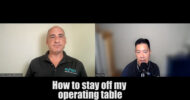
In this special episode, KevinMD is on the other side of the microphone as he’s interviewed by cardiothoracic surgeon Philip Ovadia and patient advocate Jack Heald, originally aired on the Stay Off My Operating Table podcast. He shares his perspective on the social media-health care intersection, the physician-patient relationship, entrepreneurship in medicine, clinician burnout, and the dynamic nature of health care expertise.
Catch up with Dr. Ovadia and Mr. Heald on Twitter, Instagram, and LinkedIn.
SUBSCRIBE TO THE PODCAST → https://kevinmd.com/podcast
RATE AND REVIEW → https://kevinmd.com/rate
FOLLOW ON INSTAGRAM → https://www.instagram.com/kevinphomd
FOLLOW ON TIKTOK → https://www.tiktok.com/@kevinphomd
GET CME FOR THIS EPISODE → https://earnc.me/IgAIB7
Powered by CMEfy – a seamless way for busy clinician learners to discover Internet Point-of-Care Learning opportunities that reward AMA PRA Category 1 Credit(s)™. Learn more at about.cmefy.com/cme-info
Transcript
Jack Heald: This is the Stay Off My Operating Table Podcast with Dr. Philip Ovadia. I’m Jack Heald, the talking hairdo and the co-host, and we are thrilled today to have Dr. Kevin Pho with us. I asked Phil, “Who is this guy?” And he started telling me all about him. I went, “OK, Phil, you’re going to have to take it from here to bring Kevin in on the conversation.”
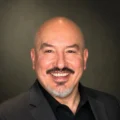
Philip Ovadia: Yeah, definitely. And I think any of the physicians in my audience will certainly be familiar with Kevin, but the non-physicians may not be as familiar. Kevin is a board-certified internal medicine physician, and he has really been one of the leading physician voices on social media, one of the leading physician presences on social media, for almost 20 years. He has appeared in numerous national media. He has a daily podcast and a platform, KevinMD, which is really probably one of the largest health care podcasts, if not the largest health care podcast, out there. And Kevin has also written a book, Establishing, Managing, and Protecting Your Online Reputation: A Social Media Guide for Physicians and Medical Practices. So I’m really excited to get into this conversation with Kevin. And first, I’ll just let Kevin introduce himself a little bit more to our audience. Tell us how you got involved in social media so early, really before there was social media.
Kevin Pho: First off, Jack and Philip, thank you so much for inviting me on. It’s an absolute pleasure. And as Philip says, I am an internal medicine physician. I do primary care in Nashua, New Hampshire, which is about 45 minutes north of Boston, where I trained. And I got involved with social media back in 2004, so that was almost 20 years ago. Back then, it certainly wasn’t what it is now. At that time, there were a handful of blogs. People would go on Blogger. I don’t know if that even still exists now.
Jack Heald: It does, actually. I just checked that here in the last month. I have a Blogger blog that I started right after Blogger hit the world, and by God, some of that stuff is still sitting out there.
Real physician voices, twice a week
Free, and one click to unsubscribe.
Kevin Pho: Absolutely, I know. Some of the stuff that I wrote back then, I still cringe at. One day, I think one of my family members said, “You have a lot of opinions about medicine. You should start a blog.” And at that time, there weren’t many physicians really blogging. So I started writing a few articles and sharing my thoughts.
And I think there was a drug recalled one day, Vioxx, which is an anti-inflammatory. I remember it got recalled for whatever cardiovascular heart conditions it would sometimes precipitate, and I remember I wrote something about it. A day or two afterward, I walked into the exam room with a patient, and she said, “Dr. Pho, I read your blog post this morning, and I was comforted by what you had to say about Vioxx.”
At that point, I had that light bulb moment, that we can use, at that time, blogs. I think it was just blogs; there wasn’t very much social media. But there were these user-generated platforms where we can write an article, share our voice, and really impact patients, not just in the exam room, but outside of the exam room as well. And that’s where it started. Social media has really been evolving, certainly by the year. There are so many new platforms, so many different media where we can express ourselves. But that was really the start of my social media journey.
Jack Heald: So, Phil, other than the fact that he’s been on social media and has been a doctor for a million years, what is it about this guy that got you excited about having him on the show?
Philip Ovadia: Yeah, what really got me excited, and I’ve been aware of and been following Kevin on the various platforms for a while now, is just that sort of outside-the-box thinking. Because let’s be honest, most traditional physicians still pooh-pooh social media and the internet in general, and they worry about the patient who came in and Googled their condition and has whatever information, whatever quality of information. For a large part, I would say health care is still very hesitant about social media. And I really was looking forward to getting Kevin’s perspective on that.
I’ll start by asking about your colleagues. With, let’s call it, the day job of being an internal medicine physician and having a medical practice and interacting with your colleagues, do you get a lot of pushback about what you do on social media?
Kevin Pho: Not anymore. I think at first, during the first few years, it was a little bit of a novelty. I was probably one of a few dozen physician bloggers back in the early 2000s, and there were some newspaper pieces: Oh, I was a blogging doctor. So I think at that time, it was a novelty. But now everyone has that voice on social media, and as you mentioned, a lot of patients get their information from online resources. I think the third most popular reason why people go on Google is really for some type of health care question that they’re not necessarily getting. And for those clinicians who still think patients shouldn’t go online to research their health conditions, that horse has already left the barn.
So I think that patients are already going online to get their health information, and especially during the pandemic, a lot of that health information online isn’t necessarily the most reliable. It’s heavily politicized. It’s sometimes created by people who don’t have the requisite medical credentials, and that’s a lot of information that I have to clear up in the exam room, and that takes up a lot of time, energy, and effort.
So one of the narratives that I’ve always pushed in the last 15 to 20 years is that we need more medical professionals, certified medical professionals, to also go online, either to create reputable sources of health information for our patients or to dispute and clear up a lot of the misinformation that’s out there. And it’s been an ongoing journey. So to answer your question, I think that there’s certainly much less pushback now, and I think there’s actually much more support among the medical profession, saying, “Hey, we do need to get online.” And I think that has certainly been clarified over the last three years of the pandemic, where a lot of the misinformation has caused a lot of public harm.
Philip Ovadia: Yeah, and I think you make an excellent point, one that I certainly share, that if we’re not out there putting out medical information as medical professionals, someone else is going to be putting the information out there. And so I really view it as an essential role, an essential part of our role as health care practitioners, to be putting the information out where the patients are going to be getting it.
Kevin Pho: Absolutely. And as we all know, people consume information in different ways, right? Some people would go online to, say, the New York Times or the Washington Post. Some people will read it in email. Some people will get it on their Facebook or Twitter channels. And some people will just get it delivered to their door. So I think that we all consume information in different ways.
And the medical profession, we’ve been behind on this. I think that we don’t realize the value of being where our patients are. So we’ve been a few years behind, and we’ve allowed other proverbial bad actors to take that online space away from us. So that’s one of the things that I always try to talk about whenever I give talks to other clinicians. I say, “Hey, we do have a responsibility to be online and be where the patients are, because that little time that we spend in the exam room with patients, whatever, what, 10, 15, in my case 10, 15 minutes every year or so, that’s not nearly enough time to give patients the information that they need.”
Philip Ovadia: Talk a little bit about your education, your journey along the way. Obviously, you’re drawing upon skills that were not taught in medical school: public speaking, writing, speaking, having a podcast, things like that. There were certainly no classes in medical school when we went to medical school, and I doubt even today there’s anything in the medical school curriculum about hosting a podcast or having your own social media platform. So what kind of education have you gotten along the way to be able to do that so well?
Kevin Pho: It’s a lot of trial and error. There are very few books that you read, and like you said, it’s not taught in medical school and residency. But one of the things that I’ve learned in medicine is that if you look at trends in other industries and you apply those trends to health care and medicine, you’ll always be ahead of the curve, because medicine’s always 3 to 5 years before any other trend. So I looked at, say, technology, and looked at how people are communicating with technology and how they’re getting online with social media, and I thought to myself, “Hey, why can’t I use some of those ideas in health care?” And all of a sudden, when those ideas are applied to health care, you’re on the cutting edge, when really those ideas have just been commonplace for a long time in other areas.
Social media has been constantly evolving. There are certainly new platforms that come up almost every year. So again, you look at other industries and see how they’re using these new platforms, and apply that to health care. And then you just have to have that growth mindset and use failure as a guide, and see what works and what doesn’t. There’s a lot of trial and error in terms of what you can say, what doesn’t work, and what gets politicized. There’s a lot of backlash, of course, when it comes to social media. So it’s an ongoing, trial-by-fire learning process.
But after doing this for almost 20 years now, I think one of my strengths is that I’m able to stick with something for a long time. So I played it as a strength, in that I’m able to be consistent, I’m able to be persistent despite failures, and that’s actually served me well to overcome a lot of the obstacles that I’ve had during those 20 years.
Philip Ovadia: I think being willing to fail is a challenge for many physicians. I know, certainly coming from my background as a surgeon, obviously you can’t fail too many times in that arena. But when I started doing all this other stuff, you learn that sometimes you just put version one out there, and then you iterate, and you get better as you go along.
Kevin Pho: Because you look at every other industry, and obviously in surgery, you can’t have version 1.0 and improve on it with version 2.0, because then the patient would be dead. But if you look at how technology runs, for instance, let’s take a look at Microsoft Windows. It just ships a version 1.0 whether it’s done or not. You have all these bugs, and you have version 1.1. So you have that mentality in technology where you just ship at a certain date, no matter what shape it’s in, and then you just fix it in subsequent versions.
And I think you’re right; a lot of physicians really don’t have that mentality. You have that perfectionist mentality. And when it comes to embracing new technologies, that’s what really holds us back. We’re, like you said, afraid to fail, because that’s not the mindset that we’re trained in. But sometimes you can’t apply that mindset to things like social media, because if you do, if you wait for things to be perfect before you start a podcast, for instance, then you’re just never going to start one. So I think it is a different mentality. It’s an entrepreneurship mentality, and that is in stark contrast to what we’re trained with in medical school and residency.
Jack Heald: OK. I represent the patient who doesn’t have medical training and doesn’t really speak the language except at a very superficial level. One of the things that has been blindingly obvious over the last two-plus years is that there has been an appeal to authority as a reason to believe somebody, without a concomitant demonstration of actual authority. And I’ll drill down into that. We’ve gotten an unbelievably complex and internally contradictory set of instructions about how to deal with this pandemic. They came from all kinds of different experts, in air quotes.
Is there a heuristic that you can use that I can use as a consumer? The reality is I am a consumer of the medical product. I’m not a provider; I am a consumer. We’ve had so many experts contradict each other, experts. Do you have a heuristic that you use, or that you can recommend that I can use, to know who’s just full of crap and who isn’t? Because I think there’s been a lot of that.
Kevin Pho: I think that’s a wonderful point and question. I completely agree with you that there are so many experts out there, and they all have great credentials, and they could contradict each other. One person can say one thing and the other can say the other. And part of the reason that is, is because of social media itself, right? We’re all caught in these echo chambers. For instance, let’s say you go on Facebook. On your Facebook feed, who do you tend to hear most from? It tends to be people that you already agree with, or people who share your worldview, because otherwise you wouldn’t like the posts that come on your feed if you don’t necessarily agree with them. And I think what happened is that we’re all caught in these little chambers where we only want to hear what we already agree with. We already want to hear what confirms our worldview.
And the other thing about social media is that it gives everyone a platform, no matter what their credentials are. So you could have someone who sees things through a very political light and may have zero medical credentials, but they will be at the same standing on social media as someone with an MD or a PhD. And I think that also contributes to this expert confusion.
The question then becomes, so who can you trust? I’ll get back to your original point. Who can you trust? I would normally say you would trust the government, you would trust people with expert credentials at hospitals and medical schools and universities. But if I say that, there are going to be people who obviously inherently distrust those institutions already.
The biggest rule of thumb I use when I read something is people who admit they’re wrong. When I read a certain columnist, or if I read a certain authority, and they could admit that sometimes they’re wrong, or that sometimes they agree with a point from the other side of the political equation, that to me would already give that person more trust in my eyes. People who are not so dogmatic in their worldview. People who can admit, “Hey, I may have got it wrong in the past, but now, because the science changed, this is what I think now.” Or, “Hey, I am a progressive Democrat, but sometimes this point from this conservative Republican makes a lot of sense.” It would give me a lot of trust in that person: someone who could admit not only that they’re wrong, but that they may agree with someone from a different political worldview. So that, to me, would be the heuristic that I would use in terms of trusting someone that I read online.
Jack Heald: In other words, you’re talking about humility, someone who’s got the humility to acknowledge their own fallibility and their own likelihood of not always getting it right. That’s a pretty good one. That’s a pretty good one. What is the most challenging set of circumstances that you have faced in your work over the last couple of years?
Kevin Pho: I think it goes back to what I said about people being dogmatic in their thinking. Someone believes that COVID vaccines are harmful, or they’ll downplay the severity of COVID, or they take drugs that are proven not to work, and they come into my exam room and they’re just dogmatic in their thinking. I would explain what I believe the science is and talk to them about the guidelines, and they continue on with that dogmatic thinking, and then something bad happens to them because they refuse to believe some of the science that is out there. That, to me, is incredibly frustrating, not only for me but for those of us in the health care professional community as well, because we’ve seen a lot of the worst effects of COVID that people may not necessarily know about.
We’ve seen people on the ventilators in the intensive care units. We’ve seen people die, and the only way that they can connect with their loved ones is through these iPads because of isolation procedures. So we’ve seen some of these terrible effects of COVID, and yet sometimes in the exam room, you see some people downplay COVID or believe things that simply aren’t true. That, to me, remains the biggest challenge over the last few years: people believing things that are not true, people adhering to a certain worldview that contradicts the science and facts that are out there. And sometimes that leads to just terrible consequences.
Jack Heald: Would it be accurate to say, then, that the information environment that people inhabit is the single biggest obstacle to good medical care and good health?
Kevin Pho: I think it’s a huge detriment to good health. It goes to certain worldviews, because there are some worldviews out there that are against science and scientists and physicians, and against authority in general, I think, like you mentioned. And sometimes it is a challenge to care for patients who adopt that worldview and are unwilling to change, or unwilling to consider new information to adapt that worldview. So I would say yes, when it comes to that.
And this leads to that whole question of misinformation, online misinformation on social media. We in health care do have to spend a lot of time in the exam room dispelling a lot of the myths that are out there, when we could be doing more preventive care, for instance. But instead, we have to spend a lot of our time dispelling what this person read on someone’s Facebook group, for instance. So I do think that it is a huge detriment to a lot of people’s care.
Philip Ovadia: I want to explore a slightly different angle of that, and how we as physicians deal with the changing information environment. You probably heard many times during medical school that half of what you learn in medical school is going to be proven wrong by the end of your career; we just don’t know which half. And we can point to many examples in medicine where things that were accepted as absolute dogma, we now find crazy that anyone ever believed. As we go through this information environment, this comes up a lot for us, a lot for me, in the nutritional space. What we’ve been told for 40 or 50 years were healthy ways of eating are turning out not to be very healthy ways of eating.
So how do you, as a physician, approach that problem? And do you think it’s been magnified in recent years, because we do have all the social media and these things get out there? Medical journals would show up in our office, and we would maybe read them in a month or two, and the information maybe got to us, but patients really didn’t have any access to medical journals. And today, the medical journal is on social media, and the article is being interpreted, oftentimes misinterpreted, by the media. So how do you deal with that today as a physician?
Kevin Pho: I think it goes to what Jack said earlier. It has to be dealt with with humility. When science changes, and we believe one thing with a certain set of facts, and the science evolves and those facts may change, we have to admit that the science has changed. And if we were wrong back then, I think that sometimes we have to admit, “Hey, we were wrong.” And that goes for both sides of the political spectrum. That applies to conservatives and progressives, too, because there have been multiple instances over the past few years where both sides weren’t necessarily correct at a certain point in time.
And as the situations evolved, there’s just been a lack of humility, a lack of admitting, “Hey, I maybe got it wrong,” on both sides. And I think that’s contributed to this lack of trust that one side has for the other. And I think that if we did have a little bit of humility and admit, “Hey, what I said back then was wrong, and my stance has evolved as the situation and science changed,” I think that could only help the problem. But we don’t live in a society where that’s readily available. We live in a highly politicized environment where people don’t like to admit that they’re wrong. It’s sometimes interpreted as a sign of weakness. And until that happens, or until that changes, it’s difficult to imagine that situation improving.
Jack Heald: My guess is, and I haven’t listened to your podcast, so I’m just guessing here, help me out: Is your primary audience people like me, consumers of health care, or is your primary audience providers of health care?
Kevin Pho: Primarily clinicians. I would say about 70 to 80 percent of my audience, not only on my podcast but on KevinMD.com, are physicians and other health care professionals, like nurses and advanced practice practitioners, but I do have 20 to 30 percent health care consumers and other patients. And I think that is one of the things that we may talk about later, in terms of why I do that.
I do think that there’s a little bit of a chasm and a gap between clinicians and patients, and sometimes we do need to share our stories from each side to understand, to bridge that gap. A lot of times, I don’t necessarily know what it’s like to undergo some of the tests I prescribe. I’ve never had an MRI before, but I prescribe MRIs a lot. I’ve obviously never taken a lot of the medications I prescribe. So sometimes I just don’t have that patient perspective of what’s going on in the health care system.
So what I try to do is really use the platform that I’ve built over almost 20 years to really elevate those voices so we can better understand each other. And when I say we, it’s all entities of the health care milieu, right? It could be clinicians, nurses, patients, administrators, politicians, anyone involved in health care, because we do need to share stories from each of our perspectives. And I think that’s the only way to bridge that gap and realize that shared purpose of improving our health care system.
Jack Heald: As a consumer and not a provider, I am in violent agreement with your diagnosis. Yes, there is a massive gap.
Kevin Pho: I think that traditionally, medicine has been very paternalistic in terms of having that prescriptive relationship between doctor and patient. And I do think that’s evolved over the last few years. I think that when I see patients, it’s less prescriptive. It’s more of a partnership. There are a lot of decisions that have many options. There are a lot of decisions that have varying advantages and disadvantages. And every individual patient has different values, right? So they may have a different tolerance when it comes to side effects, or a different tolerance when it comes to incidental diagnoses from tests, and a different risk tolerance. That was laid bare during the pandemic. You’re seeing everyone’s different risk tolerances, and that kind of influences their worldview when it comes to the pandemic.
But I think that, in general, the doctor-patient relationship needs to evolve more into a partnership. I see myself more as a guide in the patient’s medical journey, and a lot of the decision-making has to be shared. I do my best to give my pros and cons of any medication, diagnostic test, or treatment path to the patient. And unless it’s something egregious that I know will harm the patient, I think the final decision always should be the patient’s. As long as it’s an informed decision, and unless, like I said, it’s a situation where the patient actively harms themselves, I think that the final decision should always be the patient’s.
Philip Ovadia: Yeah, and I think one of the things that gives me hope about the future of health care is that I’ve been seeing that more as well. And as Jack mentioned, we’ve now had countless physicians on here who have that humility you were talking about, who have admitted that we were wrong about this or that, and who are looking to move forward, looking to have that partnership with their patients, as you said.
And I view my role exactly as you said it. I’m an educator. I’m a guide. I’m not here to tell you what you need to do. When I’m in my heart surgery role, I’ll have a conversation with someone, and it will be glaringly obvious that heart surgery is the best option for them, according to all the science and the literature and all that. But if the patient doesn’t want heart surgery, I’m not here to force them to have heart surgery. I’m here to say, “OK, you don’t want heart surgery. What’s the next best thing that we can do for you to help you meet your goals in life?” And as you said, that’s a very important part of it: what the patient wants out of this encounter, not necessarily what the physician wants out of the encounter.
Jack Heald: What’s the biggest win you’ve had over, let’s call it, the last couple of years, during the era of COVID? What’s your biggest win as a health care practitioner?
Kevin Pho: I would say the biggest win is elevating the voices of those who normally don’t get a voice on mainstream media platforms. One of the other goals that I have with KevinMD is using that platform to elevate voices, like I said, across the health care spectrum. There are a lot of stories that clinicians face that patients don’t necessarily know about. We talk about things like clinician burnout. If you look at the statistics, more than 50 percent of physicians experience symptoms of burnout, and this was before the pandemic, so the number is only higher now.
And sometimes I walk into the exam room and the patients still say they read KevinMD.com or listen to my podcast, and they’ll come up to me and say, “Hey, I really didn’t realize that the suicide rate among physicians is so high,” or that story about that physician who was so burned out because of what he or she saw in the pandemic and had to quit medicine because of that, or realizing some of the tremendous family challenges that a lot of physicians have.
I think that in the early days of the pandemic, you had these two-physician families, and they both had to work, and there were no vaccines or therapeutics available, and they literally had to redraw their wills because of what was going to happen to them, because they could have gotten sick from COVID and died just from going to work, and left their young kids behind. These are all things that weren’t necessarily reported in mainstream media. Just having other people read these stories and realize some of these underreported effects that the pandemic would have on the health care community, I would say that was a huge win for the platform.
Philip Ovadia: And I’d like you to talk a little bit about your experience as a physician entrepreneur. I think entrepreneurship has largely been driven out of, or discouraged from, medicine. We know that the number of physicians who are in private practice anymore has dropped dramatically and continues to drop. So how do you see entrepreneurship as part of physician life, and how do you, I guess, encourage others, and how do you balance it in your life?
Kevin Pho: I think that it’s critically important for clinicians to have interests outside of medicine. Now, before I go on, I’m going to say that if your passion is medicine, and if your passion is seeing patients every day, then absolutely double down on that and continue doing that. But I would say, for the majority of physicians, if they double down on medicine every day and see 20 to 30 patients a day at the expense of their family life and work-life balance, that is a sure path to burnout. And if physicians leave medicine, if they cut down hours, that really isn’t going to do anyone any good. Patients are just going to have longer wait times, and they’re just not going to be able to see a doctor.
So I think that it’s important to have a passion outside of clinical medicine to balance that. And for a lot of physicians, that is entrepreneurship. It is a proverbial side gig. There is a whole entity of physician side gigs. If you go to Facebook, Nisha Mehta, who’s a radiologist in North Carolina, runs a very popular physician side gigs group, and there are plenty of doctors who have interests and passions outside of clinical medicine.
We have to ask ourselves, why are clinicians burning out? And I think that one of the biggest reasons is that there’s just a lack of empowerment, right? Because medicine isn’t what it used to be 20 to 30 years ago. A lot of the things that we have to do are dictated to us. They don’t necessarily improve patient care. There’s a lot of bureaucracy. There are a lot of checkboxes that we have to click on. Electronic medical records are very archaic, and there are a lot of things that are forced upon us that don’t necessarily help patients. And there’s a complete loss of physician empowerment.
So having an entrepreneurial spirit allows us to at least take some of the pressure off medicine, where we don’t have to do medicine because we have to, but because we can enjoy what we’re doing. We’re not forced to practice five days a week. We’re not forced to see 30 patients in a primary care clinic. Maybe we can cut down and see the patients that we want to see, because our income isn’t necessarily reliant on what we do every day as a physician. And because there’s less pressure, we can actually continue in medicine longer than we would have otherwise. So to answer your question, in a circuitous way, I think that there is a role for entrepreneurship in medicine, but more broadly speaking, I think there’s a role for passions outside of clinical medicine for every physician.
Jack Heald: Phil, anything else you want to say before we let Kevin go?
Philip Ovadia: No, I just want to thank Kevin for all that he’s doing. I think this is a very important aspect of the health care system that he’s putting his stamp on, and he’s showing the way for other physicians so that we can become more empowered and we can really take back control of the health care system, which is what I think ultimately physicians need to do to benefit our patients.
Jack Heald: Yes, please, guys. Take back control. Please.
Kevin Pho: Thank you so much, both of you, for having me on.
Listen and followApple PodcastsSpotifyYouTubeMore apps · Browse all episodes