

















Listen and followApple PodcastsSpotifyYouTubeMore apps · Browse all episodes
“There is no temptation to go back to my old life. I hit rock bottom and have been enjoying a doctor’s job. My future is bright. My income is growing. My schedule still has plenty of room. My patients are happy. How many doctors can say that?”
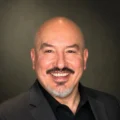
Rob Lamberts is an internal medicine-pediatrics physician.
He shares his story and discusses his KevinMD article, “Meet the primary care doctor who’s happy with his job.”
SUBSCRIBE TO THE PODCAST → https://kevinmd.com/podcast
RATE AND REVIEW → https://kevinmd.com/rate
FOLLOW ON INSTAGRAM → https://www.instagram.com/kevinphomd
FOLLOW ON TIKTOK → https://www.tiktok.com/@kevinphomd
GET CME FOR THIS EPISODE → https://earnc.me/uwgGVF
Powered by CMEfy – a seamless way for busy clinician learners to discover Internet Point-of-Care Learning opportunities that reward AMA PRA Category 1 Credit(s)™. Learn more at about.cmefy.com/cme-info
Transcript
Kevin Pho: Welcome to the show, where we share the stories of the many who intersect with our health care system but are rarely heard from. My name is Kevin Pho, founder and editor of KevinMD. Rate and review the show at KevinMD.com/rate. Subscribe at KevinMD.com/podcast.
Today on the show, we welcome back an old friend, Rob Lamberts. He’s an internal medicine-pediatrics physician. His KevinMD article is titled “Meet the primary care doctor who’s happy with his job.” Rob, it’s wonderful to see you again.
Rob Lamberts: It’s been a long time.
Kevin Pho: So we’ll talk about your article in a little bit. I know it’s part of your story, but for those who haven’t met you, just briefly share your story and journey to where you are today.
Real physician voices, twice a week
Free, and one click to unsubscribe.
Rob Lamberts: I live in Augusta, Georgia, or suburban Augusta, I guess, and I actually moved here in 1994 and started a primary care practice. I worked along with several other physicians and built up a typical fee-for-service primary care practice over the years, and it was really successful.
But about 10 years ago, and actually today is my 10-year sobriety date, not sobriety from alcohol, but my sobriety from taking insurance money. But back up a little bit. Ten years ago, things just weren’t working between me and my partners. There were a bunch of conflicts that ended up happening, and some of it was just personality, but a lot of it was actually my dissatisfaction with the way that my practice was: a lack of focus on patient-centeredness, a lack of focus on doing good for the patient, and an increasing focus on finance, on doing things that would make the money for the practice do well.
And again, I don’t fault people for trying to make money with their business. That’s the whole point of having a business. But we were an independent practice. We were not employed by the hospital, so it was our own choice of the way that we would do this.
Kevin Pho: So what are some examples? When you said that there was a little bit of focus that was off the patient-centeredness and more on the finances, what would be an example of that?
Rob Lamberts: Well, I mean, the whole system is geared away from patient-centeredness. But for instance, rather than sitting and talking with people and taking time, you added more and more patients to your schedule, so you have five to 10 minutes to talk to people about life issues that are humongous, to manage things that take time to get to the bottom of.
And the other thing is, we would bring people in for every little thing. The mindset of a primary care practice, at least when I was in the fee-for-service model, was to try and get the people into the office if at all possible and give them as little free care as you can. So your nurse’s job was largely to protect the doctor from the patients, which is so wrong. It is so wrong to have this mentality that people are trying to get an antibiotic out of you, getting you to answer questions without having to come into the office.
And when your office schedule is already slam full and you’re already running an hour late every day, you really can’t afford to spend all this time handling those problems. It just got to be something that seemed to me to be an insolvable problem. I remember feeling that I couldn’t give good care to anybody. I just felt like I didn’t have the time, I didn’t have the energy, I didn’t have the ability to give truly good care.
It’s not that I was being a bad doctor. It’s just, I know, it’s like spending five minutes with your kids every day, and that’s all you spend. You’re not going to be a good parent if you neglect your kids, or in this case, if you neglect your patients, who are relying on you for huge things. That’s the way it was.
Kevin Pho: So you were doing this for many years. You felt that you weren’t doing well by patients, and it was the antithesis of why you went into medicine in the first place. So now you’re at a crossroads in your professional career. What were some of the options that were available to you at that point?
Rob Lamberts: The options were either I stay within the system and just find somewhere else to work, join another practice, start my own fee-for-service practice with the hospital running it, or try and be independent, that type of thing. But to me, the problem was not one of the partners that I had. It was really the problem in the system itself.
And so I thought about doing a concierge, MDVIP type of practice. I talked to them, actually, a bit, but there was something very unappealing about doing a practice that only a very small percentage of patients could afford.
And then I happened, through my writing actually, to get in touch with a guy named Dave Chase, who was just brilliant on the insurance side of things. He’s written books about just the pernicious nature of the insurance industry, how the insurance industry undermines good care and all the incentives are misaligned. So I talked to him, and he brought up the idea of direct primary care.
Well, 10 years ago, direct primary care was a very small thing, about 100 docs around the country. But he was up in the land where Garrison Bliss and Erika Bliss were both up there doing that, and he walked me through it. The minute I heard the idea of direct primary care, it was like, “Oh, that’s it. That’s what I need to do.” It is one of those things where I knew, yeah, that makes sense, and I think I can make it work.
Kevin Pho: So contrast your direct primary care practice to that of the traditional fee-for-service practice in those first very few years of your practice life.
Rob Lamberts: Yeah. First off, just in case people don’t know, and it’s now much less likely, the two pillars of direct primary care are, number one, I don’t accept insurance, and number two, I get paid on a monthly basis. But it’s not a high fee. It’s somewhere in the $50 to $60 per month average range, per patient per month.
In my old practice, the incentives were fourfold. As far as the financial incentives of the practice, they were to bring the patient in for any problem possible, to do as many procedures on the patient as possible, for the patient to be as sick as possible, and to spend as little time with the person as I possibly could. None of those are patient-centered. All four of those main incentives of the financial health of a business go against what the business was put there to be in the first place.
And so in my practice, when I first started, I actually took only about 200 patients with me. But I am motivated to communicate by any means possible. It really doesn’t matter if I call them, or text message them, or if I do a house call or a video call. Communication is communication, and an office visit is simply a different means of communication, where you can do an exam, where you can have face-to-face interaction, but it’s all communication.
So now I’m incentivized to handle stuff as efficiently and easily as I possibly can. I’m incentivized to save money for the patient, actually to find ways to save them money, because if I save them money, then they’ll keep paying their monthly payments. So you’re motivated to do good customer service, to be on time. I seldom make people wait more than 15 minutes in my office, and I’ve got a relatively big direct primary care practice, around 800 patients.
If I remember, when I first started, one of the biggest contrasts was, we were going for about three, four months and figuring it out, and I would have days where I just didn’t have any patients. I was like, “Ah, this is bad, this is bad.” No way. I’m paid just as much on the days that I don’t see anybody as I am on the days that I’m chock-full.
And again, the busiest day I’ve ever had is 15 patients in one day. The average is probably between six and 10, six to 12 patients per day. But it’s just better and easier, and I spend on average a half an hour with each person, so I get to talk to them. And if they have an ear infection, then I get some extra time to catch up on text messages and stuff like that. It’s just so different.
Kevin Pho: So you went from a relatively secure position in a fee-for-service private practice to something, especially 10 years ago, relatively unknown, and unknown security in terms of income and all that. So tell me about some of that trepidation that you had going into this relatively new model at the time.
Rob Lamberts: Yeah. Everybody says, “You’re really courageous.” There’s a very fine line between being courageous and being a total idiot. But it’s like, I didn’t know. I was like, “I can make this work,” and I went into it boldly, but I knew that it could fail terribly. Except that I did have a good base. I had a good nurse that was with me. But I had a ton of trepidation, and I had to run the whole business, and at that point in time, I had to make up the business.
And actually, I didn’t have a good EMR. At one point in time, I wrote my own EMR and built it myself. There just weren’t the tools available to make direct primary care work. And again, even the patients didn’t fully understand it. They didn’t take advantage of what I was offering, which was basically access, unlimited access.
It was scary the first year. I broke even within the first couple of months in terms of paying my nurse and paying the rent and all my bills. But in terms of paying myself a salary, I didn’t get much of a salary at all that first year. And then the second year, Obamacare had come out, and I went on to the health care marketplace and I qualified for Medicaid. It was very ironic that a doctor who eschews insurance would be on Medicaid. It was only for a year.
Now my income is actually better than it ever was in my old practice, and I’m well over the national average for primary care doctors, and it’s actually increasing. Now, nobody’s driving you. You’re driving yourself in that circumstance, and there really isn’t that good of a guide.
Now, fortunately, we’ve created a new business, a partnership of three providers: myself, Ed Boland, who’s a family doc, and Davis Mellick, who is a PA. They came to work here, and they’re in Augusta. They were working in urgent care and were ready to quit, and they came to talk to me, and I set them up with direct care. Turns out we get along marvelously, and so we formed a new business where it’s a single practice. We actually had up to six providers and are continuing to grow.
Our goal is to start spreading it, to make things better for patients, but also to reach out to businesses in the local area to offer them direct primary care as a benefit to their employees, whether paired with insurance or not. The bigger businesses obviously would need it paired with an insurance plan, but even a mom-and-pop place could offer something to their employees.
And the other thing is actually just offering a good life to the doctors out there, just saying, “Look, during the pandemic, we did great. We had no problem with our cash flow during the pandemic at all.” In fact, it was probably even a little better, because nobody was leaving. It’s just a system that works so well and so easily, and it makes you practice like you dreamed medical practice would be.
I had a person a couple weeks ago who was having these really weird symptoms, and I was talking to her and talking to her. It was this chest pain that, she went to the hospital, in a crescendo, and then it went away. And that’s like, that’s bad, it’s just weird. As I was talking to her, it was about 20 minutes into it that I was like, “Wait a minute, where does the pain start, and where does it go?” Anyway, it was her gallbladder that was going on, but it was just a strange presentation.
That dialogue, that conversation, is so important, but you don’t get that when you’re trying to meet the Medicare criteria and meet your MIPS or whatever type of thing. I forget. I haven’t paid attention to Medicare for 10 years now, so I just know that I still get some PTSD shocks through my system when I hear about quality measures.
That’s the thing: I get to spend time talking to people. And it’s not perfect. I still stress out about the business, and sometimes I feel like I’m a little kid who’s in an adult body. That’s like, “How am I doing this stuff?” Because I just don’t know what I’m doing, you know? It turns out a lot of small business folks don’t feel that way, and imposter syndrome runs right through the medical profession, so there you go.
Kevin Pho: We’re talking to Rob Lamberts. He’s an internal medicine-pediatrics physician. We’re talking about his primary care journey and his KevinMD article, “Meet the primary care doctor who’s happy with his job.” Rob, for those who are interested in making that transition into direct primary care, because a lot of doctors still practice in that fee-for-service system, certainly what you’re saying sounds like a marked contrast. What’s some of your advice for these physicians?
Rob Lamberts: First is, don’t be too scared. There are supports in place to do it now, and there are some paths that have been well worn. In the Augusta area, we’re actually wanting to basically say, “Look, you want to practice, we’ll handle it. We’ve made it work. We’ll guide you through that.” We’re trying to grow our business, which is called Welcome Health, and just trying to say, “Look, we want you to just practice medicine and be happy.”
There are lots of practices around the country now that are doing exactly what we’re doing, trying to grow a network. There are also businesses like Hint Health, which kind of sets up the platform for the membership model. There’s another called Atlas, which does an EMR and does that type of thing as well.
Right now, the DPC culture is one of helping the other person. We don’t really feel like we’re going to hurt our own business by adding new DPC docs in our area, because you only have 800 people, and so there’s tons of room to grow. The interest in the business community especially, but the interest overall is extremely high among consumers, because as opposed to 10 years ago, where people were a little bit frustrated with, well, we’re still very frustrated, actually, with health care, the level of frustration has just ratcheted up over the past 10 years, and people are just looking for something.
And really, if you’re willing to ask in the Direct Primary Care Alliance or Hint Health, or there’s a DPC meeting. The AAFP has an arm that promotes this. Sadly, as an internist, the American College of Physicians is way behind on this, and I don’t quite understand it. But there are lots of people who would help out, and I would say, don’t try and reinvent the wheel. We’re willing to let you learn from our mistakes, and now it’s way easier to do, and you can be more profitable. You can be profitable within a fairly short time if you do it right.
Kevin Pho: And my final question: What are some of your take-home messages that you want to leave with the KevinMD audience?
Rob Lamberts: I think we’ve gone from the pioneer stage. You go through the pioneers, the total crazy people like Garrison Bliss, or me to a lesser extent, because I was a little later than him. But now we’re really in this phase where, I think, you have to have a little bit of courage going into it, but it doesn’t take that much courage, stepping out of the known to the unknown, of the devil that you know versus the devil that you don’t.
I will just say this: Two months into when Ed Boland started working at my office, I came in, and I remember saying, “So what do you think?” And he got this expression on his face that was just one of total excitement. He said, “I’ve never been happier practicing. I so much love this. This is better than I expected it.”
It really is the devil you know versus the devil that you don’t know, but the truth is, it’s not a devil. It’s a job still. But I strongly encourage any folks dealing with burnout to seriously think about switching to direct primary care and reaching out to the resources out there.
Kevin Pho: Rob, it’s great seeing you again. Thank you so much for sharing your story, time, and insight.
Rob Lamberts: My pleasure, Kevin.
Listen and followApple PodcastsSpotifyYouTubeMore apps · Browse all episodes